


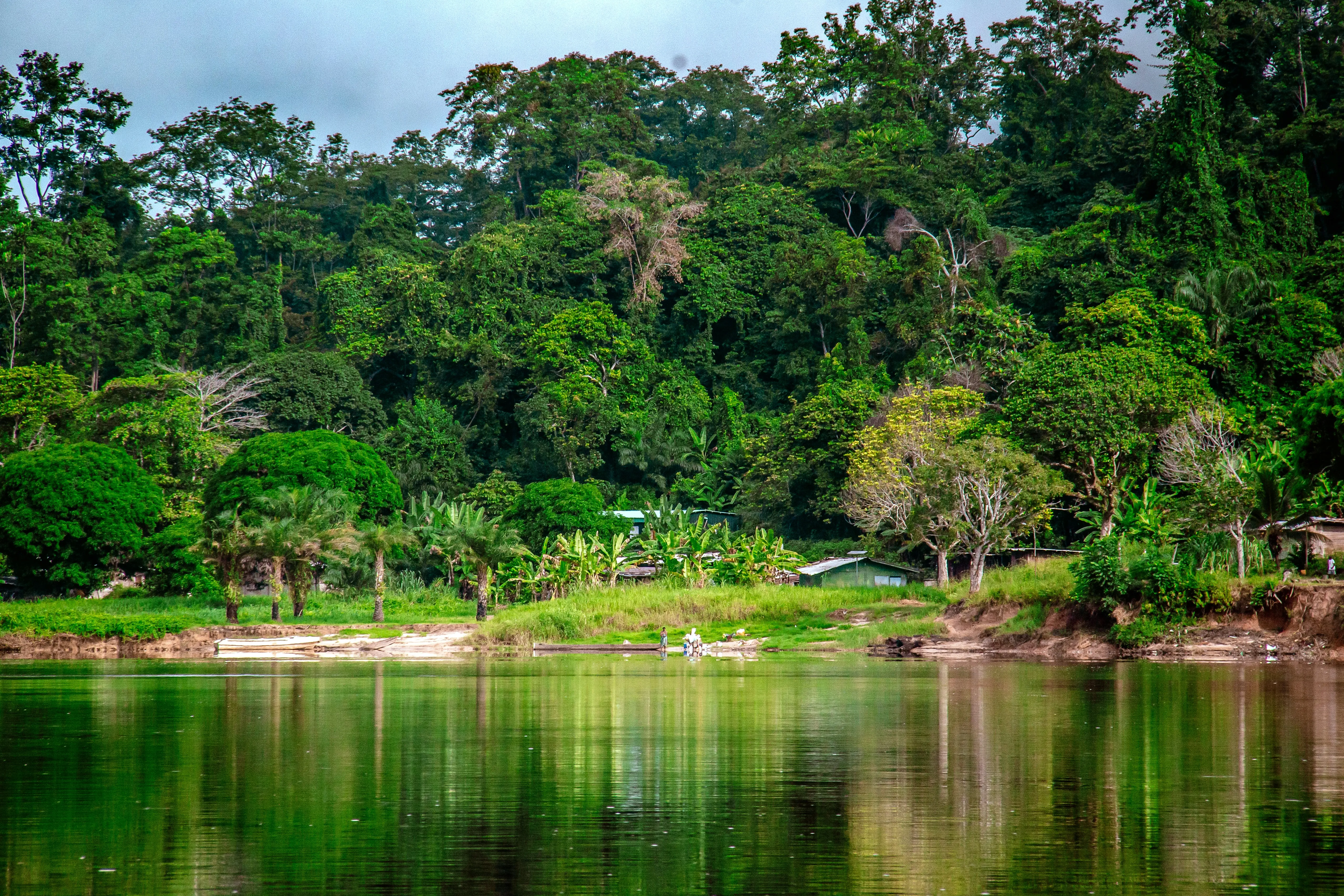
Gabon
Gabon is an African natural sanctuary that offers pristine beaches, dense tropical rainforests, and unique wildlife for adventure lovers.
Quick Facts
- Capital
- Libreville
- Language
- French
- Fang, Myene, Nzebi
- Currency
- CFA Franc (XAF)
- Best time to visit
- From June to August and from December to January
- Budget per day
- $60 - $220 per day
- Climate
- Equatorial climate, hot and very humid throughout the year, with abundant rainfall during the rainy seasons.
- Connectivity
- medium
- Easy to get at airports and shops in major cities
- Electricity
- Type C (220V)
- Local transport
- limited
- Card usage
- cash is used more
- Tipping
- optional
🌎 Introduction
On the shores of the Atlantic, right where the Equator line crosses the map, the landscape is tinged with a deep green that seems to merge with the ocean. In this corner of Central Africa, life moves at a leisurely pace, marked by a geography where the tropical jungle still occupies much of the horizon and wildlife appears naturally on solitary beaches. It is a place of serene contrasts, where the hustle and bustle of markets in cities like Libreville coexists with the silence of inland villages, creating an atmosphere of authenticity perceived in the daily lives of its people.
The essence of the country manifests itself both in its spiritual traditions, such as the Bwiti rite and the delicate craftsmanship of wooden masks, and in its gastronomy, where the aroma of poulet nyembwe permeates shared gatherings. From the rainy months that refresh the land to the season when humpback whales can be seen off its coasts, the passage of time follows its own logic here. This combination of living cultural heritage and a nature that dictates its own rules forms the identity of a territory that shows itself exactly as it is, without artifice.
🛡️ General Safety
Gabon is considered one of the most stable and safe countries in the Central African region. For the international traveler, the security level can be classified as medium, with a relatively calm political environment and a low incidence of violent crimes against tourists compared to other neighboring destinations.
The general context for the visitor is one of cordiality, although as with any trip to a developing environment, it is essential to maintain a heightened sense of common sense. Most visits occur without incident, provided that basic self-protection recommendations are followed and local regulations are respected.
Crime and Common Risks
Crime in Gabon is usually opportunistic in nature. The most common risks include:
- Pickpocketing and bag snatching: These are the most frequent incidents, especially in crowded areas.
- Small scams: These can occur in informal transactions or with unregulated transport services.
- Thefts from vehicles: It is common for objects left in sight inside parked cars to be stolen.
It is recommended to take extreme precautions in places like the Mont-Bouët market in Libreville, isolated beach areas, and during night travel. Violent crimes are uncommon, but it is advisable to avoid situations of total isolation or displaying high-value objects such as jewelry or professional cameras in unmonitored areas.
Safety in Cities and Tourist Areas
Safety varies significantly between day and night. In the urban centers of Libreville and Port-Gentil, residential and administrative areas are usually safe during daylight hours.
- Tourist neighborhoods: Areas with international hotels usually have private security and are highly controlled environments.
- Nightlife: When the sun sets, safety decreases considerably. Walking through peripheral neighborhoods or poorly lit streets is discouraged.
- Urban transport: Movement between safe zones should preferably be done by vehicle, avoiding travel on foot in areas that are not strictly tourist or commercial.
Transport Safety
Transport in Gabon has peculiarities that the traveler should know to move efficiently and safely:
- Driving: In Gabon, you drive on the right. The condition of main roads is acceptable, but secondary roads can be in poor condition, especially after rain.
- Taxis: They are the most common medium. There are collective taxis (very economical) and private taxis (more recommended for tourists). It is advisable to negotiate the price before getting in or use apps if available.
- Rental vehicles: This is a safe option, although it is recommended to hire a local driver who knows the state of the routes and traffic customs.
- Road checkpoints: It is normal to encounter police or military checkpoints. A respectful attitude should always be maintained, and the requested documentation (passport or certified copy) should be shown.
Natural and Climatic Risks
Gabon has an equatorial climate that marks the main natural risks:
- Intense rains: There are two rainy seasons (from February to May and from September to December). During these periods, flash floods and road closures due to mud or landslides can occur.
- Heat and humidity: Temperatures are high throughout the year, which can cause heatstroke or dehydration if preventive measures are not taken.
- Sea currents: On the Atlantic coasts, currents can be very strong and dangerous. It is recommended to swim only at beaches with other swimmers present or marked as safe.
Legislation and Local Norms
Compliance with local laws is strict, and ignorance of them does not exempt one from responsibility.
- Photography: It is strictly forbidden to photograph government buildings, military installations, airports, bridges, or any person in uniform. This can lead to equipment confiscation or arrests.
- Documentation: It is mandatory to always carry valid identification. It is recommended to carry a photocopy of the passport and visa, leaving the originals in the hotel safe.
- Drugs: The consumption or trafficking of narcotics carries very severe prison sentences.
- Social behavior: Gabon is a country with traditional values. It is important to dress decorously in public buildings and show respect toward authorities.
Safety for Specific Groups
- Female travelers: Generally safe, but it is recommended to avoid walking alone at night or in isolated areas. In rural areas, discreet clothing helps avoid unwanted attention.
- LGTBIQ+ travelers: Although homosexuality is not explicitly criminalized in the current penal code, there is no great social acceptance. It is recommended to maintain an attitude of maximum discretion and avoid public displays of affection to prevent incidents or discrimination.
- Children and seniors: Gabon is a welcoming destination for families, although health and transport infrastructures can be demanding. It is vital to have international medical insurance with broad coverage.
Emergencies and Assistance
In case you need help, these are the key contact points:
- Police: 1722 or 1300 (depending on the area).
- Firefighters: 18.
- Medical assistance: In major cities, there are high-level private clinics, but in rural areas, assistance is very limited.
In the event of any incident, stay calm, do not offer resistance in case of robbery, and go as soon as possible to the nearest consular office to report the situation and receive technical assistance with documentation.
> Tip: Always carry a card from your hotel with the address written on it and the local phone number to facilitate your return in case of getting lost or an emergency.
📝 Entry Requirements
To undertake a trip to Gabon, the first fundamental step is to ensure that your passport has sufficient residual validity, which is usually recommended to be at least six months from the moment of arrival. It is convenient for the document to have blank pages for the various control stamps applied at land or airport borders.
In most cases, international travelers usually require a tourist visa to access the territory. This document typically authorizes stays for a specific period, which is frequently around thirty or ninety days, depending on the arrangements made prior to the trip. In some cases, the processing of a prior electronic authorization is provided to speed up entry into the country.
When presenting yourself to immigration authorities, it is common to be asked for proof of an outbound ticket from the country or a continuation ticket to a third destination, as well as justification for possessing sufficient economic means to cover the entire stay. Controls at entry points are usually exhaustive and include the verification of documentation and, occasionally, the collection of the visitor’s biometric data.
Regarding health, a recurrent requirement is the presentation of the international vaccination card certifying immunization against yellow fever, considered necessary to protect public health and that of the traveler. Additionally, it is suggested to consult with health professionals regarding other common preventive recommendations for tropical environments before starting the journey.
Regarding customs regulations, there are common limitations on the introduction of products such as alcohol or tobacco, which must comply with the permitted personal quantities. The transport of medicines should preferably be done in their original packaging and accompanied by a medical prescription. Restrictions also apply to the entry of certain fresh foods or products of animal and plant origin to preserve the local ecosystem.
🌍 General Tourist Information
Gabon is a destination that stands out for its pristine nature and its commitment to environmental conservation. Being a country with a large area of tropical rainforest, it offers unique experiences for lovers of ecotourism and wildlife observation in the wild.
- Exceptional Biodiversity: The country has an extensive network of national parks protecting varied ecosystems, from coastal lagoons to dense inland forests.
- Culture and Traditions: Cultural heritage is manifested in its crafts, music, and traditional dances, with a strong presence of local communities in the management of sustainable tourism.
- Coast and Beaches: The Gabonese coastline offers extensive white sand beaches, many situated in protected environments where wildlife even reaches the seashore.
📍 Highlighted Places of Interest
- Loango National Park: It is world-renowned for offering the possibility of seeing elephants, hippos, and other animals walking on the beach sand, a rare phenomenon elsewhere on the continent.
- Libreville: The country’s capital combines modern infrastructure with vibrant markets and interesting architecture, such as St. Michael’s Church with its carved columns.
- Lopé National Park: Declared a World Heritage Site, this space is fundamental for understanding the evolution of the African landscape and houses a large concentration of mandrills.
- Kongou Falls: Located in Ivindo National Park, these waterfalls are considered some of the most spectacular in Central Africa due to their width and the force of their flow.
🍽️ Gastronomy and Customs
The cuisine of this region is based on the use of natural resources from the environment, integrating products from the jungle and the ocean into dishes full of flavor and tradition.
- Base Ingredients: Cassava, plantain, and yam are the pillars of the daily diet, serving as an accompaniment to stews and meats.
- Fish and Seafood: Given its extensive coastline, fresh fish prepared on the grill or in seasoned sauces is a very popular option in coastal areas.
- Traditional Preparations: Highlights include dishes prepared with palm nuts or peanut sauces, which provide creamy textures and intense aromas to poultry or game meat preparations.
☁️ Climate and Best Time to Travel
The climate in this area is equatorial, which translates to constant and warm temperatures throughout the year, accompanied by high humidity levels.
- Dry Season: Usually extends from June to August and from December to January, being the most favorable period for road travel and visiting national parks.
- Rainy Season: Mainly occurs from September to November and from February to May, periods in which the landscape becomes intensely green, although transport through the interior can be more complex.
🏥 Basic Health Considerations
If you are planning your adventure through Gabonese lands, it is essential that you know how the health environment works so that you only worry about enjoying its landscapes. In main cities like Libreville or Port-Gentil, you will find private medical centers that offer an acceptable standard of quality, although you should know that public healthcare usually has quite limited resources. Costs in private clinics for tourists are usually high, so they will ask for payment in advance or a guarantee of solvency before treating you. Additionally, most health personnel usually communicate in French, so having a translation app handy or knowing basic phrases will make things much easier for you.
Taking out travel medical insurance is not just a recommendation; it is an absolute necessity to move with peace of mind. You should look for a policy that offers very broad coverage, especially regarding hospitalization and, most importantly, medical repatriation by medicalized plane. In case of suffering a serious mishap in areas far from the capital, transfer to another country with better infrastructure could be the only solution, and the costs of this service are astronomical if you do not have insurance that covers them.
In the section on vaccines, you must be very clear that the yellow fever vaccine is mandatory to enter the country. You will be required to present the original international vaccination certificate as soon as you land. Beyond this, it is highly advisable to have your standard vaccination schedule up to date and consider protecting yourself against hepatitis A and B, tetanus, and typhoid fever. As requirements can vary depending on the season, the ideal is to visit a tropical medicine center a few weeks before your flight.
For your peace of mind, you should carry a well-equipped personal first-aid kit. If you regularly consume specific medications, make sure to take enough for the entire trip in their original packaging. It is very important to always carry the medical prescription or a certificate signed by your doctor, preferably translated into French, to avoid any legal inconvenience at customs. Do not forget to include painkillers, gastric protectors, and some basic disinfectant for small wounds.
When moving through a tropical environment, the greatest risks you will find are related to the climate and insects. Malaria is endemic throughout the territory, so you should use potent repellents and, most likely, take preventive medication before, during, and after the trip under medical supervision. The intense heat and constant humidity can cause dehydration or fatigue, so you will have to measure your physical efforts, especially if you are not used to this type of environment. On the other hand, do not worry too much about altitude or extreme cold, as they are not relevant factors in Gabon’s geography.
Regarding hygiene and food, the golden rule is to only consume bottled water and ensure that it is opened in your presence. Avoid ice cubes in drinks and raw salads, as they may have been washed with tap water. You can try the delicious local cuisine at street stalls, but always check that the food is well cooked and hot. You will enjoy fruit much more if you peel it yourself with clean hands.
In case of a medical emergency, the telephone number you should call is 1300. You must be aware that the ambulance service is not always as fast or efficient as you might expect, especially outside urban centers. If you are in an urban area and have the means to do so, it is usually much more effective to go directly to the emergency room of a prestigious private clinic.
As final tips for your trip to be perfect, remember to pack clothes made of natural, light fabrics and light colors that cover most of your body at dusk, which is when mosquitoes are most active. It will also be useful to always carry a copy of your documentation and your medical insurance contact details in your backpack, in case you need to consult them quickly for any unforeseen event.
🚌 Transport Within the Country
Moving around Gabon requires flexible planning adapted to the geography of the terrain. The Trans-Gabon railway is one of the most used means to connect the coast with the interior, crossing a large part of the territory at a leisurely pace. Due to dense vegetation and distances, domestic flights are a common option for travelers who need to move between major urban centers or access coastal areas that lack road connections.
In the urban sphere, shared taxis represent the most common method of transport. These vehicles do not usually follow strict schedules or conventionally marked routes, so it is necessary to communicate with drivers to confirm the destination. The use of French is essential in these interactions, as tourist signage is scarce and the purchase of tickets for long journeys is usually managed in person at stations or departure points.
There is a clear distinction between transport in cities and in rural areas. While in urban centers the streets are paved, in the interior of the country, dirt routes predominate, which can become complex to navigate. For this reason, renting 4x4 vehicles is a frequent practice when wishing to explore remote areas or national parks where conventional public transport does not reach regularly.
The general feeling for the visitor is that of a system that prioritizes adaptability over punctuality. Ferry travel is also relevant for connecting certain points on the coast, although these services usually depend on sea conditions. Overall, transport is functional for those seeking an authentic travel experience, although levels of comfort and reliability can vary considerably depending on the chosen route.
Tip: It is advisable to schedule important trips well in advance and have an additional margin of time in case unexpected changes arise during the journeys.
🤵 Culture and Etiquette
Social interaction in Gabon is based on courtesy and greetings, essential elements for starting any type of conversation or procedure. When entering an establishment or meeting someone, it is fundamental to dedicate a moment to greeting at a measured pace. The use of a handshake is the general norm in professional and introductory contexts, while in closer circles, it is common to exchange several kisses on the cheeks. It is viewed positively to show interest in the interlocutor’s well-being before addressing the main reason for the meeting, as rushing can be perceived as a lack of consideration.
Respect for hierarchy and older people is a central value in daily coexistence. In meetings or group encounters, preference and attention are usually given to the elders, and it is recommended to address them with a calm and measured tone of voice. Regarding time management, punctuality tends to be more relaxed in social commitments than in business or official transport, so showing flexibility and patience toward possible delays is considered a constructive and understanding attitude toward the local rhythm.
In the sphere of gastronomy and private visits, sharing the table is a frequent gesture of hospitality. It is a common practice to wash your hands carefully before meals, especially if traditional dishes served communally are to be tasted. If invited to a home, it is a well-received gesture to bring a small gift or token for the hosts. Regarding tipping, although there is no rigid rule, leaving a gratuity in restaurants or for guides is interpreted as recognition of the service and is a standard practice in urban and tourist areas.
Behavior in places of worship or during the celebration of traditional ceremonies should always be discreet and observant. It is fundamental to dress in a manner considered respectful of the environment and always follow the instructions of the hosts or those in charge of the place. Before capturing images of people, homes, or scenes of daily life, it is an essential etiquette rule to request prior permission, which allows establishing a bond of trust and respect for the privacy and culture of the local population.
“Tip”: When greeting an older person or someone in a position of authority, it is advisable to avoid excessively prolonged or direct eye contact at the first moment, as in certain local contexts, this is interpreted as a sign of deference and respect.
🍛 Typical Gastronomy
The cuisine of Gabon is a faithful reflection of its privileged geographical location, where the tropical rainforest and the Atlantic Ocean provide an immense natural pantry. In the Gabonese table, intense flavors predominate, marked by the regular use of red palm oil, which adds a characteristic color and aroma to stews. The basic products that accompany almost any meal are cassava (both the root and the leaves), yam, and plantain, ingredients that serve as the energy base for hearty dishes that simmer for hours.
In urban areas, a fluid coexistence between local traditions and the influence of French cuisine is perceived, especially in bakery techniques and the preparation of some sauces. Fish and seafood are fundamental in coastal regions, while in the interior of the country, meats accompanied by thick sauces made with nuts, ginger, and chilies take center stage. The local palate appreciates the contrast of textures, often combining creamy preparations with denser, more fibrous accompaniments.
Eating habits in Gabon usually focus on a main meal in the mid-afternoon or at nightfall, becoming a moment of social gathering. In more traditional settings, it is common to share several dishes placed in the center of the table. Regarding etiquette, it is fundamental to wash your hands before starting, as some solid accompaniments are consumed directly with the fingers. In restaurants in major cities, service is usually leisurely, inviting the diner to enjoy the meal without rushing.
To accompany meals, the most common drinks include freshly squeezed tropical fruit juices, such as mango or pineapple. The consumption of palm wine is also very popular, a traditional fermented drink that is part of the local culture. In catering establishments, nationally brewed beers and bottled mineral waters are easily found and recommended for the traveler. The atmosphere in food venues is generally welcoming and relaxed, reflecting the hospitality that characterizes the local population.
| Dish | Description | Main Ingredients | Where to try it | Tip |
|---|---|---|---|---|
| Poulet Nyembwe | Considered the national dish, it is a thick chicken stew with a palm nut sauce. | Chicken, palm nut cream, garlic, and local spices. | Traditional cuisine restaurants in any city. | Accompany it with boiled plantain to balance the flavor of the sauce. |
| Bouillon de poisson | A light but very flavorful fish soup, ideal for a less heavy meal. | Fresh fish, tomato, onion, and a touch of chili. | Market stalls and venues near coastal areas. | It is an excellent dish to taste the freshness of the local marine product. |
| Odika | A dark, dense sauce known as “indigenous chocolate,” with a deep, earthy flavor. | Grated wild mango seeds, meat or fish. | Especially common in celebrations and inland homes. | Its flavor is very intense; try it in small quantities first. |
| Manioc (Foufou) | A dense, elastic dough served as a basic accompaniment. | Fermented cassava flour and water. | Available in practically all establishments in the country. | It is used to scoop up the sauce from stews with the right hand. |
| Brochetas de pescado | Grilled white fish skewers, very popular as quality fast food. | Fish (usually captain fish), lime and pepper marinade. | Street stalls and outdoor terraces at sunset. | Order them with a side of fried cassava for a crunchy contrast. |
📷 Areas and Places to Visit
The country’s capital, Libreville, is the natural starting point for any traveler and represents the balance between urban development and the ocean’s influence. Walking along the Bord de Mer, its extensive seaside promenade, allows for observing daily life while contemplating the Atlantic. In the heart of the city, the National Museum of Arts and Traditions offers a necessary immersion into the country’s cultural identity, housing a collection of masks and ritual objects that explain the worldview of the different local ethnic groups. The capital’s neighborhoods show varied architecture combining modern government buildings with vibrant traditional markets, where commercial activity reflects the dynamism of today’s society.
Inland, on the banks of the majestic Ogooué River, lies Lambaréné, a town that stands out for its historical and humanitarian significance. It is world-renowned for housing the Albert Schweitzer Hospital, which currently also functions as a museum and research center. Visiting this complex allows for understanding the legacy of the Nobel Peace Prize winner and the evolution of medicine in tropical contexts. The city’s surroundings are dominated by a system of lakes and river channels that can be navigated in local boats, facilitating contact with riverside communities and the observation of wildlife that depends on the watercourse.
Loango National Park is probably the most representative natural area of Gabonese geography due to its particular configuration. It is one of the few places in the world where the tropical rainforest directly meets the oceanic coast, creating landscapes of pristine beaches flanked by dense vegetation. In this environment, it is possible to go on excursions to observe how land fauna occasionally crosses the sand, a rare phenomenon in other destinations. The park’s interior lagoons offer quiet routes for birdwatching and other animals in an exceptional state of conservation.
Another mandatory stop to understand the region’s biodiversity is Lopé National Park, declared a UNESCO World Heritage Site. This territory is unique for its mixture of ancient savanna and primary forest, which has allowed for the coexistence of very different ecosystems. In addition to its natural wealth, the area has great archaeological value, with sites containing stone tools and rock carvings dating back thousands of years. Tours through its hills and valleys allow for learning about the geological and human history of Central Africa in an environment of great serenity.
In the northeast of the country, Ivindo National Park protects stretches of practically unaltered jungle. One of its most notable points of interest is the Kongou Falls, an impressive set of waterfalls located on the Ivindo River that stand out for their magnitude and for being surrounded by impenetrable vegetation. This region is ideal for those seeking a pure nature experience, traveling along paths that lead to “baïs” or forest clearings, natural places where local fauna usually congregates, allowing for discrete and respectful observation of the environment.
Finally, the Franceville area in the southeast offers a landscape dominated by high plateaus and singular geological formations. The Batéké Plateau presents an orography of deep valleys and plains that contrast with the northern jungles. In the nearby rural areas, it is still possible to find traditional liana bridges, artisanal structures woven with plant fibers that demonstrate the ingenuity of popular architecture for crossing riverbeds. This region combines interest in open landscapes with the opportunity to learn about the most traditional ways of life in the country’s interior.
“Tip”: You cannot miss visiting Loango National Park, the most emblematic place in the country.
✈️ Best Season to Travel
Choosing the right time to visit Gabon is fundamental, as its equatorial climate sets the pace for activities and accessibility to its national parks. Being in the heart of the tropical rainforest, the country has constant humidity and warm temperatures that fluctuate slightly throughout the year. The traveler’s decision usually depends on whether they seek to observe marine fauna, such as whales and turtles, or if they prefer to venture into the dense forest in search of elephants and gorillas, as the state of land routes varies significantly according to the level of rainfall.
The most favorable time to travel the country coincides with the main dry season, which occurs in the middle of the year. During these months, the decrease in rain facilitates travel on dirt roads and allows animals to group around water points, simplifying their sighting. However, Gabon offers unique experiences in other periods, such as sea turtle nesting or the growth of exuberant vegetation, provided one has the proper equipment for humidity and occasional rains.
| Season | Months | Typical Climate | What to Expect | Tourist Influx |
|---|---|---|---|---|
| Spring | Mar – May | Frequent and intense rains with high humidity. | Very green jungle landscapes and high flow in rivers and waterfalls. Reduced mobility in rural areas. | Low (⭐) |
| Summer | Jun – Aug | Main dry season. Cooler temperatures and overcast skies. | Humpback whale watching on the coast and better conditions for jungle trekking. | High (⭐⭐⭐) |
| Autumn | Sep – Nov | Transition to the rainy season. Rising heat and humidity. | Start of the leatherback turtle nesting season on the beaches of Loango National Park. | Medium (⭐⭐) |
| Winter | Dec – Feb | Short dry season. Clear days and hotter temperatures. | Excellent conditions for enjoying the beaches and observing primates and elephants in forest clearings. | Medium / High (⭐⭐) |
🗣️ Basic Vocabulary
Although French is the official language and the most useful for moving throughout Gabon, knowing some basic expressions can make your daily life much easier. Gabonese people usually appreciate visitors trying to communicate in their language or using terms from widely used local languages, such as Fang, especially in informal or rural settings.
Having these expressions handy will help you navigate more naturally in markets, transport, or when interacting with people on the street. It is not about mastering the grammar, but about having simple tools to show courtesy and solve practical needs during your stay.
- Bonjour / M’bolo: Hello / Good morning. The second form belongs to Fang and is very common for greeting.
- Merci / Akiba: Thank you. Using “Akiba” is a gesture of courtesy that is usually very well received.
- S’il vous plaît: Please.
- C’est combien ?: How much is it? Essential for asking prices at street stalls and markets.
- Où se trouve… ?: Where is…? Useful for asking directions to specific places.
- Pardon / Excusez-moi: Sorry / Excuse me. Used to get someone’s attention politely or ask for passage.
- Oui / Non: Yes / No.
- Tout va bien: Everything is fine. A common answer when asked how you are.