


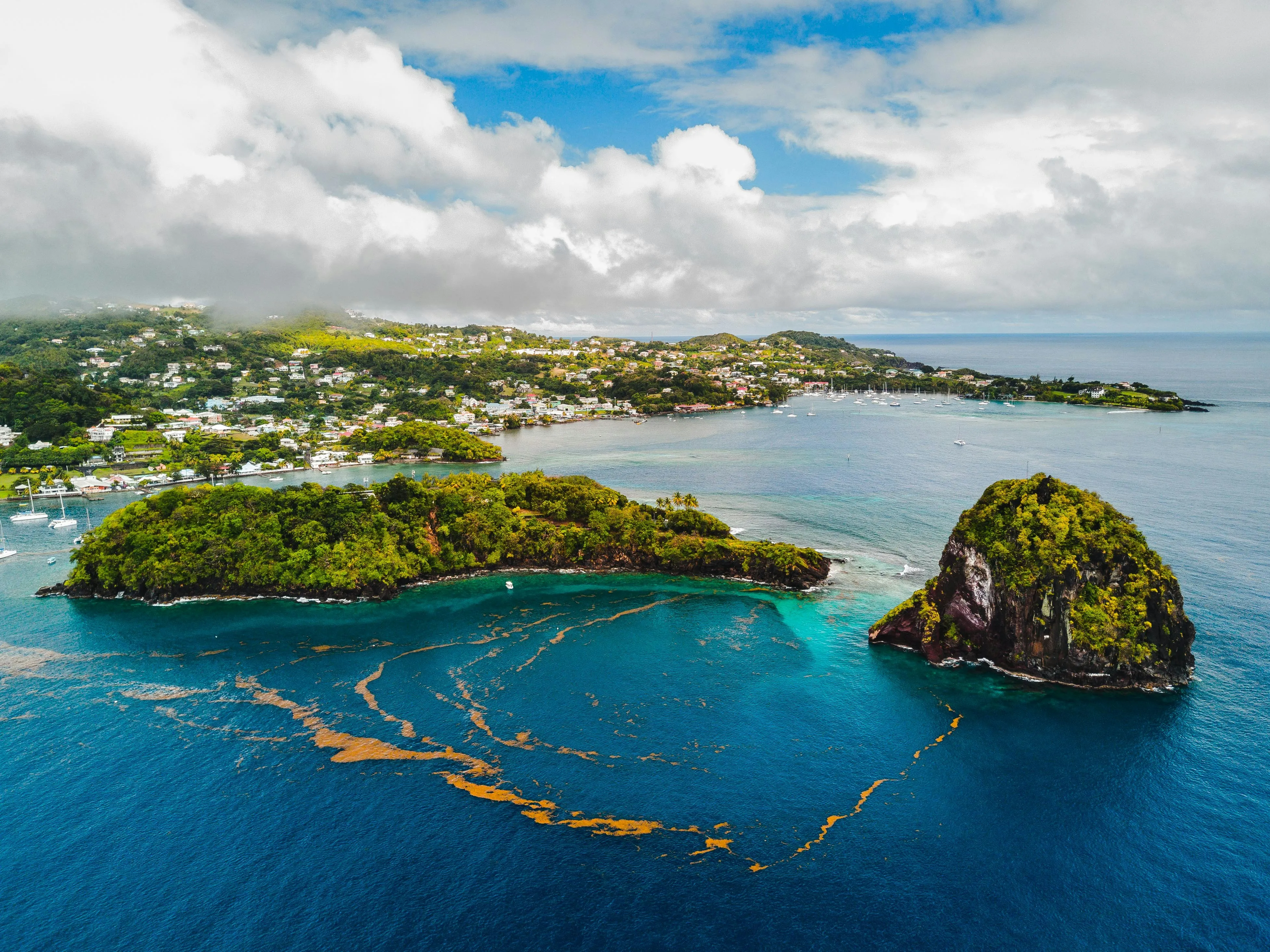
Saint Vincent and the Grenadines
Discover a pristine archipelago of crystal-clear waters and lush tropical jungle, ideal for sailing lovers and the most authentic and natural Caribbean tranquility.
Quick Facts
- Capital
- Kingstown
- Language
- English
- Saint Vincent Creole
- Currency
- Eastern Caribbean Dollar (XCD)
- Best time to visit
- From December to May, during the dry season.
- Budget per day
- $80 - $300 per day
- Climate
- Warm and humid tropical year-round, with a rainy season between June and November.
- Connectivity
- medium
- Easy to obtain at the airport and shops in Kingstown.
- Electricity
- Type G (230V)
- Local transport
- acceptable
- Card usage
- acceptable
- Tipping
- yes
🌎 Introduction
In the arc of the Lesser Antilles, this archipelago stretches out as a succession of volcanic reliefs and small islets surrounded by the sea. The geography of the place is divided between the island of Saint Vincent, with its imposing mountainous and jungle presence, and the chain of the Grenadines, which dot the horizon with low shores and calm waters. It is an environment where the sound of the wind in the palm trees and the swaying of fishing boats are part of the daily landscape of those who inhabit these lands.
Daily life is marked by a deep connection with nature and local traditions. In the markets, one can perceive the aroma of spices and the abundance of the land, while in celebrations such as the carnival, a vibrant cultural heritage is felt, full of rhythm and hospitality. From the fertile slopes surrounding the La Soufrière volcano to the coral reefs that protect the southern bays, there is a natural balance between the exuberance of the vegetation and the simplicity of life by the ocean.
During the months of constant light, the contrasts between the dark volcanic rock and the clarity of the sandbanks become more evident. It is a corner of the world that invites calm observation, appreciating details such as the wooden architecture of its small urban centers or the flavor of a gastronomy based on fresh fish and breadfruit. The country’s identity is built on this coexistence between the strength of the land and the serenity of the sea, maintaining an authentic essence far from the rush.
🛡️ General safety
Saint Vincent and the Grenadines is a destination that can be considered, in general terms, as safe for international tourists. The country offers a welcoming and quiet environment, especially in the smaller islands of the Grenadines. However, as in any Caribbean destination, it is necessary to maintain basic common sense and be attentive to local dynamics to enjoy a smooth stay.
The level of safety is moderate, falling within a range similar to that of other neighboring countries in the region. While rural areas and smaller islands are usually extremely quiet, the capital, Kingstown, requires slightly more attention due to its greater activity and population density.
Crime and common risks
Most visits pass without incident, but there are certain minor risks that the traveler should be aware of to prevent unpleasant situations:
- Petty theft and minor robberies: These are the most frequent crimes, especially in crowded areas, popular beaches, or near cruise ports. Neglect of bags, cameras, or mobile phones is the main cause of these incidents.
- Incidents on vessels: For those traveling by yacht or sailboat, cases of theft on board have been reported while vessels are anchored. It is vital to secure the boat and not leave valuables in sight on the deck.
- Minor scams: Occasionally, some individuals may offer unofficial tourist services or unsolicited help and then ask for excessive remuneration. It is always advisable to agree on prices beforehand.
- Isolated areas: It is advised to avoid walking on lonely beaches or little-traveled trails after sunset, as the lack of lighting and surveillance increases the risk of incidents.
Safety in cities and tourist areas
Safety dynamics vary significantly between the main island of Saint Vincent and the smaller islands (such as Bequia, Mustique, or Union Island):
- Kingstown: The capital is vibrant and safe during the day, but caution is recommended when walking through certain peripheral areas or very crowded market zones. At nightfall, the most prudent thing is to travel by taxi instead of walking along poorly lit streets.
- Tourist areas and hotel complexes: Resorts and areas specifically oriented toward tourism have private security measures and are usually very protected and reliable environments.
- Grenadines Islands: On islands like Bequia or Canouan, the atmosphere is much more relaxed and the crime rate is notably low, allowing for very free and quiet movement at almost any time.
Transport safety
Moving around the archipelago requires adapting to local infrastructure and specific regional traffic rules:
- Driving: In Saint Vincent and the Grenadines, driving is on the left. Roads on the main island can be narrow, steep, and with very sharp curves, demanding defensive driving and great caution.
- Taxis: They are a safe and reliable means of transport. They do not usually have meters, so it is essential to agree on the fare before starting the trip. Official taxis usually have license plates starting with the letter “P” or “H”.
- Local minibuses: They are economical and widely used by the local population. Although they are safe, they often travel at high speeds and are usually very full, which can be uncomfortable for some travelers.
- Ferries: Inter-island transport is common and safe. It is recommended to check schedules in advance and pay attention to sea conditions, which can affect the stability of smaller vessels.
Natural and climatic risks
The natural environment is one of the country’s greatest attractions, but it also involves certain seasonal risks that should be monitored:
- Hurricanes and tropical storms: The official Caribbean hurricane season runs from June to November. During these months, it is vital to follow local weather reports and the instructions of the authorities.
- Volcanic activity: Saint Vincent is home to the La Soufrière volcano. Although its activity is constantly monitored by experts, it is a natural factor to take into account. Access to exclusion zones, if any, must always be respected.
- Sun exposure and heat: The climate is tropical and humid. The risk of dehydration and sunburn is real, so constant use of sunscreen and frequent water intake is recommended.
Local legislation and norms
Compliance with local laws is fundamental to avoid serious legal problems during the stay:
- Camouflage clothing: It is strictly forbidden to wear camouflage or military-style clothing, even for children. This rule is rigorously applied, and the garments may be confiscated.
- Prohibited substances: Laws related to the possession and consumption of drugs are very strict and carry prison sentences and high fines.
- Respect for the environment: There are severe laws for the protection of coral and marine life. Collecting coral or protected mollusks is prohibited.
Safety for specific groups
- Women travelers: The country is generally safe for women traveling alone, although they may receive unwanted attention or persistent comments in very crowded areas. It is recommended to maintain the same caution as in any other international destination.
- LGTBIQ+ travelers: Local society is conservative, and laws exist that penalize certain acts between people of the same sex. Although tourists are not usually actively pursued, absolute discretion is recommended in public to avoid uncomfortable situations or legal problems.
- Traveling with children and the elderly: It is an excellent destination for families. The main precautions should focus on water safety (sea currents) and avoiding heat exhaustion in elderly people.
Emergencies and assistance
In case of needing immediate help, these are the basic protocols and contact numbers:
- General emergency number (Police, Ambulance, Fire): 911 or 999.
- Medical assistance: Kingstown has the main hospital (Milton Cato Memorial Hospital). For complex health problems in the smaller islands, medical evacuation to the main island or to other nearby countries may be necessary.
- Procedure in case of incidents: In case of theft or loss of documents, you must go to the nearest police station to file a report (police report), an essential document for insurance or consular procedures.
Tip: Always use hotel safes to store your original passport and valuables, and travel with a photocopy or digital copy of your identity documents.
📝 Entry requirements
To plan a trip to Saint Vincent and the Grenadines, the first fundamental step is to have a valid passport whose validity preferably extends throughout the entire planned stay in the archipelago. In most cases, international travelers visiting the islands for purely tourist purposes do not require a prior visa, as the entry permit is usually processed directly upon arrival at border control points. This permit generally authorizes a maximum stay of thirty days, although there is the possibility of requesting extensions from the local authorities if you wish to prolong the duration of your stay.
Upon entry, immigration officials commonly request the presentation of a return or onward ticket confirming the return to the country of origin or the continuation of the trip to another destination. Likewise, it is advisable to have documents proving a lodging reservation and proof of sufficient financial funds to cover personal expenses during the visit. Controls at airports and ports are usually straightforward, provided that the documentation is organized and a cooperative attitude is maintained with customs personnel.
In the customs field, there are standard regulations that limit the entry of certain products to protect the natural environment of the islands. The entry of fresh foods, plants, seeds, and animal products without the corresponding permits is restricted. Regarding medications for personal use, it is suggested to transport them in their original containers and accompanied by a descriptive medical prescription to avoid inconveniences during inspection. Compliance with these guidelines facilitates a smooth and trouble-free entry process for the tourist.
Regarding health conditions, complex medical certifications are not usually required for most visitors. However, in specific situations related to the traveler’s previous itinerary, a yellow fever vaccination certificate might be requested, especially if they have recently transited through areas where this disease is considered endemic. It is advisable to keep the general vaccination schedule up to date and to have travel insurance that offers broad coverage to guarantee peace of mind during the entire stay in this Caribbean destination.
Key aspects for entering the territory are summarized below:
- Identity document: The passport is the essential document and must be in good physical condition.
- Visa process: Most nationalities enjoy a visa exemption for short tourist stays.
- Length of stay: The period usually granted for visitors is one month.
- Proof of transport: It is necessary to show proof of exit from the country, either by air or sea.
- Financial support: Authorities may require evidence that the traveler possesses economic means to afford their stay.
- Customs regulation: Controls are applied to perishable products and chemical substances to preserve local biosecurity.
- Health and vaccines: It is important to verify if the yellow fever vaccine is required according to the flight origin or previous stopovers.
🏥 Basic health considerations
When planning your trip to Saint Vincent and the Grenadines, it is important to know how the health environment works so that you only worry about enjoying the scenery. You will find that the country’s health system is functional but limited, especially if you move away from the capital. The Milton Cato Memorial Hospital in Kingstown is the main center, while in the Grenadines you will see smaller clinics prepared for minor cases. Private care is the fastest and most comfortable option for a tourist, although you should keep in mind that prices tend to be high. Health personnel usually communicate in English, so it will be easy for you to make yourself understood.
Although it is not a legal requirement to cross the border, it is highly recommended that you have robust travel medical insurance. Your policy should mandatorily include medical repatriation and air ambulance transfer, as in the event of a serious emergency in the smaller islands, you might need a transfer to better-equipped centers in other countries or to the capital. Ensure that the coverage for hospital expenses is broad to avoid setbacks in your budget.
Regarding vaccines, generally, you will only be asked for the yellow fever vaccination certificate if you come from an area where the disease is endemic. For all other travelers, it will suffice to have your usual vaccination schedule updated. It is advisable to consult with your doctor about vaccines against hepatitis A and typhoid fever, which are usually recommended for tropical destinations, but are not a requirement to enter the country.
If you need to carry personal medication, ideally you should transport it in its original packaging and accompanied by the medical prescription. This will avoid complications at customs and make things easier for you if you need to replenish any medication at local pharmacies. You will see that pharmacies are well-stocked in Kingstown, but much scarcer in the outer islands, so carrying a basic first-aid kit with pain relievers, gastric protectors, and disinfectants is a smart decision.
The main health risks you might experience are related to the Caribbean climate. Intense heat and humidity can take a toll on you, so you should pay attention to constant hydration to avoid heatstroke. On the other hand, being a tropical environment, you will see the presence of mosquitoes that can transmit viruses such as dengue or Zika. There is no reason to be alarmed, but it is essential to use insect repellent regularly, especially at dawn and dusk. You will not find risks from altitude or serious endemic diseases that require extreme measures.
Regarding water and food, tap water is considered potable in Saint Vincent, but in the smaller islands of the Grenadines, you might prefer bottled water because storage systems are often based on rainwater tanks. You will see that hygiene in food establishments is generally good. You can try the local gastronomy with peace of mind, although as on any trip, it is advisable to be cautious with street stalls if you have a sensitive digestive system.
If you find yourself in a health emergency situation, the number you should dial is 911 or 999. Ambulance service is available, although you should know that on less populated islands the response time may be longer and emergency transport is usually carried out by sea or air depending on the severity of the case.
As final tips, always remember to carry a good broad-spectrum sunscreen and watch your sun exposure during the middle of the day. Maintain good hand hygiene and, in the face of any persistent symptoms, go to a clinic to receive professional attention. If you follow these basic guidelines, you will enjoy a quiet and safe stay in this archipelago.
🚌 Transport within the country
Moving through the archipelago of Saint Vincent and the Grenadines requires combining travel by land, sea, and air. Due to its fragmented geography, the ferry is the most common means of transport for moving between the main islands, connecting the capital with destinations such as Bequia, Canouan, or Union Island. For faster trips or to more remote territories, there are internal flights in small aircraft that operate regularly between local airfields.
On the main island, public transport is primarily based on a network of minibuses that travel the main roads. These vehicles are simple for the tourist to use, as the official language is English, which facilitates communication with drivers to learn about the stops. However, route signage is not always explicit and, while frequency is constant in urban areas, in rural areas the service is much more limited and depends on passenger demand.
The use of taxis is another frequent and comfortable option for visitors looking for direct door-to-door service. These vehicles do not usually have meters, so it is common to agree on the fare with the driver before starting the journey. On the other hand, car rentals allow for greater autonomy to explore the interior, always keeping in mind that driving is on the left side of the road and that the terrain’s topography often makes roads narrow and winding.
The general feeling of transport in the country is one of acceptable reliability, although marked by a slow pace typical of the island environment. While boats usually follow established schedules, land transport is more informal and flexible. Therefore, travelers are recommended to act with foresight, especially when the itinerary includes connections between different islands, to ensure a smooth transition between the different means of transport.
Tip: It is advisable to check ferry schedules with sufficient lead time, as the frequency of maritime connections can change according to the day of the week or sea conditions.
🤵 Culture and etiquette
Social interaction in Saint Vincent and the Grenadines is based on constant courtesy and slow interpersonal treatment. One of the most important unwritten rules is the initial greeting; it is considered essential to say good morning, good afternoon, or good night when entering an establishment, getting on public transport, or simply when crossing paths with someone in a less crowded environment. Omitting this gesture can be perceived as a lack of interest in harmonious coexistence. The use of courtesy titles such as Mr. or Mrs., followed by the last name, is common when addressing older people or in formal contexts, reflecting deep respect for hierarchy and experience.
Regarding behavior in public spaces, a relaxed yet environmentally respectful atmosphere prevails. Although the pace of life may seem slower than in other regions, formality in treatment remains a central pillar. In conversations, a moderate tone of voice and a friendly attitude are valued. Physical contact is usually limited between people who do not know each other well, reserving closer gestures for intimate friends or family members. Regarding punctuality, while there is a flexible view of time in informal social encounters, punctuality is expected in professional appointments, official services, or scheduled events.
Clothing plays a relevant role in social perception. Despite the tropical climate, there is a clear distinction between leisure spaces and urban or rural centers. Visitors are expected to maintain a neat appearance and avoid wearing swimsuits, bikinis, or excessively informal clothing outside of beaches and pool areas. When visiting government buildings, offices, or churches, it is most appropriate to opt for conservative clothing that covers shoulders and knees, thus showing deference to local customs and the solemnity of certain spaces.
In the realm of gastronomy and visits, tipping is a common practice but not always mandatory. Many establishments add a service charge to the bill, but it is common to leave a small additional percentage if the service has been excellent. If you have the opportunity to be invited to a private home, it is a gesture of courtesy to bring a small gift for the hosts. During meals, it is valued to wait for the host to begin or give a signal before starting to eat, always maintaining composed behavior at the table.
Respect for religious traditions is fundamental, as faith plays a central role in the lives of many inhabitants. Sundays are usually days of rest and family reflection, so some commercial activities may be reduced. When visiting places of worship, it is important to keep silent and avoid interrupting ceremonies. Likewise, when participating in local festivals or community events, observing and following the pace of the residents helps make the cultural exchange fluid and enriching for all parties.
“Tip”: It is fundamental to always ask for permission before photographing local people or their private properties, as respect for privacy and personal space is highly valued.
🍛 Typical gastronomy
The cuisine of Saint Vincent and the Grenadines is a reflection of its history, combining African, European, and indigenous influences with the generosity of its fertile lands and crystal-clear waters. It is mainly based on the use of fresh and local products, where tubers, tropical fruits, and freshly caught fish are the undisputed protagonists of the table. Simplicity in preparation allows natural flavors to stand out, offering an authentic and comforting culinary experience.
One of the most emblematic elements of their diet is the breadfruit, a food so versatile that it has become the national symbol. Inhabitants usually consume it roasted, boiled, or fried, often accompanying fried fish. Other essential ingredients include taro, sweet potatoes, coconut, and a wide variety of legumes. The use of spices and aromatic herbs is balanced, providing nuances without masking the freshness of the raw material.
Regarding eating habits, lunch is usually the main meal of the day, while dinners can be lighter or more informal. It is very common to find outdoor food stalls and small grills, especially during weekends, where the atmosphere is relaxed and friendly. In restaurants, etiquette is usually informal but respectful, and the pause and enjoyment of food without rush are valued.
Regarding beverages, tropical fruit juices such as mango, guava, or tamarind are common to accompany meals. The consumption of ginger infusions and the popularity of drinks made with local rum also stand out, forming an important part of the islands’ social culture. Fresh coconut water, served directly from the fruit, is another very common refreshing option in any corner of the archipelago.
| Dish | Description | Main Ingredients | Where to try it | Tip |
|---|---|---|---|---|
| Roasted Breadfruit and Fried Jackfish | National dish combining roasted breadfruit with seasoned fried fish. | Breadfruit, jackfish, onion, and peppers. | Street stalls and local restaurants in Kingstown. | Accompany it with a mild hot sauce to highlight the flavors. |
| Callaloo Soup | Thick and nutritious soup of intense green color, very traditional in the islands. | Callaloo leaves, coconut milk, smoked meat or crab, and tubers. | Local markets and traditional food houses. | It is ideal as a single dish due to its consistency and nutritional value. |
| Buljol | Cold saltfish salad usually served at breakfast or as an appetizer. | Salted cod, tomatoes, onions, and olive oil. | Local cafes and bed & breakfast accommodations. | Try it inside a freshly baked coconut roll. |
| Ducana | A kind of sweet tamale or dumpling cooked in banana leaves. | Grated sweet potato, coconut, cinnamon, nutmeg, and sugar. | Gastronomic festivals and traditional food stalls. | It is best enjoyed as an accompaniment to a salted fish dish. |
| Arrowroot Sponge Cake | Light and fluffy sponge cake made with arrowroot flour. | Arrowroot flour, eggs, sugar, and vanilla essence. | Local bakeries and dessert stalls in the Grenadines. | It is the perfect accompaniment for a ginger infusion in the mid-afternoon. |
📷 Areas and places to visit
Saint Vincent and the Grenadines is an archipelago composed of more than thirty islands and cays that offer a remarkable diversity of landscapes and experiences. The main island, Saint Vincent, is characterized by its mountainous terrain and volcanic origin, while the Grenadines, a chain of smaller islands stretching south, are known for their fine sand coasts and transparent waters. This duality allows alternating between the dense tropical vegetation of the north and the calmer marine environments in the south.
In the capital, Kingstown, much of the cultural and historical activity is concentrated. Walking through its streets allows observing architecture that preserves influences from different eras, with stone buildings and very busy local markets. Fort Charlotte, located on a hill offering panoramic views of the bay and neighboring islands, stands out especially. It is also highly recommended to visit the Saint Vincent Botanical Gardens, one of the oldest in the Western Hemisphere, where native plant species are preserved in a very serene environment.
To the north of the main island, the landscape becomes more rugged and lush. The La Soufrière volcano dominates the horizon and is a reference point for those who enjoy hiking routes. The ascent paths cross cloud forests and allow an understanding of the region’s geological formation. In this same area, the Baleine Falls represent one of the most unique natural corners, with freshwater falls surrounded by a dense jungle, usually accessible via sea excursions.
Moving toward the Grenadines, the atmosphere changes notably. Bequia is the largest of this group and maintains a strong tradition linked to boat building. In Admiralty Bay, it is common to see sailboats from different parts of the world anchored in its waters. The island invites you to walk its coastal trails and to visit small museums dedicated to local maritime history, maintaining a balance between hospitality and its most deep-rooted customs.
Continuing the journey south, islands such as Mustique and Canouan appear. While the former stands out for its orderly landscapes and serene beaches like Macaroni, the latter is recognized for its coral reefs that protect turquoise-toned lagoons. These areas are conducive to observing the marine environment and resting, offering an evident contrast to the more dynamic rhythm of Saint Vincent. The environment allows appreciating the transition between volcanic and coral landscapes within a few kilometers.
One of the best-preserved natural spaces is the Tobago Cays Marine Park. This set of uninhabited islets is surrounded by reefs where it is possible to observe sea turtles and a rich biodiversity in their natural habitat. It is a reference point for navigation and underwater activities, always under strict conservation rules. Nearby is Mayreau, a small island with a small population where one can experience the rural life of the Grenadines in its simplest form.
Finally, Union Island functions as the main hub for the southern part of the archipelago. The settlement of Clifton is a common meeting point for visitors, with a colorful atmosphere and various services. From here, trips are organized to neighboring cays or to the small island of Palm Island. The country’s diversity is manifested in this ability to offer everything from volcanic peaks shrouded in mist to small white sand refuges where nature is the absolute protagonist.
Tip: You cannot miss visiting the Tobago Cays, the most iconic place in the country.
✈️ Best time to travel
Saint Vincent and the Grenadines has a tropical climate that is mainly divided into two periods: the dry season and the rainy season. The most recommended time to visit the archipelago usually coincides with the months of December to May, when the weather is more stable and temperatures are pleasant for outdoor activities. During these months, the trade winds soften the heat, allowing for the enjoyment of sailing and beaches with moderate humidity.
From June until November, the archipelago experiences its wettest season, which translates into a more exuberant and green landscape. Although rainfall is more frequent, it is usually of short duration, allowing the sun to reappear quickly. This time offers a different perspective of the country, with a quieter atmosphere and the possibility of participating in local cultural events held outside the peak season.
| Season | Months | Typical weather | What to expect | Tourist influx |
|---|---|---|---|---|
| Spring | Mar – May | Warm and mostly dry, with constant breezes. | Sunny days ideal for diving and sailing; celebration of local regattas. | ⭐⭐⭐ (Medium-High) |
| Summer | Jun – Aug | High temperatures and increased humidity and rainfall. | Very green landscapes, cultural festivals, and local carnivals with music and dance. | ⭐⭐ (Medium) |
| Autumn | Sep – Nov | Humid weather with frequent rain and warm temperatures. | Quiet environment, observation of lush nature, and local daily life. | ⭐ (Low) |
| Winter | Dec – Feb | Mild temperatures and low rainfall. | Optimal weather for the beach and nautical activities; period of greatest social activity. | ⭐⭐⭐⭐ (High) |
🗣️ Basic vocabulary
Although the official language of Saint Vincent and the Grenadines is English, in daily life its inhabitants commonly use Vincentian Creole. Knowing some simple words and phrases will allow you to communicate more fluidly and closely, facilitating daily tasks such as greeting, asking for directions, or thanking for a service.
It is not necessary to master local grammar, but showing interest in these expressions is usually well-received by residents. Maintaining basic rules of courtesy is fundamental for navigating naturally in shops, public transport, or when visiting the islands’ beaches.
- Wha’ hap’nin?: How is everything going? or What’s happening? It is a widespread informal greeting.
- Alright: Frequently used as a passing greeting or to confirm that you agree with something.
- Good morning / Good afternoon: Good morning / Good afternoon. Courtesy is highly valued, so it is recommended to always greet when entering a place.
- Please / Thank you: Please / Thank you. These are essential terms for any basic interaction.
- Everything cool: Everything is fine. Used to indicate there are no problems or as a response to a greeting.
- Where de…?: Where is…? It is a simple way to ask for a location, such as a street or an establishment.
- Check, please: The bill, please. It is the standard expression to request payment in cafes and restaurants.