


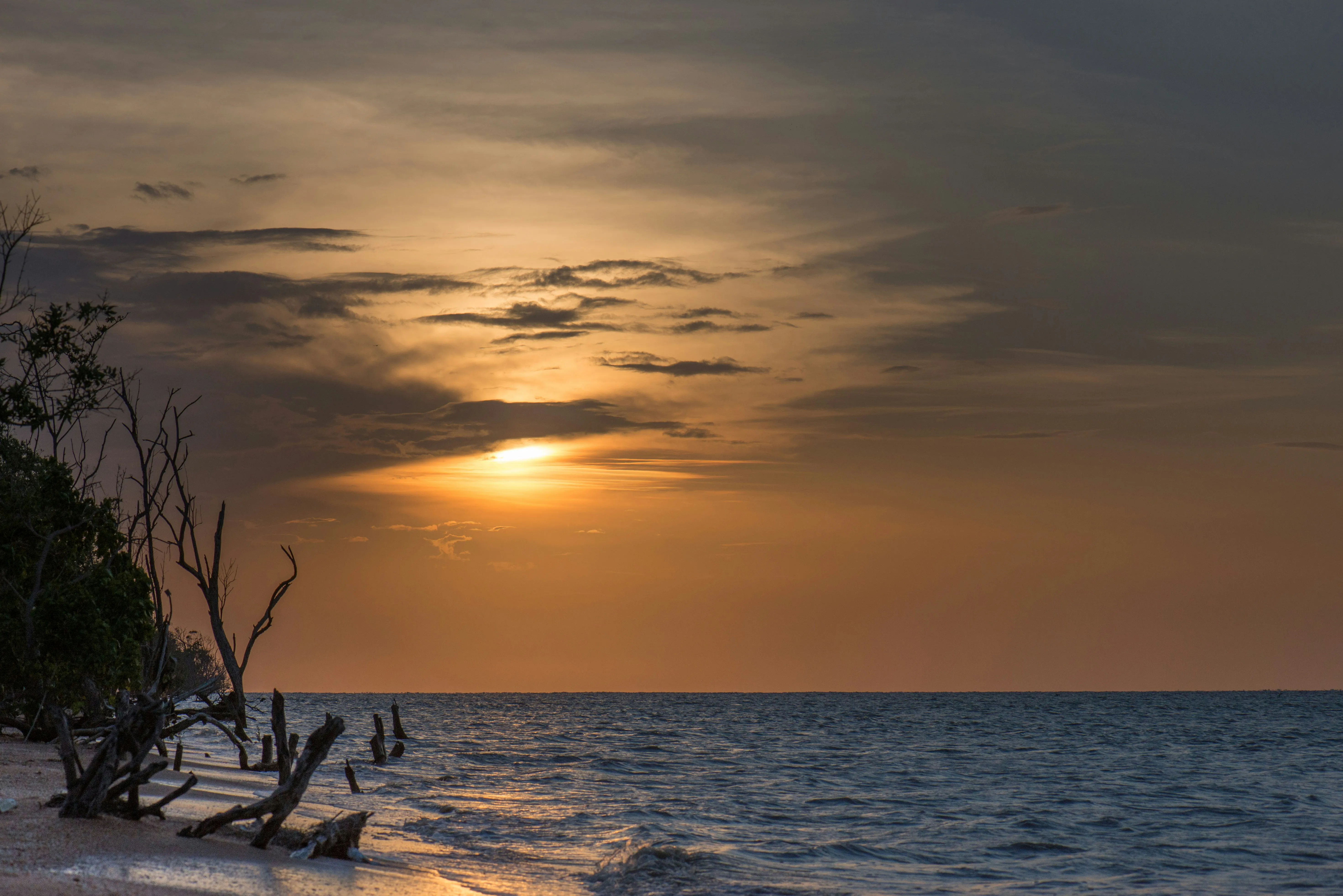
Suriname
Discover the virgin Amazon rainforest, the cultural diversity of Paramaribo, and a unique gastronomy that fuses Indian, African, and Javanese influences in South America.
Quick Facts
- Capital
- Paramaribo
- Language
- Dutch
- Sranan Tongo, Hindi, Javanese, and English
- Currency
- Surinamese Dollar (SRD)
- Best time to visit
- From February to March and from August to November
- Budget per day
- $40 - $120 per day
- Climate
- Warm and humid tropical climate throughout the year, with constant temperatures and abundant rainfall distributed across two annual seasons.
- Connectivity
- medium
- Easy to obtain at airports and official stores of local operators such as Telesur or Digicel.
- Electricity
- Type A/B/C/F (127V / 220V)
- Local transport
- limited
- Card usage
- more cash is used
- Tipping
- optional
🌎 Introduction
Overlooking the Atlantic and embraced by a jungle that seems endless, Suriname unfolds as a corner of South America where water and vegetation set the pace of life. In this territory, rivers are the true highways, and the murmur of the tropical forest accompanies daily life, offering a landscape that changes subtly with the passing of the seasons. It is a place where nature feels present in every corner, from the extensive reserves of the interior to the coasts where the tides dictate their own times.
Walking through the streets of Paramaribo, one perceives a coexistence of cultures that has been naturally forged over the centuries. The colonial-style wooden architecture is intertwined with the aroma of spices emanating from the markets, where it is common to find dishes with Javanese, African, or Indian roots sharing space. This mix is also reflected in the hospitality of its people and in a diverse identity that is celebrated daily, whether in the tranquility of an afternoon by the river or during the festivities that fill the neighborhoods with color.
Far from the capital, life flows more slowly in the communities that simply guard the traditions of their ancestors. The connection with the land is fundamental here, maintaining a balance between local customs and a well-preserved natural environment. It is a country with its own serene personality, defined by the richness of its human mosaic and the immensity of green landscapes that still seem to hold many of their secrets.
🛡️ General safety
Suriname is a destination that, in general terms, offers a safe and welcoming experience for the international traveler. The country is characterized by a peaceful and multicultural environment, which translates into a moderate safety level, comparable to other developing countries in the region. It is not considered a high-risk destination, but it does require the tourist to maintain a vigilant attitude and apply common sense at all times.
The context for the traveler is that of a country with a growing tourism infrastructure, where most visits take place without incident. However, as in any part of the world, there are contrasts between urban areas and rural or jungle areas that should be known before starting the journey.
Crime and common risks
Crime in Suriname usually manifests primarily in the form of petty property crimes, affecting both locals and visitors.
- Theft and snatching are the most frequent incidents, especially in crowded places or high-traffic areas.
- Thefts from vehicles can occur if valuables are left in sight, even in areas that seem quiet.
- Tourist scams are not widespread, but there may be cases of overcharging for informal services or unofficial currency exchanges.
- Although rare, cases of robbery with intimidation have been reported in isolated areas of the capital after dark, so it is recommended to avoid walking alone in poorly lit areas.
Safety in cities and tourist areas
The capital, Paramaribo, is the central hub for tourism and is generally safe during the day, especially in its UNESCO-protected historic center.
- In tourist neighborhoods and the city center, there is a police presence, which increases the feeling of safety.
- Extreme caution should be exercised in areas such as the Palm Garden (Palmentuin) after sunset, as lighting is scarce and it is often frequented by homeless people.
- Public markets are places of great interest, but the bustle makes it easy for pickpockets to operate. Always keep your belongings in front of you.
- In inland areas (the jungle), the risk of crime is virtually zero, as local communities are very protective of visitors, although risks here are usually more linked to the natural environment.
Transport safety
Transport in Suriname presents specific challenges that travelers should consider to move around peacefully.
- Public transport consists mainly of private minibuses. Although inexpensive, they can be confusing for tourists and sometimes exceed speed limits.
- For urban trips, it is most recommended to use official taxis or services recommended by the hotel. It is essential to agree on the fare before getting in, as they usually do not use meters.
- Regarding driving, it is vital to know that in Suriname people drive on the left. Main roads are in good condition, but secondary roads and routes to the interior may be unpaved and become dangerous after rain.
- If you rent a vehicle, exercise extreme caution with potholes and signage, which is sometimes poor.
Natural and climatic risks
Suriname enjoys a geographical location that keeps it outside the hurricane belt, and earthquakes are extremely rare. However, the tropical climate carries its own risks.
- Extreme heat and humidity are constant throughout the year. It is vital to stay hydrated and protect yourself from the sun to avoid heatstroke.
- Flooding is the most common natural risk, especially during the two rainy seasons (April to August and December to January). At these times, some streets in Paramaribo can flood quickly.
- In jungle areas, the main risk is wildlife and insect-borne diseases, so the use of repellent and appropriate footwear is mandatory.
Local legislation and norms
Compliance with local laws is fundamental to avoid serious problems during the stay.
- Suriname has extremely strict laws against drug trafficking and consumption. Prison sentences are severe and conditions in detention centers are difficult.
- It is mandatory to always carry an official identification (or a photocopy of the passport).
- Environmental protection is a priority; it is forbidden to extract protected flora or fauna species, which can lead to high fines.
- Regarding social behavior, although Surinamese are tolerant, it is recommended to dress with some modesty when visiting religious buildings or remote rural communities.
Safety for specific groups
- Female travelers: Suriname is considered a safe destination for women traveling alone, although they may receive unwanted attention or comments on the street. It is recommended to avoid walking unaccompanied in lonely areas at night.
- LGTBIQ+ travelers: Although homosexuality is legal, Surinamese society remains conservative in this aspect. Public displays of affection are not common, and discretion is recommended to avoid uncomfortable or discriminatory situations.
- Children and seniors: The country is welcoming to families, although the lack of level sidewalks and the intense heat can make it difficult for strollers or people with reduced mobility to move.
Emergencies and assistance
In case of needing immediate help, these are the basic protocols:
- The general emergency number (Police, Fire, and Ambulance) is 115.
- The tourist police are usually friendly and willing to help, although the bureaucratic process for reporting a theft can be slow.
- In case of loss of documents or serious incidents, the corresponding embassy or consulate should be contacted immediately.
- It is strongly recommended to travel with comprehensive health insurance, as high-quality health services are private and can be expensive.
Tip: Avoid carrying large amounts of cash or flashy jewelry in plain sight and always use your accommodation’s safe to store original travel documents.
📝 Entry requirements
To organize a trip to Suriname, the first fundamental step is to have a valid passport. It is recommended that this document has a residual validity of at least six months from the planned date of arrival in Surinamese territory. Additionally, it is convenient to have enough blank pages for the entry and exit stamps that migration authorities usually stamp at border posts.
Regarding access permits, most international travelers usually require the payment of an entry fee or the prior attainment of a tourist visa. This process usually allows a stay for recreational purposes for up to 90 days, although it is prudent to verify the duration granted at the time of arrival. It is common for control personnel to request the presentation of a return ticket or departure to a third destination, as well as proof of sufficient financial funds to cover expenses during the stay in the country.
Controls at airports and land border points are usually exhaustive. It is recommended to declare any amount of cash exceeding the limits established by local regulations to avoid inconveniences. Likewise, it is advisable to carry the corresponding medical prescriptions if traveling with specific medications, as customs authorities may request justification for their possession. The entry of products of animal or plant origin without the proper phytosanitary permits is generally restricted.
From a health point of view, prevention is key when visiting this region. There is a possibility that an international certificate of vaccination against yellow fever will be requested, especially if the traveler has previously passed through areas where this disease is considered endemic. It is very useful to have travel insurance with broad medical coverage to ensure a peaceful stay in case of any health contingency.
- Essential documentation: Passport with a minimum validity of six months and free pages.
- Entry authorization: Payment of the tourist fee or visa processing before the trip.
- Stay period: Usually a maximum of 90 days is allowed for leisure activities.
- Additional proof: Departure ticket from the country and proof of financial solvency.
- Customs regulations: Control of prescription medications, fresh products, and currency limits.
- Health requirements: Yellow fever vaccination certificate depending on the previous itinerary.
- Travel safety: Recommendation to have an international medical insurance policy.
🏥 Basic health considerations
You will find that health infrastructure in Suriname is concentrated almost exclusively in its capital, Paramaribo. In the rest of the territory, especially if you plan to venture into jungle and river areas, medical services are much more basic or directly non-existent. The public system is usually quite saturated, so as a traveler you will most likely end up going to private clinics. These offer higher quality care and much shorter waiting times, although you should keep in mind that prices can be high for foreigners. Regarding language, although the official language is Dutch, in most private centers you will be able to communicate in English with the medical staff without major complications.
Although it is not a legal requirement to enter the country, having travel medical insurance is something you should consider as essential. It is fundamental that your policy includes broad coverage for hospitalization, surgical interventions and, above all, medical repatriation. If you were to have a serious health problem in a remote area, the transfer to the capital or back to your place of origin could be extremely expensive if you do not have the backing of an insurer.
Before setting out, it is wise to check if you need the yellow fever vaccine. This is usually mandatory if you come from a country where the disease is endemic, so they may ask for the international vaccination certificate upon landing. Beyond this, it is always a good idea to have your regular vaccination schedule up to date. To feel more at ease during your stay, you could consult a specialist about Hepatitis A, Hepatitis B, and Typhoid vaccines, especially if you plan to explore rural areas or try food at local stalls frequently.
If you follow any specific treatment, it is best to carry all the necessary medication for the total duration of your trip, as you may not find the same brands or compounds in local pharmacies. Always keep medications in their original packaging and accompany everything with a copy of the medical prescription or a certificate signed by your doctor. There are usually no severe legal restrictions for common-use medications, but it is always better to be cautious when passing through customs.
The main factor you will notice upon arrival is the tropical climate. Heat and humidity are constant, which can cause dehydration if you do not drink liquids continuously. Insects are the other major point to consider. You will find mosquitoes that can transmit diseases such as Dengue, Zika, or Malaria in certain regions of the interior. Using a good repellent and wearing clothing that covers the skin at sunset will be your best allies. Otherwise, you won’t have to worry about altitude sickness, as most of the territory is at low altitude.
Although in some parts of the capital tap water is considered potable, the most recommended way to avoid any gastric mishap is to always drink bottled water. As for food, the local cuisine is delicious and very varied, and you can try incredible dishes in the markets. Just make sure the place you choose has a good turnover of customers and that food is cooked to order at high temperatures. General hygiene in tourist establishments is usually acceptable, but it is always very useful to carry a hand sanitizer gel in your backpack.
In case you need urgent assistance, the phone number for medical emergencies in Suriname is the 115. You should know that the ambulance service can be somewhat slow due to heavy traffic in Paramaribo or long distances in jungle areas. In critical situations, it is sometimes much faster to move by your own means to a private hospital if you are within the urban area.
To make your stay as pleasant as possible, remember to stay hydrated at all times and do not skimp on the use of high-factor sunscreen. Always carry a small first-aid kit with disinfectant, bandages, and some basic analgesic for small contingencies. If you notice an insect bite and start to feel a fever or general malaise, do not hesitate to go to a doctor for a quick check-up. With these basic precautions, you can peacefully enjoy all the nature and culture this country has to offer.
🚌 Transport within the country
Moving around Suriname requires adapting to a different pace than other destinations. In the capital, Paramaribo, the most common means for short trips are private minibuses. These vehicles follow established routes, although they usually do not have fixed stops or rigid schedules. It is a functional system for those seeking to integrate into the local routine, although it can be somewhat confusing at first due to the lack of clear signage about the routes. It should be noted that the country does not have a railway or metro network, so land journeys are carried out exclusively by road.
To reach the most remote areas of the interior and the jungle, the options change radically. As there are no roads connecting the entire territory, the use of short-range small planes and wooden boats is fundamental. Boats are essential for navigating the rivers, which function as the main communication arteries in rural areas. These river and air journeys are what allow access to the villages and nature reserves where motorized land transport has no access.
The use of taxis is frequent in urban areas, especially for direct trips or during the night. Generally, these services do not use automatic measuring devices, so it is common to establish the details of the journey before starting. Regarding driving on your own, it is important to take into account that in this country traffic moves on the left side of the road. While the main roads are paved, the paths that lead south are usually dirt and their condition depends heavily on the weather.
Communication with drivers is usually simple because, although the official language is Dutch, the use of English is widespread in the transport sector. The general feeling for the visitor is that of a system based on flexibility and calm, where strict punctuality is not always the norm. Therefore, it is recommended to face journeys with a patient attitude, understanding that transit times can vary depending on the circumstances of the day.
Tip: It is advisable to plan transfers to rural areas with a time margin, as the departure of boats and internal flights may be conditioned by the state of the rivers or the weather.
🤵 Culture and etiquette
Surinamese society is characterized by its notable ethnic and religious diversity, which translates into a daily coexistence based on tolerance and mutual respect. When interacting with local inhabitants, a cordial greeting is essential to start any conversation or process. A handshake is the most common form of greeting between strangers, and it is customary to address elderly people or those in positions of authority with formal treatment, using titles of courtesy if known. Maintaining a moderate tone of voice in public spaces is valued positively, avoiding behaviors that might be disruptive to the calm environment that usually prevails.
Regarding time management, punctuality usually has a more flexible character in social contexts, where the pace of life can be perceived as slower. However, in professional settings, official appointments, or tourist services, it is recommended to comply with the established schedules. Regarding physical contact, this is usually measured and varies according to the familiarity between people; generally, observing the behavior of local interlocutors is the best guide to acting naturally and avoiding invading personal space unnecessarily.
Hospitality is a deeply rooted value in local culture. If an invitation to a private home is received, it is a gesture of courtesy to thank the offer, and at times, it is considered appropriate to bring a small gift for the hosts. During meals, customs can vary depending on the family’s cultural background, so it is advisable to wait for the host to indicate the start of the meal. In restaurants, tipping is not a contractual obligation, but it is received with pleasure as a recognition of the quality of service provided.
Given the coexistence of multiple creeds, religious spaces such as mosques, Hindu temples, synagogues, and churches require special attention from the visitor. It is essential to dress modestly when accessing these places, ensuring that shoulders and knees are covered. In many temples and also in private homes, it is customary to remove shoes before entering, a practice that must be observed and followed as a sign of consideration. Likewise, before taking photographs of people or their property, it is fundamental to request permission politely to respect their privacy.
“Tip”: Before entering a place of worship or a private home, observe if there is footwear at the door; removing your shoes is a simple gesture of courtesy that demonstrates great sensitivity toward local customs and facilitates harmonious interaction.
🍛 Typical gastronomy
The cuisine of Suriname is a direct reflection of its multicultural history, combining influences of African, Indonesian, Indian, Chinese, and European origin. This fusion has resulted in a varied culinary identity where rice, cassava, plantain, and legumes constitute the base of most preparations. Flavors are usually aromatic and spicy, highlighting the frequent use of coconut milk, ginger, turmeric, and the characteristic Madame Jeanette chili, which provides an intense aroma although its heat level is usually adjusted to the diner’s taste.
Eating habits in the country usually prioritize lunch as the main meal of the day. It is very common to visit warungs, small establishments of Javanese origin that offer inexpensive and comforting dishes, or street food stalls that activate at dusk. Etiquette in restaurants is generally informal and relaxed, although courtesy and patience are valued, as service usually follows a slow pace. In the interior of the country, it is possible to find more traditional ways of eating linked to local communities, where food is shared in a communal environment.
As for drinks, natural tropical fruit juices are very popular due to the abundance of local products. Also noteworthy is handcrafted ginger beer, which is consumed cold to balance the intense flavors of the main dishes. Although water is usually of good quality in urban areas, for international visitors, the consumption of bottled water is recommended. Tipping is not mandatory, but in the main city establishments, the custom of leaving a small percentage is beginning to be adopted if the service has been satisfactory.
| Dish | Description | Main ingredients | Where to try it | Tip |
|---|---|---|---|---|
| Pom | A traditionally festive baked stew with a creamy texture. | Tayer root (local cassava), chicken, citrus, and spices. | Local celebrations and Creole restaurants in Paramaribo. | It is usually enjoyed best inside a crispy roll. |
| Roti | An Indian-influenced flatbread served with various accompaniments. | Wheat flour, potatoes, chicken or goat curry meat, and long beans. | Restaurants specialized in Indian food and street stalls. | The traditional way to eat it is using pieces of bread with your hands. |
| Saoto Soup | Chicken soup of Javanese origin, light but very complete. | Chicken broth, bean sprouts, hard-boiled egg, fried noodles, and crispy potato. | Warungs (Javanese food places) throughout the country. | Add a bit of spicy soy sauce to enhance the broth. |
| Moksi Alesi | A mixed rice dish that blends different flavors and textures. | Rice, salted meat, smoked fish, vegetables, and coconut milk. | Local markets and traditional food houses. | It is a very filling dish, ideal for an energetic lunch. |
| Bakabana | A popular snack consisting of fried plantain with a light batter. | Ripe plantain, flour, and peanut sauce. | Street stalls and afternoon markets. | Always order it accompanied by the spicy peanut sauce. |
📷 Areas and places to visit
The country’s capital, Paramaribo, is the ideal starting point for understanding this nation’s identity. Its historic center, declared a UNESCO World Heritage Site, is famous for its unique wooden colonial architecture, which combines European influences with local adaptations to the tropical climate. Walking through its streets allows you to admire the Saint Peter and Saint Paul Cathedral, considered one of the largest wooden structures in the world, and Fort Zeelandia, a 17th-century fortification that today functions as a museum and offers a deep look into the region’s political and social history. The coexistence of diverse cultures is evident when observing how mosques are situated next to synagogues in the urban layout, creating an environment of respect and diversity.
Crossing the river toward the Commewijne district, the landscape transforms into a rural environment marked by its agricultural past. In this area, it is possible to visit former coffee and sugar plantations, such as Frederiksdorp or Mariënburg, where original infrastructures are preserved that narrate the era of colonial production and the arrival of immigrants from various parts of the world. Exploring these lands by bicycle or through quiet boat crossings allows you to enjoy a slow pace of life, surrounded by canals and vegetation that is beginning to gain ground over the former cultivation areas.
For those seeking more direct contact with the natural environment, Brownsberg Nature Park is a reference destination. Located on a plateau, it offers trails that lead into the jungle and to various waterfalls with clear waters. From its viewpoints, panoramic views of the Brokopondo Reservoir are obtained, an immense artificial lake from which the skeletons of submerged trees emerge, creating a very characteristic visual image. It is an excellent place for wildlife observation, including various species of monkeys, tropical birds, and vibrant colored butterflies.
Following the course of the Upper Suriname River, one reaches the heart of the Maroon communities. In this region, transport is mainly carried out in traditional dugouts, navigating between rapids and dense jungle areas. Visiting the villages in this area allows you to learn about the traditions, craftsmanship, and way of life of the descendants of slaves who settled in the interior centuries ago. Activities here focus on community tourism, rainforest hikes, and the experience of staying in accommodations fully integrated into the jungle landscape, far from urban noise.
In the western coastal zone is the Bigi Pan reserve, an extensive wetland that serves as a refuge for thousands of birds. Boat trips through its lagoons and mangroves are the main activity, highlighting the presence of scarlet ibises and various migratory birds that color the sky at sunset. To the east, near the border, the Galibi reserve is fundamental for observing sea turtles, which choose these beaches for their annual nesting, a natural process that takes place under strict conservation measures to protect these species.
Finally, the Central Suriname Nature Reserve represents one of the most important areas of virgin jungle on the planet. Inside is Voltzberg, an imposing granite dome that rises above the thick forest. Ascending this rock formation allows you to contemplate the immensity of the jungle from above, an experience that is usually complemented by a visit to the Raleighvallen Falls on the Coppename River. This environment is ideal for those who wish to experience nature in its purest state, undertaking excursions that require an active spirit and a genuine interest in biodiversity.
“Tip”: You cannot miss visiting the historic center of Paramaribo, the most emblematic place in the country.
✈️ Best time to travel
Suriname has a tropical climate characterized by constant temperatures and high humidity throughout the year. Located near the equator, the country does not experience the four traditional thermal seasons, but instead alternates between dry periods and rainy periods. This climatic variability sets the pace for outdoor activities, the flow of rivers, and the ease of accessing the deeper parts of the Amazon jungle.
The choice of date depends largely on the type of experience sought. While the drier months facilitate hiking, land transport, and wildlife observation, the rainy seasons transform the landscape, allowing rivers to be more navigable to reach waterfalls and remote communities. Regardless of the month, the environment always remains green and vibrant, offering an experience of immersion in nature.
| Season | Months | Typical climate | What to expect | Tourist influx |
|---|---|---|---|---|
| Spring | Mar – May | Warm and humid with transition to heavy rains. | Start of sea turtle nesting season and very green landscapes. | Medium ⭐⭐ |
| Summer | Jun – Aug | Frequent rainfall and high humidity levels. | High-flow rivers ideal for navigation and visits to large waterfalls. | Medium-Low ⭐ |
| Autumn | Sep – Nov | Mostly dry, sunny, and with higher temperatures. | Optimal conditions for hiking and animal sightings in the jungle. | High ⭐⭐⭐ |
| Winter | Dec – Feb | Moderate rains and somewhat milder temperatures. | Local cultural celebrations and a festive atmosphere in urban areas. | Medium-High ⭐⭐ |
🗣️ Basic vocabulary
Although Dutch is the official language of Suriname, Sranan Tongo is the language usually spoken on the streets and acts as a link between its different ethnic groups. Knowing some basic words and phrases in this local language will be very useful for getting by in day-to-day situations, such as greeting, thanking for a service, or navigating markets.
Using these simple expressions will help you communicate more fluently and closely during your trip, facilitating interaction in shops and transport. It is not necessary to master the grammar, as local inhabitants value the efforts of visitors to use their lingua franca in daily situations.
- Fa waka?: How are you? or How’s it going?
- Bun: Good or fine.
- Grantangi: Thank you.
- Pleezi: Please.
- Iya: Yes.
- Nono: No.
- Omeni a e kosti?: How much does it cost?
- Adjosi: Goodbye