


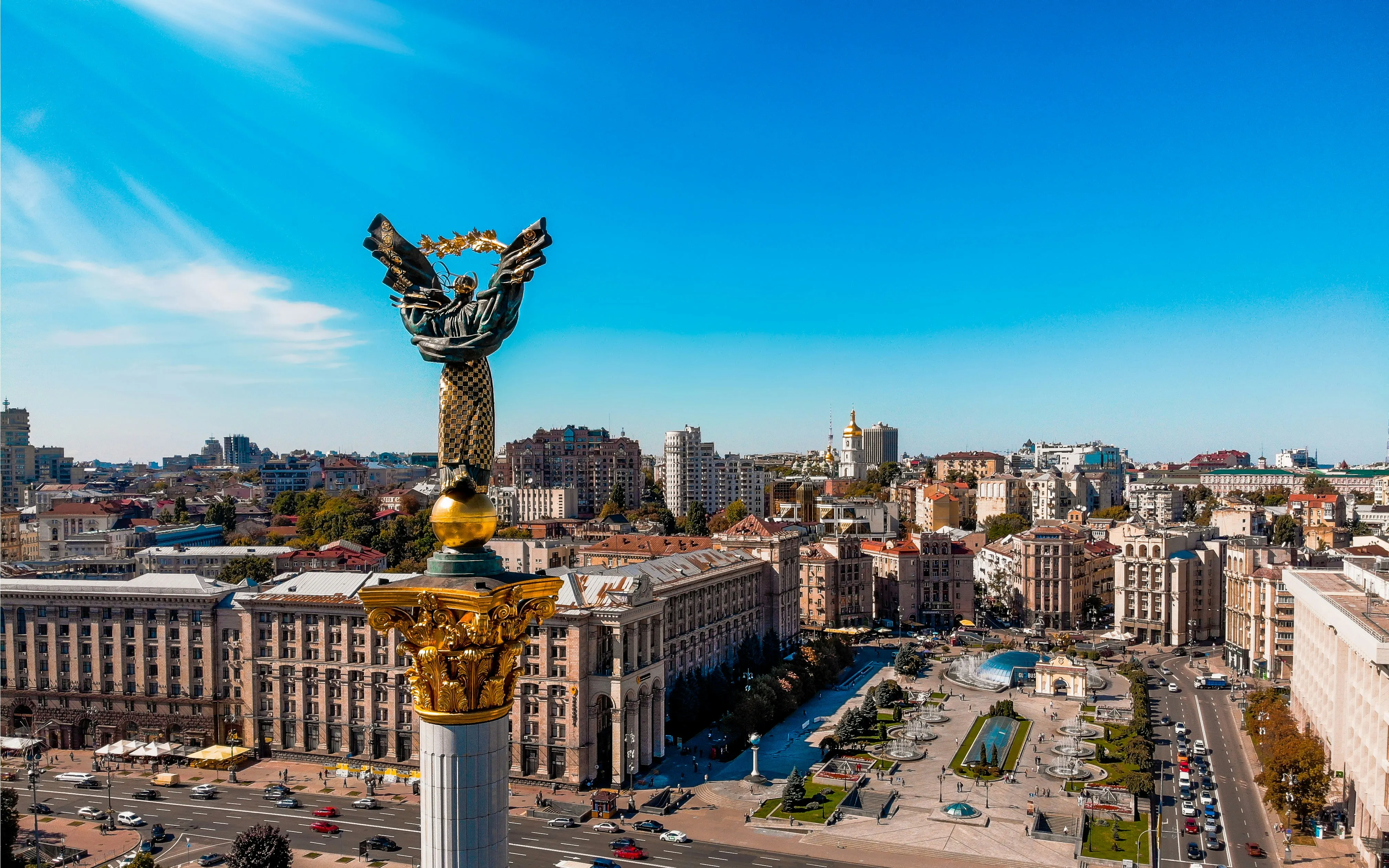
Ukraine
Ukraine offers a captivating blend of Orthodox history, vibrant architecture, and diverse natural landscapes, inviting visitors to discover its rich cultural heritage with serenity and wonder.
Quick Facts
- Capital
- Kyiv
- Language
- Ukrainian
- Russian and English
- Currency
- Hryvnia (UAH)
- Best time to visit
- From May to June and from September to October for the temperate climate.
- Budget per day
- $30 - $80 per day
- Climate
- Temperate continental with cold winters and warm summers, featuring brief but very colorful intermediate seasons throughout the territory.
- Connectivity
- medium
- Very easy to obtain SIM and eSIM cards in phone stores and kiosks.
- Electricity
- Type C/F (230V)
- Local transport
- acceptable
- Card usage
- widespread
- Tipping
- optional
🌎 Introduction
Ukraine unfolds as an extensive mosaic of landscapes where the seasons clearly mark the rhythm of daily life. From the plains that turn golden in summer to the presence of forests in the Carpathian Mountains, the territory offers a varied and serene geography. In its cities, the pulse of modernity coexists with traditional markets where the aroma of freshly baked bread and seasonal products remain the protagonists, reflecting a simple gastronomy based on the fruits of especially fertile land.
The country’s identity is perceived in the details, such as the characteristic embroidery worn during celebrations or the light reflected in the domes of its historic centers. It is a place of deep-rooted traditions and quiet hospitality, where the passage of time seems to stop in urban parks and small villages. Strolling through its streets allows a glimpse into a culture that, without renouncing its history, maintains a natural balance between the heritage of its ancestors and the current life of its people.
🛡️ General safety
Ukraine is a country that, under normal conditions, offers a welcoming experience for the visitor, although its security situation is currently marked by the ongoing armed conflict. In general terms and from a historical perspective, the safety level for tourists has been considered medium, similar to that of other Eastern European countries, where common sense is the traveler’s best tool.
- General assessment: In the current context, safety is subject to the evolution of the armed conflict, which significantly raises the risk throughout the territory. In times of stability, the country is mostly safe for those visiting major cities.
- Guidance comparison: It is at a high risk level due to the current geopolitical situation, although common crime (unrelated to the conflict) remains at moderate levels compared to other large European capitals.
- Context for the traveler: It is fundamental to understand that the country is under martial law, which implies movement restrictions, curfews, and a constant presence of security forces that the traveler must respect at all times.
Common crime and risks
Crime affecting tourists in Ukraine is usually non-violent and primarily motivated by carelessness.
- Theft and pickpocketing: These are the most frequent crimes, especially in crowded places such as train stations, open-air markets, and public transport.
- Scams in establishments: In some nightlife areas or very touristy restaurants, there may be cases of inflated prices or unexpected charges on the bill. It is recommended to always check the menu with prices before consuming.
- Cybersecurity: Caution is recommended when connecting devices to public Wi-Fi networks and avoiding bank transactions on open networks.
- Infrequent risks: Although uncommon, incidents of credit card fraud can occur at ATMs located on the street; it is preferable to use those inside bank branches.
Safety in cities and tourist areas
Urban centers of cities like Kyiv, Lviv, or Odesa have active surveillance, creating a sense of security during the day.
- Urban centers: Historic and pedestrian areas are usually well-lit and patrolled. They are safe areas to walk, always paying attention to personal belongings.
- Peripheral neighborhoods: As in any large city, it is recommended to avoid remote or poorly lit residential areas at night if they are not well known.
- Practical recommendations: It is advisable to move along main arteries and avoid parks or abandoned industrial areas after sunset.
Transport safety
The transport system in Ukraine is extensive and functional, allowing travel over long distances economically.
- Public transport: The metro in large cities and buses are safe, although they are often very crowded. Backpacks and bags should be watched during trips.
- Taxis and private transport: It is strongly recommended to use well-known transport apps (Uber, Bolt) instead of taking taxis directly on the street. This guarantees a fixed price and a record of the journey.
- Driving: In Ukraine, people drive on the right. The condition of the roads can vary considerably between main highways and secondary roads, which often have potholes.
- Traffic rules: Traffic police are strict regarding alcohol consumption (zero tolerance). It is recommended to drive with caution due to the local driving style, which can be more aggressive than usual.
Natural and climatic risks
Ukraine is not a country prone to extreme natural disasters, but its continental climate requires some preparation.
- Extreme heat: During the months of July and August, temperatures can exceed 35°C, especially in the south and center, requiring constant hydration.
- Severe winters: Winter (from December to March) is very cold, with temperatures frequently below zero and heavy snowfall. Ice on sidewalks is a real risk for falls, and road travel can be difficult.
- Flooding: In the Carpathian region, during spring and due to snowmelt, localized flooding can occur.
Legislation and local norms
Compliance with local regulations is essential to avoid legal problems during the stay.
- Identification: It is mandatory to always carry an original passport. Authorities may request it at any time, and not carrying it can lead to administrative detention.
- Prohibited photography: It is strictly forbidden to photograph or record military installations, checkpoints, government buildings, or critical infrastructure (bridges, tunnels). Non-compliance can lead to equipment confiscation or arrest.
- Prohibited substances: Laws against drug trafficking and consumption are very severe, with prison sentences of several years even for small amounts.
- Martial Law: Respecting the curfew is mandatory. During these hours, you cannot circulate on public roads under any circumstances.
Safety for specific groups
- Solo female travelers: Ukraine is generally safe for women traveling alone. It is recommended to follow standard precautions, such as avoiding lonely places at night and using trusted transport apps.
- LGTBIQ+ travelers: Although society is increasingly open in large cities and cultural environments, conservative attitudes still exist. Discretion is recommended in rural areas or outside the modern circuits of the capitals to avoid incidents.
- Seniors and children: The country is respectful of families. The main challenge for these groups is accessibility, as many old metro stations and sidewalks are not adapted for strollers or reduced mobility.
Emergencies and assistance
In case of needing urgent help, these are the numbers and procedures to follow:
- 101: Fire Service.
- 102: Police.
- 103: Ambulance and medical emergencies.
- 112: General emergency number (available in some regions with assistance in several languages).
In case of an incident, you should go to the nearest police station to file a report (zayava). It is highly recommended to have comprehensive travel insurance that includes medical evacuation and covers conflict situations, given the current context of the country.
Tip: Always download local safety alert apps on your phone and locate the nearest shelters to your accommodation as soon as you arrive in a city.
📝 Entry requirements
To undertake a trip to Ukraine, the fundamental requirement is to possess a valid passport. It is a recommended practice that this document has a minimum validity of several months after the planned date of departure from the territory, thus ensuring that no inconveniences arise during the stay.
In terms of access permits, many international travelers can benefit from a visa exemption for short stays for tourism purposes. Generally, this permit allows staying in the country for a maximum period of up to 90 days within a determined time interval. However, for those cases that do not fall under this modality, it is necessary to process a tourist visa prior to the start of the journey.
Upon arriving at border control points, authorities may request the presentation of an exit ticket, either back to the place of origin or to a third destination, as proof of the intention to comply with the permitted stay periods. Likewise, it is common to be required to demonstrate possession of sufficient economic funds to cover all expenses derived from the visit and accommodation.
Customs controls are governed by standard regulations that the traveler must consider for a smooth entry. Personal items are usually inspected, and there are specific regulations regarding the entry of certain products. It is important to pay attention to the following common elements in controls:
- The transport of medications must be justified for personal use, and it is advisable to have documentation supporting it if they are specific substances.
- There are established limits for the entry of tobacco and alcohol, similar to international customs standards.
- The introduction of fresh food products may be restricted by phytosanitary safety regulations.
- Cash currencies exceeding certain thresholds must be declared upon entry to avoid complications when leaving the country.
From a health perspective, mandatory vaccinations are not usually required for tourists visiting the country. However, it is recommended to keep the general vaccination schedule up to date. Having travel medical insurance with international coverage is a highly advisable measure to ensure assistance in the event of any contingency during the stay at the destination.
Below are the main aspects to consider for access to the territory:
- Travel document: Passport with sufficient validity.
- Stay permit: Visa exemption or tourist visa as applicable.
- Allowed time: Generally up to 90 days for tourism.
- Additional documentation: Proof of departure and financial solvency.
- Health: Recommendation of medical insurance and routine vaccines.
🏥 Basic health considerations
When preparing your trip to Ukraine, you will see that the country has a health network that combines public and private systems. In major cities like Kyiv, Lviv, or Odesa, you will find modern private clinics with international standards. However, in rural areas, resources may be more limited. The cost of private medicine is affordable compared to other countries, but it is still better to be prepared. Regarding language, in private centers, it is very likely you will find staff who speak English, although in public hospitals, Ukrainian or Russian is standard.
Regarding travel medical insurance, you should know that having one is mandatory to enter the country as a tourist. It is essential that your policy includes coverage for hospitalization, medical transfers, and repatriation. It will give you great peace of mind to know that any unforeseen event will be covered without you having to pay large sums of money out of pocket in an emergency.
Regarding vaccines, there are none that are mandatory to enter by law, but it is always a smart decision to have your routine vaccination schedule up to date, including tetanus, diphtheria, and MMR. If you plan to do a lot of hiking or spend time in forested areas and lots of nature, you might consider the vaccine against tick-borne encephalitis, although it is best to consult with a medical professional before your departure for guidance according to your itinerary.
If you need to take personal medication, remember to always transport it in its original packaging and accompanied by the corresponding medical prescription, preferably translated into English. Ukraine maintains strict controls over certain substances, especially those containing psychotropic or narcotic components. In those cases, it is vital that you carry an official medical certificate justifying its use to avoid problems when passing through customs.
Regarding the most common health risks, climate is the main factor. During winter, the cold can become very intense, so you should protect yourself well to avoid hypothermia. In the summer and spring months, if you move through rural areas or lush parks, the greatest risk is ticks. Otherwise, you will not find risks of tropical diseases, and public health levels are reasonable.
Regarding hygiene and food, we recommend that you always drink bottled water, as tap water quality can vary greatly by area and is not always suitable for consumption. You can enjoy the delicious local food safely in most establishments, as the general level of hygiene is good, although it is always a good idea to use common sense when choosing very informal street food sites.
If you find yourself in a medical emergency situation, the phone number you should dial to request an ambulance is 103. The emergency service works correctly, although you should keep in mind that in urban areas the response speed will always be faster than in remote areas.
As final practical recommendations, I suggest you carry a small first-aid kit with basic items like painkillers, bandages for chafing, and some stomach protector. Staying well hydrated and using sunscreen if you travel in hot months will help you enjoy all the cultural richness of this destination without health setbacks.
🚌 Transport within the country
The train constitutes the backbone of transport for travelers wishing to move between major cities. The railway network is extensive and offers different types of services that connect urban centers regularly. For travel between smaller towns or areas where the railway does not reach, the bus and interurban van services are the most common resource, covering transverse routes frequently.
The ease of use of public transport is notable in large population centers. Signage at major stations usually includes transcriptions into the Latin alphabet, which facilitates the orientation of international visitors. Ticket purchases can be made easily at station ticket offices or through digital platforms. In larger cities, the metro presents itself as a fast and efficient option to avoid urban traffic, complemented by networks of trams and trolleybuses.
The contrast between metropolitan areas and rural zones is significant. While transport in cities is constant and diversified, in rural environments the frequency is usually lower and vehicles may be simpler. On the other hand, the use of taxis and mobility apps is widespread throughout the country, representing a comfortable and direct alternative for short door-to-door trips.
Regarding the traveler’s experience, the punctuality of railway services is usually a positive aspect, allowing itineraries to be organized with confidence. Although the country has infrastructure for domestic flights between more distant points, land transport is preferred by those seeking to observe the surroundings. The general feeling is that of a functional system that, with basic planning, allows for effective travel across the territory.
“Tip”: Always check the name of destinations in both the local and Latin alphabets to facilitate route identification at stations.
🤵 Culture and etiquette
In Ukraine, social interactions usually begin with a tone of formality and courtesy that quickly transforms into great hospitality once a bond of trust is established. When greeting, the most common gesture is a firm handshake while maintaining eye contact, especially in professional contexts or between men. In public settings, such as transport or streets, discreet and moderate behavior predominates, so a low voice volume is usually preferred to maintain the harmony of the shared space.
Punctuality is valued positively and is considered a sign of respect for others’ time, both in business meetings and social dates. If you receive an invitation to visit a private home, it is a fundamental custom to remove your shoes upon entering to maintain the cleanliness of the dwelling; usually, hosts will offer house slippers to their guests. It is a highly appreciated gesture of courtesy to bring a small gift, such as sweets or flowers, as a token of gratitude for the invitation.
In the culinary field, meals are moments of conviviality and generosity. In dining establishments, it is standard to leave a tip of around 10% of the total bill if the service was satisfactory. During toasts, it is frequent for words of good wishes to be dedicated to those present, always maintaining an attitude of attentive listening and participation in the group conversation.
Respect for traditions and religious sites is a relevant aspect of daily life. When visiting Orthodox churches, it is recommended to dress decorously and modestly. In many of these temples, it is common for women to cover their heads with a scarf and for men to uncover their heads and avoid excessively informal clothing. Maintaining a silent and respectful attitude in these spaces allows for observing the ceremonies and architecture without interfering with the devotion of the faithful.
Tip: If you decide to give flowers, always ensure the number is odd, as bouquets with even quantities are traditionally reserved for funerals and mourning.
🍛 Typical gastronomy
The cuisine of Ukraine is based on the products offered by its fertile land, resulting in a hearty, varied, and comforting culinary proposal. Flavors are usually natural and balanced, with extensive use of ingredients such as beetroot, cabbage, potatoes, and grains. The star accompaniment in most dishes is smetana, a thick sour cream that adds smoothness to stews and soups. Fresh dill, garlic, and sunflower oil are the aromatic pillars that define the taste profile of its traditional recipes.
Local eating habits usually follow a slow pace, giving great importance to lunch, which is traditionally the main meal of the day. It is common to start with a hot soup, followed by a meat dish or filled pasta. Bread holds a sacred place at the table and is considered a symbol of hospitality and respect; it is common to find a wide variety of artisanal rye or wheat breads accompanying every service. In restaurants, etiquette is simple and friendly, with calmness valued during the post-meal conversation.
In the drinks section, traditional options are very representative of the local culture. Uzvar, an infusion made with dried and smoked fruits, is the preferred alternative for refreshing or accompanying desserts. Kvass also stands out, a fermented drink made from rye bread that is very popular in the summer months. On special occasions and celebrations, horilka is the distilled beverage par excellence, usually served very cold and accompanied by small salty snacks to contrast its intensity.
| Dish | Description | Main Ingredients | Where to try it | Tip |
|---|---|---|---|---|
| Borscht | The country’s most iconic soup, deep red in color and slightly sweet in flavor. | Beetroot, cabbage, potatoes, meat, and a touch of smetana. | Traditional cuisine restaurants throughout the country. | Always accompany it with pampushky, which are tender rolls with garlic oil. |
| Varenyky | Small pasta doughs filled, similar to dumplings, boiled in water. | Potato, cheese, mushrooms, or even cherries in the sweet version. | Local taverns, cafes, and specialized establishments. | Order a generous portion of sour cream to dip them one by one. |
| Holubtsi | Cabbage leaf rolls slow-cooked in a mild sauce. | Cabbage leaves, rice, minced meat, and tomato sauce. | Traditional dining rooms and homemade food markets. | It is a dish that gains flavor if left to rest, ideal for a quiet lunch. |
| Deruny | Grated potato pancakes fried until golden and very crispy. | Potatoes, onion, egg, and flour. | Breakfasts or as a side dish in any regional restaurant. | Enjoy them freshly made to appreciate the contrast between the crispy exterior and tender interior. |
| Chicken Kyiv | Boneless and breaded chicken breast that hides a liquid surprise inside. | Chicken breast, herb-flavored butter, and breadcrumbs. | Major city restaurants and hotels. | Be careful when making the first cut, as the melted butter usually comes out hot. |
📷 Areas and places to visit
The heart of Ukraine beats strongly in Kyiv, its capital, a metropolis where millenary history coexists with contemporary dynamism. Strolling through its streets, it is impossible not to fix one’s gaze on the golden domes that define its urban profile. Saint Sophia Cathedral, with its ancient mosaics and frescoes, and the Kyiv Pechersk Lavra (Monastery of the Caves), an extensive complex of churches and underground catacombs, are fundamental points for understanding Eastern European spirituality and art. Additionally, neighborhoods like Podil, the old merchants’ district, offer a more bohemian atmosphere with their cobblestone streets and squares that invite a leisurely walk.
Towards the west lies Lviv, a city that seems frozen in time and shows a very different side of the country. Its old town, recognized for its architecture of Central European, Polish, and Austro-Hungarian influence, is a labyrinth of alleys that converge at the Market Square. Here, coffee culture is an essential part of daily life, and it is common to enjoy outdoor musical or artistic festivals. The Lviv Opera House stands out as one of the most elegant buildings in the region, being a nerve center for the performing arts.
If we seek a different environment, the south of the country opens to the Black Sea with the port city of Odesa. Known for its cosmopolitan atmosphere and neoclassical architecture, it offers a mix of urban life and sea breeze. The famous Potemkin Stairs connect the city center with the port area, while the Opera and Ballet Theater competes in beauty with the best in Europe. Its beaches and tree-lined boulevards provide a much-valued relaxation space during the months of milder temperatures.
For lovers of nature and rural tourism, the Carpathian Mountains in the southwest represent the green lung of the territory. This area is ideal for hiking routes in summer or enjoying snowy landscapes in winter. In its valleys, ancestral traditions of the Hutsul culture are preserved, and it is possible to visit villages where wood handicrafts and local markets remain protagonists. Spots like Lake Synevyr, located at high altitude, offer a picture of serenity surrounded by dense coniferous forests.
Medieval history also holds a prominent place in cities like Kamianets-Podilskyi, famous for its impressive medieval fortress situated above a natural canyon. This castle is one of the best-preserved examples of military architecture in the area. Similarly, the city of Chernihiv, north of the capital, houses some of the oldest churches in the region, dating back to the Kyivan Rus era, allowing the visitor a journey back in time through its brick and stone walls.
Regarding the cultural and museum offer, the country has a wide variety. The National Art Museum of Ukraine allows for tracing the country’s aesthetic evolution, while open-air museums of folk architecture, such as Pirogovo near the capital, offer a detailed view of traditional dwellings and mills from different regions. These spaces are perfect for understanding the ethnographic diversity and customs that have shaped local identity over the centuries.
“Tip”: You cannot miss visiting the Monastery of the Caves in Kyiv, the most emblematic place in the country.
✈️ Best season to travel
Ukraine has a temperate continental climate that offers very different experiences depending on the time of year. The choice of the ideal moment for the visit depends largely on the traveler’s interests, as the country transforms its landscape and cultural offerings with each change of season. While the warmer months invite exploration of nature and coastal areas, the cold brings a quiet atmosphere and snow-covered landscapes.
Generally, the periods of late spring and early autumn tend to be the most balanced for urban tours and outdoor activities. During these months, temperatures are mild and allow for comfortable walking through cities without the intense summer heat or winter frosts. Additionally, daylight is sufficient to make efficient use of visiting days.
| Season | Months | Typical climate | What to expect | Tourist influx |
|---|---|---|---|---|
| Spring | Mar – May | Transition from cold to mild temperatures (10°C - 20°C). | Chestnut trees blooming, very green urban parks, and longer days. | Medium (⭐⭐) |
| Summer | Jun – Aug | Warm and occasionally hot, with highs exceeding 25°C. | Outdoor festivals, lively atmosphere on the coast, and hiking routes. | High (⭐⭐⭐) |
| Autumn | Sep – Nov | Cool and dry at the start, turning cold and damp towards the end. | Golden-colored landscapes in the forests and intense cultural life in theaters. | Medium (⭐⭐) |
| Winter | Dec – Feb | Intense cold with temperatures below zero and frequent snow. | Winter sports in the mountains, traditional markets, and snowy landscapes. | Low / Medium in ski areas (⭐) |
🗣️ Basic vocabulary
Learning some basic notions of the local language will allow you to move with greater ease during your trip through Ukraine. Although in more touristy areas or among young people the use of English is common, knowing some essential words will help you manage better in everyday situations, such as making a purchase or using public transport.
Furthermore, local inhabitants usually value positively that visitors try to communicate in their language, which can facilitate a closer and smoother interaction. Here is a selection of practical terms that will be very useful in your daily life.
- Pryvit (Привіт): Hello.
- Dyakuyu (Дякую): Thank you.
- Bud’ laska (Будь ласка): Please.
- Tak (Так): Yes.
- Ni (Ні): No.
- Vybachte (Вибачте): Excuse me or sorry.
- Do pobachennya (До побачення): Goodbye.
- Rakhunok, bud’ laska (Рахунок, будь ласка): The bill, please.