


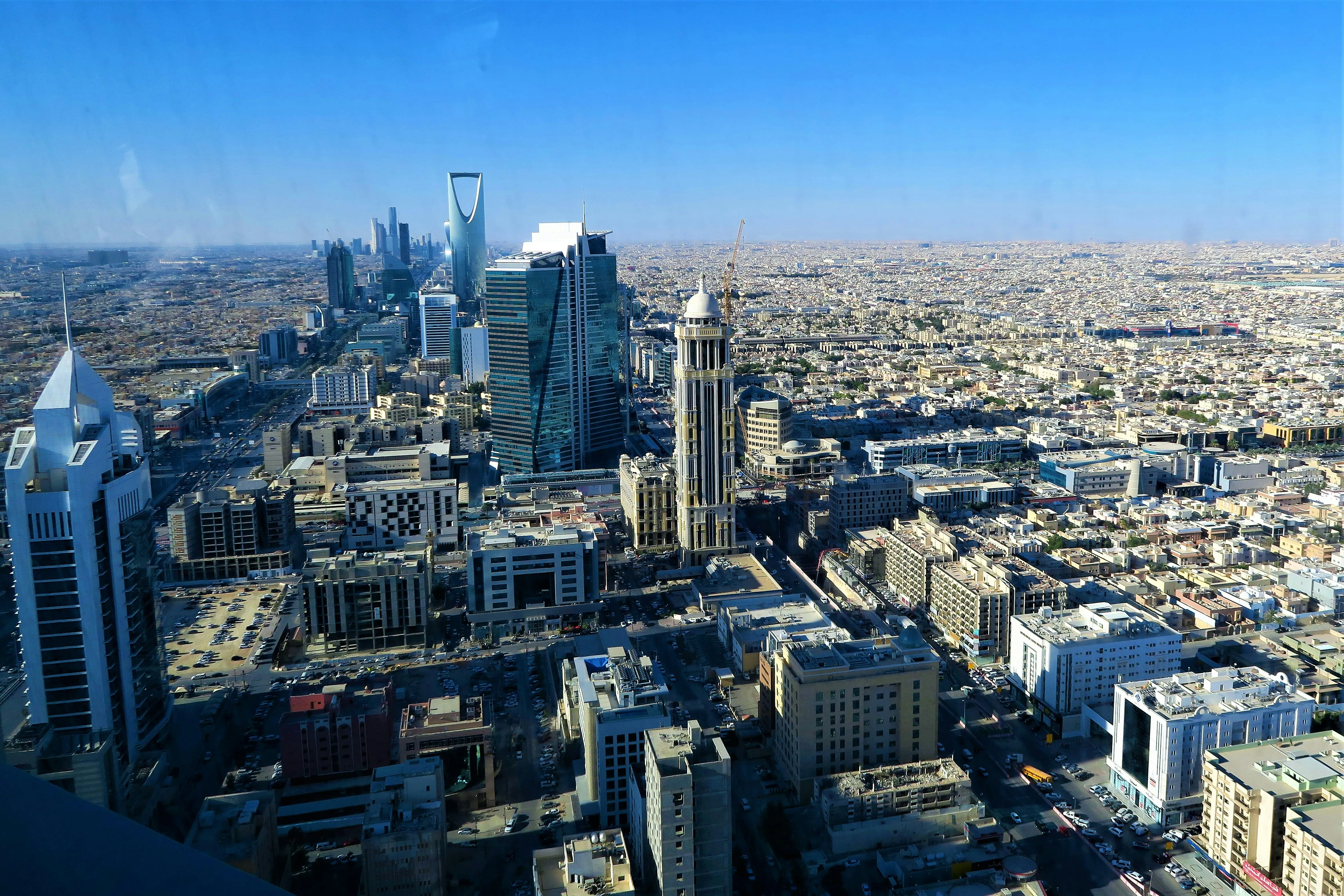
Saudi Arabia
Discover a fascinating kingdom where ancient deserts meet futuristic cities, offering a millenary cultural heritage and unique natural landscapes that always surprise.
Quick Facts
- Capital
- Riyadh
- Language
- Arabic
- English
- Currency
- Saudi Riyal (SAR)
- Best time to visit
- From November to March, when temperatures are more pleasant.
- Budget per day
- $80 - $250 per day
- Climate
- Desert with extremely hot summers and mild winters, characterized by scarce rainfall and great daily thermal oscillation.
- Connectivity
- good
- Very easy to obtain both at airports and official stores.
- Electricity
- Type G (230V)
- Local transport
- acceptable
- Card usage
- very widespread
- Tipping
- optional
🌎 Introduction
Throughout the Arabian Peninsula, the landscape unfolds between the ochre of the deserts and the deep blue of its coasts. In this territory, time seems to follow its own rhythm, marked by the wind that shapes the dunes of the Rub’ al Khali and the breeze that cools the historic ports of the Red Sea. Far from the uniform image of eternal heat, the seasons transform the environment: while winter can cover the northern mountains in white, the south offers refuges of greenery and freshness in the highlands, where traditional agriculture and flower cultivation still define the daily life of its inhabitants.
Saudi identity is perceived naturally in everyday details, such as the aroma of coffee with cardamom and the taste of dates that accompany any welcome. In its cities, avant-garde architecture coexists with souks where incense and spices remain the protagonists when the sun sets. Traditions, from falconry to local craftsmanship, remain alive in festivals that celebrate a legacy linked to ancient caravan routes. It is a place of slow contrasts, where the calm of a starry sky in the desert and the bustle of night markets reflect a society seeking balance between its history and the present.
🛡️ General Safety
Saudi Arabia currently positions itself as one of the destinations with the highest safety levels for international tourists. The country has undergone a significant opening to tourism in recent years, reinforcing visitor protection and maintaining a very low crime rate compared to other global destinations.
The feeling of safety in the country is of a high level. The traveler will perceive a peaceful environment, where respect for rules is fundamental and surveillance in public areas is constant but discreet. It is not necessary to adopt extraordinary self-protection measures beyond the common sense that would be applied in any other international destination.
Crime and common risks
Common crime affecting tourists is practically non-existent in most of the territory. However, as in any part of the world, it is worth keeping the following in mind:
- Petty theft or minor robberies are extremely rare due to severe legal penalties, although it is recommended to watch belongings in high-traffic areas such as traditional souks or large shopping malls.
- Scams targeting tourists are not common, but it is always advisable to agree on prices for unregulated services before they are performed.
- The risk of violent incidents is residual, allowing for peaceful walks through most neighborhoods at any time.
Safety in cities and tourist areas
Urban centers such as Riyadh, Jeddah, or Dammam, as well as the archaeological enclaves of AlUla, have a robust safety infrastructure.
- In large cities, neighborhoods are well-lit and police presence is common but not intimidating.
- Public transport, including the metro in Riyadh and bus systems, is safe and modern.
- Tourist areas are especially cared for to ensure that the visitor feels comfortable and protected.
- It is recommended to avoid industrial peripheral areas or neighborhoods excessively far from tourist circuits, not because of extreme danger, but because of the lack of services directed at the traveler.
Transport safety
Moving around Saudi Arabia is generally safe, although traffic can be a challenge for those less accustomed to it.
- The use of official taxis and ride-sharing apps (such as Uber or Careem) is the most recommended and safest option for tourists. These services are monitored by GPS and prices are regulated.
- Regarding driving, in Saudi Arabia, traffic moves on the right.
- If you decide to rent a vehicle, you should know that highways are of excellent quality, but the local driving style can be aggressive and high-speed. It is vital to maintain a safety distance and exercise extreme attention.
- Desert journeys should never be made alone or without a prepared 4x4 vehicle and proper navigation equipment.
Natural and climatic risks
The climate is the main physical risk factor for the traveler in this country.
- Extreme heat is the most relevant risk, especially between the months of May and September, when temperatures can exceed 45 °C. Constant hydration and avoiding sun exposure during central hours is fundamental.
- Sandstorms can occur suddenly, reducing road visibility to minimum levels. In these cases, it is best to stop the vehicle off the road.
- Although the climate is arid, flash floods can occur in valleys or “wadis” after heavy rains, which are brief but very powerful.
Local legislation and norms
This is the section where the tourist must pay the most attention, as the legal system is based on very strict rules derived from Islamic tradition.
- The consumption, possession, or trafficking of alcohol and drugs is strictly prohibited and carries prison sentences and severe fines.
- The dress code has relaxed for tourists, but it is still necessary to dress modestly in public places (shoulders and knees covered for both sexes). The use of the veil or abaya is not mandatory for foreign women.
- Public displays of affection should be avoided, as they can be considered offensive or even illegal.
- It is forbidden to photograph government buildings, military installations, or local people without their express consent.
- During the month of Ramadan, eating, drinking, or smoking in public during fasting hours should be avoided out of respect for the local culture.
Safety for specific groups
- Female travelers: Saudi Arabia is a safe country for women traveling alone. Respect for women is high, although it is recommended to follow modest dress codes to avoid unwanted attention.
- LGTBIQ+ travelers: Homosexuality is illegal in the country. Maximum discretion is recommended, avoiding any public display of affection or identity, as local laws are very strict in this regard.
- Children and the elderly: The country is very welcoming to families. Children are welcome everywhere, and there is adequate infrastructure for people with reduced mobility in modern centers.
Emergencies and assistance
The emergency system is efficient and has operators who, in general, can assist in English.
- 911 is the unified number for emergencies (police, ambulances, and fire department) in most regions.
- If 911 is not available, you can dial 999 for the police and 997 for medical emergencies.
- Hospitals in large cities are of international standard, although it is essential to travel with comprehensive medical insurance, as private care is expensive.
- In case of a legal incident, a respectful attitude toward authorities should always be maintained, and contact with the corresponding consular representation should be requested.
Tip: Always respect prayer times, as many shops and services may close temporarily for about 20-30 minutes several times a day; plan your shopping and travel accounting for these brief pauses.
📝 Entry requirements
Access to this destination requires the traveler to have a valid passport with a validity that generally extends at least six months beyond the planned arrival date. For most international tourist profiles, it is necessary to obtain a travel authorization or visa, a procedure that is usually done online before starting the journey. This permit typically grants a stay that allows one to enjoy the country’s attractions for a period of up to ninety days, facilitating a complete and leisurely travel experience.
During the entry process at border points or airports, the corresponding authorities usually request proof of a return ticket or onward travel to another destination, as well as truthful information about the planned accommodation for the first nights. It is also common to be required to demonstrate in some way that sufficient financial funds are available for sustenance during the visit. Migration controls are usually detailed and include taking fingerprints and other biometric data as part of standard airport security protocols.
Regarding customs, there are clear regulations on the items that can be introduced into the territory. It is recommended to completely avoid carrying alcoholic beverages and pork products, as their entry is usually not permitted under any circumstances. For those traveling with personal medication, it is highly advisable to carry original medical prescriptions translated and keep the drugs in their original packaging to facilitate any inspection by the authorities. Other personal items or conventional electronic equipment do not usually present issues, although professional equipment might require a declaration.
From a health point of view, it is suggested that travelers keep their routine vaccinations recommended by international organizations up to date. Although there are usually no strict requirements for specific vaccinations for conventional tourism, it is fundamental to have international medical insurance with broad coverage, which is often directly linked to the process of obtaining the entry authorization. This insurance guarantees access to quality medical care in case of any unforeseen event during the journey through the different regions of the country.
- Travel documentation: Passport with a minimum validity of six months and a previously managed tourist visa.
- Length of stay: Recommended maximum periods of up to ninety days per entry.
- Financial requirements: Proof of economic solvency and possession of a ticket out of the territory.
- Baggage restrictions: Prohibition on the entry of alcohol, pork derivatives, and materials that may be considered sensitive.
- Health and prevention: Health insurance with coverage in the country and an updated basic vaccination schedule.
- Medications: Use of original packaging and accompanying medical prescription for specific treatments.
🏥 Basic health considerations
If you plan to travel to Saudi Arabia, you will find a modern and efficient health system, especially in large urban centers such as Riyadh, Jeddah, or Dammam. You will see that hospitals in major cities feature cutting-edge technology and international standards. As a tourist, you will normally access private healthcare, as the public system is primarily oriented toward local citizens. You should know that the prices for consultations and treatments are quite high, so any unforeseen event without protection can seriously affect your travel budget. Regarding communication, you will not have problems, as the vast majority of medical staff speak English fluently.
Taking out travel medical insurance is mandatory to obtain an entry visa to the country. Generally, when paying the visa fee, basic coverage is included, but it is highly advisable to have additional private insurance that increases the limits. Ideally, your policy should include hospitalization, surgical interventions, and medical repatriation. Having this support will allow you to enjoy your stay with much more peace of mind, knowing that you will be covered for any medical eventuality, no matter how complex.
Regarding vaccines, there is no mandatory requirement for tourists on general leisure trips, unless you are coming from a country with a risk of yellow fever transmission. If your trip is for religious reasons, such as a pilgrimage, authorities will require the meningococcal meningitis vaccine. In any case, it is most recommended to have your routine vaccination schedule updated and, a few weeks before leaving, make an appointment at an international vaccination center for personalized advice according to your history.
If you need to bring your own medication, you must be especially careful. Saudi Arabia has very strict laws on medications, especially those containing narcotic, sedative, or psychotropic substances. Whenever you travel with drugs, carry them in their original packaging and make sure to bring the original medical prescription and, if possible, a doctor’s report translated into English. This is fundamental to avoid misunderstandings at customs controls and ensure that you can continue your treatment without problems.
The most common health risk you will see is related to the climate. Extreme heat is a reality during much of the year, which can cause dehydration or heat stroke if you do not take care of yourself. In desert areas, dust storms can cause discomfort if you suffer from asthma or respiratory problems. It is also convenient for you to know that there is a very low risk of MERS, so it is recommended to avoid direct contact with camels and not to consume unpasteurized camel milk. Otherwise, you will not find risks from insects or tropical diseases common in other regions.
Regarding food and water, you will notice that the levels of hygiene in establishments are very high. Although tap water is usually potable in large cities, the most common and safest practice is to drink bottled water, which you will find anywhere at a very low price. You can try the varied local gastronomy with confidence, even at street stalls, as long as you observe that the place maintains a good level of cleanliness and the food is cooked to order.
For any medical emergency situation, the phone number you should dial is 997, which corresponds to the ambulance service. Care is usually fast, and they will take you to the nearest hospital facility capable of treating you. Always have your insurance contact details handy so they can coordinate payment and assistance with the hospital from the first moment.
As final recommendations for your day-to-day, you will see that hydrating constantly is the key to feeling well. Do not wait until you are thirsty to drink water and always use high-factor sunscreen, even on cloudy days. Carry a small first-aid kit with basic items like bandages or common painkillers, and remember that prevention is your best ally for your experience in the country to be perfect.
🚌 Transport within the country
To move around the territory, travelers usually combine various means according to distance and destination. Due to the extensive geography of the country, domestic flights are a very frequent option to connect the main regions quickly. Between some key cities, the high-speed train offers a modern and punctual alternative, facilitating transfers comfortably and efficiently across the desert.
In the most important urban centers, public transport is in a phase of significant expansion. Stations and signage are usually available in both Arabic and English, which facilitates orientation for international visitors. While in large capitals there are modern metro and bus systems, in more rural or remote areas, collective transport options are more limited, with private vehicles being the predominant means of moving.
Taxis and transport services managed through mobile applications are extremely common and constitute the simplest way to make short journeys within cities. These services are valued for their wide availability and for allowing direct transfer between points of interest, facilitating mobility without the need to depend on fixed mass transport schedules.
The state of the roads is generally optimal, allowing many visitors to opt for car rentals to explore the country at their own pace. The highway network connecting urban centers is wide and well-maintained, although traffic within cities can be heavy during peak hours. The general feeling for the traveler is that of a system that bets on comfort and the constant modernization of its infrastructure to facilitate transit.
“Tip”: It is recommended to download transport mobile apps upon arrival, as they are the primary tool for managing urban transfers quickly and reliably.
🤵 Culture and etiquette
Saudi society is in a period of opening and transformation, where deep-rooted traditions coexist with growing modernity. When interacting with the local population, hospitality manifests as a fundamental pillar; it is common for visitors to be received with a generous and welcoming attitude. In daily dealings, kindness and a moderate tone of voice in public spaces are valued, avoiding gestures or excessively effusive noises that may be intrusive to others.
The greeting is usually slow and cordial, dedicating time to initial courtesy formulas. Between people of the same sex, a handshake is common, while in interactions between different genders, the standard is to wait for the other person to initiate the gesture or, failing that, to perform a slight nod of the head as a sign of respect. The use of the right hand is essential in almost all social contexts, especially when greeting, handing over objects, or consuming food, as the left hand is traditionally reserved for other functions.
Regarding non-verbal communication, a wide personal space in public places and an attitude of patience when waiting are appreciated. Punctuality has different nuances depending on the context: while precision is expected in professional appointments, there is greater temporal flexibility in social gatherings. During conversations, it is recommended to maintain a constructive exchange of opinions and avoid topics that may be excessively private, focusing on strengthening the personal bond through mutual respect.
Gastronomy and the culture of coffee and dates represent widespread rituals of welcome. When invited to a home or a meeting, accepting this courtesy is considered a gesture of appreciation and good manners. In dining establishments, although service may be included, leaving a moderate tip is a common practice interpreted as recognition of good treatment. Likewise, during prayer times, which occur several times a day, it is normal for commercial activity to pause briefly, so it is advisable to plan activities in advance.
Respect for social hierarchies and older people is a central value in daily coexistence. In places of special relevance, such as religious environments or during traditional festivities, it is important to maintain an attitude of discretion. Observing the behavior of locals is always the best reference for acting naturally, maintaining decorous clothing that adapts to the environment and shows consideration for local sensitivity in shared spaces.
“Tip”: If offered Arabic coffee in a social setting, it is customary to accept at least one cup as a gesture of courtesy. To indicate that you have finished and do not want more, simply perform a slight wrist movement, tilting the small cup from side to side before returning it to the person serving you.
🍛 Typical gastronomy
The gastronomy of Saudi Arabia is a direct reflection of its nomadic history and its position as a meeting point on ancient trade routes. It is fundamentally based on the use of grains such as wheat and rice, accompanied by meats, mainly lamb, chicken, or camel, and a wide variety of dates. Hospitality is the central axis of the Saudi table, where food is conceived as a social act to share with guests and family members.
The flavors of the region are characterized by the balanced use of aromatic spices. It is common to find nuances of cloves, cardamom, saffron, and cinnamon in most of its main dishes, which gives stews a deep aroma without necessarily being spicy. Fresh, locally sourced ingredients, such as nuts and local fruits, provide varied textures to a cuisine that has adapted to desert conditions over the centuries.
An essential element in any encounter is Arabic coffee or Gahwa. It is prepared with lightly roasted beans and cardamom, offering a golden hue and a very particular flavor. It is traditionally served in small handleless cups called finjal, always accompanied by fresh dates to balance the bitterness of the drink. Regarding customs, it is important to remember that the right hand is the one used both for eating and for offering or receiving food, following local etiquette rules.
Meal times tend to be later than in other regions. Lunch is usually the main meal of the day, while dinner is often served from eight or nine at night. In many traditional establishments, it is common to find differentiated areas and spaces where one can eat sitting on carpets and cushions, enjoying dishes arranged on large central trays, which fosters a relaxed and community atmosphere.
Regarding drinks, due to the prohibition of alcohol, the country has developed a rich culture of natural fruit juices, mocktails, and yogurt-based drinks, such as laban, which is very refreshing to accompany heavier meals or hot days.
| Dish | Description | Main ingredients | Where to try it | Tip |
|---|---|---|---|---|
| Kabsa | Considered the national dish, it is a base of long-grain rice with very tender meat. | Basmati rice, meat (chicken or lamb), and spice mix. | Traditional restaurants throughout the country. | Mix it with the spicy tomato sauce (dakous) usually served on the side. |
| Mutabbaq | A kind of thin bread or folded crepe, fried until crispy. | Thin dough, minced meat, eggs, chives, and spices. | Street food stalls and local markets. | Ask for a squeeze of lemon before eating to enhance the flavor. |
| Jareesh | A traditional dish with a creamy texture similar to a porridge or wheat risotto. | Crushed wheat, yogurt or milk, and chicken or beef meat. | Especially popular in the Najd region (Riyadh). | It is usually served with a layer of caramelized onion on top that you should not miss. |
| Saleeg | A white rice dish cooked in meat broth and milk, with a smooth consistency. | Short-grain rice, milk, broth, and roasted meat. | Very common in the Hejaz region (Jeddah and Mecca). | It is ideal if you are looking for a mild and comforting flavor option. |
| Luqaimat | Small spheres of fried dough, crispy on the outside and fluffy on the inside. | Flour, yeast, honey or date syrup, and sesame. | Traditional cafes and dessert stalls. | Enjoy them freshly made alongside a cup of hot Arabic coffee. |
📷 Areas and places to visit
Saudi Arabia offers a fascinating contrast between the modernity of its urban centers and the stillness of its desert and mountainous landscapes. In the heart of the country is Riyadh, the capital, a metropolis where contemporary design skyscrapers coexist with spaces of great historical value. In this city, it is essential to visit the Al Masmak Fortress, a clay and mud-brick building that represents the origin of the modern state, and the National Museum, which offers a detailed journey through the history and culture of the peninsula. On the outskirts, the district of Diriyah, especially the At-Turaif area, allows for walking among restored traditional structures recognized as a World Heritage Site.
Towards the west coast, the city of Jeddah acts as the historic gateway to the holy cities and stands out for its port and cosmopolitan atmosphere. Its old neighborhood, known as Al-Balad, is famous for its houses built with coral stone and their intricate carved wooden balconies, called rawashin. Strolling through its streets allows for discovering traditional souks trading in spices and fabrics, while the city’s Corniche offers a more current side with modern sculptures and clear views of the Red Sea.
In the northwest of the country lies one of the most relevant archaeological enclaves in the region: AlUla. This destination houses Hegra, the country’s first site declared a UNESCO World Heritage Site, where one can contemplate monumental tombs carved directly into the sandstone rock by the Nabataean civilization. In addition to its historical value, the area stands out for unique geological formations such as Elephant Rock and the AlUla Old Town, a labyrinth of mud-brick houses showing what life was like in the oases centuries ago.
For those seeking different natural landscapes, the Asir region in the southwest presents a high-mountain environment with a cooler climate and abundant vegetation. The city of Abha is the starting point for exploring Asir National Park, where visitors can observe the unique architecture of villages like Rijal Almaa, characterized by its stone buildings decorated with white quartz. This area is ideal for hiking routes and learning about the local traditions of the mountain tribes.
The Red Sea coast has become a point of interest for marine nature lovers, especially in areas like Umluj and Yanbu. These areas are known for their preserved coral reefs and crystalline waters, where boat excursions and diving activities can be done peacefully. To the east, the Al-Ahsa Oasis offers a landscape dominated by millions of date palms, irrigation canals, and natural caves, representing one of the oldest and most extensive agricultural areas in the world.
Tip: You cannot miss visiting Hegra, the most emblematic place in the country.
✈️ Best season to travel
Saudi Arabia has a predominantly desert climate, which directly conditions the visitor’s experience. Generally, the months between November and March are considered the most suitable for touring the country, as moderate temperatures allow for exploring both large cities and archaeological and desert sites comfortably. During this period, the environment is pleasant for outdoor activities and participating in various cultural events taking place in the main regions.
Nevertheless, the choice of the ideal time also depends on the geographic area you wish to visit. While the interior and coastal areas usually experience intense heat for much of the year, the highlands of the southwest, such as the Asir region, offer a much more temperate and humid climate, even in the months where the rest of the territory experiences its highest readings. This climatic diversity allows for a corner of the country with suitable conditions for tourism to always exist, depending on the itinerary.
| Season | Months | Typical climate | What to expect | Tourist influx |
|---|---|---|---|---|
| Spring | Mar – May | Warm and variable temperatures; possible occasional sandstorms. | Green landscapes in the north, blooming, and long days ideal for hiking. | Medium ⭐⭐⭐ |
| Summer | Jun – Aug | Intense heat, often exceeding 40 °C. Dry climate in the interior and humid on the coast. | Mountain tourism in the southwest, indoor activities, and nightlife. | Low ⭐ |
| Autumn | Sep – Nov | Gradual drop in temperatures; cooler nights towards the end of the season. | Recovery of desert activities and opening of the festival season. | Medium ⭐⭐⭐ |
| Winter | Dec – Feb | Mild and clear days; cold nights, especially in the desert and high areas. | Ideal time to visit AlUla, Riyadh, and the Red Sea; clear skies for stargazing. | High ⭐⭐⭐⭐⭐ |
🗣️ Basic vocabulary
Although it is common to communicate in English in hotels and tourist areas of Saudi Arabia, knowing a few words in Arabic will help you move around with more confidence. Local residents usually value visitors trying to use their language positively, which facilitates a more fluid and cordial interaction in everyday situations like shopping in a market or asking for directions.
It is not necessary to delve into grammar for these expressions to be useful. Memorizing a few courtesy terms and key phrases for daily life will allow you to show respect for the local culture and quickly resolve basic needs during your stay.
- Salam alaykum: Universal greeting meaning “peace be upon you”. It is answered with “Wa alaykum salam”.
- Shukran: Thank you.
- Min fadlak: Please.
- Na’am: Yes.
- La: No.
- Afwan: You’re welcome or excuse me (used to get someone’s attention politely).
- Bi-kam?: How much is it?
- Ma’a salama: Goodbye