


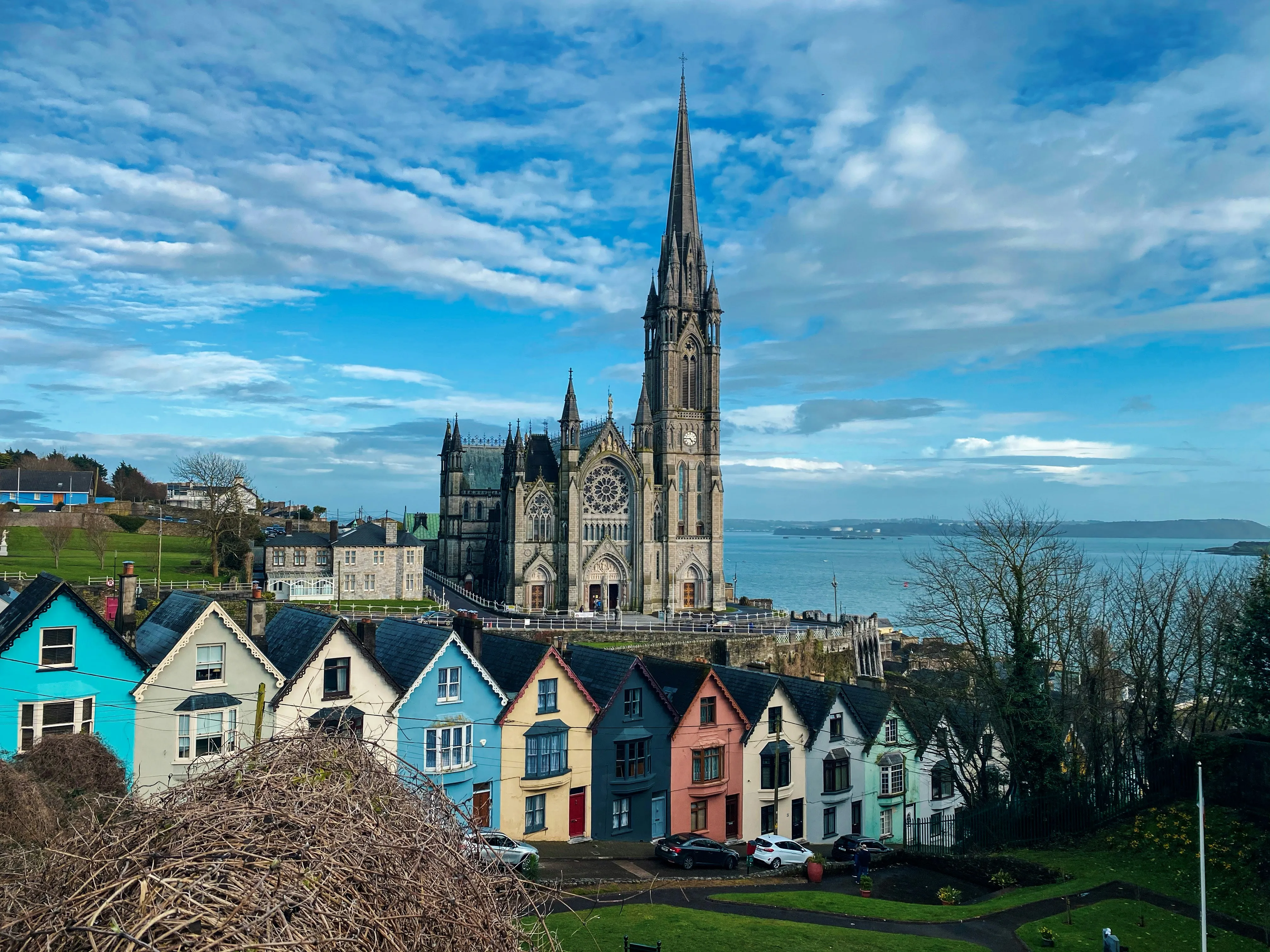
Ireland
Discover the emerald isle, famous for its green landscapes, stunning cliffs, and a welcoming culture full of traditional music, ancient history, and fascinating legends.
Quick Facts
- Capital
- Dublin
- Language
- Irish
- English
- Currency
- Euro (EUR)
- Best time to visit
- From May to September to enjoy mild temperatures and days with more sunlight.
- Budget per day
- $85 - $220 per day
- Climate
- Temperate oceanic climate characterized by mild winters, cool summers, and frequent rainfall throughout the year.
- Connectivity
- good
- Very easy to obtain at airports, shopping centers, and mobile phone stores.
- Electricity
- Type G (230V)
- Local transport
- good
- Card usage
- very widespread
- Tipping
- optional
🌎 Introduction
To the west of the European continent, the landscape is tinged with a variety of greens that constantly change according to the light of day and the passage of clouds. It is a territory where the influence of the Atlantic is felt in every corner, from the cliffs sculpted by the wind to the quiet valleys of the interior. The rain, far from being an inconvenience, is part of the identity of this place, keeping the meadows alive and feeding the rivers that cross small towns with colorful houses.
Life here proceeds at a leisurely pace, closely linked to traditions and social encounters. It can be felt in the conversations around a fireplace when temperatures drop or in the music that plays spontaneously in the venues of any town. Elements such as the St. Patrick’s Day festivities or the legacy of its ancient stone constructions coexist with a simple daily life, where a cup of tea, artisanal bread, or a comforting stew mark the end of the day.
🛡️ General safety
Ireland is consistently considered one of the safest destinations in the world for travelers. The country enjoys notable political and social stability, which translates into a welcoming and calm environment for those who visit.
- General assessment: The safety level in Ireland is very high. Violent crime rates are remarkably low compared to other international destinations.
- Context for the traveler: The country is characterized by the hospitality of its inhabitants (locally known as “fáilte”). Although it is a very safe place, as in any tourist destination, common sense is the best tool to avoid minor setbacks.
Common crimes and risks
Most visits to Ireland pass without any incident. However, in high-traffic areas, there are some minor risks worth knowing:
- Theft and pickpocketing: These are the most frequent incidents, especially in the busiest areas of Dublin, such as the Temple Bar area, O’Connell Street, or Grafton Street.
- Thefts from vehicles: In rural areas or the start points of hiking routes, cases of broken windows to steal objects from inside rental cars have been reported.
- Minor scams: There may be cases of fraudulent accommodation on unofficial platforms or overcharging for unregulated services, although this is not a widespread practice.
Safety in cities and tourist areas
Irish cities are generally safe both day and night, although it is always advisable to remain attentive in urban environments.
- Urban centers: In cities like Dublin, Cork, Limerick, or Galway, the atmosphere is very safe. It is recommended to avoid poorly lit streets or non-tourist peripheral areas late at night.
- Public transport: The use of buses, the tram (Luas), and the train (DART) is completely safe. During weekend nights, you may encounter people under the influence of alcohol, but this rarely poses a real danger to tourists.
- Practical recommendations: Always keep your belongings in sight on café terraces and avoid carrying large amounts of cash visibly.
Transport safety
Moving around Ireland is simple, although it requires adapting to certain local particularities, especially regarding road mobility.
- Driving: It is essential to remember that in Ireland people drive on the left. This requires special attention both when driving and when crossing the street as a pedestrian.
- Road conditions: While motorways are excellent, secondary roads in rural areas can be very narrow, winding, and frequented by livestock or agricultural machinery.
- Taxis and private services: Taxis are highly regulated and safe. It is recommended to use official applications or signposted ranks.
- Vehicle rental: This is a very popular option. It is advised not to leave valuables in the trunk when parking in isolated places or tourist viewpoints.
Natural and climatic risks
Ireland does not suffer from extreme natural phenomena such as earthquakes or hurricanes, but its climate is the most relevant risk factor for the visitor.
- Changing weather: The weather on the island is extremely unpredictable. It is common to experience “four seasons in one day.”
- Winds and storms: During autumn and winter, strong winds and Atlantic storms can occur, which may affect sea transport or temporarily close some natural monuments (such as the Cliffs of Moher).
- Prevention: If you are going to go hiking or engage in outdoor activities, always check the weather forecast and wear appropriate technical clothing (waterproofs and thermal layers).
Local legislation and norms
Ireland has clear legislation that tourists must respect to avoid fines or sanctions.
- Alcohol consumption: There are strict laws regarding the consumption of alcohol in public spaces. In many cities, drinking outside authorized establishments (pubs and restaurants) is prohibited.
- Tobacco: Smoking is strictly prohibited in all enclosed public places, including pubs, restaurants, and public transport.
- Social behavior: Respect and courtesy are fundamental. Uncivil behavior under the influence of alcohol can lead to arrests or high fines.
Safety for specific groups
Ireland is a progressive and open country, making it an ideal destination for all types of travelers.
- Women travelers: The country is very safe for women traveling alone. There are no special restrictions or precautions beyond those common in any European country.
- LGTBIQ+ travelers: Ireland is a very welcoming destination and has advanced legislation regarding equality. Public displays of affection are generally well accepted, especially in cities.
- Traveling with children and the elderly: Infrastructure is adequate, and Irish society is very considerate of families and the elderly. Parks and public areas are usually well-maintained and safe.
Emergencies and assistance
In case of needing urgent help, the Irish emergency system is efficient and multilingual.
- Emergency numbers: 112 and 999 are the free numbers to contact the Police (Garda), Ambulance, or Fire Brigade.
- Police assistance: The national police is called An Garda Síochána. Officers are generally very friendly and willing to help tourists.
- Assistance centers: In Dublin, there is a specific office for assistance to tourists who are victims of crime (Irish Tourist Assistance Service - ITAS), which offers practical support in case of loss of documents or similar incidents.
Tip: Before starting a hiking route in remote areas like Connemara or Kerry, always inform your accommodation about the route you plan to take and your expected return time.
📝 Entry requirements to the country
To plan a trip to Ireland, the first fundamental aspect is to have a valid passport. Although validity requirements can vary, it is most common for the document to be valid at least for the entire duration of the planned stay in the territory. Upon arriving at border control points, whether at airports or ports, agents usually conduct a brief informative interview about the purpose of the trip and the travel plans in the country.
Regarding visa requirements, a large number of nationalities can enter for leisure purposes without the need for prior consular procedures for short stays. The maximum period of stay for a visitor for tourist purposes is normally set at 90 days. During the entry process, the traveler may be asked to show an onward ticket (either returning to the country of origin or toward a third destination) and proof of having sufficient financial funds to cover expenses during the visit without the need to work.
Customs restrictions follow standard regulations to protect public health and the local environment. It is recommended to pay attention to the limits allowed for personal consumption goods, avoiding the transport of large quantities of tobacco or alcohol. Regarding medications, it is advisable to carry them in their original packaging and, in the case of specific treatments, to have a copy of the medical prescription to avoid misunderstandings at security checks.
About health requirements, there are usually no mandatory vaccines to enter the island from major international circuits. However, it is suggested to keep the general vaccination schedule up to date. Having travel medical insurance with broad coverage is a highly recommended measure to guarantee assistance in the event of any health unforeseen event that could arise during the tour of the country.
To facilitate the organization of arrival, the following common points in the entry process can be considered:
- Travel documentation: Passport valid throughout the stay.
- Tourist stay: Generally permitted for a maximum of three months.
- Immigration controls: Possible request for accommodation reservations and a return ticket.
- Restricted items: Limitations on products of animal origin, meat, and dairy.
- Healthcare: Recommendation to have private insurance with international coverage.
- Currency declaration: It is usually necessary to inform customs if transporting very high amounts of cash.
🏥 Basic health considerations
In Ireland, you will find a health system of an excellent level, with modern facilities and well-trained professionals. As a tourist, you should know that you have the possibility of accessing both public and private health care, although it is most common for visitors to use emergency services or private clinics. The prices for consultations and treatments are usually high if you do not have adequate coverage, so it is a factor you should take into account when planning your budget. The primary language in which health personnel will assist you is English, so communication is usually simple if you manage with this language.
Taking out travel medical insurance is not a mandatory requirement to enter the country, but it is highly recommended for your peace of mind. I advise you to choose a policy that includes broad coverage for hospitalization and surgery, in addition to covering medical repatriation if it were necessary. Having this support will allow you to enjoy your stay without worrying about unforeseen expenses that could be very costly.
In the vaccine section, there is no mandatory vaccine for traveling to Ireland. You will not find risks of tropical or exotic diseases, so it is enough to have your usual vaccination schedule updated. If your basic vaccines are up to date, you will not have to carry out any additional medical procedures before getting on the plane.
If you need to carry your own medication, it is essential that you transport it in its original packaging and with the leaflet visible. It is always a good idea to carry with you a copy of the medical prescription or a report from your doctor written in English, especially if you travel with drugs that require needles or are controlled substances. You will find pharmacies easily in cities, but keep in mind that some medications that are over-the-counter in other places may require a local medical prescription here.
The health risks in Ireland are minimal and are closely linked to the climate. As it is a country with constant weather changes, I recommend that you protect yourself well against humidity and cold to avoid colds or minor respiratory problems. In some rural areas during the summer, you might encounter midges, very small mosquitoes that bite but do not transmit any disease. There are no altitude risks or the presence of animals dangerous to human health.
The quality of hygiene in the country is very high, so you will not have problems with food. Tap water is drinkable throughout the territory and is of very good quality, so you can drink it with total confidence. Regarding food, food safety standards are strict, allowing you to try the local gastronomy in both restaurants and markets without risks to your stomach.
For any medical emergency situation, the number you should dial is 112 or 999. These numbers are free and operate 24 hours a day. The ambulance and urgent care service is very efficient and they will attend to you quickly, activating the necessary protocols according to the severity of the situation.
As final practical recommendations, I suggest you always carry a small first-aid kit with band-aids for walks and some common painkiller. Do not forget to use sunscreen even if you see a cloudy sky, as the wind can deceive you and you could burn your skin without realizing it while walking along cliffs or the countryside. Staying hydrated and wearing appropriate clothing for the wind will help your only concern be enjoying the landscapes.
🚌 Transport within the country
Traveling through the territory is simple thanks to a network that effectively connects the main points of interest. The bus is the most widespread means, as it reaches almost all towns, while the train links the most important cities with direct journeys. Although there are ferries to visit the smaller islands off the coast, internal flights are not common because the distances by land are manageable. Many visitors also opt for a rental car to explore the environment at their own pace.
For the traveler, using public transport is intuitive and accessible. Signage is clear and the language facilitates communication at all times, making it easy to buy tickets both at stations and through electronic means. The system is designed so that even those visiting the country for the first time can orient themselves without difficulty among the different routes and connections available.
There is a notable difference between the urban environment and more remote areas. In the large cities, the offer is varied and the frequency is high, in some cases featuring tram systems. On the contrary, in rural areas transport is more limited, so journeys depend on more specific schedules that should be consulted in advance to avoid long waits.
Taxis and ride-hailing services are common in population centers and are considered a safe and regulated option. In general terms, transport offers a good sense of comfort and is quite reliable, allowing for peaceful travel while enjoying the country’s characteristic landscape.
“Tip”: It is advisable to check return schedules in advance when taking excursions to remote areas, as services often end early in the rural sphere.
🤵 Culture and etiquette
Ireland is distinguished by its warm and friendly social treatment, where verbal courtesy plays a fundamental role in daily interaction. It is common for conversations to start with light comments about the surroundings or the weather, which helps establish an atmosphere of trust. The frequent use of expressions of gratitude and please is a basic norm that applies in any context, from public transport to retail. In general, a humble and discreet attitude is valued, avoiding displays of wealth or status, and maintaining a moderate voice volume in public spaces so as not to interfere with the peace of others.
Regarding greetings, a firm handshake accompanied by eye contact is the most common way to introduce oneself in both formal and informal settings. Although warmth is a characteristic of its culture, personal space is usually respected, limiting closer physical contact to people of great trust. Concerning punctuality, visitors are expected to arrive at the agreed time for professional appointments, restaurant reservations, or events with a fixed schedule. In more relaxed social encounters, there is a somewhat broader margin of courtesy, although arriving excessively late is usually perceived as a lack of consideration toward the hosts.
Social life often revolves around gastronomy and local establishments, where rules of reciprocity prevail. In restaurants, a tip is not strictly mandatory, but it is common practice to leave between 10% and 12% of the total bill if the service has been satisfactory, always checking first if a service charge has already been included in the invoice. In the case of being invited to a private home, it is considered a gesture of courtesy to bring a small gift, such as flowers or chocolates, to thank for the hospitality.
Respect for local history and traditions is fundamental to integrating naturally. When visiting places of worship, cemeteries, or historical monuments, it is recommended to maintain solemn behavior and respectful silence. It is important to be aware of the cultural and political diversity of the island, treating these topics with sensitivity and avoiding judgments about the past. It is especially appreciated when the traveler recognizes the local cultural identity and shows a genuine interest in heritage, the arts, and customs without resorting to simplifications.
Tip: When getting off the bus or leaving a small shop, it is a very widespread and valued practice to say thank you to the driver or the shop assistant, a simple gesture of recognition that facilitates harmonious coexistence and reflects the courtesy values of Irish society.
🍛 Typical gastronomy
The gastronomy of Ireland stands out for its simplicity and the excellent quality of its raw materials. Its traditional cuisine is deeply linked to the land and the sea, which translates into nutritious and comforting dishes, ideal for the island’s climate. The basic ingredients revolve around the potato, which is the central axis of many side dishes, lamb and grass-fed beef, and a wide variety of fresh fish and seafood from its extensive Atlantic coasts.
Local eating habits usually begin with a hearty breakfast, known for its ability to satisfy for a large part of the day. Throughout the day, it is very common to go to pubs, which act as the center of social life and offer honest, homemade cuisine. In these establishments, slow-cooked stews and soups of the day are served, always accompanied by artisanal bread. Furthermore, dairy products, especially butter and cheeses, enjoy great prestige for their intense flavor and creamy texture.
Regarding cultural customs, it is important to keep in mind that meal times are usually earlier than in other latitudes. Lunch is generally taken between twelve and two in the afternoon, while dinner is usually served starting from six. At the table, the atmosphere is usually relaxed and friendly, without excessively rigid protocols in most establishments. In the drinks section, tea is the preferred choice for any time of day, while stout and Irish whiskey are the undisputed companions for social gatherings in the evening.
| Dish | Description | Main ingredients | Where to try it | Tip |
|---|---|---|---|---|
| Irish Stew | The most traditional stew in the country, slow-cooked to tenderize the meat. | Lamb or beef, potatoes, onions, and carrots. | Traditional pubs and local cuisine restaurants throughout the country. | It is ideal for cold or rainy days due to its high energy contribution. |
| Seafood Chowder | A creamy and thick fish and seafood soup, very popular in coastal areas. | White fish, salmon, local seafood, cream, and potatoes. | Coastal towns and establishments near the ports. | Always accompany it with a slice of soda bread with salted butter. |
| Boxty | A kind of potato pancake or crepe that can be served stuffed or as a side dish. | Grated potatoes, flour, baking soda, and milk. | Restaurants specialized in breakfast or regional cuisine. | Try it stuffed with meat or vegetables for a more complete experience. |
| Colcannon | A creamy and green mashed potato dish, usually served as a main side dish. | Mashed potatoes, kale or cabbage, butter, and spring onions. | Rural taverns and during celebrations of local festivities. | Enjoy it hot to better appreciate the texture of the melted butter. |
| Soda Bread | Traditional bread that does not use yeast and has a dense texture and a firm crust. | Wheat flour, baking soda, buttermilk, and salt. | Artisanal bakeries, local markets, and as a base for any meal. | It is the best accompaniment for soups of the day and local cheeses. |
📷 Areas and places to visit
Any tour of Ireland usually begins in Dublin, its capital and nerve center. It is a city that naturally combines its literary and Viking past with a contemporary atmosphere. Strolling through its streets allows you to discover institutions such as Trinity College, whose old library houses historical manuscripts of great value, or the lively Temple Bar neighborhood, famous for its architecture and cultural atmosphere. The city also offers spaces for historical reflection, such as the former Kilmainham Gaol prison, and world-class museums such as the National Gallery or the National Museum of Ireland, where archaeological treasures telling millennia of history are exhibited.
To the west of the country, the landscape transforms into a succession of cliffs, green valleys, and deep-rooted traditions. The city of Galway acts as a vibrant gateway to this region, standing out for its dynamism, its music festivals, and its proximity to areas where the influence of Gaelic culture is still perceived. From here, it is common to explore the Connemara region, an area of rugged beauty composed of peat bogs, lakes, and mountains, or the limestone and almost lunar landscape of The Burren, which houses unique archaeological remains and singular flora that coexist among the rocks.
One of the greatest natural attractions is, undoubtedly, the Cliffs of Moher. These impressive formations rise above the Atlantic Ocean and offer hiking routes with panoramic views that allow you to appreciate the magnitude of the western coast. This area is part of the so-called Wild Atlantic Way, an itinerary that runs along the entire western coastline and invites you to stop in small fishing villages and white sand beaches that contrast with the intense green of the surrounding meadows.
In the southwest, the county of Kerry offers some of the most picturesque routes in the territory. The Ring of Kerry is a circular route that passes through Killarney National Park, a protected space where you can find serene lakes, ancient forests, and the elegant Ross Castle. In this region, nature intertwines with historical constructions, such as the medieval fortresses that dot the coast. For its part, the county of Cork combines the port and cosmopolitan life of its main city with rural enclaves full of charm, such as Blarney Castle and its surrounding gardens.
The area known as the Ireland’s Ancient East focuses on the oldest and most spiritual heritage of the island. Here you will find the Glendalough valley, located in the Wicklow mountains, which houses the ruins of a medieval monastic settlement framed by two glacial lakes. Not far away, the archaeological complex of Brú na Bóinne, with the monumental tombs of Newgrange and Knowth, offers an exceptional opportunity to understand the sophistication of Neolithic societies. It is a region of gentler terrain, ideal for those seeking cultural routes that explain the origin of local traditions.
Activities in these areas are as varied as their landscapes. While in urban centers visitors can enjoy art exhibitions, craft markets, and a rich gastronomic scene, in rural areas, walking excursions, cycling routes, and observing marine fauna on nearby islands predominate. The contrasts between historical areas, with their stone walls and ruined castles, and modern areas with current infrastructure, allow the traveler to experience the evolution of a country that looks after its identity while looking toward the future.
“Tip”: You cannot miss visiting the Cliffs of Moher, the most emblematic place in the country.
✈️ Best time to travel
Ireland has a temperate oceanic climate that allows it to be visited at any time of the year, although the experience varies significantly depending on the month chosen. The decision depends on whether one prioritizes daylight hours and mild temperatures or, on the contrary, prefers to enjoy the tranquility of the landscapes without the usual crowds of holiday periods.
Generally, most travelers opt for the months where the days are longer, which facilitates road routes and hikes through its cliffs and national parks. However, the changing nature of the weather is a constant on the island, which maintains the characteristic greenery of its fields and defines much of its natural charm throughout all seasons.
| Season | Months | Typical climate | What to expect | Tourist influx |
|---|---|---|---|---|
| Spring | Mar – May | Cool and variable, with temperatures between 8°C and 15°C and occasional showers. | The awakening of flora, the birth of lambs in rural areas, and popular cultural festivities. | Medium ⭐⭐ |
| Summer | Jun – Aug | Mild temperatures (16°C - 20°C) and very long days with light until past 21:00. | Outdoor festivals, water activities, and optimal conditions for hiking. | High ⭐⭐⭐ |
| Autumn | Sep – Nov | Gradual drop in temperatures (10°C - 14°C) and increased breeze and humidity. | Landscapes in reddish and golden tones, art festivals, and a quiet atmosphere in the cities. | Medium ⭐⭐ |
| Winter | Dec – Feb | Cold and humid, with average temperatures from 4°C to 9°C. Days are short and it gets dark early. | Cozy atmosphere in the villages, traditional markets, and clear winter landscapes. | Low ⭐ |
🗣️ Basic vocabulary
Although English is the main language in Ireland, the inhabitants of the island use their own expressions and, occasionally, some words in Irish (gaeilge) that are part of their daily identity. Knowing these terms will help you move around more easily, whether entering a shop, ordering in a pub, or simply greeting someone on the street.
You don’t need a deep mastery of the language, but showing interest in local forms of courtesy usually makes communication with residents much easier and helps you better understand the cultural context of the places you visit.
- Hello: Hello.
- Please: Please.
- Thank you / Cheers: Thank you (in Ireland, “cheers” is used constantly as an informal way of giving thanks).
- Sláinte: Health (used specifically for toasting).
- Grand: Fine or okay (it is one of the most common words to indicate that something is correct or that one is doing well).
- Craic: Fun or good atmosphere (people often ask “What’s the craic?” to mean “how is everything?” or “what’s the news?”).
- Sorry: Sorry (used to apologize, but also to ask for passage or get a waiter’s attention).
- Slán: Goodbye.