


Gambia
Small African nation that dazzles with its hospitality, golden beaches, riverside wildlife, and a rich traditional culture full of color and music.
Quick Facts
- Capital
- Banjul
- Language
- English
- Mandinka, Wolof, Fula
- Currency
- Gambian Dalasi (GMD)
- Best time to visit
- From November to May during the dry season
- Budget per day
- $30 - $100 per day
- Climate
- Tropical climate with a sunny dry season and a hot, humid rainy season from June to October.
- Connectivity
- medium
- Easy to obtain at local shops and the airport
- Electricity
- Type G (230V)
- Local transport
- limited
- Card usage
- cash is used more
- Tipping
- optional
🌎 Introduction
Following the course of the river that gives it its name until it meets the ocean, Gambia is shaped as a narrow strip of land where water and savanna define the horizon. The climate, divided between a season of clear skies and another of rains that transforms the landscape into a garden, dictates the pace of a serene nature. It is a place where life passes at a slow pace, between the salty breeze of the coast and the calm of its interior paths dotted with baobabs.
The country’s identity is felt in the bustle of its markets and in the warmth of traditional dishes like domoda or benachin, which are usually shared in an atmosphere of natural hospitality. The sound of the kora and brightly colored clothing are part of a daily life where various ethnic groups live together with simplicity. Daily rituals, from artisanal fishing at sunset to leisurely conversations in the shade of trees, offer a balanced look at a culture that values encounter and respect for its roots.
🛡️ General Safety
Gambia is popularly known as the “Smiling Coast” of Africa, a nickname that reflects the hospitable nature of its inhabitants and the relative stability of the country. Generally, the safety rating for tourists is favorable, situated at a low-medium risk level, as long as basic common-sense precautions are followed that would apply in any international destination.
The country is a consolidated destination for European tourism, which has allowed for the development of an adequate security infrastructure in the main rest areas. Although it is not a country with high rates of violent crime against foreigners, travelers should be aware that the local economic situation can encourage opportunistic situations. The general context is one of tranquility and peaceful coexistence, being one of the safest and most accessible countries in West Africa.
Crime and common risks
Most incidents affecting tourists are of a non-violent nature. It is fundamental to be attentive to the following points:
- Pickpocketing and petty theft: Snatching or opportunistic thefts are common in very crowded places, such as open markets, bus stations, and public beaches.
- The “Bumsters”: These are young men who approach tourists on beaches and hotel areas offering help, guide services, friendship, or products. Although they are usually not dangerous, they can become very persistent and insistent, which some travelers find overwhelming.
- Minor scams: There may be cases of overcharging for services not previously agreed upon or attempts at deception in street currency exchange.
- Nighttime assaults: Although infrequent, incidents have been reported on solitary beaches or poorly lit areas during the night. It is recommended to avoid walking on the sand or in wooded areas after sunset.
Safety in cities and tourist areas
Safety varies slightly depending on the area where the traveler is located, although the overall atmosphere is relaxed:
- Tourist areas (Senegambia, Kololi, Kotu): These are the safest and most monitored areas, with the presence of the Tourist Security Unit. It is safe to walk through them during the day, but it is wise to be discreet with valuables.
- Banjul (The capital): It is a relatively small and quiet administrative city during the day, but it becomes very solitary as evening falls, so it is recommended to move by taxi at night.
- Markets and crowds: In places like the Serrekunda market or the Royal Albert market in Banjul, extreme vigilance should be maintained over backpacks and wallets due to the density of people.
- Practical recommendations: It is advised to use hotel safes to store passports and large sums of money, carrying only a copy of the identity document and the necessary cash for the day.
Transport safety
Moving around Gambia requires knowing certain local dynamics to ensure a smooth experience:
- Tourist taxis vs. Local taxis: There are “Green Taxis,” authorized for tourists with fixed rates and better safety conditions, and yellow taxis, which are shared and cheaper, but less regulated.
- Road conditions: Many secondary roads are unpaved and can become impassable during the rainy season. Main roads are usually in acceptable condition.
- Driving: In Gambia, driving is on the right. If you decide to rent a vehicle, exercise extreme caution with pedestrians and animals crossing the road, especially outside urban areas.
- River transport: When crossing the Gambia River (for example, on the ferry from Banjul to Barra), it is vital to follow safety instructions and avoid small boats that do not appear to have life jackets or that are overloaded.
Natural and climatic risks
Gambia does not present significant geological risks (such as earthquakes), but the climate dictates some precautions:
- Extreme heat: During the dry season, temperatures can be very high. Constant hydration and sun protection are essential to avoid heatstroke.
- Rainy season (June to October): Sudden floods can occur, affecting road circulation. The presence of mosquitoes also increases, so preventive measures against insect-borne diseases must be reinforced.
- Harmattan winds: Between December and February, winds from the Sahara can bring dust and sand, reducing visibility and affecting people with respiratory problems.
Local legislation and norms
It is imperative to respect local laws, as penalties can be severe:
- Drugs: There is a zero-tolerance policy. The possession, consumption, or trafficking of any type of drug (including marijuana) carries very strict prison sentences and high fines.
- Photography: It is strictly forbidden to photograph government installations, official buildings, airports, or bridges. It is always recommended to ask for permission before photographing local people.
- Dress and behavior: Although Gambia is a tolerant country, the majority of the population is Muslim. It is recommended to dress discreetly and respectfully, especially when visiting rural villages or places of worship.
- Export of items: It is forbidden to export certain items made from protected animal skins or ivory without the corresponding permits.
Safety for specific groups
- Solo female travelers: Gambia is a safe destination for women traveling alone, although they are likely to experience constant attention from “bumsters.” A firm but polite response is usually enough for them to desist.
- LGTBIQ+ travelers: Homosexuality is illegal in Gambia and is socially stigmatized. Absolute discretion is recommended, and any public display of affection should be avoided to prevent legal problems or situations of hostility.
- Traveling with children and the elderly: There are no specific risks beyond the need to take care of food hygiene and hydration. It is a country that values family highly, so children are usually very welcome.
Emergencies and assistance
In case of needing help, these are the key points to keep in mind:
- Emergency numbers: The general number to contact the police is 117. For fire services, it is 118, and for ambulances, it is 119.
- Medical services: Quality healthcare is limited. In case of a serious incident, transfer to a private clinic in the coastal area or even medical evacuation may be required.
- Procedure for incidents: If you are a victim of a theft, you must go to the nearest police station to file a “police report,” an essential document for any subsequent travel insurance claim.
Tip: Learn to say a firm “no, thank you” with a smile; it is the most effective tool to manage the insistence of local vendors and informal guides without losing the friendliness that characterizes the country.
📝 Entry Requirements
Accessing Gambia for tourism purposes requires the traveler to have a valid passport with a validity that, ideally, is at least six months from the time of entry. Although access policies can vary, a large part of international visitors usually obtain a stay permit upon arrival at the main points of entry, whether by air or land. Nevertheless, it is advisable to verify the specific situation before traveling, as some travel profiles might require prior processing of the corresponding permit.
The maximum duration of stay allowed for tourists usually ranges between twenty-eight and ninety days. It is common for authorities to grant an initial amount of time upon arrival, which can be extended later at local immigration offices. During the control process, the traveler may be asked to present an exit ticket from the country or proof of having sufficient funds to cover all expenses during the stay in the territory.
Routine baggage inspections are carried out at border control points and airports. Travelers should take into account the usual customs restrictions, which limit the entry of fresh food products and certain high-value electronic items that are not for personal use. Regarding medications, it is fundamental that these are transported in their original packaging and, preferably, accompanied by a copy of the medical prescription to avoid inconveniences during the review by customs agents.
From a health point of view, it is strongly recommended to travel with an updated vaccination certificate. In particular, the yellow fever vaccine is usually a requirement for those coming from regions where the disease is endemic. Likewise, it is advised to consult with a travel medicine center about general health recommendations, the prevention of insect-borne diseases, and the convenience of taking out travel insurance with broad coverage to respond to any medical eventuality during the stay.
Top Places of Interest
- Banjul: The country’s capital, situated on an island, stands out for its colonial architecture, the bustling Albert Market, and Arch 22, which offers panoramic views of the city and the river estuary.
- Abuko Nature Reserve: One of the oldest protected areas, ideal for observing local fauna, including various species of primates, antelopes, and a wide variety of birds.
- Kunta Kinteh Island: A place with a deep historical burden linked to the memory of the human trade, recognized as a World Heritage Site.
- Kotu and Kololi Beaches: Very popular coastal areas offering wide stretches of golden sand, tourist services, and the opportunity to enjoy the Atlantic in a relaxed setting.
- Wassu Stone Circles: Impressive megalithic formations that are part of an archaeological complex of great relevance in the West African region.
Practical Information and Culture
- Climate: The country has a tropical climate with two distinct seasons: a dry season, which usually runs from November to May, and a rainy season for the rest of the year. The former is the most frequented by tourists due to more moderate temperatures.
- Gastronomy: Typical dishes usually include bases of rice, fish, and peanuts. Benachin (rice cooked with meat and vegetables in a single pot) and Domoda (meat stew with peanut sauce) are the most representative.
- Culture: Gambia is known as the Smiling Coast due to the friendliness of its people. Respect for local traditions and modest dress in non-coastal areas are aspects valued by the population.
- Currency: The official currency is the dalasi. It is recommended to carry cash for transactions in markets and rural areas, as the use of credit cards is usually limited to hotels and larger establishments in tourist zones.
- Transport: Travel is usually done in shared taxis or private vehicles. To travel along the Gambia River, the use of traditional boats or ferries is a common practice that allows for appreciation of the country’s biodiversity.
🏥 Basic Health Considerations
When preparing your suitcase for Gambia, it is important to keep in mind that you are heading to a country with somewhat limited health infrastructure. You will find that quality medical assistance is concentrated mainly in the coastal area and in the capital, Banjul. Public centers often lack sufficient resources, so if you need care, you will most likely end up in a private clinic. These private centers have a cost that is high by local standards, although for a traveler it may be affordable for minor consultations. The best part is that health personnel usually speak very clear English, which will greatly facilitate communication if you have any setbacks.
Regarding travel medical insurance, it is not a legal requirement to enter the country, but traveling without it is an unnecessary risk. Ideally, you should look for a policy that not only covers basic medical expenses but also obligatorily includes medical repatriation and transfer by medicalized plane to other nearby countries with better infrastructure if necessary. It is your best safety net to enjoy the trip with peace of mind.
On the subject of vaccinations, the yellow fever vaccine is mandatory if you come from a country where the disease is endemic, although it is highly recommended to always have the international certificate at hand in case it is requested. Apart from this, it is standard for them to recommend being up to date with the standard vaccination schedule and adding protection against hepatitis A and B, typhoid fever, and, in some cases, meningitis. The smartest thing is to visit a tropical medicine center a month before your departure so that a professional can evaluate your particular case.
If we talk about medication and first aid kits, I advise you to take everything you habitually use with you, as local pharmacies may not have the exact brands or compounds you need. If you travel with specific or chronic medicines, always carry the original medical prescription or a medical certificate in English to avoid uncomfortable questions at customs. Do not forget to include a good repellent, basic painkillers, and something for stomach problems.
Among the common health risks, the most relevant is malaria, which is present throughout the country all year round. You will need to talk to your doctor about prophylaxis and be very rigorous with the use of mosquito nets and repellent, especially at dawn and dusk. The intense heat and humidity can also play a trick on you, so watch your hydration and do not expose yourself to the sun during the central hours of the day. Fortunately, you will not find risks from altitude or problems related to extreme cold.
Hygiene with water and food will be your greatest ally in avoiding the famous traveler’s diarrhea. You must always drink bottled water and ensure that the seal is intact when opening it. Avoid ice cubes and raw salads if you are not in a place of total trust. You can try the delicious local food, but make sure it is well-cooked and served hot, as heat eliminates most bacteria. Street food is tempting, but always use common sense and observe the general cleanliness of the stall before deciding.
In case of a medical emergency, the general number you can dial is 116 to contact emergency services, although the response of public ambulances can be quite slow. If you are in a tourist area, it is much faster to ask your hotel to call a nearby private clinic or even look for private transport to reach the nearest hospital if the situation permits.
As final practical recommendations, I would tell you to listen to your body and not ignore small discomforts if they appear. Always use high-factor sunscreen, wash your hands frequently or use disinfectant gel, and above all, do not self-medicate with local antibiotics without professional supervision. Following these basic guidelines, you can focus on enjoying Gambian hospitality with total safety.
🚌 Transportation Within the Country
Moving around Gambia is an experience that requires patience and adaptability, as the country does not have a railway network or internal flights due to its small size. Most travel is done by road or by crossing the Gambia River using ferries, which are essential for connecting the two banks of the country. Travelers usually opt for shared transport vehicles or private services to move between the different population centers.
The use of public transport can be somewhat informal for those visiting the country for the first time. There are no conventionally marked stops or rigid schedules, and communication about routes is usually verbal. Since English is the official language, it is easy to ask drivers or other passengers about the vehicle’s destination. Tickets or fares are usually paid directly in cash when boarding the transport.
There are notable differences between the coastal zone and the interior. In urban areas like Banjul or the tourist coastal zone, the frequency of vehicles is high and it is easy to find transport at almost any time. In contrast, in rural areas, roads may be unpaved and vehicles are less frequent, often depending on the transport being completely full before starting the journey.
Taxis are the most versatile medium for tourists. Two main types are distinguished: vehicles exclusively for visitors, which make direct and private journeys, and shared yellow taxis that follow fixed routes picking up several people. The latter are a very common option for short trips within cities and main towns.
Regarding reliability and comfort, transport in this destination is far from Western standards of punctuality. Journeys can be slow and vehicles are usually basic and without great luxuries. The flow of traffic and the state of some roads directly influence the duration of the trip, so it is recommended to plan transfers with sufficient time and a flexible attitude.
Tip: It is very useful to always confirm the final destination with the driver before boarding the vehicle to ensure that the route coincides with the place you wish to go.
🤵 Culture and Etiquette
Social interaction in Gambia is based on a slow and detailed greeting. It is not simply a quick formality, but an exchange where genuine interest in the well-being of the other person and their environment is valued. It is essential to dedicate a few moments to these initial courtesies before making any request or starting a commercial transaction. In this sense, the use of the right hand is the established norm for greeting, handing over documents, paying, or eating, as the left hand is traditionally reserved for personal hygiene.
In daily communication, a moderate tone of voice and a friendly manner predominate. The perception of time is considerably more flexible than in Western cultures, so extreme punctuality is not always the norm. Showing patience and a relaxed attitude towards possible waits or delays is considered a sign of respect and adaptation to the local pace. Likewise, eye contact is common, although in certain contexts of hierarchy or respect for elders, it may be more discreet as a show of deference.
Respect for social hierarchy and elders is an essential pillar of coexistence. When visiting rural communities or interacting with local leaders, it is important to show a receptive attitude and follow the hosts’ instructions. Regarding dress, discretion and modesty are appreciated, especially when visiting places of worship or areas far from the tourist beach centers. Effusive displays of affection in public spaces are not common and are usually reserved for the private sphere to maintain the harmony of the social environment.
Customs related to food usually revolve around hospitality and a sense of community. It is common for food to be shared from the same central container, a practice that symbolizes unity. If invited to a private home, it is customary to remove your shoes when entering and wait for the host to indicate where to sit. Regarding tipping, it is considered a gesture of gratitude for a service well performed, especially in the catering and guided transport sectors, always maintaining a close but professional treatment.
“Tip”: When starting any conversation, even for a brief inquiry, always take a moment to greet formally and ask about the well-being of the interlocutor before stating your need; this small gesture greatly facilitates communication and mutual understanding.
🍛 Typical Gastronomy
The gastronomy of Gambia is characterized by being a balanced mix of intense flavors and fresh products obtained directly from the land and the sea. Being a country closely linked both to the Gambia River and the Atlantic coast, fish and seafood are fundamental elements in the daily diet, although rice constitutes the energetic base upon which almost all traditional recipes are built. It is a simple cuisine, with agricultural roots, where legumes and tubers provide great consistency to the dishes.
The most distinctive ingredient of the region is, without a doubt, the peanut. This nut is used in multiple ways: toasted, ground, or converted into a creamy paste that serves to thicken stews and provide a deep, earthy flavor. Alongside it, the use of lime, caramelized onion, and various varieties of local chilies define a flavor profile that ranges from citrusy and sweet to slightly spicy, always without reaching extremes that hide the main product.
Regarding eating habits, food is understood as a social and communal act. In homes, it is common to share a large central container, although in restaurants the service is adapted to individual formats. Lunch is the main meal of the day and usually takes place in the early afternoon. After the meal, the ritual of Attaya is very common, a very sugary green tea with mint that is served in three rounds and symbolizes hospitality and friendship towards the visitor.
Regarding drinks, travelers usually find refreshing options made with local fruits. Notable ones include Wonjo, a cold infusion of reddish hibiscus flowers, and Baobab juice, which has a dense texture and a flavor that vaguely recalls citrus yogurt. In catering establishments, treatment is usually friendly and leisurely, reflecting the country’s calm pace of life, so it is recommended to enjoy the gastronomic experience without rushing.
| Dish | Description | Main Ingredients | Where to try it | Tip |
|---|---|---|---|---|
| Benachin | Known as “one-pot rice,” it is the national dish par excellence, similar to a spiced paella. | Rice, tomato, seasonal vegetables, and meat or fish. | Coastal restaurants and local celebrations. | It is ideal for tasting the combination of local flavors in a single bite. |
| Domoda | A dense and savory stew with a very characteristic creamy base. | Peanut paste, meat (beef or chicken), vegetables, and white rice. | Traditional eateries in cities like Serrekunda. | If you like the intense flavor of the nut, this is the essential dish. |
| Chicken Yassa | A dish of coastal influence where the balance between sour and sweet stands out. | Chicken marinated in lemon, a large amount of onion, mustard, and pepper. | Terraces and restaurants near the beaches. | Perfect for those who prefer fresh and less heavy flavors. |
| Superkanja | A green and nutritious stew that stands out for its gelatinous texture. | Okra, smoked fish, palm oil, and vegetables. | Traditional cuisine restaurants in urban areas. | It is a very authentic dish, recommended for travelers seeking different textures. |
| Mbahal | A dry rice preparation with a marked marine and salty character. | Rice, smoked or dried fish, ground peanuts, and beans. | Local food stalls and fish markets. | It is usually served as a quick and energetic meal during the day. |
📷 Areas and Places to Visit
Gambia is articulated around the watercourse that gives it its name, offering a fascinating contrast between the coastal strip and the interior regions. Exploration usually begins in the capital, Banjul, located on St. Mary’s Island, where the river meets the ocean. In this city, colonial architecture coexists with significant elements like Arch 22, which offers an elevated perspective of the urban layout. Albert Market is the nerve center of daily life, a space where visitors can closely observe the local trade of textiles and fresh products. To delve into the country’s past, the National Museum of Gambia preserves collections that narrate the political and ethnographic history of the region.
To the west of the capital lie the most frequented coastal areas, such as Serekunda, the most populated town, and the hubs of Bakau and Kololi. In Bakau, the Kachikally Crocodile Pool stands out, a site of great spiritual importance for local communities where a close bond with the fauna is maintained. The Bakau Botanical Garden offers a serene environment to learn about the indigenous flora. The area’s beaches, such as those at Cape Point or Kotou, are conducive to long walks at sunset, while the Senegambia area concentrates a varied gastronomic and cultural offering that activates especially at nightfall.
Nature is one of the country’s fundamental pillars. The Abuko Nature Reserve constitutes one of the oldest protected spaces and allows for the observation of a wide variety of birds, reptiles, and small mammals in a tropical forest environment. Near the coast, the Bijilo Forest Park is known for its trails among palms and baobabs. On the other hand, the fishing village of Tanji offers a unique visual experience in the afternoon, when colorful boats return to the shore and traditional smoking and fish-selling tasks begin, attracting a large number of seabirds.
Venturing up the riverbed towards the east, the landscape becomes more rural and the pace of life slows down. Kunta Kinteh Island (formerly James Island), declared a World Heritage Site, along with the towns of Albreda and Juffureh, are essential stops to understand the history of the transatlantic trade. In these areas, vestiges of fortifications and historical interpretation centers invite reflection on the colonial past. Following the river route, one reaches the Wassu Megalithic Circles, an archaeological complex of great relevance that shows the complexity of the societies that inhabited the region centuries ago.
In the upper course of the river is the town of Janjanbureh, formerly known as Georgetown. This enclave, located on MacCarthy Island, preserves a particular historical atmosphere and serves as a base for exploring the Gambia River National Park. In this protected natural environment, which includes the so-called Baboon Islands, it is possible to observe chimpanzees in the wild within a rehabilitation project, as well as hippopotamuses and exceptional birdlife. Excursions in traditional boats through the mangroves and tributaries allow for appreciation of the river ecosystem’s biodiversity without the rush of more urban areas.
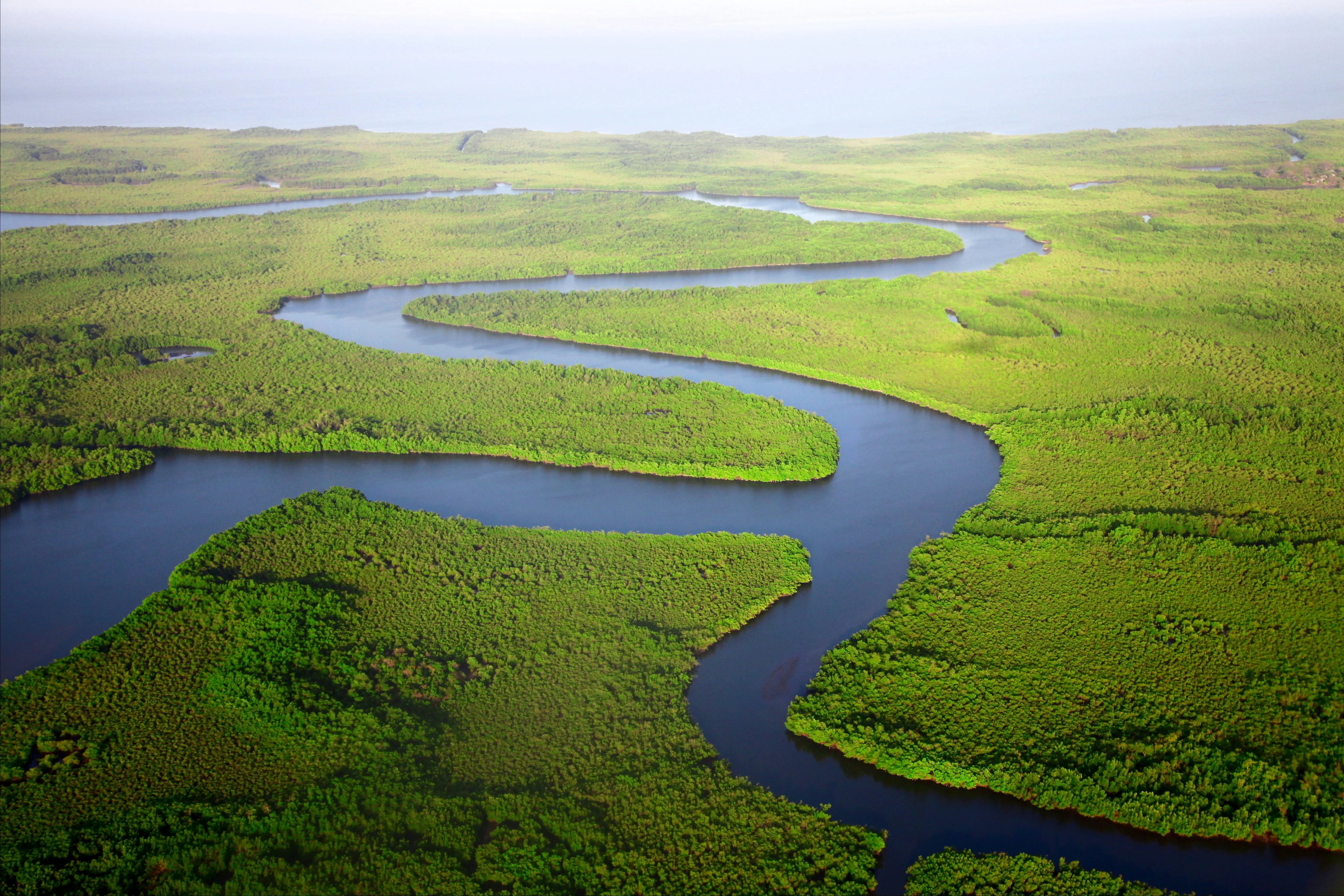
Tip: You cannot miss visiting the Gambia River, the country’s most emblematic place.
✈️ Best Time to Travel
Gambia has a tropical climate marked by two very distinct seasons: the dry and the rainy. The choice of when to travel usually depends on each visitor’s priorities, whether it is enjoying the beaches of the Atlantic coast, observing the rich biodiversity of its nature reserves, or participating in the daily life of its communities. Generally, the months with more moderate temperatures and the absence of rainfall facilitate travel through the interior and outdoor activities.
During the months of higher humidity, the landscape transforms and takes on intense green tones, offering a different perspective of the natural environment. Although temperatures remain warm throughout the year, the sea breeze softens the atmosphere in coastal areas, while in the interior the thermometer usually rises with greater intensity. Each period of the year provides a different experience, balancing factors such as climate, wildlife observation, and the tranquility of less crowded environments.
| Season | Months | Typical Climate | What to Expect | Tourist Influx |
|---|---|---|---|---|
| Spring | Mar – May | Warm and very dry. Rising temperatures with clear skies. | Sunny days ideal for the coast and constant breezes on the littoral. | Medium |
| Summer | Jun – Aug | Start of the rainy season. High humidity and occasional storms. | Very green landscapes, lush environment, and a more local perspective of the country. | Low |
| Autumn | Sep – Nov | Transition from rainy to dry. Humidity drops progressively. | Return of migratory birds and river navigation in a vibrant environment. | Medium |
| Winter | Dec – Feb | Dry season. Mild and pleasant temperatures, no rain. | Optimal conditions for wildlife viewing and cultural festivals. | High (⭐⭐⭐) |
🗣️ Basic Vocabulary
Learning some words in the local language can greatly facilitate your integration during the trip. Although English is the official language of Gambia, a large part of the population uses languages like Mandinka or Wolof in their daily lives. Using some basic terms is a gesture of courtesy that is usually very well received by local inhabitants.
These expressions will serve you to greet, give thanks, or move through daily environments like markets and transport stops, helping you create a closer bond with the people you meet during your stay.
- Asalaam aleikum: Traditional greeting of peace used when meeting someone or entering a place.
- Abarka: Thank you (in Mandinka language).
- Jerejef: Thank you (in Wolof language).
- Kaira be: Common greeting used to ask how everything is going or if there is peace.
- Naam: Polite response to say “yes” or confirm that you are listening.
- Be bita: Expression used to say goodbye or see you later.
- Ajarama: Thank you (in Fula language, another of the country’s main ethnic groups).