


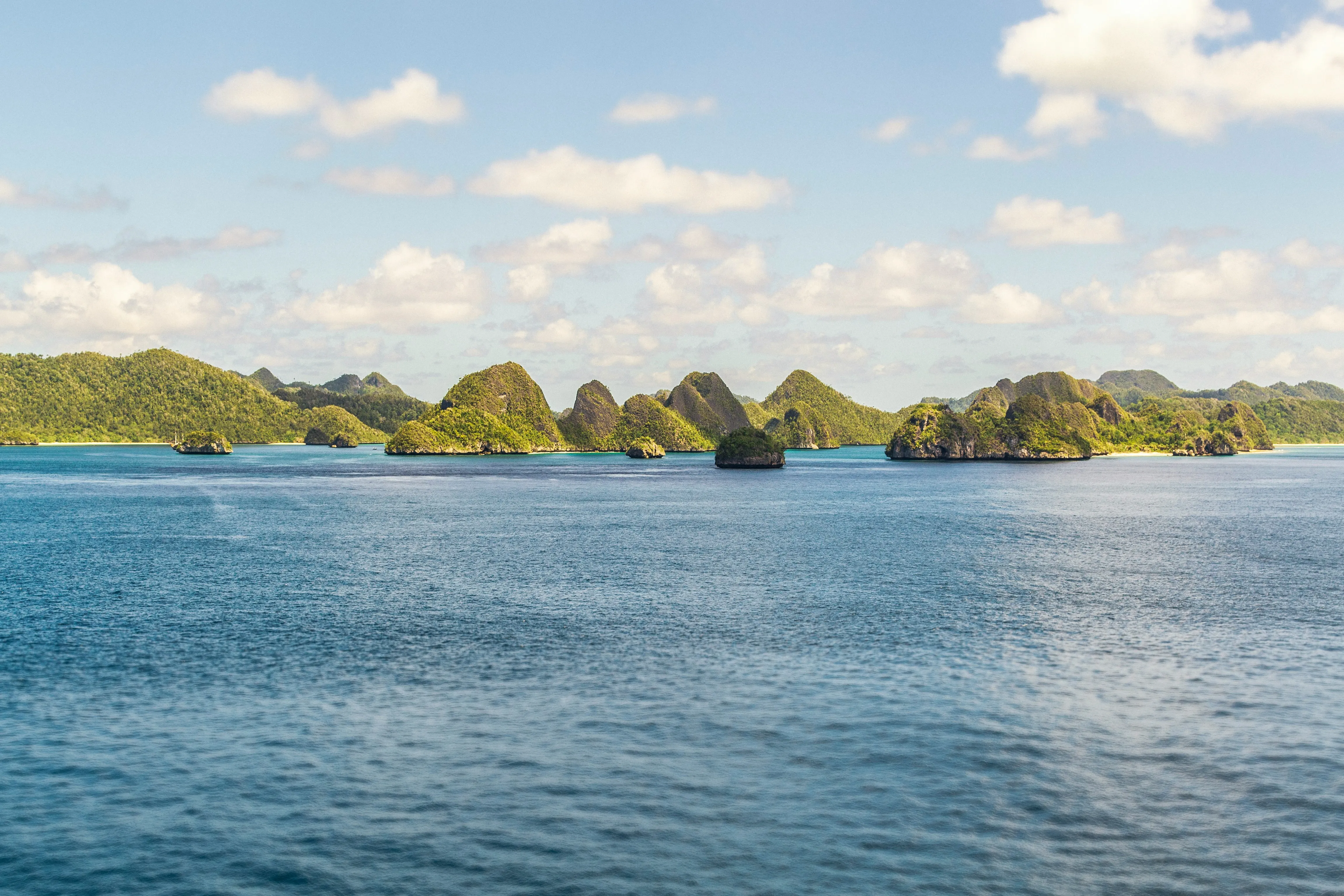
Palau
Discover an untouched paradise in Oceania, with crystal-clear lagoons, exceptional marine biodiversity, and landscapes that captivate every lover of nature and pure adventure.
Quick Facts
- Capital
- Ngerulmud
- Language
- Palauan
- English, Japanese, Sonsorolese, Tobian
- Currency
- United States Dollar (USD)
- Best time to visit
- From December to April, coinciding with the dry season and clear skies.
- Budget per day
- $120 - $350 per day
- Climate
- Humid tropical climate with warm temperatures year-round and frequent rainfall, especially between May and November.
- Connectivity
- low
- Local SIM cards can be purchased at the airport and authorized stores in Koror.
- Electricity
- Type A/B (120V)
- Local transport
- limited
- Card usage
- acceptable
- Tipping
- optional
🌎 Introduction
In a corner of the western Pacific, where ocean currents embrace hundreds of small islands, lies an archipelago that seems to have found a peaceful balance between the sea and the mainland. Its landscapes are defined by limestone rock formations covered in dense vegetation that protrude from calm waters, creating a natural labyrinth that has shaped the identity and history of its inhabitants for centuries.
The local culture maintains a deep connection with its roots, something that becomes evident in the traditional bai or communal houses, whose carved beams narrate legends and chronicles of the past. In this archipelago, social life is organized under a structure where respect for the community and the environment is the norm, complemented by a simple gastronomy based on taro, coconut, and the fruits that the ocean provides daily.
The tropical climate envelops daily life with a pleasant temperature, only altered by seasonal rains that nourish its forests and reefs. Those who approach these shores find a daily life marked by calm and land management that has prioritized conservation for generations. It is a place that reveals itself little by little, offering a serene experience through its living traditions and a nature that preserves its original essence.
🛡️ General Safety
Palau is considered one of the safest and most peaceful destinations in the Pacific region. For the international traveler, the level of safety is very high, comparable to countries with the lowest crime rates in the world. Most visits take place without any type of incident related to public safety.
The context of the islands is that of a small and welcoming community, where tourism is a fundamental piece of the economy and, therefore, respect and protection for the visitor are deeply rooted in the local culture. Although the risk is low, as on any trip, it is advisable to maintain basic common sense to avoid minor setbacks.
Crime and Common Risks
Violent crime is extremely rare in Palau. Incidents that may affect tourists are usually minor and opportunistic.
- Thefts due to oversight: Although not frequent, they can occur on crowded beaches or high-traffic areas. It is recommended not to leave valuables unsupervised.
- Scams: There is no record of organized scam networks against tourists. However, it is always advisable to confirm the prices of private services before hiring them.
- Accommodation safety: It is advised to use hotel safes to store original identity documents and large sums of cash.
Safety in Cities and Tourist Areas
The country’s nerve center is Koror, where most commercial and tourist activity is concentrated. This area, along with resort areas on other islands, is very safe both day and night.
- Walking: It is safe to walk along the main streets of Koror. However, some areas may lack sidewalks or adequate lighting at night, so it is recommended to walk with caution to avoid traffic accidents.
- Local interaction: Palauan citizens are generally hospitable. There are no “forbidden” or dangerous neighborhoods for tourists, although it is always respectful to ask permission before entering private property or communal areas in more traditional villages.
Transport Safety
Transportation in Palau is simple, though limited in mass public transport options.
- Taxis: They are the most common means of moving around Koror. They are safe, although they usually do not have a meter, so it is essential to agree on the price before starting the journey.
- Rental vehicles: This is a popular option. In Palau, you drive on the right, although it is very common to find vehicles with the steering wheel on the right (imported from Japan), which requires extra attention when overtaking or at intersections.
- Road conditions: The compact road of Babeldaob (the largest island) is in very good condition, but potholes may appear in rural or secondary areas after heavy rains.
- Maritime transport: For excursions to the Rock Islands, always ensure that the boats have life jackets and radio communication equipment.
Natural and Climatic Risks
Given its geographical location, the most relevant risks in Palau are related to the natural environment and the tropical climate.
- Typhoons: Although Palau is located outside the main typhoon belt, strong tropical storms can occur, especially between June and December. It is important to follow local weather warnings.
- Sun and heat: The ultraviolet radiation index is very high. Heat exhaustion and sunburn are real risks. Constant hydration and sun protection are recommended.
- Marine environment: Currents can be strong at certain diving or snorkeling spots. Always follow the instructions of professional guides. Some marine animals (such as jellyfish outside Jellyfish Lake or certain corals) can cause irritation if touched.
Local Legislation and Norms
Palau is very strict with the protection of its ecosystem and has specific laws that tourists must know to avoid high fines or legal problems.
- Palau Pledge: Upon entering the country, you must sign a commitment in your passport to respect the environment. Failure to comply with environmental regulations (such as damaging coral or disturbing wildlife) carries very severe fines.
- Sunscreen: The use and import of sunscreens containing chemicals harmful to coral (such as oxybenzone) is prohibited. Only the use of “reef-safe” creams is allowed.
- Drugs: The possession, use, or trafficking of narcotics is punished with very rigorous penalties, including long prison sentences.
- Tobacco and alcohol: There are strict limits on the amount of tobacco that can be brought into the country, and the consumption of alcohol in public spaces is regulated.
Safety for Specific Groups
- Female travelers: Palau is a very safe destination for women traveling alone. No specific harassment issues are reported, although it is recommended to dress modestly when visiting traditional villages outside beach areas.
- LGTBIQ+ travelers: Homosexuality was decriminalized in 2014. However, Palau is a socially conservative society. It is recommended to avoid excessive public displays of affection, regardless of sexual orientation, to respect local customs.
- Traveling with children and the elderly: It is an excellent destination for families. Basic medical services are adequate, although for serious cases, medical evacuation is required, so it is essential to travel with comprehensive international health insurance.
Emergencies and Assistance
The emergency response system is efficient by regional standards.
- Main emergency number: The general number for police, fire, and ambulance is 911.
- Medical assistance: The main hospital is located in Koror (Belau National Hospital). For minor incidents, there are private clinics.
- Procedure in case of an incident: If you are a victim of theft or loss of documents, you must go to the nearest police station to process the necessary report for your insurance and for the management of new travel documents.
Tip: Sign and respect the “Palau Pledge” seriously; it is not just a symbolic gesture, but a legal regulation that locals value deeply and whose violation can ruin your trip with very high economic sanctions.
📝 Entry Requirements
To plan a trip to this Pacific archipelago, the first fundamental element is to have a valid passport. Generally, it is suggested that the document has a residual validity of at least six months from the moment of entry into the territory, in addition to having free pages for immigration control stamps.
Regarding access procedures, most international visitors usually obtain an entry permit directly upon landing, which simplifies the process by not requiring prior consular arrangements for short-term stays. This permit usually authorizes a stay for tourism purposes for up to thirty days, although in certain circumstances, there is the possibility of requesting an extension of this period from the local authorities.
It is common for the presentation of an onward ticket confirming the intention to leave the country for a third destination at the end of the visit to be requested at the point of entry. Likewise, it is frequent to be asked to prove the availability of sufficient financial resources to cover expenses during the stay, either by showing cash, bank statements, or credit cards.
At airport controls, special attention is paid to the protection of the islands’ fragile ecosystem. A unique aspect is the environmental commitment that travelers usually sign in their passports upon entry, a document that promotes sustainability and respect for nature throughout the duration of the visit.
Customs regulations maintain clear restrictions on the import of fresh products, plants, seeds, or animal derivatives, in order to avoid the introduction of invasive species. Regarding medications, it is recommended that they be transported in their original packaging and, if possible, accompanied by a medical prescription justifying their personal use, especially if they contain controlled substances.
From a health point of view, specific vaccines are not generally required for entry. However, it is considered advisable to have an up-to-date vaccination schedule and, in some particular cases, a vaccination certificate against tropical diseases might be required if the traveler has recently transited through areas where these pathologies are frequent.
- Identity document: Passport with a recommended minimum validity of six months.
- Tourism permit: Usually processed upon arrival for periods of about thirty days.
- Proof of departure: Proof of return transport or to another country.
- Financial support: Demonstration of funds to cover the expenses of the stay.
- Environmental protection: Signing of the ecological respect commitment at entry control.
- Customs control: Restrictions on food, vegetation, and biological products.
- Health: Recommendation of basic vaccines and control of personal medications with a prescription.
🏥 Basic Health Considerations
If you are planning your trip to this Pacific paradise, it is advisable to take into account some details about how its health system works so that your only concern is enjoying the scenery. You will find that medical infrastructure in Palau is limited due to the size and isolation of the country. The main reference center is the Belau National Hospital, located in Koror, which has basic services and emergency care. Although there are some private clinics for minor consultations, you should know that for any serious health problem or complex surgery, the standard procedure is a medical evacuation to more equipped centers in the Philippines, Guam, or Hawaii. Healthcare costs for foreigners are high, and medical staff will usually communicate with you in English.
It is highly recommended that you take out comprehensive travel medical insurance before leaving home. It is not a mandatory requirement to cross the border, but given the limitation of its hospitals, it is essential that your policy includes medical repatriation and transfer by medical aircraft. Also, make sure it covers adventure activities or scuba diving if you plan to explore its seabed, as hyperbaric chamber treatments or rescues can be extremely expensive.
Regarding vaccines, you will not find any legal vaccination requirement to enter Palau, unless you come from an area where yellow fever is endemic, in which case they will ask for the international certificate. The most sensible thing is to have your usual vaccination schedule up to date. Additionally, you could consult your doctor about vaccines for hepatitis A, hepatitis B, and typhoid fever, especially if you plan to spend a lot of time in rural areas or try food in more informal places.
If you need to take personal medication with you, make sure to transport it in its original container and with the label visible. It is very important to carry a copy of the medical prescription translated into English, as customs controls can be strict with certain drugs they consider controlled substances. Although you will find pharmacies with basic products in Koror, the supply of specific medications can be irregular, so we advise you to take everything you anticipate needing for the total duration of your stay.
The main risks to your health in Palau are related to the tropical climate. The intense heat and constant humidity can take a toll if you do not stay well-hydrated, so drinking fluids frequently will be your best ally. On the other hand, the presence of mosquitoes can transmit diseases such as dengue or zika, which are seasonal. We recommend using repellent generously and wearing light clothing that covers the skin at dawn and dusk. In the marine environment, be cautious with jellyfish stings or coral cuts, which tend to become infected easily in humid climates.
Regarding the consumption of water and food, the most prudent thing is to always drink bottled or filtered water, even for brushing your teeth if you have a sensitive stomach. You will find that the level of hygiene in restaurants is generally good and you can try the local gastronomy without fear, although it is always better to opt for dishes that are well-cooked and avoid consuming raw vegetables that have not been washed with potable water.
In case you find yourself in a medical emergency situation, the telephone number to dial is 911. The ambulance service is functional in the most populated areas such as Koror and Babeldaob, but you must keep in mind that if you are on more remote islands, the response time will be considerably longer and will depend on maritime transport.
As final practical recommendations, do not forget to pack a reef-safe sunscreen, as Palau is very strict with environmental conservation and some substances are prohibited. Also carry a small first-aid kit with disinfectant, bandages for scrapes, and some common pain relievers. Maintaining good hand hygiene and protecting yourself from the sun during the central hours of the day will help ensure your stay is perfect and without health setbacks.
🚌 Transport within the country
Moving around Palau requires understanding that the infrastructure is adapted to the geography of a small archipelago. In the main islands, such as Koror and Babeldaob, the most common means of transport for visitors is rental cars, which allow you to travel the main roads with total freedom. For transfers between the different islands, such as trips to Peleliu or Angaur, the use of speedboats and ferries is the standard option, with the sea being the country’s main communication route.
Regulated public transport, as known in other regions, is very limited in the country. There are no train or metro networks, and buses are scarce or oriented towards very specific functions. Because of this, the ease of use for the tourist lies in the simplicity of its road network and the fact that signage is usually clear. The management of maritime journeys is done directly at the docks or departure points, as there are no complex digital reservation systems.
There is a clear difference between the center of activity and more remote areas. In the Koror area, it is easy to find taxis that facilitate short trips between accommodations and services. In contrast, in the rural areas of Babeldaob or on the outer islands, mobility depends entirely on having arranged private transport or adapting to boat schedules. The general feeling is of a slow and peaceful pace, where the reliability of maritime transfers can be influenced by weather conditions.
Taxi services are a common alternative for those who do not wish to drive. These vehicles usually operate simply, and it is common to communicate directly with the driver to organize the journey. In general, traveling through the main islands is comfortable and safe, provided that one takes into account that the car and the boat are the two fundamental pillars for getting to know the environment effectively.
“Tip”: It is advisable to coordinate boat transfers in advance, as the frequency to the smaller islands can vary depending on the day of the week.
🤵 Culture and Etiquette
Palauan society is founded on a deep sense of community and a social structure where hierarchy and respect for elders and traditional leaders play a central role. In daily dealings, an attitude of kindness and hospitality prevails, with discretion and calm behavior being highly valued. When interacting with residents, communication is typically slow-paced, avoiding loudness or expressions of anger in public to maintain social harmony.
Regarding non-verbal communication, it is preferred to maintain a prudent personal space, and physical contact is usually moderate, generally limited to a cordial greeting or a soft handshake. It is recommended to use a low tone of voice in public spaces and avoid excessively effusive gestures. Regarding punctuality, although there is some flexibility in informal social contexts, meeting schedules in tourist services and professional encounters is valued as a sign of consideration for others’ time.
Clothing is another relevant aspect for moving naturally in the local environment. While swimwear is common in beach areas and for water activities, when moving through urban centers, visiting villages, or entering public buildings, it is considered appropriate to dress discreetly, preferably covering shoulders and knees. This practice is essential when visiting sites of traditional or religious significance, where sobriety in attire reflects recognition of the site’s cultural importance.
In the realm of gastronomy and social gatherings, hospitality is often manifested by sharing food. If an invitation is received, showing gratitude is fundamental to maintaining a cordial relationship. Regarding tipping, there is no cultural norm that requires it mandatorily, although in areas most frequented by international travelers, it is accepted as an optional gesture of satisfaction with the service. Likewise, before photographing people or entering land that appears private, it is always recommended to request prior permission as a basic rule of courtesy.
“Tip”: It is essential to pay attention to the indications of guides or local authorities when visiting natural areas or villages, as some zones may be subject to a bul, a traditional concept that establishes temporary access restrictions to allow for the regeneration of resources or for reasons of institutional respect.
🍛 Typical Gastronomy
The gastronomy of Palau is a fascinating reflection of its island geography and the cultural influences it has received over the centuries. The foundation of its cuisine rests on the resources offered by the Pacific Ocean and traditional land crops, such as taro, an edible root that is not only a staple food but also a sacred element in the local culture. Flavors are usually mild and natural, prioritizing the freshness of the product over strong spices or excessively complex preparations.
In daily life, the inhabitants of Palau maintain simple eating habits where fish, seafood, and tropical roots like cassava or yam take center stage. It is common to find dishes that combine these ingredients with coconut milk, providing a creamy texture and a characteristic aroma to many of their preparations. Due to its history and geographical proximity, it is very common to perceive influences from Japanese and Filipino cuisine, as well as from other Micronesian archipelagos, which enriches the variety of options available to the traveler.
In terms of social customs, eating is a hospitable and relaxed act. Schedules usually follow the rhythm of sunlight, with early breakfasts and dinners that are not usually delayed too much. In local establishments, the atmosphere is informal and strict etiquette is not required. Regarding drinks, natural coconut water is the preferred option for hydration, along with local infusions. An important aspect to keep in mind is that most fresh products come directly from the environment, so the availability of certain dishes may vary according to the season or the catch of the day.
| Dish | Description | Main Ingredients | Where to try it | Tip |
|---|---|---|---|---|
| Demok | A thick and nutritious soup, considered one of the country’s most comforting dishes. | Taro leaves, coconut milk, ginger, and sometimes fish. | Local food restaurants in Koror. | It is the perfect dish to understand the importance of taro in the Palauan diet. |
| Grilled Fish | Fresh fish of the day prepared simply to highlight its natural flavor. | Local fish (such as snapper or grouper), lemon, and salt. | Outdoor markets and beach stalls. | Order it with a side of rice or cooked roots for a complete meal. |
| Billum | A fundamental side dish, dense and filling, served at almost every meal. | Grated cassava or taro, wrapped in banana leaves. | Traditional food stalls and celebrations. | It is consumed at room temperature and is ideal as a snack on excursions. |
| Ulukl | A fish soup with a very aromatic tropical touch. | Fish, coconut milk, and mild local spices. | Family restaurants on the main islands. | It is usually a light but very tasty main dish, ideal for dinner. |
| Tama | Small sweet bites similar to fritters, very popular as a snack. | Flour, sugar, and sometimes egg, fried until golden. | Street stalls and local bakeries. | Enjoy them freshly made while they still maintain their crunchy texture on the outside. |
📷 Areas and Places to Visit
Palau is an archipelago located in the Pacific Ocean that stands out for its unique geography and its deep respect for the natural environment. Most travelers begin their stay in Koror, the economic center and the most populated town. A relevant cultural offering is concentrated in this area, where it is possible to visit the Belau National Museum, which allows for an understanding of local history and traditions, or the Etpison Museum, focused on the art and marine biodiversity of the region. Walking through its streets offers a contrast between moderate urban activity and the serenity of the sea that surrounds every corner.
The Rock Islands, or Chelbacheb Islands, constitute the most representative and internationally recognized landscape. They are a group of hundreds of limestone islands covered in vegetation that emerge from turquoise waters. Within this complex is the famous Jellyfish Lake (Ongeim’l Tketau), a particular biological environment inhabited by a species of jellyfish that has lost its ability to sting, allowing for a very rare observation experience. Another point of interest in these islands is the Milky Way, a cove known for the white limestone sediments on its bottom, which visitors usually use to cover their skin as a natural treatment.
To the north lies Babeldaob, the largest island in the archipelago and the ideal place for those seeking to connect with terrestrial nature and ancient history. This area houses the administrative capital, Ngerulmud, which stands out for its large neoclassical architecture government complex situated in a rural setting. At the northern end of the island are the Badrulchau Stone Monoliths, enigmatic basalt columns carved centuries ago whose exact origin remains a subject of study. The island also features the Ngardmau Waterfall, the highest in the country, accessed after a hike through jungle trails.
The historical aspect has a fundamental weight on the island of Peleliu, located south of the main group. This place was the scene of intense fighting during World War II and today functions as an open-air museum. It is possible to tour the island to observe remains of tanks, planes, and bunkers that have been gradually reclaimed by tropical vegetation. In addition to its historical importance, Peleliu offers coastal areas with great biodiversity, ideal for bird watching and contemplating peaceful maritime landscapes.
For those who prefer to get away from the busiest spots, the Kayangel atoll represents the country’s most remote essence. It is located at the northern tip and is a group of coral islands surrounded by reefs and white sandbanks. In this place, life passes at a slow pace, allowing for the observation of the traditional lifestyle of its inhabitants, closely linked to fishing and natural resources. The absence of large infrastructure keeps this environment as one of the most authentic and least altered spaces in the region.
The marine environment is, without a doubt, another of the great attractions that define a visit to this destination. Areas such as the Blue Corner or the German Channel are reference points for those who practice diving or aquatic fauna observation, due to the currents that attract a wide variety of large species. The country has established numerous environmental protections that ensure these ecosystems remain in good condition, allowing interaction with the environment to be educational and respectful.
Tip: You cannot miss visiting the Rock Islands, the most emblematic place in the country.
✈️ Best Season to Travel
Palau enjoys a tropical climate year-round, characterized by warm temperatures that usually fluctuate between 24°C and 31°C. Being located near the equator, humidity is a constant and the archipelago does not have marked thermal seasons; instead, its calendar is mainly divided by the frequency of rainfall. Although rain can appear in any month, it is usually short-lived and quickly gives way to the sun.
The choice of time to visit the islands usually depends on the interest in water activities. The dry season, which coincides with the least rainy months, offers calmer waters and exceptional underwater visibility, ideal for exploring the reefs and the famous Rock Islands. On the other hand, the months with higher rainfall transform the terrestrial landscape into an intense green environment, allowing for the enjoyment of nature in a more serene and less crowded atmosphere.
| Season | Months | Typical Climate | What to Expect | Tourist Influx |
|---|---|---|---|---|
| Spring | Mar – May | Warm temperatures and progressive reduction of rain. | Excellent conditions for diving and snorkeling due to the calm sea. | ⭐⭐⭐ (Medium) |
| Summer | Jun – Aug | Higher humidity and presence of intermittent tropical showers. | Very exuberant jungle landscapes and flowering of local species. | ⭐⭐ (Low/Medium) |
| Autumn | Sep – Nov | Variable climate with periods of wind and frequent rain. | Opportunity to observe marine fauna and enjoy sites of interest peacefully. | ⭐ (Low) |
| Winter | Dec – Feb | Dry season with clear skies and pleasant breezes. | Maximum underwater visibility and sunny days ideal for navigation. | ⭐⭐⭐⭐⭐ (High) |
🗣️ Basic Vocabulary
Although English is official and spoken fluently throughout the archipelago, knowing some words in Palauan will help you connect better with the residents and show respect for their culture. The inhabitants of Palau appreciate visitors taking an interest in their native language, which usually facilitates closer interaction in shops, hotels, or excursions.
These basic expressions are sufficient to manage in the most common daily situations, such as greeting, thanking for a service, or making simple inquiries. You do not need to delve into the grammar; with this small list, you will be able to move comfortably during your stay on the islands.
- Alii: Hello.
- Sulang: Thank you.
- Mechikung: Goodbye.
- Ungil tutau: Good morning.
- Ungil sils: Good afternoon.
- Choi: Yes.
- Ng diak: No.
- Ke ua ngerang?: How are you?
- Ng tela cheral?: How much does it cost?