


Canada
Explore the vastness of its natural parks, from the Rocky Mountains to vibrant and welcoming cities, in an environment of unparalleled peace and natural beauty.
Quick Facts
- Capital
- Ottawa
- Language
- English
- French
- Currency
- Canadian Dollar (CAD)
- Best time to visit
- From May to September for nature or from December to March for skiing
- Budget per day
- $85 - $220 per day
- Climate
- Extensive territory with very cold winters and mild summers, varying from arctic to temperate continental climate depending on the region.
- Connectivity
- good
- Very easy to get at airports, shopping centers, and official stores
- Electricity
- Type A/B (120V)
- Local transport
- good
- Card usage
- widespread
- Tipping
- yes
🌎 Introduction
Stretching between two oceans, the Canadian territory unfolds as a mosaic of landscapes that change profoundly with the passage of the seasons. Beyond the classic image of maple forests that dye autumn in reddish tones, the country offers a geography of contrasts where the serenity of the great lakes alternates with the constant presence of an untamed nature. It is an environment where the rhythm of the earth dictates daily life, allowing the silence of open spaces to coexist in harmony with the steady pulse of its communities.
In its cities, the meeting of diverse cultural influences has forged a hospitable and calm identity. This essence is perceived in everyday scenes, such as the cozy atmosphere around a skating rink during winter or the simplicity of local markets where gastronomy linked to the territory is the protagonist. This duality between the modernity of its urban centers and the roots in rural traditions defines a balanced daily life, where respect for diversity and the natural environment form a natural part of the character of those who inhabit these lands.
🛡️ General safety
Canada is globally recognized as one of the safest and most welcoming destinations for international travelers. The country stands out for its political stability, low crime rates, and a culture based on respect and tolerance.
General safety level
- The overall safety rating in Canada is very high. It is a destination where travelers can move with a great sense of tranquility, both in urban and rural environments.
- Compared to other global destinations, the risk is low. However, as with any trip, absolute safety does not exist, and it is necessary to maintain basic common sense.
- The context for the traveler is one of hospitality and order, with efficient public institutions and an infrastructure designed to facilitate the visitor’s stay.
Crime and common risks
- The most common type of crime that can affect a tourist is petty theft, such as pickpocketing of wallets or mobile phones in crowded areas.
- A specific risk in Canada is theft from inside vehicles. Criminals often target rental cars parked in tourist spots or hiking areas if they detect valuable objects in sight.
- Telephone or digital scams attempting to impersonate local authorities are infrequent risks for short-term tourists, but it is advisable not to provide personal data to strangers.
- It is recommended not to leave belongings unattended in cafes, hotel lobbies, or transport stations.
Safety in cities and tourist areas
- Urban centers and tourist neighborhoods in cities like Toronto, Vancouver, Montreal, or Quebec are extremely safe, even at night.
- Public transport is reliable and monitored, being an excellent and safe option for getting around.
- There are very specific areas in some large cities (such as the Downtown Eastside neighborhood in Vancouver) that present problems with homelessness and drug addiction. Although they are not usually dangerous zones for a tourist’s physical integrity, they can be visually uncomfortable, so it is recommended to avoid them if you do not have a specific reason to go.
- To move with peace of mind, it is enough to follow the usual tourist routes and maintain the standard precautions you would have in any modern city.
Safety in transport
- Public transport (metro, bus, train) is modern, clean, and very safe.
- Taxis and private transport services (apps) are highly regulated and reliable. It is advisable to verify that the taxi is official before getting in.
- In Canada, people drive on the right. Roads are in excellent condition, but distances are enormous.
- It is essential to respect speed limits and stop signs, as authorities are very strict with traffic rules.
- In rural areas, the main road risk is the crossing of wildlife (such as moose or deer), especially at dawn and dusk.
Natural and climatic risks
- The main risk in Canada is the extreme climate. During winter, temperatures can drop drastically, requiring appropriate technical clothing and precaution against frostbite.
- In summer, some regions may be affected by wildfires, which can cause road closures or poor air quality due to smoke.
- On the west coast (British Columbia), there is a low but constant seismic risk, so it is advisable to know the basic protocols in case of an earthquake.
- It is recommended to always check the official weather forecast and respect alerts issued by national park services.
Local legislation and norms
- The consumption of cannabis is legal nationwide for adults, but there are very strict rules about where it can be consumed and how it must be transported. It is strictly forbidden to cross international borders with cannabis.
- The consumption of alcohol in public spaces is generally prohibited, except in very specific areas designated by municipalities.
- Laws against driving under the influence of alcohol or drugs are extremely severe and can lead to prison sentences or immediate deportation.
- Smoking tobacco is prohibited in almost all enclosed spaces, including bars, restaurants, and often at a certain distance from building entrances.
Safety for specific groups
- Female travelers: Canada is one of the safest countries in the world for women traveling alone. Respect is the general norm, and there are very efficient assistance services.
- LGTBIQ+ travelers: The country is highly progressive, and the rights of the community are protected by law. Public displays of affection are normally accepted in almost the entire territory.
- Children and elderly: The infrastructure is very accessible and the environment is safe, which facilitates family travel and trips for seniors without additional concerns.
Emergencies and assistance
- The universal emergency number in Canada is 911, which provides access to police, fire, and ambulance services.
- The police in Canada (whether local or the iconic GRC/RCMP) are attentive, professional, and trustworthy. Do not hesitate to approach an officer if you need guidance or help.
- In case of an incident, it is vital to request a police report for any subsequent travel insurance claim.
- It is strongly recommended to travel with comprehensive medical insurance, as healthcare for foreigners is very expensive, although of excellent quality.
”> Tip: Before embarking on a road trip in rural areas or national parks, download maps for offline use and make sure to have a full fuel tank, as mobile coverage and service stations can be non-existent for long stretches.”
📝 Entry requirements
To plan a trip to this destination, the first fundamental step is to have a valid passport. It is usually recommended that the document has a validity that covers, at least, the entire planned stay, although it is advisable that the expiration date is more than six months from the moment of entry to avoid any setbacks at border posts. The document must be in perfect condition and be the original, as authorities usually perform exhaustive checks of the traveler’s identity.
Regarding access permits, most international visitors are required to obtain an electronic travel authorization or a visitor visa before starting their journey. This process is usually done online and allows a stay for tourism purposes that, in general, extends up to a maximum of six months. It is important to remember that the final duration of the stay is a decision usually made by border control officers at the point of entry, who may indicate a shorter period if they deem it appropriate.
Upon arrival at airports or land border crossings, it is common for border staff to request complementary information about travel plans. It is advisable to have proof of a departure ticket from the country or a reservation confirming the intention to return to the place of origin or continue to another destination. Likewise, it may be required to demonstrate having sufficient financial funds to cover accommodation, transport, and maintenance costs during the period of stay in the territory.
Regarding customs regulations, there are common restrictions on the introduction of certain items. The entry of fresh food, plants, or products of animal origin is usually monitored with special attention to protect the local ecosystem. In the case of traveling with medications, it is advisable that these are in their original packaging and accompanied by a clear medical prescription. There are usually no mandatory vaccination requirements for entry, although it is advised to have the standard health calendar up to date and to have medical insurance that covers possible eventualities during the holidays.
Below is a summary of the key points to consider for trip preparation:
- Identity documentation: Passport with preferred validity of at least six months.
- Travel authorization: Need to process a visa or prior electronic permit according to the traveler’s profile.
- Length of stay: The usual limit for leisure activities is half a year.
- Proof of means: Possibility of requiring proof of financial solvency and accommodation.
- Transport logistics: It is convenient to show a return or transit ticket to a third country.
- Health and vaccines: No specific vaccines are generally required, but private medical coverage is recommended.
- Customs controls: Limitations on agricultural products and the need to declare prescription medications.
🏥 Basic health considerations
Canada has one of the most advanced health systems in the world, so in that sense, you can travel with total peace of mind. If you need assistance at any time, you will see that the quality of hospitals and the training of their professionals is top-tier. However, you must be very clear that Canadian public healthcare is only for its residents. As a tourist, you will have access to both public and private centers, but the costs are extremely high. A simple visit to the emergency room or a basic diagnostic test can result in a bill of thousands of dollars. Regarding language, health personnel will usually attend to you in English, although in the province of Quebec, communication is normally in French.
Due to the high prices of medicine mentioned, taking out travel medical insurance is essential. Although it will not be mandatory to cross the border, it is reckless to travel without it. Make sure your policy includes generous coverage for hospitalization and, above all, medical repatriation in case it is necessary to return to your country urgently.
In the vaccination section, none are mandatory to enter Canada. It is usually enough to have your vaccination calendar updated according to general health recommendations. You will not find tropical diseases or strange epidemiological risks, so it is not necessary to make special preparations in this regard before flying.
If you travel with personal medication, I recommend that you always carry it in its original container and with the label clearly visible. It is very important that you carry the medical prescription or a report signed by your doctor, preferably in English or French, to avoid problems at customs. Canada is quite rigorous with the entry of medications, especially those containing controlled substances. For basic products such as painkillers or bandages, you will find well-stocked pharmacies in any corner of the country.
The most common health risks are related to the natural environment and the climate. If you go in winter, extreme cold is the main factor to monitor to avoid hypothermia issues. In the summer months and in natural areas, you should protect yourself from insect bites, especially ticks in wooded areas, which can transmit some local diseases. Otherwise, there are no major altitude risks or endemic diseases to worry about.
Regarding food and drink, you can be totally relaxed. Tap water is potable and of excellent quality throughout the territory, so you can refill your bottle without problems. Food hygiene levels are very high, so you will enjoy local food or street stalls with total safety.
In case you suffer a medical emergency, the telephone number to call is 911. The ambulance and emergency care service is fast and extremely efficient, although remember that this service is also usually paid for foreign visitors.
As final practical tips, I would tell you to always pack a good sunscreen, as the sun can be very strong both in summer and due to the reflection from snow. It is also a good idea to carry a small basic first-aid kit for minor treatments to avoid having to look for an on-call pharmacy for something minor. If you follow these guidelines, your stay in this incredible country will be most pleasant and safe.
🚌 Transport within the country
Moving through a territory of Canada’s dimensions requires prior planning due to the considerable distances between its main points of interest. For long-distance travel between provinces, the plane is the most frequent means, while the train offers a slow alternative to observe the landscape on specific routes connecting large urban centers. In coastal regions, ferry trips are common to connect different islands or areas difficult to access by road.
Within cities, public transport is well organized. Metropolises have networks of metro, tram, and bus that stand out for their reliability and cleanliness. Signage is usually clearly presented in English and French, which facilitates the orientation of international visitors. The acquisition of tickets is a simple process carried out at stations or through digital supports, allowing fluid mobility through urban centers.
The transport experience varies when moving towards natural or less populated environments. While in cities it is possible to do without a private vehicle, in rural areas and national parks, the use of a car is the most common option among travelers. Main roads are well maintained, although in these areas the frequency of collective transport is significantly lower than in urban environments.
Regarding short trips, the use of taxis and other transport services requested through mobile applications is very widespread and easy to use in any medium or large-sized town. In general terms, transport means convey a sense of comfort and punctuality, allowing the tourist to move with peace of mind through the different regions of the country.
Tip: It is advisable to always verify travel times between regions, as great geographical distances can make trips that seem close on the map require much more time than expected.
🤵 Culture and etiquette
Coexistence in Canada is based on a deep sense of mutual respect and kindness in daily interactions. It is common for people to maintain a cordial treatment and use expressions of courtesy constantly, even with strangers in service or transport environments. In public spaces, discretion and maintaining a moderate voice volume are highly valued, favoring a calm and orderly environment for all citizens and visitors.
In the sphere of interpersonal relationships, punctuality is an essential value interpreted as a sign of consideration for others’ time, both in professional commitments and social meetings. When greeting, the standard is a brief and firm handshake, always maintaining a physical distance that respects each individual’s personal space. More effusive gestures of affection or prolonged physical contact are usually reserved for intimate circles of trust.
Regarding gastronomy and social life, the tipping system is fully integrated into the service culture, especially in restaurants. It is considered a standard etiquette norm to leave between 15% and 20% of the total bill, depending on satisfaction with the service received. If an invitation to visit a private home is received, it is a highly appreciated courtesy gesture to bring a small gift for the hosts and, generally, to remove shoes upon entering the home to preserve the hygiene of interior spaces.
The country stands out for its bilingual character and multicultural diversity, which requires an open and receptive attitude towards different languages and origins. There is a very significant sensitivity toward the history and traditions of Indigenous peoples, so it is important to show scrupulous respect for their ceremonies, symbols, and territories. Likewise, the commitment to the preservation of the natural environment is a collective priority, so responsible behavior in waste management and the care of parks and natural spaces is expected.
“Tip”: It is essential to be aware of the importance of bilingualism in the country, especially in provinces like Quebec, where French is the primary language; attempting to use basic greetings in the local language is perceived as a gesture of great courtesy and respect toward regional culture.
🍛 Typical gastronomy
Canadian gastronomy is defined by its diversity and multiculturalism, reflecting the country’s vast geography and the influence of the different cultures that have shaped it. Although there are very marked European roots, especially French and British, current cuisine is a mosaic that incorporates Indigenous traditions and international influences. The result is a culinary proposal based on fresh seasonal products and comforting dishes that vary significantly from one region to another, adapting to the natural resources of each area.
In the eastern and central provinces, climate and history have favored heartier dishes, while in the Atlantic and Pacific coastal areas, high-quality fish and seafood predominate. Ingredients such as maple syrup, forest fruits, legumes, and game meats are recurring elements that provide characteristic flavors. Furthermore, large cities present a very varied urban offering that coexists with the more traditional recipes of the rural sphere, offering options for all tastes.
Regarding eating habits, it is common to have a full breakfast to start the day, followed by a light and functional lunch. Dinner is considered the main meal of the day and is usually served early, typically between 5:30 PM and 7:00 PM. In restaurants, it is important to keep in mind that service is usually not included, so tipping is a standard and expected practice. In the realm of beverages, coffee has a constant presence throughout the day, along with a prominent production of craft beers and cool-climate wines.
| Dish | Description | Main ingredients | Where to try it | Tip |
|---|---|---|---|---|
| Poutine | Classic combination of french fries with a firm texture and hot sauce. | Potatoes, cheese curds, and gravy. | Quebec and fast food stalls nationwide. | Consume it freshly made so the cheese maintains its characteristic texture. |
| Tourtière | Traditional meat pie, very common during festivities and cold seasons. | Minced meat (pork, beef, or venison) and spices like cloves and cinnamon. | Quebec and artisanal bakeries. | Try it accompanied by a touch of homemade tomato sauce or chutney. |
| Montreal Smoked Meat | Cured and smoked beef with an intense and spicy flavor. | Beef brisket, black pepper, and marinating spices. | Delicatessens and specialized venues in Montreal. | Order it as a sandwich on rye bread with classic mustard. |
| Nanaimo Bars | No-bake three-layer sweet, originating from the west coast. | Cookie and coconut base, custard cream, and chocolate topping. | Coffee shops in British Columbia and pastry shops. | It is a dense dessert, so it is ideal to accompany with a black coffee. |
| Fried Dough (BeaverTails) | Hand-stretched fried dough sweet with an elongated shape and various finishes. | Fried wheat flour, sugar, cinnamon, and fruit toppings. | Street stalls in Ottawa and tourist areas. | Enjoy it hot while walking through outdoor areas. |
📷 Areas and places to visit
Canada is a country of colossal dimensions where the wildest nature coexists in harmony with cosmopolitan cities and a rich cultural heritage. Exploring its territory, the traveler discovers a fascinating contrast between the eastern regions, with a marked European influence and a vibrant urban rhythm, and the west, where the Rocky Mountains and the Pacific coast define the landscape and lifestyle.
In the eastern area, Toronto presents itself as a dynamic and multicultural metropolis. Strolling through its neighborhoods allows one to understand the country’s diversity, while the silhouette of the CN Tower dominates the horizon. A short distance away, Niagara Falls offer a natural spectacle that can be appreciated from different viewpoints or through short boat trips. Following the course of the St. Lawrence River, the capital, Ottawa, stands out for its institutional architecture on Parliament Hill, a nerve center of Canadian political history with neo-Gothic style buildings.
The province of Quebec brings a distinct cultural nuance thanks to its French-speaking heritage. Montreal combines the modernity of its skyscrapers with the historical charm of Vieux-Montréal, where cobblestone squares and streets house art museums and basilicas of great architectural value. For its part, the city of Quebec is one of the few walled cities in North America. Its old town, declared a World Heritage Site, invites you to contemplate the emblematic Château Frontenac while traversing the fortifications that surround the upper part of the city.
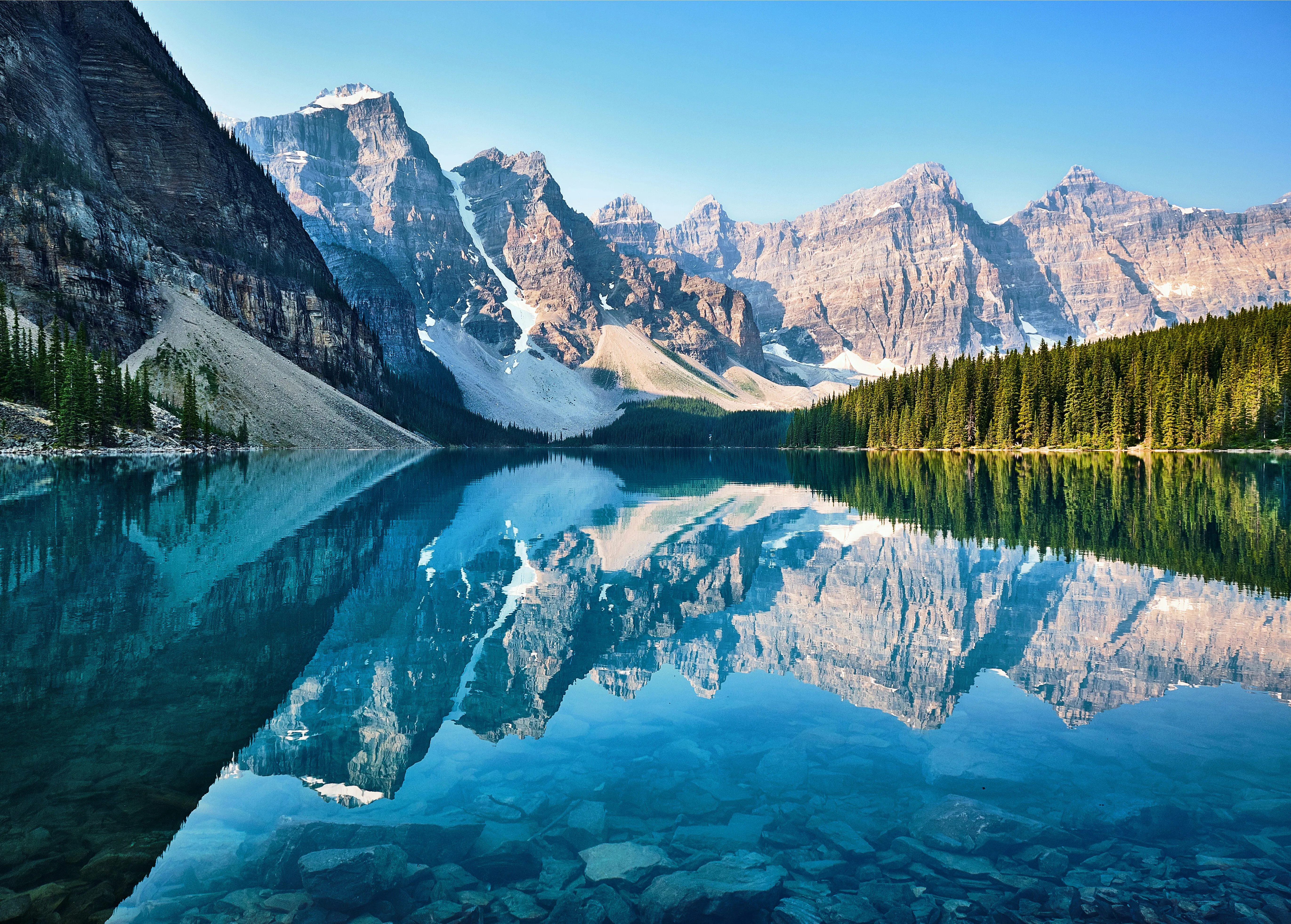
Towards the west, the province of Alberta houses some of the most representative natural landscapes in the world. Banff National Park and Jasper National Park are the heart of the Canadian Rockies. Here, visitors can travel the Icefields Parkway, go hiking through alpine valleys, or photograph turquoise water lakes surrounded by snowy peaks. It is an ideal area for observing local fauna and enjoying outdoor activities in both summer and winter, when ski resorts take center stage.
Upon reaching the Pacific coast, the city of Vancouver surprises with its privileged location between the sea and the mountains. Stanley Park is one of the largest urban parks on the continent and offers circular routes with views of the bay and First Nations totems. The area is known for its relaxed atmosphere, its local product markets on Granville Island, and its proximity to Vancouver Island, where you can visit the botanical gardens of Victoria or go on whale-watching excursions.
For those seeking a more remote experience, Atlantic provinces like Nova Scotia or Newfoundland offer a scene of fishing villages, lonely lighthouses, and rugged cliffs. In the far north of the country, the territories of the Yukon and the Northwest Territories attract travelers interested in Indigenous culture, gold rush history, and the possibility of contemplating natural phenomena such as the northern lights in the coldest months of the year.
Tip: You cannot miss visiting Banff National Park, the most emblematic place in the country.
✈️ Best season to travel
Canada is a country of vast dimensions where the travel experience is radically transformed with the passage of the seasons. The choice of the ideal time for a visit usually depends on the desired activities: warm months are ideal for exploring nature and national parks in all their splendor, while cold months turn the landscape into a privileged setting for snow sports and observing natural phenomena like the northern lights.
During summer, accessibility to more remote regions and long days facilitate adventure tourism and urban festivals. Conversely, transitional seasons, such as spring and autumn, offer a quieter and visually stunning perspective, marked by the rebirth of flora or the characteristic color change of Canadian forests, allowing the enjoyment of major cities with a more relaxed atmosphere.
| Season | Months | Typical climate | What to expect | Tourist influx |
|---|---|---|---|---|
| Spring | Mar – May | Cool and variable; thawing and moderate rains occur. | Tulip blooming, wildlife sightings after winter, and opening of low hiking routes. | Medium (⭐⭐) |
| Summer | Jun – Aug | Warm and pleasant, with mild temperatures and days with many daylight hours. | Cultural festivals, lake sailing, total access to national parks, and high mountain routes. | High (⭐⭐⭐) |
| Autumn | Sep – Nov | Dropping temperatures and fresh air; dry and clear environment. | Reddish and golden colored landscapes (foliage), harvest season, and final whale watching outings. | Medium (⭐⭐) |
| Winter | Dec – Feb | Intense cold and constant presence of snow in most of the territory. | Winter sports, ice sculpture festivals, Christmas markets, and northern lights in the north. | Medium - High in ski resorts (⭐⭐) |
🗣️ Basic vocabulary
Mastering some basic words and phrases is very useful for getting around easily in everyday situations that arise during a trip through Canada. Since the country has English and French as official languages, knowing essential terms will help you communicate respectfully in shops, restaurants, or when asking for directions.
Using these simple expressions facilitates interaction with residents and allows for solving basic needs without complications. Below are some of the most common terms that will serve you in most of the territory:
- Hello / Hi: Hello.
- Please: Please.
- Thank you: Thank you.
- Excuse me: Excuse me (useful for asking for passage or calling someone’s attention).
- Sorry: Sorry (a very frequent courtesy expression in daily Canadian life).
- Where is…?: Where is…?
- How much is it?: How much is it?
- The bill, please: The bill, please.