


Qatar
Discover in Qatar a fusion of modern architecture and Arabian tradition, offering world-class museums, golden dunes, and exceptional safety for the traveler.
Quick Facts
- Capital
- Doha
- Language
- Arabic
- English
- Currency
- Qatari Riyal (QAR)
- Best time to visit
- From November to March, when temperatures are much more pleasant for walking.
- Budget per day
- $80 - $300 per day
- Climate
- Desert climate with extreme heat in summer and mild, sunny winters with very little rainfall.
- Connectivity
- good
- Very easy to acquire both at the airport and in shopping malls.
- Electricity
- Type G (240V)
- Local transport
- good
- Card usage
- widespread
- Tipping
- optional
🌎 Introduction
On the shores of the Persian Gulf, where the desert sand merges with the blue of the sea, lies a peninsula that has managed to balance its Bedouin heritage with a dynamic present. In this corner of the world, days usually pass between the aroma of coffee with cardamom and the gentle swaying of dhows—traditional wooden boats—that still sail near the coast. It is a space of slow contrasts, where the silence of the dunes coexists with the vitality of traditional markets, where the trade of spices, perfumes, and fabrics marks the rhythm of local life.
The identity of this place is reflected in everyday scenes ranging from respect for falconry to the hospitality felt in every encounter. During the cooler months, life moves outdoors and the promenades become the natural meeting point, taking advantage of a pleasant temperature that invites walking. Its gastronomy, rich in nuances and spices, and an architecture that constantly dialogues with the horizon, offer a vision of the Arab world that keeps its roots firm while curiously observing the passage of time.
🛡️ General safety
Qatar is considered one of the safest destinations in the world for travelers. The country stands out internationally for its extremely low crime rates and notable social stability. The sense of security is palpable both day and night, allowing tourists to explore its main attractions with a peace of mind hard to find in other major metropolises.
- The general security level is very high.
- In comparative terms, Qatar usually ranks among the lowest risk levels on a global scale.
- The context for the traveler is one of great order and control, with a strong presence of surveillance cameras and security personnel in public areas.
Crime and common risks
Although crime is minimal, zero risk does not exist anywhere in the world. Incidents affecting tourists are anecdotal, but it is wise to maintain common sense.
- Theft and robbery: These are extremely rare. It is common to see people leaving their personal belongings on café tables unattended, although it is recommended not to lower your guard in crowded areas.
- Scams: Isolated attempts at overcharging for unregulated services or in traditional markets may occur if the price is not agreed upon beforehand, although it is not a widespread practice.
- Infrequent risks: Cyber fraud or fraud through ATMs can occur, so it is advised to use bank terminals inside shopping malls or financial institutions.
Safety in cities and tourist areas
Urban areas in Qatar, especially in its capital, Doha, are designed to be safe and welcoming for the visitor.
- Centers such as Souq Waqif, Msheireb Downtown, and The Pearl-Qatar have constant surveillance and are very safe environments to walk in at any time.
- Public transport, including the modern Doha Metro, is impeccable and monitored, being one of the safest options for getting around.
- There are no relevant safety differences between neighborhoods, as even less touristy areas maintain very high standards of order.
Safety in transport
Transport in Qatar is modern, efficient, and subject to strict regulations that guarantee user protection.
- Public transport: The metro and buses are extremely safe, clean, and have assistance staff.
- Taxis and VTC: Official taxis (turquoise color, Karwa brand) and apps like Uber or Careem are totally reliable. It is always recommended to use licensed vehicles.
- Driving: In Qatar, people drive on the right. Roads are excellent, but traffic can be dense and local driving is sometimes aggressive. It is essential to respect speed limits, as fines are very high and speed cameras are omnipresent.
Natural and climatic risks
The main challenge for the physical safety of the traveler in Qatar does not come from crime, but from extreme weather conditions.
- Extreme heat: Between the months of May and October, temperatures can exceed 45°C with very high humidity. The risk of heat stroke and dehydration is real if outdoor activities are performed during the central hours of the day.
- Sandstorms: These can occur occasionally, drastically reducing visibility and affecting people with respiratory problems.
- Prevention: It is recommended to drink water constantly, use high sun protection, and plan visits to outdoor spaces for sunrise or sunset during the summer.
Legislation and local norms
Qatar is a country with a conservative Islamic culture and laws that can be stricter than in other international destinations. Respecting local norms is the best way to avoid legal problems.
- Clothing: Tourists are expected to dress with modesty in public places (shoulders and knees covered), especially in government buildings and markets. At hotel beaches and private pools, the use of standard swimwear is accepted.
- Alcohol and substances: Alcohol consumption is restricted to hotels and licensed establishments. Drinking in public or showing symptoms of drunkenness in the street is a serious offense. There is zero tolerance for drugs; possession of any amount carries severe prison sentences.
- Social behavior: Excessive public displays of affection can be considered offensive or even illegal. It is important to maintain decorous conduct.
- Photography: Military buildings, government facilities, or local people should not be photographed without their explicit consent.
Safety for specific groups
- Female travelers: Qatar is a very safe country for women traveling alone. Street harassment is almost non-existent, although it is recommended to dress respectfully toward the local culture to avoid stares or uncomfortable situations.
- LGTBIQ+ travelers: Homosexuality is illegal in Qatar. Although the country has shown a “non-interference” attitude with tourists as long as discretion is maintained, it is fundamental to avoid public displays of affection to prevent legal or social incidents.
- Children and the elderly: The country is extremely family-friendly. Infrastructures are adapted and safety allows trips with children to be very relaxed. In the case of the elderly, the main risk is excessive heat, so climatic precautions must be extreme.
Emergencies and assistance
The emergency system in Qatar is highly efficient and staffed by people who usually speak English fluently.
- Main emergency number: 999 (for Police, Ambulance, and Firefighters).
- Medical assistance: The Hamad Medical Corporation ambulance service is world-class. Private hospitals also offer excellent care.
- Procedure: In case of an incident, the police usually act professionally. It is recommended to cooperate at all times and remain calm.
Tip: Download the official Ehteraz app or local transport apps before arriving, and always respect dress codes in public places to integrate better and avoid any misunderstanding with the authorities.
📝 Entry requirements
To undertake a trip to Qatar, it is essential to have a passport with a minimum validity of six months from the planned date of arrival. This document is the primary basis for any entry procedure and must be in good condition. In most cases, visitors traveling for leisure reasons can access an entry permit or visa waiver upon arrival at the airport, which greatly facilitates international tourist flow. This authorization usually allows a maximum stay that varies between thirty and ninety days, depending on various generic administrative factors, more than covering the time of a standard vacation.
When passing through immigration controls, it is common for authorities to request the presentation of an exit ticket from the country or a return passage, in order to confirm the intention not to prolong the stay beyond what is permitted. Likewise, in certain cases, proof of sufficient funds to cover expenses during the stay at the destination or confirmation of a valid accommodation reservation could be required. The entry process is usually swift, although it is recommended to maintain a cooperative attitude during routine security and documentation inspections carried out at access points.
Regarding customs regulations, there are clear restrictions on the introduction of certain items. It is important to note that the entry of alcoholic beverages and pork products is usually restricted for travelers. Regarding the entry of medications, it is advised that those for personal use and under medical prescription be accompanied by their respective prescription or medical report to avoid inconveniences at luggage controls, which are carried out systematically using scanners.
From a health point of view, mandatory vaccines are not usually required in a general way for international tourists, unless coming from areas with very specific epidemiological risks. Nevertheless, it is highly recommended to have basic vaccines up to date and to have travel insurance with broad medical coverage, as health care for non-residents is generally provided privately. Staying generically informed about the health conditions of the destination contributes to a calmer and more predictable travel experience.
- Main document: Passport with a validity exceeding six months.
- Tourism permit: Generally obtained upon arrival for short or medium-term stays.
- Additional documentation: Possible requirement of a return ticket and proof of accommodation.
- Customs controls: Mandatory luggage inspection to detect restricted products such as alcohol or certain foods.
- Medicines: Need for a medical prescription for specific drugs or continuous treatment.
- Health: Recommendation to travel with private medical insurance and usual vaccines up to date.
🏥 Basic health considerations
Qatar has a health system that ranks among the most advanced in the world. You will find modern facilities, cutting-edge technology, and highly qualified professionals who, for the most part, communicate perfectly in English. As a tourist, the most common thing is that you will use private healthcare, as it offers faster and more personalized care than public healthcare for visitors. You should keep in mind that the prices of medical services are quite high, so any simple consultation or emergency treatment can mean a significant outlay if you do not have the proper backing.
Regarding medical insurance, it is important for you to know that having one is mandatory to enter the country. Authorities usually require a policy that covers, at a minimum, emergency services and accident assistance within Qatari territory. It is essential that your insurance also includes medical repatriation, as the costs of such a transfer from the Gulf region are astronomical. Make sure to always carry a copy of the policy and the insurer’s contact number for any unforeseen event.
Regarding the subject of vaccines, there are none that are mandatory to enter the country in a general way. The most recommended thing is that you have your official vaccination schedule up to date, including the usual doses against tetanus, diphtheria, or hepatitis. You will not have to worry about strange tropical diseases, as sanitary conditions and pest control in urban areas are excellent. It is enough to check that your routine vaccines are in order before starting the trip.
If you need to carry personal medication, you must be cautious. Qatar has very strict laws against substance trafficking, which includes certain medications that may be common elsewhere, such as some strong painkillers, psychotropics, or anxiolytics. Whenever you travel with drugs, carry them in their original packaging, accompanied by the original medical prescription and, if possible, a brief report from your doctor translated into English justifying their use. This will help you avoid any inconvenience at customs controls.
The most evident health risk you will encounter in this destination is the extreme heat. During much of the year, temperatures can exceed 45 degrees, which entails a real danger of dehydration or heat stroke. It is vital that you drink liquids constantly and avoid direct sun exposure during the central hours of the day. On the other hand, there are no major risks from insects or diseases transmitted by animals in tourist areas, and altitude is not a risk factor given that the country’s terrain is mostly flat.
Regarding water and food, you can be very calm. Tap water in Qatar is desalinated and technically potable, although most residents and tourists prefer to consume bottled water for reasons of taste and custom. Hygiene in food establishments is very rigorous, even in the most traditional stalls of the souqs, so you will be able to try the local gastronomy without fear of the food poisoning common in other less developed destinations.
If you find yourself in a health emergency situation, the number you should dial is 999. This service centralizes care for police, firefighters, and ambulances. The urgent care system is extremely efficient and ambulances are equipped with advanced life support technology. They will assist you quickly and transfer you to the nearest or best-prepared hospital center to treat your specific problem.
As final practical tips, always remember to use high-factor sunscreen, even if the day seems somewhat hazy due to suspended sand. It is highly recommended to wear clothing made of natural fabrics, such as cotton or linen, which allows your skin to breathe. Do not forget to include some oral rehydration salt sachets in your basic first aid kit, which will come in handy if you notice that the heat is affecting you more than expected. With these small precautions, your stay in the country will be totally pleasant and safe.
🚌 Transport within the country
Mobility in the country is supported mainly by an advanced metro network and a bus system that covers much of the territory. As it is a country with a small surface area, road travel completely replaces domestic flights, with the car being the main ally for covering longer distances. In some coastal areas, it is also possible to find maritime transport options that connect specific points of the coast occasionally.
Access to public transport is simple for any visitor, with stations featuring clear signage understandable in several languages. The systems for obtaining the necessary transport tickets are intuitive, which facilitates the tourist experience from the first moment. The vehicles and facilities stand out for their reliability and punctuality, also offering a climate-controlled and comfortable environment that is appreciated throughout the year.
A natural contrast is perceived between the urban area and the more remote or rural environments. In the heart of large cities, the frequency of service is constant and connectivity is excellent, allowing you to reach the main museums and monuments with ease. However, to explore the desert or less populated areas, the private vehicle is the predominant option, as the mass transport infrastructure is more limited in those locations.
The use of taxis and ride-hailing services through applications is a very widespread and functional practice. These services operate permanently and can be requested easily at any point of interest. They represent a flexible alternative that allows direct door-to-door transfers, guaranteeing a sense of safety and great comfort for those who prefer to avoid waiting at conventional stops.
Tip: It is convenient to check transport connections before leaving your accommodation to optimize travel times between different areas of interest.
🤵 Culture and etiquette
Qatari society deeply values hospitality and formal treatment in everyday interactions. When greeting, it is common to use slow and respectful courtesy formulas, dedicating time to preliminaries before entering into any specific matter. Physical contact, such as a handshake, is usually performed mainly between people of the same sex, so a recommended practice is to wait for the local interlocutor to take the initiative in this gesture. Maintaining a serene and patient attitude is fundamental, as rushing or insistence can be perceived as a lack of consideration for others’ time.
In public spaces, a calm atmosphere prevails where a moderate voice volume and a discreet attitude are preferred. Public displays of physical affection are not part of local custom, prioritizing reserve to maintain environmental harmony. Regarding punctuality, there is a natural flexibility in purely social contexts, where the flow of conversation is a priority, while in the professional field or at official events, compliance with schedules is appreciated as a sign of mutual respect.
Gastronomy and the act of sharing food represent an extension of local generosity and are pillars of social life. If you have the opportunity to participate in a traditional meal, it is custom to preferably use the right hand to eat food or accept plates and drinks. In dining establishments, although there is no strict obligation, tips are well received as a gesture of gratitude for the service received, especially in contexts where the service has been exceptional.
Respect for religious traditions and social hierarchies is essential for smooth coexistence. When visiting places of special relevance or residential areas, silence and clothing that covers shoulders and knees are basic signs of courtesy. Likewise, showing deference toward elderly people and avoiding gestures that could be abrupt, such as pointing directly with a finger, helps maintain a harmonious and fluid interaction with local residents.
“Tip”: When sitting on low sofas or in traditional spaces, try to ensure that the soles of your shoes do not point directly toward other people, as this gesture can be unintentionally interpreted as a lack of attention toward those present.
🍛 Typical gastronomy
The cuisine of Qatar is a reflection of its history, where the Bedouin traditions of the desert blend with influences from maritime trade routes that brought spices from India, Iran, and North Africa. The result is a culinary offering rich in aromas and textures, primarily using rice, lamb and chicken meats, and fresh fish from the Persian Gulf. The use of loomi (dried black lime), saffron, and cardamom gives its dishes a distinctive, deep, and slightly citrusy flavor profile that defines the Qatari table’s identity.
Sitting down to eat in this country is, above all, an act of hospitality and coexistence. Meals are usually presented in large shared platters, reinforcing the sense of community. In more traditional settings, it is common for diners to sit on rugs on the floor and use their right hand to serve themselves, a fundamental etiquette rule in the local culture. Lunch is usually the most important meal of the day, while dinners tend to be slower and extend late into the night, especially when the weather is more pleasant.
The welcoming ritual always revolves around gahwa, traditional Arabic coffee. This drink, prepared with lightly roasted beans and flavored with cardamom, is served in small cups called finjan. It is considered a gesture of courtesy to accept at least one cup, which is generally accompanied by dates to balance its intense flavor. Being a majority Muslim country, alcoholic beverages are not part of the daily diet and their consumption is limited to establishments with specific licenses, with natural juices and herbal teas playing a major role.
Another essential drink in daily life is karak tea, a mixture of black tea with evaporated milk, sugar, and spices that has become a symbol of urban life. This tea is consumed at any time and is the ideal accompaniment for traditional breads, such as khubz or regag. The gastronomic offer is completed with a wide variety of stews and slow-cooked preparations that demonstrate the patience and respect for ingredients that characterize the region’s cuisine.
| Dish | Description | Main ingredients | Where to try it | Tip |
|---|---|---|---|---|
| Machboos | Considered the national dish, it is a highly spiced rice accompanied by meat or fish. | Basmati rice, lamb or chicken, spice mix (bezar), and dried lime. | Traditional food restaurants in Doha and local markets. | Squeeze a bit of fresh lemon over it to enhance the spice flavors. |
| Saloona | A classic and comforting stew that allows for multiple variants depending on the season. | Meat, varied vegetables (potato, carrot, eggplant), and spiced tomato sauce. | Traditional eating houses and local spots in historical areas. | Order a portion of khubz bread to dip in the stew sauce. |
| Madrouba | A dish of creamy consistency, similar to a savory porridge, cooked very slowly. | Crushed rice or wheat, chicken, butter, and aromatic spices. | Food stalls in Souq Waqif or neighborhood markets. | It is a very filling dish, ideal for sharing as a main course. |
| Luqaimat | Small fried dough balls, crunchy on the outside and fluffy on the inside. | Flour, yogurt, cardamom, saffron, and date syrup or honey. | Street sweet stalls and traditional cafes. | Enjoy them freshly made, while they are still hot and crunchy. |
| Harees | A traditional preparation of dense and smooth texture, very common in celebrations. | Ground wheat, meat (generally lamb), and cinnamon. | Restaurants specialized in Qatari cuisine and cultural events. | Add a pinch of sugar and cinnamon if you prefer a sweet-savory contrast. |
📷 Areas and places to visit
The capital, Doha, presents itself as the natural starting point for any traveler wishing to get to know the country. This city combines an avant-garde skyline with spaces that invite slow strolls, such as the Corniche promenade. From this multi-kilometer path, one can observe the contrast between traditional wooden boats, known as dhows, and the glass skyscrapers that define the contemporary urban profile. It is an ideal area for walking at sunset and enjoying the sea breeze while contemplating the architecture of the bay.
In the historical heart of the capital lies Souq Waqif, a traditional market that preserves the essence of old-time commerce. Walking through its labyrinthine streets allows you to discover spice shops, local crafts, textiles, and perfumes. Very close to this enclave, the Msheireb Downtown Doha neighborhood offers a totally different vision; it is an example of sustainable urban regeneration where modern architecture respects local aesthetic roots, creating an airy space connected by a modern tram system.
The cultural sphere has its maximum expression in internationally renowned institutions such as the Museum of Islamic Art, located on an artificial peninsula and surrounded by extensive gardens. Its exterior design is as relevant as the vast collection of historical objects it houses. On the other hand, the National Museum of Qatar stands out for its structure inspired by the geological formation of the desert rose, narrating the evolution of the territory from its geological origins and its pearling past to the present in an immersive and visual way.
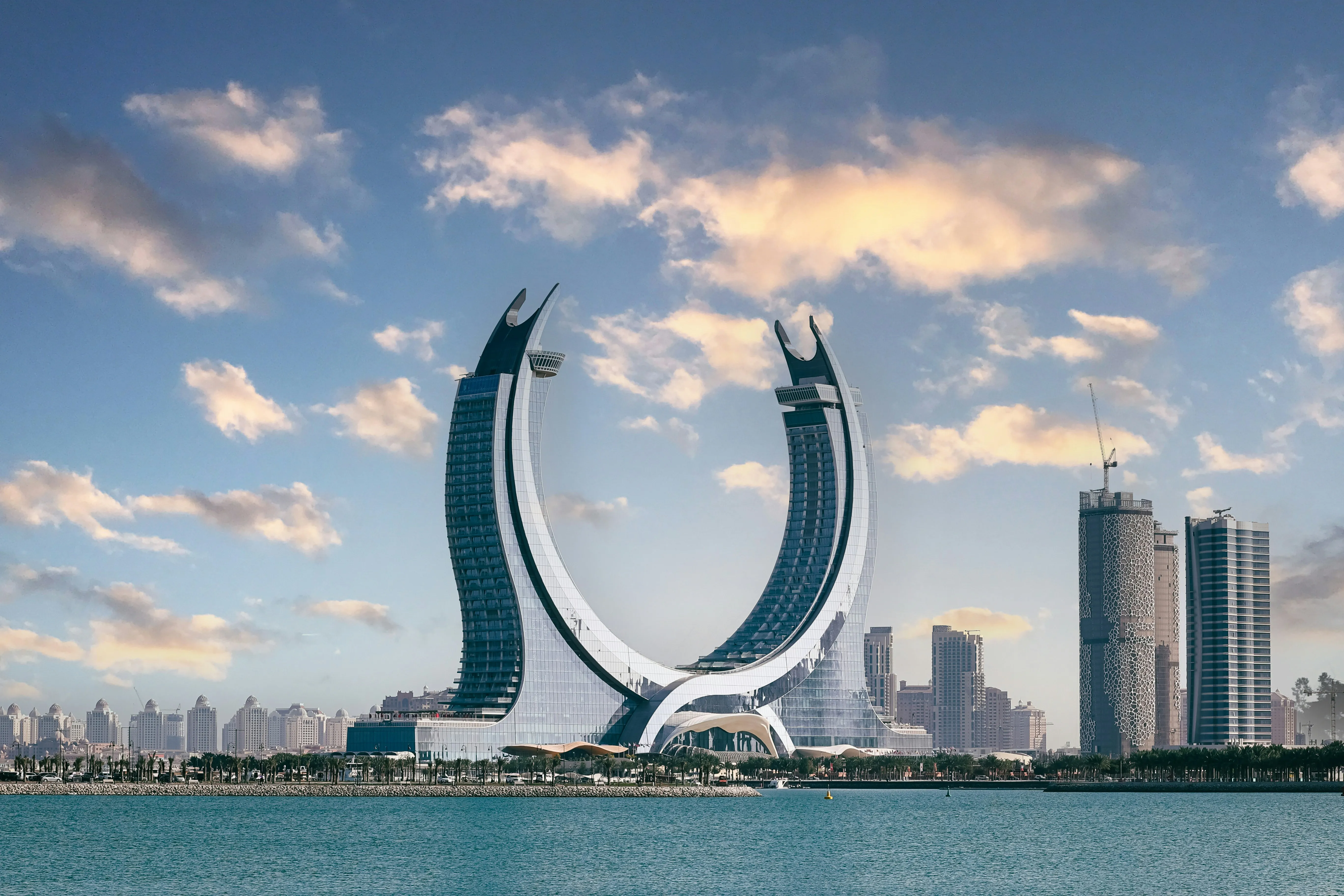
For those seeking a more cosmopolitan and relaxed experience, The Pearl-Qatar is an artificial archipelago that houses exclusive residential areas, marinas, and a wide range of international restaurants. Following the coastline north, the city of Lusail represents the most recent expansion of the country, known for its advanced urban design, its parks, and its capacity to host major events in a futuristic design environment.
Nature also occupies a fundamental place in the visitor’s experience, especially in the south of the country, where Khor Al Adaid or the Inland Sea is located. This spot is one of the few places in the world where the desert dunes directly meet the sea, creating an ecosystem of great beauty. Sand excursions in prepared vehicles are a common activity to appreciate the vastness of the landscape and enjoy the tranquility offered by the desert environment far from the urban bustle.
Exploring the north, the landscape changes toward coastal areas and wetlands of great ecological value. The Al Zubarah fort, recognized as a World Heritage site, is a key testimony to the commercial past and pearl fishing in the region, offering an educational look at life in ancient coastal settlements. In this same region, the Al Thakira mangroves show an unexpected green and aquatic facet, being a perfect place for kayaking routes and observing local fauna in an environment of absolute calm.
Finally, the Katara Cultural Village acts as a nerve center for the arts and cultural exchange. This complex brings together amphitheaters, art galleries, exhibition halls, and craft centers in a precinct that mimics the traditional architecture of ancient villages. It is a vibrant space where festivals and cultural events are often held, allowing the tourist to get close to the traditions and contemporary creativity of the region.
Tip: You cannot miss visiting Souq Waqif, the most emblematic place in the country.
✈️ Best time to travel
Qatar has a desert climate that significantly marks the traveler’s experience. The most recommended time to visit the country usually coincides with the months of moderate temperatures, when the environment allows for enjoying both urban architecture and natural landscapes. During this period, social life moves to open spaces and the sea breeze softens the atmosphere, facilitating travel on foot.
In contrast, the transition months and the summer period offer a different perspective of the region. While the heat invites you to discover the extensive cultural offer in climate-controlled spaces, such as internationally relevant museums and leisure centers, the drop in temperatures at the end of the year reactivates activities in the desert and outdoor cultural events. The choice of date will therefore depend on the type of activities you wish to prioritize during your stay.
| Season | Months | Typical climate | What to expect | Tourist influx |
|---|---|---|---|---|
| Spring | Mar – May | Rising temperatures (25°C - 35°C). Moderate humidity. | Transition toward heat, last outdoor festivals, and clear days. | Medium ⭐⭐ |
| Summer | Jun – Aug | Intense heat (above 40°C) and high humidity. | Activities centered indoors, museums, shopping malls, and nightlife. | Low ⭐ |
| Autumn | Sep – Nov | Gradual decrease in heat (25°C - 35°C). Drier environment. | Reopening of terraces, start of the sailing season, and sports events. | Medium ⭐⭐ |
| Winter | Dec – Feb | Mild and pleasant weather (14°C - 24°C). Scarce rains. | Ideal time for desert excursions, walks through Souq Waqif, and beach life. | High ⭐⭐⭐ |
🗣️ Basic vocabulary
Although English is the language of common use in most tourist services and shops in Qatar, knowing some basic expressions in Arabic is an excellent way to show courtesy. Learning these words will help you navigate daily situations better, such as greeting when entering an establishment or saying thank you for a direction, making interaction with local residents smoother.
It is not necessary to delve deep into grammar, as with just a few courtesy formulas you can show respect for local culture and facilitate communication during your travels and visits.
- Marhaba: Hello.
- Shukran: Thank you.
- Min fadlak: Please.
- Salam Alaikum: Formal greeting (meaning “peace be upon you”).
- Afwan: You’re welcome or excuse me.
- Na’am: Yes.
- La: No.
- Kam?: How much?