


Fiji
South Pacific archipelago with crystal-clear waters, white sand beaches, vibrant reefs, and a hospitable culture that invites relaxation and adventure.
Quick Facts
- Capital
- Suva
- Language
- Fijian
- English and Fiji Hindi
- Currency
- Fijian Dollar (FJD)
- Best time to visit
- From May to October, during the cool dry season.
- Budget per day
- $75 - $280 per day
- Climate
- Warm tropical climate throughout the year, with a wet season from November to April and mild temperatures during the dry season.
- Connectivity
- medium
- Very easy to obtain at airports and local shops.
- Electricity
- Type I (240V)
- Local transport
- acceptable
- Card usage
- acceptable
- Tipping
- optional
🌎 Introduction
In the heart of the South Pacific, Fiji presents itself as a mosaic of more than three hundred islands that combine the lushness of volcanic mountains with the calm of its coasts. Far from the rush, life in this archipelago moves at a leisurely pace, marked by the cycle of the sun and the sea breeze. Its landscapes vary according to the time of year, showing everything from tropical forests overflowing with humidity to coral reefs that peek out under calm waters, offering a diverse and well-preserved natural environment.
The essence of these islands also resides in its people and in a culture that values community and shared time. In daily life, it is common to encounter the aroma of local ingredients cooked in the traditional earth oven or the murmur of conversations during the kava ritual. This mix of Melanesian roots and external influences has shaped a unique and welcoming identity, where traditions coexist naturally with daily life in an atmosphere of great hospitality.
🛡️ General Safety
Fiji is known worldwide as one of the most hospitable and safe destinations for travelers. The country maintains a high general level of safety, especially in areas dedicated exclusively to tourism and in the outer islands. Although it is a much quieter destination compared to other regions of the Pacific or Southeast Asia, as with any international trip, it is necessary to apply common sense and be attentive to certain local particularities to guarantee a trouble-free stay.
Crime and common risks
Most visits to Fiji pass without incidents related to crime. However, there are minor risks that are worth knowing:
- Pickpocketing and petty theft: These occur mainly in busy urban areas, markets, or public beaches. It is recommended not to leave valuables unattended.
- Minor scams: In cities like Nadi or Suva, some vendors may approach you very persistently offering “gifts” or wooden carvings personalized with your name and then demand payment.
- Safety in accommodations: Although resorts have excellent security measures, in hostels or cheaper accommodations, it is prudent to use the safes provided.
- Nighttime incidents: Isolated cases of bag snatching or incidents after leaving nightlife establishments in major cities have been reported, so it is advised to move in groups or by official taxi.
Safety in cities and tourist areas
There is a notable difference between the experience in private island resorts and life in urban centers:
- Tourist areas and resorts: These are extremely safe environments, designed for relaxation, where security risk is practically non-existent.
- Urban centers (Suva and Nadi): During the day they are vibrant and safe places to walk. However, after nightfall, it is preferable to avoid poorly lit areas or walking alone through peripheral neighborhoods of the capital.
- Markets: These are safe but very crowded places; keep your belongings close to your body to avoid oversights.
Safety in transport
Moving around Fiji is simple, but requires attention to certain logistical details:
- Driving: In Fiji, they drive on the left. If you decide to rent a vehicle, keep in mind that many secondary roads may not be well lit or may have potholes.
- Public transport: Local buses are an economical and safe way to travel, widely used by tourists who want an authentic experience.
- Taxis: They are abundant and generally reliable. In major cities, make sure the taxi driver turns on the meter; in rural areas, it is advisable to agree on the price before starting the journey.
- Maritime transport: For transfers between islands, always use ferry services or motorboats operated by authorized companies that have life jackets and communication equipment.
Natural and climatic risks
Given its geographical location, Fiji is exposed to certain natural phenomena that the traveler should consider:
- Tropical cyclones: The cyclone season generally runs from November to April. During these months, rains can be intense and cause flash flooding or transport disruptions.
- Seismic activity: Although Fiji is located in a zone with tectonic activity, high-magnitude earthquakes are infrequent. Tsunami evacuation protocols exist in all coastal areas and resorts, which are clearly signposted.
- Heat and solar radiation: The sun is extremely strong at these latitudes. The risk of dehydration and sunburn is real if constant preventive measures are not taken.
Local legislation and norms
Respect for traditions is fundamental in Fijian culture, especially when visiting villages outside the commercial circuits:
- Protocol in villages: When visiting a local village, it is customary to bring a gift (generally yaqona, known as kava). It is considered a sign of disrespect to wear a hat or sunglasses inside the village, or to touch someone’s head, as it is considered the most sacred part of the body.
- Drug consumption: Laws against the trafficking and consumption of narcotic substances are very strict and carry severe prison sentences, without distinction for foreigners.
- Dress code: Outside hotels and beaches, it is recommended to dress modestly, covering shoulders and knees, especially in rural or religious settings.
Safety for specific groups
- Solo female travelers: Fiji is a safe destination for women traveling alone. Nevertheless, it is recommended to avoid walking on lonely beaches at night and to be cautious with displays of excessive attention in nightlife settings.
- LGTBIQ+ travelers: Although homosexuality is legal in Fiji, society is conservative and deeply religious. Public displays of affection may be frowned upon or cause discomfort, so discretion is recommended, especially outside international resorts.
- Traveling with children and the elderly: It is an excellent destination for families and seniors. The local culture loves children and resorts are perfectly equipped with assistance and supervision services.
Emergencies and assistance
Fiji has operational emergency services, although their speed can vary depending on whether you are on the main island (Viti Levu) or on remote islands:
- Emergency numbers: The general number for emergencies (Police, Ambulance, and Fire) is 911 or 917 for direct police assistance.
- Medical assistance: In major cities, there are hospitals and private clinics of good quality. In remote islands, medical assistance is very limited, so it is essential to have travel insurance that covers air medical evacuation in case of seriousness.
- Handling incidents: In case of being a victim of a robbery, go to the nearest police station to make a report (“police report”), which is necessary for any subsequent insurance claim.
Tip: When visiting a local village for a kava ceremony, always dress respectfully and ask permission before taking photographs of residents or their homes.
📝 Entry requirements to the country
To plan a trip to Fiji, it is essential to have a passport with a minimum validity that usually extends to six months after the scheduled departure date from the archipelago. Most international travelers visiting the islands for tourism purposes do not usually require a prior visa, as it is common for a visitor permit to be granted upon landing at the main entry points. This permit allows for a maximum stay for tourism that generally reaches four months, thus facilitating the exploration of the diverse regions that make up the country.
At the airport migration control, officers may request the presentation of an exit ticket to a third destination or back to the place of origin, as a guarantee that the traveler does not intend to exceed the permitted time. Likewise, it is common to be asked to demonstrate the possession of sufficient financial funds to cover the expenses planned during the entire stay. These procedures are part of the conventional protocols to ensure a smooth and orderly tourist flow.
Fiji maintains very rigorous controls regarding biosecurity with the aim of protecting its delicate and unique natural ecosystem. For this reason, there are significant restrictions on the introduction of fresh foods, plants, seeds, or products of animal origin, which must be compulsorily declared upon arrival. Regarding personal luggage, medications for personal use are usually allowed, and it is recommended that they be accompanied by their corresponding original medical prescription.
Regarding health considerations, it is advisable for visitors to keep their general vaccination schedule up to date. Although there are usually no specific vaccine requirements for all travelers, in certain circumstances related to the traveler’s previous origin, it might be necessary to show preventive health certificates. It is always recommended to have travel insurance that offers broad coverage during the stay on the islands.
- Identity documentation: A passport valid for more than six months is required.
- Stay permit: Generally processed upon arrival for vacation stays.
- Visiting period: The maximum authorized time is usually up to four months.
- Exit guarantees: It is usual to request the transport ticket that confirms the departure from the country.
- Financial solvency: Travelers must be prepared to prove financial means for their stay.
- Customs regulations: Strict surveillance on organic products, food, and protected species.
- Health: Consultation of general health recommendations is suggested before starting the journey.
🏥 Basic health considerations
If you are planning your trip to this Pacific paradise, it is important to know that the level of the healthcare system in Fiji is acceptable, especially in the urban areas of Viti Levu. You will find the main hospitals in cities like Suva, Nadi, or Lautoka, where care is reasonable for common problems. However, in the more distant or remote islands, medical assistance is very basic or non-existent. As a tourist, you can access both public centers and private clinics, the latter being the most recommended for their speed and better facilities. The health personnel will usually attend to you in English and you should keep in mind that costs for foreigners can be quite high, so payment in advance is usually requested.
Contracting travel medical insurance is not mandatory to enter the country, but it is something totally recommended that you should not overlook. The most important thing is that your insurance covers hospitalization and, above all, medical evacuation by air. If you are on a small island and suffer a serious mishap, the transfer by helicopter or light aircraft to a well-equipped hospital can cost you thousands of dollars if you do not have a policy to back it up.
Regarding vaccines, you will not find any that are mandatory to enter Fiji, unless you come from a country where yellow fever is endemic, in which case they will ask for the vaccination certificate. For a quiet trip, it is enough to have your official vaccination schedule updated. Some travelers prefer to get vaccinated against typhoid fever or hepatitis A if they plan to explore very rural areas or eat frequently at local stalls, but for standard resort and beach tourism it is usually not necessary.
If you need to bring your own medication, make sure to always transport it in its original packaging and with the label visible. It is essential that you carry the medical prescription or a report from your doctor with you, preferably in English, to avoid problems at customs controls. In the pharmacies of large cities you will find basic products, but if you use very specific drugs, it is better to carry a sufficient quantity for your entire stay. Do not forget a small first-aid kit with disinfectant, band-aids, and some broad-spectrum antibiotic just in case.
Regarding environmental risks, what you will notice most is the constant heat and humidity. This can cause dehydration if you do not drink enough liquid. Mosquitoes are another factor to keep in mind, as diseases such as dengue are present in the country, so the use of repellent is something you will appreciate daily. In the sea, be very careful with coral cuts or encounters with sea urchins, as in this climate small wounds tend to get infected easily if you do not clean and disinfect them quickly.
About the consumption of water and food, in the main urban areas tap water is usually safe to drink, although you may not like its taste. In the smaller or more remote islands, it is much more prudent to always consume bottled water. Hygiene in hotels and restaurants oriented to tourism is very good, so you can try the local gastronomy without fear, although it is always a good idea to avoid raw foods in places that do not inspire total confidence.
In case you have a health emergency during your stay, the phone number you should dial is 911. You should know that the ambulance service is efficient in cities, but if you are in a resort on a private island, it is usual for the hotel staff to coordinate the emergency transfer by their own means or contact private rescue services.
As final recommendations for your trip to be perfect, always use a high-factor sunscreen even if you see the sky cloudy, as radiation is very intense in this part of the world. Do not forget to drink water constantly to combat the tropical heat and always carry a good insect repellent at hand, especially at sunrise and sunset. With these basic precautions, you will only have to worry about enjoying the beaches and the kindness of the local people.
🚌 Transport within the country
Moving around Fiji involves combining land and sea journeys on a regular basis. On the larger islands, the bus is the most common means of transport for medium-distance travel, while ferries and domestic flights in light aircraft or seaplanes are frequently used to travel between the different archipelagos. Car rental is also a widespread option for those who wish to explore the main roads with greater autonomy.
The use of public transport is accessible for visitors, as signs are usually in English and station staff tend to provide close assistance. In the main cities, stops are correctly signposted, although to use the scheduled buses it is necessary to previously obtain a rechargeable transport card, as direct cash payment to the driver is not usually accepted.
There is a notable difference between urban zones and more remote areas. While in the larger population centers traffic and vehicle frequency are constant, in rural areas and small islands the pace is much slower. In these places, smaller boats and secondary paths set the pace for travel, requiring more flexible planning from the traveler.
Taxis are abundant in populated areas and near airports or main ports, being a comfortable alternative for short trips or with luggage. In general, transport services in the country are characterized by a relaxed atmosphere. Although schedules are usually respected, the reliability of times can be influenced by the local lifestyle, so it is recommended to travel without excessive haste.
“Tip”: It is advisable to check the weather status before organizing sea transfers, as maritime conditions can alter the operation of some routes.
🤵 Culture and Etiquette
Social interaction in Fiji is based on genuine hospitality and a deep sense of community. Greeting is an essential part of daily life; the term “Bula” is used constantly not only as a welcome, but as a wish for health and happiness. In personal dealings, an attitude of kindness and courtesy predominates, where maintaining a moderate voice volume and calm gestures is valued. It is important to keep in mind that the head is considered sacred, so it is recommended to avoid touching another person’s head, even in gestures of affection towards children, to respect this personal and symbolic space.
The pace of life in the archipelago is usually more relaxed than in Western urban environments, a characteristic commonly known as “Fiji time”. This perception of time implies that punctuality is flexible and activities may develop with some delay compared to the scheduled time. Adapting to this cadence with patience and without showing frustration allows for a more harmonious coexistence with local residents. In public spaces, discreet behavior and the maintenance of a respectful physical distance during conversations are appreciated.
When visiting villages or rural settings, clothing plays a crucial role as a show of consideration for local traditions. It is fundamental to dress modestly, keeping shoulders and knees covered. There is a specific rule of courtesy that consists of removing hats and sunglasses when entering a village, as wearing accessories on the head can be interpreted as a sign of disrespect towards the authority or the community chief. Likewise, it is customary to remove your shoes before entering a house or any community building.
In social and gastronomic contexts, generosity is the norm. If invited to participate in a kava (Yaqona) ceremony, it is considered a gesture of courtesy to accept at least one cup as a symbol of brotherhood. During meals, sharing food is a common practice that strengthens social ties. Regarding economic rewards, tipping is not an obligation nor part of the local culture, although it is accepted with gratitude if the visitor decides to reward exceptional service. In daily transactions, direct treatment accompanied by a smile is preferred.
Tip: To show maximum respect when visiting a traditional community, ensure you do not wear backpacks on your back or accessories on your head while walking through the village, and always wait to be invited before entering any private or sacred space.
🍛 Typical Gastronomy
The cuisine of Fiji is defined by its freshness and simplicity, the result of an interesting fusion between the ancient traditions of the Pacific peoples and the Indian influences that arrived on the islands more than a century ago. The use of local products, collected directly from the land and the sea, is the basis of a balanced diet where natural flavors and soft textures take center stage.
Among the fundamental ingredients, tubers such as taro and cassava stand out, functioning as the main accompaniment in almost all meals. Coconut milk, known locally as lolo, is the essential element that provides creaminess to a large part of the stews and sauces. Fish and seafood, caught traditionally in nearby reefs, are consumed daily, either marinated in citrus or slow-cooked.
The act of eating in Fiji has a deeply social and community component. In villages and traditional settings, it is common to share food in a group, while in more urban areas meal times tend to be flexible and relaxed. A relevant cultural aspect is the Lovo, a traditional underground cooking method used especially in celebrations. Regarding beverages, Kava occupies a central place; it is an infusion made with a local root that is consumed in ceremonies and social gatherings following a protocol of respect.
The influence of the Indo-Fijian community has enriched the local recipe book with a wide variety of curries and spices, adapted to the island’s products. It is common to find food stalls and local restaurants where flatbreads and legumes coexist with traditional Melanesian root recipes, offering a diverse culinary range that reflects the multiculturalism of the archipelago.
| Dish | Description | Main Ingredients | Where to try it | Tip |
|---|---|---|---|---|
| Kokoda | Marinated raw fish, similar to a ceviche but creamier. | White fish, lime, coconut milk, and vegetables. | Coastal restaurants and hotels in Viti Levu. | Served very cold; ideal as a starter on hot days. |
| Lovo | A feast of food slow-cooked in an oven dug into the earth. | Meat, fish, taro, and cassava wrapped in banana leaves. | Traditional villages and themed dinners at resorts. | It is a complete cultural experience that usually lasts several hours. |
| Rourou | Taro leaves cooked until they obtain a texture similar to spinach. | Taro leaves, coconut milk, and onion. | Local eateries and municipal markets. | Perfect as an accompaniment to fried or grilled fish dishes. |
| Palusami | Bundles of leaves filled with ingredients that melt in the mouth after cooking. | Taro leaves, coconut cream, and sometimes corned beef. | Suva markets and traditional food stalls. | Try it fresh out of the oven to appreciate its mellow texture. |
| Fish Curry | Aromatic stew that fuses Indian technique with local ingredients. | Fresh fish, turmeric, cumin, and coconut milk. | Small local restaurants in Nadi and Suva. | Usually accompanied by rice or roti (Indian-style flatbread). |
📷 Areas and places to visit
The Fiji archipelago is distributed across hundreds of islands, although main activity is concentrated on Viti Levu, the largest and most populated island. On its western coast is Nadi, the main entry point for international travelers. This city stands out for its dynamism and for housing the Sri Siva Subramaniya Temple, an example of Dravidian architecture with colorful reliefs that reflects the cultural heritage of the Indo-Fijian community. Nearby, the Garden of the Sleeping Giant offers a tour of paths surrounded by orchids and tropical vegetation, providing a leisurely introduction to local biodiversity.
Towards the southeast of the island lies Suva, the country’s capital. It is an urban center that combines colonial-era buildings with modern constructions. A necessary stop is the Fiji Museum, located within the Thurston Gardens, where historical objects are preserved that narrate the evolution of Oceanic customs, from ancient navigation to the current era. Walking through its streets allows you to observe the contrast between the administrative pace of the city and the relaxed atmosphere of its municipal markets, where fresh produce and wooden crafts or masi fabrics are traded.
The Coral Coast, which extends along the southern shoreline of Viti Levu, is one of the areas with the greatest diversity of landscapes. Here you will find the Sigatoka Sand Dunes, a site of great archaeological and natural importance where the wind has shaped high sand formations. In this same region, tourists often explore the Sigatoka River valley to visit small villages and observe the rural way of life. For those seeking higher intensity activities, Pacific Harbour is the key location, known for the experiences in its reefs and the practice of water sports in a jungle and sea environment.
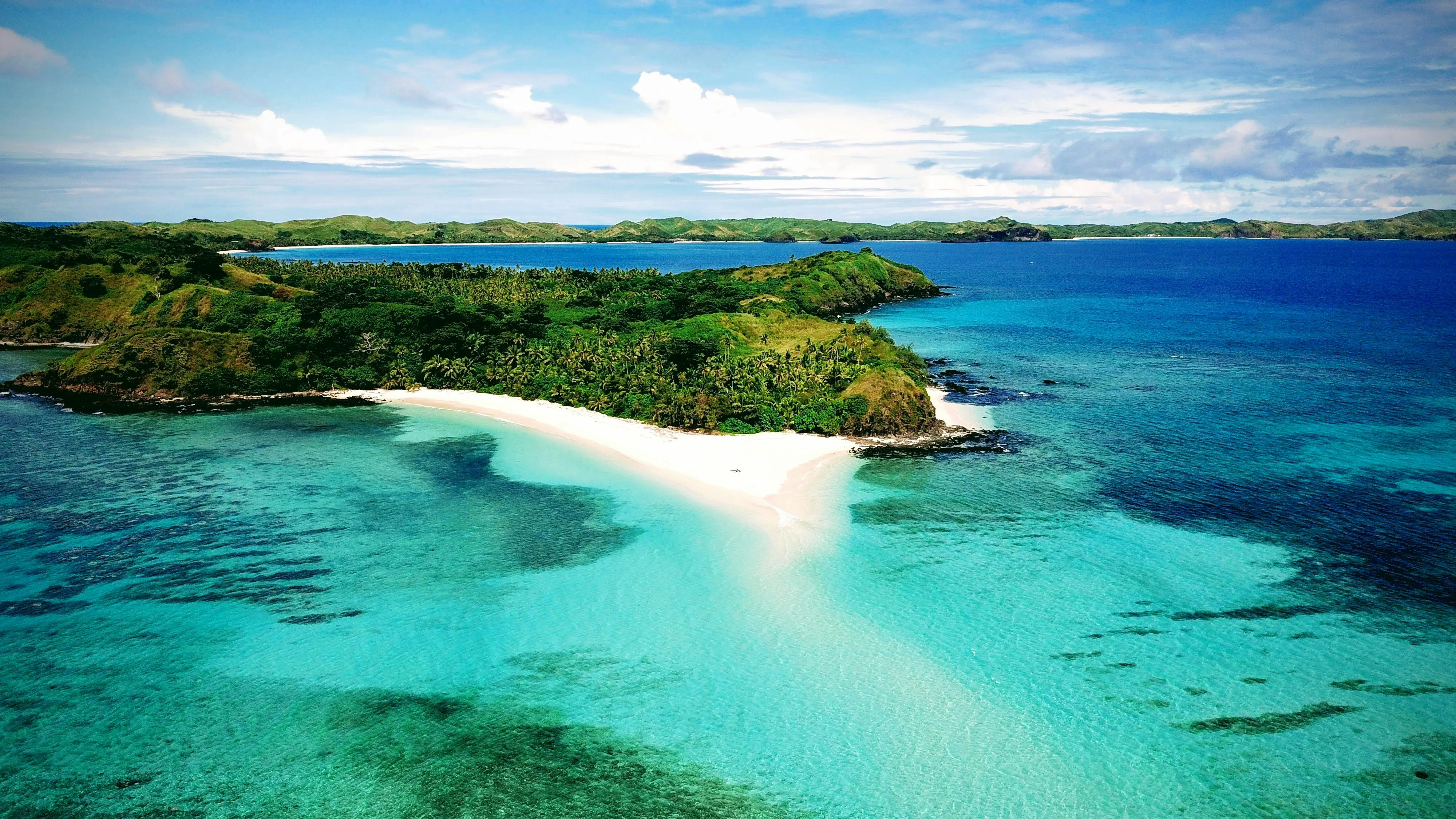
Outside the main island, the archipelagos of the Mamanuca Islands and the Yasawa Islands represent the most widespread image of the country. These islands are accessible by sea and are characterized by their volcanic formations, white sand beaches, and transparent waters. In the Yasawas, it is possible to visit the Sawa-i-Lau Caves, a series of natural cavities carved by water that have deep spiritual significance for the local inhabitants. These areas are ideal for manta ray sightings and the exploration of protected marine ecosystems.
In the north, Taveuni stands out, popularly known as the Garden Island due to its exuberant vegetation. It houses the Bouma National Heritage Park, where you can walk trails leading to the Tavoro waterfalls. A peculiar point of interest on this island is the 180th Meridian, the international date line, which allows visitors to symbolically stand between today and tomorrow. Nearby, the island of Vanua Levu offers a quieter experience in towns like Savusavu, famous for its bays and natural hot springs.
Fiji’s richness is not limited to its coastal landscapes; the interior of the islands offers the opportunity to participate in kava ceremonies in traditional communities, an essential social practice to understand Fijian hospitality. Craft markets in rural areas allow for the learning of ancient weaving and carving techniques, while in local festivities traditional dances known as meke can be observed, which tell stories of war and love through movement and song.
“Tip”: You cannot miss visiting the Mamanuca Islands, the most emblematic place in the country.
✈️ Best season to travel
Fiji has a tropical climate that allows for visits throughout the year, although the experience varies according to the level of humidity and rainfall. Generally, the period between May and October is considered the most favorable for outdoor activities, as it coincides with the dry season. During these months, days are usually sunny and temperatures milder, which facilitates water sports and island exploration with better weather predictability.
On the other hand, the months from November to April make up the wet season, characterized by an increase in temperatures and the frequency of rains, which are usually intense but brief. This time offers a more exuberant landscape and a quieter atmosphere in terms of visitor volume. When choosing a travel date, it is advisable to balance personal preferences between the dry climate and the tranquility offered by periods of lower attendance.
| Season | Months | Typical weather | What to expect | Tourist influx |
|---|---|---|---|---|
| Spring | Mar – May | Warm temperatures and progressive reduction of rains. | Transition towards clearer skies and waters with good visibility for diving. | Medium ⭐⭐ |
| Summer | Jun – Aug | Sunny days, lower humidity, and cool nights. | Optimal conditions for surfing, hiking, and local cultural festivals. | High ⭐⭐⭐ |
| Autumn | Sep – Nov | Pleasant climate with a slight increase in humidity at the end of the period. | Marine wildlife sightings and very green natural environment after the rainy season. | Medium ⭐⭐ |
| Winter | Dec – Feb | Intense heat, high humidity, and presence of frequent rains. | Vibrant tropical landscapes and a more relaxed and calm atmosphere on the islands. | Low ⭐ |
🗣️ Basic vocabulary
Learning some words and expressions in Fijian is a practical way to facilitate communication and show respect for the local culture during your stay. Although English is one of the official languages and is widely spoken in tourist areas, knowing basic terms will allow you to interact with greater closeness in everyday situations, such as when greeting or thanking for a service.
It is not necessary to master the grammar to better integrate into the daily life of the islands. Using these words in shops, hotels, or when interacting with residents helps create a friendlier and more fluid environment in your daily dealings.
- Bula: It is the most common greeting and is used to say “hello”.
- Vinaka: Meaning “thank you”.
- Vinaka vakalevu: Used to say “thank you very much”.
- Yadra: Used to say “good morning”.
- Io: Means “yes”.
- Sega: Means “no”.
- Tulou: An expression of courtesy equivalent to “sorry” or “excuse me”, especially useful when passing in front of someone.
- Moce: Used to say “goodbye” or “see you later”.