


Israel
Israel offers a millenary fusion of history, culture, and spirituality in its diverse landscapes, from the Negev desert to the Mediterranean coasts.
Quick Facts
- Capital
- Jerusalem
- Language
- Hebrew
- Arabic, English
- Currency
- New Shekel (ILS)
- Best time to visit
- Spring (March to May) and autumn (September to November) to avoid extreme heat.
- Budget per day
- $80 - $220 per day
- Climate
- Mediterranean climate with hot summers and mild winters; the south has a very dry and hot desert climate.
- Connectivity
- good
- Very easy to acquire at airports, kiosks, and phone stores, including eSIM options.
- Electricity
- Type C/H/M (230V)
- Local transport
- good
- Card usage
- widespread
- Tipping
- yes
🌎 Introduction
In the corner where the Mediterranean meets the desert, light and relief draw a landscape of constant contrasts. It is not just the heritage of centuries that defines this place, but the life that flows today between its hills and its coasts. The daily rhythm changes with the seasons, moving from cool, green winters in the north to the dry warmth that rises from the south, while the aroma of freshly baked bread and spices permeates the air of the oldest neighborhoods.
The identity of this land is perceived in the simplest details: the silence that envelops some cities at dusk, the bustle of markets full of local products, or the mix of languages heard in any square. It is an environment where tradition coexists with vibrant modernity, allowing one to move from the serenity of olive groves to the dynamism of streets full of life in a short time. Without fanfare, its geography offers a pause to observe how the past and the present intertwine naturally in the same space.
🛡️ General safety
Israel is considered a country with a high level of security for tourists, comparable in many aspects to the standards of major European or North American nations. Although external perception may be influenced by its geopolitical situation, the daily reality for the traveler is that of an extremely organized country, with a very visible police and security presence that contributes to a calm and controlled environment.
The context for the international traveler is that of a destination where security is a national priority. It is common to find security checks when entering shopping malls, transportation stations, or public buildings. These procedures are routine and carried out efficiently, so they should not be a cause for alarm but should be accepted as part of the country’s normality.
Crime and common risks
The violent crime rate in Israel is very low, and attacks specifically targeting tourists are rare. However, as in any popular destination, there are minor risks that are worth knowing:
- Theft and pickpocketing: These are the most common crimes, especially in high-traffic areas such as Tel Aviv’s beaches, the markets of the Old City of Jerusalem, or the promenades.
- Minor scams: In some tourist spots or markets (souks), there may be cases of excessive prices for visitors or improper charges for services not previously agreed upon.
- Vehicles: Although not common, leaving valuables in plain sight inside rental cars in hiking areas or remote beaches can attract thieves.
Safety in cities and tourist areas
Israeli cities are generally very safe to walk in at any time of day or night. However, there are particularities depending on the location:
- Tel Aviv: It is a cosmopolitan and relaxed city. Security is excellent, even at night in entertainment areas.
- Jerusalem: Due to its religious importance, it is a city with greater sensitivity. It is recommended to maintain a respectful attitude and follow the instructions of the authorities during massive religious celebrations.
- Tourist areas: In places like the Dead Sea or Masada, the main risk is not public safety but the physical environment (heat or terrain).
- Practical tip: It is always advisable to carry a copy of your passport and leave the original in the hotel safe, although authorities may require identification at any time.
Safety in transportation
The transportation system in Israel is modern, efficient, and subject to strict surveillance protocols.
- Public transport: Buses and the train (including the Jerusalem light rail) are very safe means used massively by both locals and tourists.
- Taxis and apps: The use of transportation applications (such as Gett) is very common and safe, as it allows for recording the journey and the price. If taking a taxi on the street, it is important to demand that the meter (moné) be activated.
- Driving: In Israel, you drive on the right. Main roads are in excellent condition and well-signposted (in Hebrew, Arabic, and English). Driving can be somewhat aggressive compared to other countries, so caution and patience are recommended.
- Roadblocks: It is possible to find checkpoints on certain routes; simply reduce speed and follow the instructions of security personnel.
Natural and climatic risks
The climate and geography present risks that the traveler must manage, mainly related to high temperatures:
- Extreme heat: During the summer months, temperatures can exceed 40°C, especially in the Dead Sea area, the Negev desert, and Eilat. The risk of dehydration and heatstroke is real.
- Flash floods: In desert areas, during rainy periods (winter), flash floods can occur in canyons and wadis. It is vital to check the forecast before hiking.
- Seismic activity: The region is located on a geological fault, so there are risks of minor earth movements, although modern buildings are constructed under strict earthquake-resistant regulations.
Legislation and local norms
Israel has laws and social norms that, while usually not strict in the civil sphere, carry a strong cultural and religious weight:
- Sacred days: During Shabbat (from Friday sunset to Saturday sunset), public transportation stops in most cities and many businesses close. It is essential to plan travel in advance.
- Religious sensitivity: In ultra-Orthodox neighborhoods or sacred places, it is mandatory to dress modestly (shoulders and knees covered). Not respecting this can lead to uncomfortable situations or reproaches from the local community.
- Prohibited substances: Drug legislation is strict, and consumption or possession, even in small quantities, can lead to severe fines or arrest.
- Photography: It is forbidden to photograph military installations, borders, or airports for national security reasons.
Safety for specific groups
- Women travelers: Israel is a safe destination for women traveling alone. There are no restrictions on movement, although it is recommended to dress discreetly when visiting religious areas to avoid unwanted attention.
- LGTBIQ+ travelers: Tel Aviv is one of the most open and friendly destinations in the world for this group. However, in more conservative cities like Jerusalem or in rural areas, it is recommended to maintain discretion in public displays of affection.
- Traveling with children and the elderly: The country is very well adapted for families and people with reduced mobility, with top-tier medical services and a culture that highly values family unity.
Emergencies and assistance
The country has highly efficient emergency services prepared to act quickly:
- Police: The contact number is 100.
- Ambulances (Magen David Adom): The number is 101.
- Firefighters: The number is 102.
- Medical assistance: The health infrastructure is excellent. Most doctors speak English fluently. It is essential to travel with private medical insurance, as the costs of care for foreigners are high.
Tip: Download the local alert app and always follow the safety instructions you see in hotels or public spaces; cooperation with security personnel is the key to a trouble-free trip.
📝 Entry requirements to the country
To plan a trip to Israel, it is fundamental to keep in mind that the essential identification document is the passport. It is recommended that this document has a minimum validity of six months from the moment of entry into the territory. In most cases, visitors traveling for leisure or tourism do not usually require prior visa processing, as it is typically handled easily at border crossings upon arrival.
The maximum duration of stay allowed for tourists is usually ninety days. During the entry process, authorities may request the presentation of an exit ticket from the country or proof of connection to another destination to confirm the intention to leave the territory within the allowed period. Likewise, it may be necessary to demonstrate that sufficient financial funds are available to cover the expected expenses during the stay without the need to work.
Security checks at access points, especially at international airports, are known for being detailed and thorough. It is common for security personnel to ask questions about the itinerary, place of accommodation, or the contents of the luggage. Travelers are advised to maintain a collaborative attitude and respond clearly to inquiries, understanding that these measures are part of the standard protocols to guarantee the safety of all visitors.
In the area of customs restrictions, there are common regulations regarding the importation of goods. Personal items and necessary medications for the traveler’s treatment are usually permitted, although it is preferable for the latter to be in their original packaging. Regarding food products, the entry of fresh products or products of animal origin is usually restricted. Concerning health requirements, specific vaccines are not generally required, although it is always a good practice to have travel insurance that covers any medical eventuality.
- Necessary documentation: Passport with a validity exceeding six months.
- Tourism permit: Generally granted upon arrival for short-term stays.
- Period of stay: The usual limit is a maximum of three months.
- Additional checks: Possible request for return tickets and proof of accommodation.
- Security inspections: Frequent informative interviews and luggage reviews.
- Customs rules: Limitations on the entry of fresh food and regulation of personal pharmaceuticals.
- Health and well-being: Recommendation to travel with an international medical insurance policy.
🏥 Basic health considerations
In Israel, you will find a first-class healthcare system, comparable to the highest standards in Europe or North America. Medical infrastructures are modern, equipped with cutting-edge technology, and professionals have excellent training. As a tourist, you will most likely access private healthcare, as the public system is intended for residents. You should keep in mind that the cost of medical services is quite high, so any consultation, test, or treatment can involve a significant expense. Regarding language, you will have no problems communicating, as the vast majority of medical personnel speak English fluently.
Although it is not always a strict legal requirement to cross the border, taking out travel medical insurance is absolutely essential to visit the country. A good policy will give you the peace of mind of being covered for any unforeseen event without having to face astronomical bills. It is fundamental that your insurance includes broad coverage for hospitalization, surgical interventions, and, very specially, medical repatriation. Ensure that the financial coverage is generous, preferably above 50,000 euros, to avoid surprises in case of serious emergencies.
Regarding vaccines, there are no mandatory vaccines to enter Israel. It is highly recommended that you have your routine vaccination schedule updated, which includes defenses against tetanus, diphtheria, or hepatitis. Being a country with very high public health standards and no endemic tropical diseases, you will not need special preventive treatments before your departure. It will be enough to consult your doctor if you have any pre-existing conditions or if you are going to perform specific high-risk activities in nature.
If you need to take your own medication, it is very important to transport it in its original packaging and to carry the medical prescription or a report from your doctor written or translated into English. This will make things easier at security and customs checks. You will see that pharmacies in the cities are very well-stocked, but some medications that are sold without a prescription elsewhere might require a local prescription in Israel. Carrying a small basic first-aid kit with pain relievers, bandages, and disinfectant will be very useful for small scrapes or minor discomfort during your walks.
The most common health risk you will face is related to the climate. During much of the year, and especially in summer, the heat can be very intense, which increases the risk of dehydration and heatstroke. You will find especially high temperatures in areas like the Dead Sea or the Negev desert, so the use of sunscreen and a hat is mandatory to protect your skin. An important detail is swimming in the Dead Sea, where you must avoid at all costs getting water in your eyes or mouth due to its density and extreme salinity, as it can cause strong irritations. Otherwise, there are no significant risks from dangerous insects or serious seasonal diseases.
Regarding the consumption of food and water, you can be very calm. Tap water is potable and safe for consumption throughout the national territory, so you can refill your bottle without fear. Food hygiene is excellent, both in luxury restaurants and street food stalls. You will notice that strict food handling rules are followed, which drastically reduces the chances of suffering the typical traveler’s stomach upsets. You can try local specialties like hummus or falafel in any market with total confidence.
In case you suffer a serious medical emergency, the phone number you should dial is 101. This number will put you in contact with the Magen David Adom ambulance service, which functions very efficiently and quickly. If you need urgent but not life-threatening care, you can go to the emergency departments of the main hospitals, which are open 24 hours a day. It is recommended that you first contact your travel insurance’s central office so they can tell you which specific center you should go to and manage the payment for services.
As final practical tips, remember to drink water constantly, even if you do not feel thirsty, to combat the dry climate. Always carry a digital copy of your insurance policy and your prescriptions on your mobile phone to have them available instantly. If you are going to hike, try to avoid the middle hours of the day and always inform your accommodation about the route you are going to follow. With these basic precautions, you will find that your stay will be safe and you can focus solely on enjoying the incredible landscapes and culture of the place.
🚌 Transportation within the country
Israel has a well-structured communication network that allows for comfortable travel throughout its territory. The train is one of the most efficient means to connect the main airport with urban centers and to travel along the coast. For its part, the bus network is very extensive and reaches practically every corner, being the main transport for medium and long-distance journeys where the railway does not have coverage.
In large cities, visitors have varied options such as the tram or the city bus. Signage at stations and stops usually includes English, which greatly facilitates orientation for the international traveler. The payment system is modernized and is usually based on digital media or rechargeable cards, simplifying the purchase of tickets by not requiring the use of cash directly in the vehicles.
The travel experience varies significantly between urban and rural areas. While in cities like Tel Aviv or Jerusalem the service is frequent and constant, in more remote areas, such as the desert or the northern mountains, public transportation is more limited. In these cases, the rental car is presented as a common alternative for those seeking flexibility. Taxis and private transportation services through mobile applications are very common and easy to locate at any point.
In general terms, transportation is punctual and modern vehicles are equipped with air conditioning, which is essential due to the climate of the region. There is also the possibility of taking domestic flights to quickly connect the center of the country with the far south. It is important to remember that the availability of public transport is affected by weekly religious rest periods, being drastically reduced on most routes.
“Tip”: It is advisable to plan travel in advance if traveling between Friday afternoon and Saturday afternoon, as most public transportation stops working during that interval.
🤵 Culture and etiquette
Israeli society is characterized by a direct and close manner, where informality usually prevails in daily interactions. When greeting, it is common to use the term “Shalom”, which serves both as a welcome and a farewell, generally accompanied by a handshake in professional or standard social contexts. In public spaces, it is common to notice an energetic and communicative tone of voice, which is part of the local expression dynamic and usually reflects active participation in the conversation rather than a confrontational attitude.
Regarding punctuality, while in the professional field and official appointments punctuality is valued, in social meetings there is greater flexibility. In the field of gastronomy, meals are fundamental moments of socialization. When going to a restaurant, it is a widespread and expected practice to leave a tip of between 10% and 15%, as this concept is usually not included in the bill. If invited to a private home, it is a gesture of courtesy to bring a small gift, such as flowers or chocolates, to thank the hospitality.
The coexistence of diverse sensitivities requires paying attention to dress and behavior in religious areas. In sacred places, it is recommended to opt for clothing that covers shoulders and knees as a sign of consideration. It is essential to observe the importance of Shabbat, the rest period that begins on Friday at sunset and ends on Saturday after the appearance of the stars. During this time, much of the trade and services cease their activity, so it is advisable to plan travel and needs in advance, showing respect for the tranquility of this period.
In terms of physical contact, attitudes vary according to the environment. While in secular environments affectionate greetings are common, in more Orthodox communities physical contact between men and women who are not direct family members is avoided. Maintaining an observant and adaptable attitude toward the diversity of traditions present in the country allows the traveler to move naturally and facilitates harmonious interaction in any social or cultural context.
“Tip”: During Shabbat, especially in more traditional areas or religious neighborhoods, it is advisable to avoid using mobile phones, cameras, or smoking in public to respect the local atmosphere of reflection.
🍛 Typical gastronomy
The cuisine of Israel is a reflection of its cultural diversity, fusing Middle Eastern and Mediterranean traditions with influences brought by communities from all over the world. It is characterized by the use of fresh seasonal products, a strong presence of legumes and vegetables, and a balanced use of aromatic spices. It is a gastronomy that invites sharing and stands out for its vibrant colors and intense but balanced flavors.
Olive oil, tahini (sesame paste), and spice blends like za’atar are cross-cutting elements on almost all tables. Flavors are usually fresh thanks to the generous use of herbs like parsley and cilantro. In daily life, the concept of fresh food is fundamental, with it being common to find local markets where ingredients are purchased and consumed on the same day.
One of the most common experiences is the service of salatim or varied salads, a selection of small appetizer dishes served in the center to share before the main course. Regarding habits, breakfast is a meal of great importance and is usually savory, including eggs, cheeses, and vegetables. Restaurants usually have an informal and dynamic atmosphere, and it is important to keep in mind that many establishments may close or modify their offerings during Shabbat (from Friday afternoon until Saturday nightfall).
To accompany meals, it is very common to find fresh fruit juices, especially pomegranate or orange, as well as black coffee with cardamom and tea with fresh mint leaves. Water consumption is essential due to the climate, and in most establishments, it is served naturally. Table etiquette is simple and close, prioritizing hospitality and the leisurely enjoyment of food.
| Dish | Description | Main ingredients | Where to try it | Tip |
|---|---|---|---|---|
| Hummus | Smooth legume cream served as a main dish or accompaniment. | Chickpeas, tahini, lemon juice, and olive oil. | In hummusias (specialized shops) in any city. | It is usually eaten warm and using pita bread to scoop it up. |
| Falafel | Fried balls of crushed legumes with aromatic herbs. | Chickpeas or fava beans, garlic, parsley, and spices. | Street food stalls and markets in Tel Aviv or Jerusalem. | Order it inside a pita bread with salad and sesame sauce. |
| Shakshuka | Poached eggs in a thick, spiced tomato sauce. | Eggs, tomatoes, peppers, onion, and cumin. | Cafes and breakfast spots throughout the country. | It is ideal for starting the day; don’t forget the bread to dip in the sauce. |
| Sabich | Pita bread sandwich of traditional origin, very popular as a quick lunch. | Fried eggplant, boiled egg, tahini, and salad. | Fast food establishments in urban areas. | Try the amba sauce (fermented mango) that usually accompanies it. |
| Shawarma | Roasted meat on a vertical spit and cut into thin slices. | Turkey, lamb, or chicken meat, marinated with spices. | Informal food establishments and central markets. | Personalize your portion by adding pickles and different types of salads. |
📷 Areas and places to visit
Israel is a destination that stands out for the enormous density of history, culture, and geographical contrasts it houses in a relatively compact territory. The starting point for any traveler is usually Jerusalem, a city where millennia of tradition converge. In its Old City, divided into four quarters (Jewish, Christian, Muslim, and Armenian), there are points of great relevance such as the Western Wall, the Church of the Holy Sepulchre, and the Dome of the Rock. Strolling through its cobblestone streets allows one to observe the coexistence of different beliefs and enjoy the aromas of its traditional markets or souks. Outside the walls, the modern city offers first-class cultural spaces, such as the Israel Museum, where the Dead Sea Scrolls are kept, and the Holocaust remembrance center, Yad Vashem.
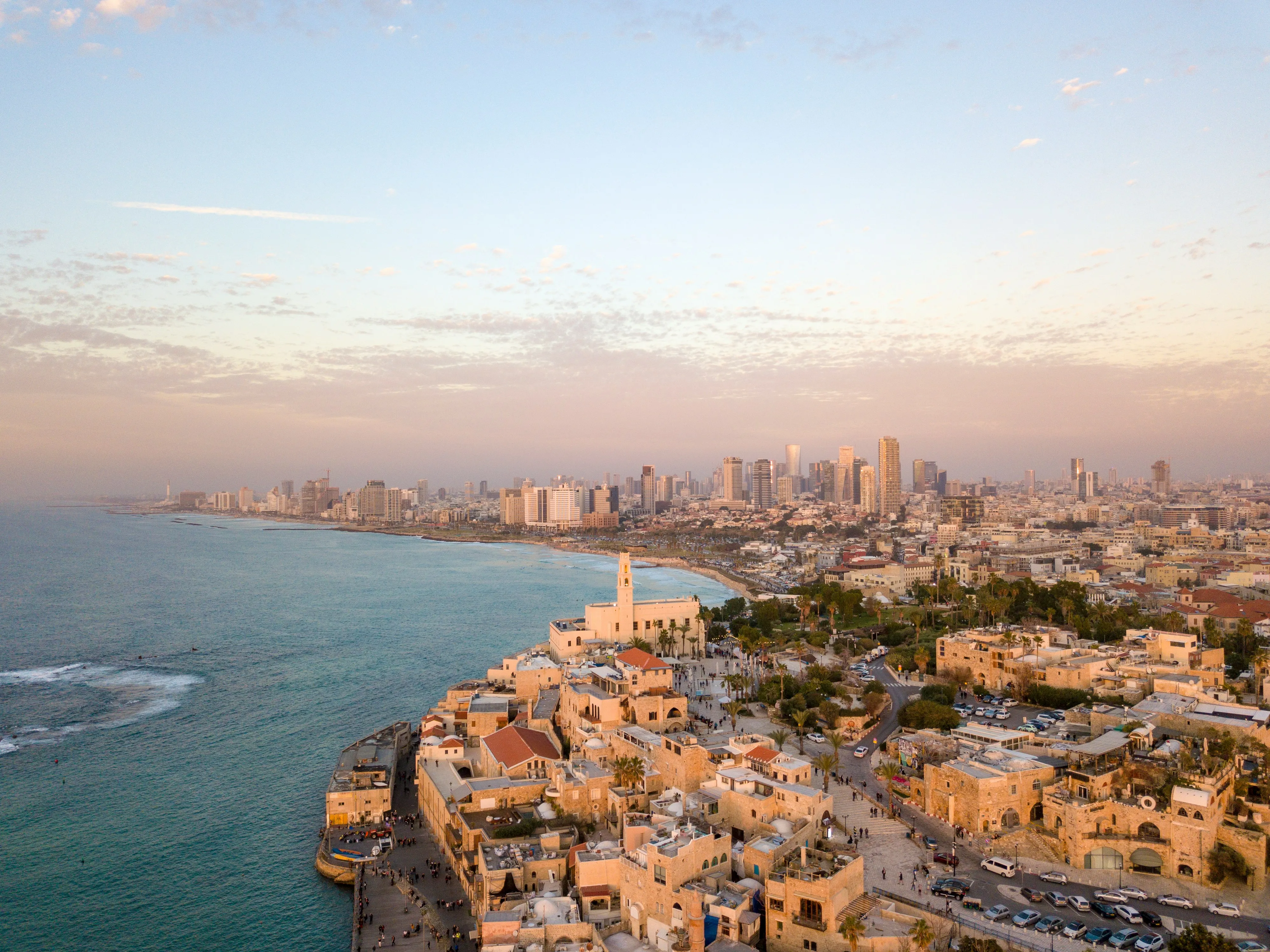
In contrast to the solemnity of the capital, Tel Aviv represents the more contemporary and vibrant side of the country on the shores of the Mediterranean. Known for its Bauhaus architecture, which has earned it recognition as the White City, it is an ideal place to explore by bicycle or enjoy its extensive beaches. At the end of its promenade is Jaffa, the ancient port of millenary origin that today houses art galleries, artisan workshops, and a wide gastronomic offer. Local markets, such as Carmel, are essential meeting points to learn about daily life and taste fresh products from the region.
To the north, the landscape transforms into fertile valleys and green hills. The Galilee region is known for its historical importance and natural landscapes, with the Sea of Galilee or Lake Tiberias as its central axis. In this area, one can visit towns like Nazareth, with its basilica and historical alleys, or the city of Safed, linked to the mystical tradition. On the northern coast, Haifa stands out, where the Bahá’í Gardens descend Mount Carmel offering a panoramic view of the port. Nearby is the walled city of Acre (Akko), whose complex of tunnels and halls from the Crusader era remains in a remarkable state of conservation.
The country’s natural environment offers unique experiences in the world, especially in the Dead Sea area. This point, located below sea level, is famous for the high salinity of its waters, which allows one to float effortlessly. In its vicinity rises the imposing plateau of Masada, where an ancient Herodian fortress dominates the desert landscape. It is also possible to go hiking in the Ein Gedi National Park, a freshwater oasis that contrasts with the aridity of the surroundings and serves as a refuge for local fauna.
Finally, the south is dominated by the vastness of the Negev Desert. This arid ecosystem hides impressive geological formations such as the Ramon Crater, a natural phenomenon that can be explored on foot or in off-road vehicles. The journey through the desert allows one to learn about the life of nomadic communities and enjoy starry skies with little light pollution. The trip usually concludes at the southern tip, in the city of Eilat, located on the shores of the Red Sea, a place internationally recognized for its coral reefs and the possibilities it offers for diving and snorkeling in warm waters.
“Tip”: You cannot miss visiting the Old City of Jerusalem, the most emblematic place in the country.
✈️ Best time to travel
Israel is a destination that can be visited at any time of the year due to its Mediterranean climate and varied geography. However, the travel experience changes significantly depending on the month chosen. Generally, transition periods tend to be the most balanced for those looking to take historical tours and outdoor activities, as temperatures are moderate and the landscape shows its kindest side.
The choice of the ideal date depends largely on the type of activities planned. While coastal areas maintain a warm atmosphere for much of the year, mountainous regions and the desert show more marked thermal variations. It is convenient to keep in mind that the local calendar is influenced by various festivities that can affect the availability of services and the influx of people at major points of interest.
| Season | Months | Typical climate | What to expect | Tourist influx |
|---|---|---|---|---|
| Spring | Mar – May | Mild temperatures and clear days. | Green landscapes, wildflower blooming, and ideal conditions for hiking. | ⭐⭐⭐⭐ (High) |
| Summer | Jun – Aug | Intense heat and high humidity on the coast; dry environment in the interior. | Sun and beach tourism, cultural festivals, and long days of sunlight. | ⭐⭐⭐⭐⭐ (Very high) |
| Autumn | Sep – Nov | Gradual decrease in heat; pleasant and temperate atmosphere. | Traditional celebrations, historical tours, and clear skies. | ⭐⭐⭐⭐ (High) |
| Winter | Dec – Feb | Cool with occasional rains; possibility of snow in high areas. | Quiet atmosphere, Christmas events, and migratory bird watching. | ⭐⭐ (Low) |
🗣️ Basic vocabulary
Although in most tourist areas of Israel you will be able to communicate in English without problems, knowing some basic expressions in Hebrew greatly facilitates interaction with the locals. Small gestures like greeting or saying thank you in the local language are usually very well received and help make interactions friendlier in markets, cafes, or transportation.
It is not necessary to master grammar or have perfect pronunciation; it is enough to memorize a few key words that will serve you to move more easily in the daily situations of your trip.
- Shalom: Means “peace,” but is commonly used as a greeting to say both “hello” and “goodbye.”
- Toda: Thank you. It is the word you will use most in your day-to-day.
- Bevakasha: Please. It is also used to say “you’re welcome” when someone thanks you.
- Slicha: Sorry or excuse me. It is useful for asking to pass through or for getting someone’s attention if you need to ask something.
- Ken / Lo: Yes / No. Two fundamental terms for any quick interaction.
- Kama ze ole?: How much does it cost? Very practical for making purchases in markets or street food stalls.
- Lehitraot: See you later. Used specifically for saying goodbye.