


Cyprus
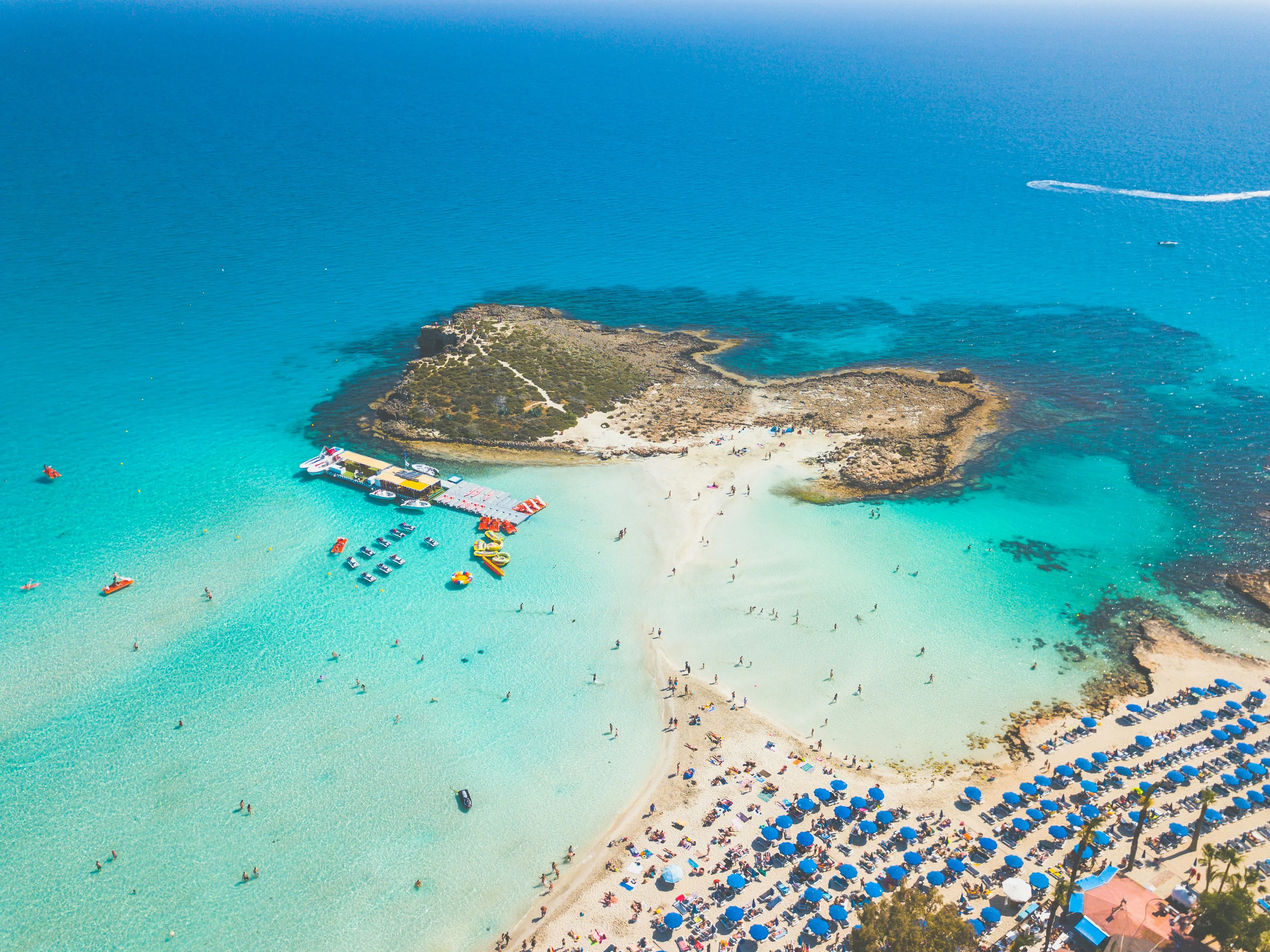
Mediterranean island combining crystal-clear beaches, millenary archaeological sites, and mountain villages under a radiant sun almost all year round.
Quick Facts
- Capital
- Nicosia
- Language
- Greek
- Turkish, English
- Currency
- Euro (EUR)
- Best time to visit
- From April to June and from September to October for pleasant temperatures.
- Budget per day
- $60 - $150 per day
- Climate
- Mediterranean climate with hot, dry summers and mild winters, with abundant sunlight throughout most of the year.
- Connectivity
- good
- Very easy to obtain SIM cards or eSIMs at airports and local shops.
- Electricity
- Type G (230V)
- Local transport
- acceptable
- Card usage
- widespread
- Tipping
- optional
🌎 Introduction
In the heart of the eastern Mediterranean, where the waters take on deep tones and the hills are covered in pines and cedars, lies a corner that seems to stop time. It is a place where the scent of orange blossom in spring mixes with the sea breeze, and where the Troodos Mountains offer a cool refuge from the warmth of the coast. Walking through its stone villages is to encounter a daily calm that invites you to observe the simplest details of island life, far from noise and haste.
The identity of this territory has been forged through the centuries, leaving a mark that is perceived both in its ancient sites and in today’s customs. Sharing a few plates of meze or enjoying a coffee in the shade of a grapevine is part of the natural rhythm of its inhabitants. Traditions remain alive in local festivities and in the artisanal work of ceramics or lace, reflecting a character that values conversation and leisurely encounters in the village squares.
This variety also extends to its human landscape, where different influences coexist that have shaped its own balanced personality. From the plains where citrus fruits are grown to the small ports where boats return at sunset, the island shows its history and nature with simplicity. It is a destination that unfolds organically, allowing the contrast between its millenary ruins and its modern life to tell its own story.
🛡️ General safety
Cyprus is widely recognized as one of the safest destinations in Europe and the Mediterranean. The country enjoys a stable and peaceful environment, making it an ideal choice for families, couples, and solo travelers seeking a trouble-free experience.
- General assessment: The safety level in Cyprus is considered very high. Crime rates are notably low compared to other countries in the region.
- Context for the traveler: Although the island has been politically divided since 1974 by the so-called “Green Line,” the current situation is one of peace and calm. Crossing between the southern zone (Republic of Cyprus) and the northern zone (self-proclaimed Turkish Republic of Northern Cyprus) is a routine and safe process for tourists through the designated checkpoints.
Crime and common risks
Despite being a very safe country, it is advisable to maintain common sense, especially in areas with a high influx of visitors.
- Petty theft: The most common incidents are small thefts or pickpocketing in crowded beaches, shopping areas, or massive nightlife spots.
- Tourist scams: They are not common, but it is always recommended to check prices on restaurant menus and agree on the fare for unregulated services before hiring them.
- Infrequent risks: Vandalism of rental vehicles is rare, but it is advised not to leave valuables in sight when the car is parked in isolated places.
Safety in cities and tourist areas
Cypriot cities such as Nicosia, Limassol, Larnaca, and Paphos are safe environments where you can walk peacefully at almost any time.
- Urban centers: Pedestrian zones and promenades have good lighting and surveillance.
- Nightlife zones: In places like Ayia Napa, known for its nightlife, it is important to be mindful of personal belongings and avoid excessive alcohol consumption, which is the main cause of most incidents in these areas.
- Practical recommendations: Always keep a digital copy of identification documents and avoid carrying large sums of cash.
Transport safety
The transport system in Cyprus is efficient, although it is mainly based on the use of private vehicles and buses.
- Driving: This is the most important point for the tourist: in Cyprus you drive on the left, a legacy of its British past. This requires extra attention during the first days of rental.
- Rental vehicles: They are safe and the companies are professional. It is recommended to check the condition of the vehicle upon receiving it. Rental car license plates are red, which helps other drivers identify tourists.
- Public transport and taxis: Buses are safe and reliable. In the case of taxis, it is advisable to use official vehicles and ensure that the meter is on or agree on the price beforehand for long journeys.
Natural and climatic risks
The natural environment of Cyprus is spectacular, but it presents certain seasonal factors that the traveler should consider.
- Extreme heat: During the months of July and August, temperatures can easily exceed 40°C. It is vital to stay hydrated and avoid direct sun exposure during the central hours of the day to prevent heatstroke.
- Forest fires: Due to the dry climate, the risk of fires is high in summer. It is strictly forbidden to light fires in forested areas.
- Seismic activity: Cyprus is located in an area with moderate seismic activity. Although tremors are usually mild and barely perceptible, infrastructure is prepared for them.
Legislation and local norms
Compliance with local norms ensures a stay without legal problems.
- Military zones: It is strictly forbidden to photograph military installations, uniformed personnel, or checkpoints, especially near the Green Line dividing the island. Doing so can lead to fines or the confiscation of equipment.
- Prohibited substances: Cyprus has a zero-tolerance policy on drugs. Possession of even minute amounts can lead to severe prison sentences.
- Antiquities: It is illegal to export antiquities or historical objects from the country without the corresponding government permits.
Safety for specific groups
Cyprus is a welcoming destination for all types of travelers.
- Solo female travelers: The country is very safe for women traveling alone. There are no clothing restrictions, although modesty (covering shoulders and knees) is recommended when visiting Orthodox churches and monasteries.
- LGTBIQ+ travelers: Homosexuality is legal and society is generally respectful in tourist and urban areas. Nonetheless, in rural areas or very religious environments, some discretion in public displays of affection is recommended.
- Traveling with children and the elderly: The infrastructure is friendly for families and the elderly, with good health services and generalized accessibility in the main areas of interest.
Emergencies and assistance
The emergency response system in Cyprus is modern and effective.
- Single emergency number: 112 is the free number to contact the police, ambulance services, or fire department (works throughout the European Union).
- Medical assistance: Healthcare in the cities is of high quality. It is essential to travel with medical insurance that covers possible transfers or specialized treatments.
- Procedure in incidents: In case of theft or loss of documents, you must go to the nearest police office to file a report, which is necessary for any subsequent procedures.
Tip: Before crossing to the northern part of the island with a rental car, make sure your contract allows it and keep in mind that you will need to purchase specific additional insurance at the checkpoint, as most standard insurances only cover the southern zone.
📝 Entry requirements
To plan a trip to Cyprus, it is essential to keep in mind that most international visitors must have a passport whose validity extends, preferably, at least six months beyond the planned date of departure from the territory. Although agreements exist for certain citizens allowing access with national identity documents, using a passport is the most recommended option to ensure smooth transit through border controls and avoid any administrative inconveniences during the stay.
In terms of stay permits, the country generally allows a stay of up to ninety days for tourism within a specific period. For a large number of international travelers, obtaining a prior visa is not necessary, thus facilitating entry for short stays. However, at the time of entry, immigration authorities at airports may request the presentation of an exit ticket confirming the intention to leave the country, as well as proof of financial solvency or sufficient funds to cover the planned expenses during the visit.
Regarding customs regulations, travelers must be aware of the usual limitations on bringing in products such as tobacco and alcoholic beverages, which have established caps for personal use. It is important to note that the transport of medicines must be duly justified, preferably with a medical prescription, to avoid delays in inspections. Likewise, the entry of certain fresh foods or products of animal origin is usually restricted for reasons of biosecurity and protection of the local environment.
In the health sector, mandatory vaccinations are not usually required for tourists visiting the island conventionally. It is recommended that the traveler keeps their standard vaccination schedule up to date and considers taking out travel insurance with broad medical coverage. This measure provides peace of mind against any eventuality, ensuring that the visitor can enjoy the country’s attractions with the necessary support in terms of health and well-being.
- Travel documentation: It is essential to have a valid passport with a minimum validity of several months from entry.
- Stay period: Tourists usually have a margin of up to 90 days to explore the country without additional paperwork.
- Justification of the trip: It is recommended to have the accommodation reservation and the return ticket at hand when passing through checkpoints.
- Baggage restrictions: There are controls on perishable products and quantitative limits for substances such as alcohol.
- Health recommendations: Although there are no strict vaccination requirements, it is advised to travel with an international medical insurance policy.
🏥 Basic health considerations
In Cyprus you will find a high quality and very efficient health system, especially in the most touristy areas and in the main urban centers such as Nicosia, Limassol, or Paphos. The level of infrastructure is comparable to that of any developed country, so you will be in good hands if you need assistance. Although a public system exists, most tourists usually turn to private healthcare, as private clinics and hospitals are very numerous, feature cutting-edge technology, and waiting times are practically non-existent. Private consultation prices are reasonable by European standards, but hospitalization due to an accident or serious illness can quickly increase the cost. A very positive point is that you will not have language barriers, as almost all medical staff speak fluent English.
Taking out travel medical insurance is not a legal requirement to enter the country, but it is highly recommended. When moving around the island, you will want the security that your policy covers hospitalization costs, medical tests, emergency transfers, and, above all, medical repatriation if necessary. Having good coverage will allow you to enjoy the beaches and hiking trails with the peace of mind of knowing that you will not have to face unforeseen medical expenses out of pocket.
In terms of prevention, you will not find mandatory vaccines to travel to this destination. Generally, for any international traveler, it is enough to have the standard vaccination schedule followed in most countries up to date. Being a Mediterranean environment with high standards of hygiene, there is no risk of tropical or exotic diseases, so you will not need special preventive treatments before boarding the plane.
If you take any personal medication, we recommend that you carry it in its original container and inside your carry-on luggage. Although in the cities you will find many well-equipped pharmacies, it is very useful to carry a medical prescription or a report from your doctor with you, preferably in English, if you need very specific or controlled medicines. This will facilitate your passage through customs controls and help you if you need to buy a replacement at a local pharmacy.
Regarding environmental risks, the main factor you should watch out for is the sun and heat. During the summer months, temperatures in Cyprus can be very high, which increases the risk of dehydration or heatstroke if you do not protect yourself properly. You will find that the sun hits hard, so the use of high-factor sunscreen is essential. There are no significant risks from insects or animals, beyond common mosquitoes in some humid areas at dusk, which you can easily solve with a standard repellent.
Regarding the consumption of water and food, you can be very calm. The level of hygiene throughout the country is excellent. Tap water is potable and safe to drink in the main cities, although it is very common for travelers to prefer bottled water due to the mineralized taste that water from the public network has in some areas. As for food, you can try all the local delicacies in taverns and stalls without fear, as food safety standards are rigorous and very reliable.
In case you face a medical emergency that requires immediate attention, the number you should dial is 112. It is the free emergency telephone number and you will be assisted in several languages, including English. The ambulance service is fast and will take you to the most appropriate medical center according to your location and the severity of the situation.
As final practical tips, always remember to carry a bottle of water with you to stay hydrated while exploring archaeological ruins or beaches, and do not forget to pack a small travel first-aid kit with the basics, such as bandages for blisters or common painkillers. With these minimum precautions, your experience on the island will be comfortable and safe.
🚌 Transport within the country
Moving around the island of Cyprus is mainly based on the use of the bus and private vehicle, as the country does not have a railway network or metro system. Intercity buses connect the most important cities and coastal tourist hubs regularly. These vehicles are usually modern and offer an adequate level of comfort for medium-distance journeys, allowing for functional travel between towns.
The use of public transport is simple for visitors. Directions at stops and information about routes are usually available in both the local language and English, which facilitates orientation at all times. Ticket management is handled directly, allowing tourists to use the service autonomously without the need for complex procedures before boarding the vehicle.
There is a difference between movement in large cities and access to rural or mountain areas. While in urban centers and coastal areas the frequency of passage is constant, to explore the interior of the island or more remote villages, it is common to resort to car rentals or the use of taxis. The latter are very present in busy areas and offer a regular service, being a common alternative for specific journeys.
The road infrastructure is in good condition, which provides a sense of safety and reliability when traveling by road. It is important to remember that in this destination you drive on the left, a relevant factor for planning journeys. In general terms, the transport system allows for organizing trips in a calm and efficient way to see the most prominent points of interest in the territory.
“Tip”: It is recommended to check schedules in advance if you plan to travel during weekends, as the frequency of some services may be lower than on workdays.
🤵 Culture and etiquette
Cypriot hospitality, traditionally known as philoxenia, is a fundamental pillar of life on the island. Treatment is usually warm and close, based on genuine kindness toward the visitor. When greeting, a firm handshake accompanied by eye contact is the general norm in formal contexts or when meeting someone for the first time. Among people who have already established a bond, it is common to use more affectionate gestures, such as hugs or kisses on the cheeks. The use of basic words in the local language is valued very positively, which is perceived as a gesture of courtesy and recognition toward their cultural heritage.
In everyday interactions, the tone of voice can be animated and expressive, especially in social settings like squares or cafes. This reflects an open communicative culture where conversations tend to be fluid and passionate. Regarding punctuality, there is a tendency toward flexibility in informal or social meetings, where the pace of life is usually slower. However, in the professional sphere, it is recommended to maintain punctuality as a sign of professionalism. In public spaces, balanced and respectful behavior regarding residents’ rest is expected.
Gastronomy is a social act of great relevance in Cyprus, and meals are usually prolonged, especially when enjoying the traditional meze, where multiple dishes are shared. It is common for the host to insist on offering food or drink generously, and accepting these offers is considered a gesture of gratitude. Regarding tipping, although service is sometimes included in the bill, it is customary to leave a small additional percentage if the service was satisfactory. If you receive an invitation to a private home, it is a polite detail to bring a small gift, such as sweets or flowers, for the hosts.
Respect for traditions and religious beliefs is essential when visiting places of worship, such as Orthodox churches or mosques. It is recommended to dress modestly, covering shoulders and knees, and to maintain a respectful silence inside these venues. On the other hand, due to the complex history of the island, if conversations arise about political or social issues, the most appropriate approach is to maintain an attitude of empathetic listening and avoid simplistic judgments, allowing the local residents to set the tone and depth of the dialogue.
“Tip”: When visiting churches or monasteries, observe the signs at the entrance, as in some sacred places it is strictly forbidden to take photographs or video recordings of ancient icons and frescoes for conservation and respect reasons.
🍛 Typical gastronomy
The cuisine of Cyprus reflects its privileged geographical location, acting as a meeting point between Eastern Mediterranean traditions, Greek influences, and Middle Eastern nuances. Dishes are characterized by the use of fresh and local ingredients, where olive oil, aromatic herbs like oregano and mint, and products of the land are the main stars. The culinary experience on the island is not limited just to feeding oneself; it is a fundamental social act for Cypriot culture, always oriented toward sharing and enjoying without haste.
One of the most deeply rooted customs is the Meze, a selection of numerous small dishes served sequentially that allow you to taste a great variety of flavors in a single meal. The pace of meals is usually slow and relaxed, especially during dinner, which tends to start later than in northern Europe. It is common for local restaurants, known as taverns, to offer this format so that diners share the food in the center of the table, encouraging conversation.
As for drinks, Cypriot coffee occupies a central place in daily life. It is prepared in a small copper pot and served with the grounds in the cup, generally accompanied by a glass of cold water. Wine also has a long historical tradition on the island, being one of the oldest and most valued products of its agriculture. Hospitality is an essential value in local establishments, where treatment is usually close and familiar, always maintaining a respect for traditional recipes passed down from generation to generation.
| Dish | Description | Main ingredients | Where to try it | Tip |
|---|---|---|---|---|
| Halloumi | Traditional cheese with a firm texture that does not melt when cooked. | Goat and sheep milk, mint. | In any tavern on the island, served grilled. | Try it hot and freshly made to appreciate its characteristic texture. |
| Kleftiko | Lamb slow-cooked in traditional clay ovens. | Lamb meat, potatoes, and bay leaf. | Restaurants in mountain villages or rural areas. | The meat should fall off the bone easily if it is well cooked. |
| Souvlaki | Meat skewers grilled and served in pita bread. | Pork or chicken, accompanied by salad and lemon. | Local food stalls and informal taverns. | It is ideal for a quick but authentic meal during the day. |
| Koupepia | Grape leaves stuffed with a flavorful and compact mixture. | Rice, minced meat, herbs, and spices. | Traditional taverns and local homes. | Accompany them with a bit of natural yogurt to balance the flavors. |
| Loukoumades | Small deep-fried doughnuts served as a dessert or snack. | Flour dough, honey, cinnamon, and sometimes walnuts. | Cafeterias, local fairs, and street stalls. | They are much more enjoyable when they are crunchy and still hot. |
📷 Areas and places to visit
Cyprus is an island of contrasts where millenary history intertwines with natural landscapes of great diversity. The capital, Nicosia, is a fundamental stop to understand the country’s identity. Walking through its old town, protected by robust Venetian walls, you perceive a mix of architectural influences ranging from ancient mosques and colonial houses to Orthodox churches. The Cyprus Museum is the city’s most relevant cultural center, housing an archaeological collection spanning from the Neolithic to the Byzantine era, offering a complete view of the island’s evolution.
To the west, the Paphos region concentrates much of the internationally recognized historical heritage. The Kato Paphos Archaeological Park is famous for its Roman mosaics, considered among the best in the Mediterranean, which decorate the ancient villas of Dionysus and Theseus. Nearby, the Tombs of the Kings form an underground necropolis carved into the rock that stands out for its solemn atmosphere. Following the coastline south, you will find Petra tou Romiou, a rock formation surrounded by mythological legends and one of the most photographed natural spots by visitors.
The cities of Limassol and Larnaca represent the most dynamic facet of the Cypriot coast. Limassol features a medieval castle located in the historical center, very close to the modern marina, creating a contrast between the old and the contemporary. A few kilometers away lies the site of Kourion, where an impressive Greco-Roman theater is still used for cultural events facing the sea. For its part, Larnaca invites you to visit the Church of Saint Lazarus, an exceptional example of Byzantine religious architecture, and its salt lake, which during the cooler months fills with migratory birds, offering a unique natural environment near the urban center.
The interior of the island is dominated by the Troodos Mountains, a range that houses the green heart of Cyprus. In this area, it is possible to visit the painted churches, a group of small rural temples decorated with Byzantine frescoes of incalculable artistic value. Traditional villages like Omodos or Lefkara, the latter famous for its delicate lace craftsmanship and silver jewelry, allow you to experience rural life and the characteristic stone architecture of the mountains. The trails that run through these pine and cedar forests are ideal for those seeking hiking routes in a quiet and cool environment.
At the eastern end, the landscape transforms into a succession of cliffs and transparent waters. The Cape Greco area, a protected national park, offers scenic routes bordering sea caves and natural rock arches, being an ideal place for observing local flora and fauna. Nearby, the light sand beaches in the region of Ayia Napa and Protaras are very popular for their natural beauty. To the north of the island, fortresses located on mountain peaks, such as Saint Hilarion Castle, and the historical port of Kyrenia, complete a journey through the cultural and geographical diversity that defines this Mediterranean destination.
Tip: You cannot miss visiting the Paphos Archaeological Park, the most emblematic place in the country.
✈️ Best time to travel
Cyprus has a Mediterranean climate that allows for visiting at any time of the year, although the experience varies considerably depending on the chosen month. The island enjoys hot, dry summers, ideal for those seeking sun and sea, while the intermediate seasons of spring and autumn offer much milder temperatures. These transition periods are especially recommended for exploring the mountainous interior and the country’s numerous archaeological sites without the intense heat of the central months.
During the winter, the atmosphere becomes quieter and cooler, allowing for a more leisurely and cultural type of tourism. While on the coast the days are usually clear and temperate, in higher altitude areas it is possible to find snow, which adds an interesting contrast to the island’s geography. In short, the choice of the right time will depend on whether you prefer the dynamism of the summer season or the calm and green landscapes that emerge after the first annual rains.
| Season | Months | Typical climate | What to expect | Tourist crowds |
|---|---|---|---|---|
| Spring | Mar – May | Mild and clear, with very pleasant temperatures and little rain. | Green landscapes, blooming wild orchids, and ideal conditions for hiking. | Medium ⭐⭐ |
| Summer | Jun – Aug | Hot and dry, with clear skies and temperatures exceeding 30°C. | Long sunny days, water sports, and active nightlife in coastal areas. | Very high ⭐⭐⭐⭐ |
| Autumn | Sep – Nov | Warm and stable, with sea water at an optimal temperature for swimming. | Grape and olive harvesting, local festivals, and less crowded beaches. | Medium-high ⭐⭐⭐ |
| Winter | Dec – Feb | Cool on the coast and cold in the interior, with occasional rainfall. | Cultural visits without waiting, authentic local atmosphere, and snow in the Troodos mountains. | Low ⭐ |
🗣️ Basic vocabulary
Although English is widespread in the tourist areas of Cyprus, knowing some basic expressions in local Greek is very useful for day-to-day life. Cypriots usually appreciate visitors making an effort to use their language, which often facilitates closer treatment in shops, restaurants, or when asking for directions.
Mastering these simple words will allow you to navigate common situations with greater confidence and better understand the environment during your stay on the island, without the need to delve into grammatical rules.
- Yia sou: Hello or goodbye (informal).
- Kaliméra: Good morning.
- Efcharistó: Thank you.
- Parakaló: Please or you’re welcome.
- Né: Yes (it is worth remembering it sounds similar to “no” in other languages, but it is affirmative).
- Óchi: No.
- Signómi: Sorry or excuse me.
- Logariasmós: The bill.
- Posó kani?: How much is it?