


Barbados
Barbados offers white sand beaches, crystal-clear waters, and a vibrant culture, ideal for those seeking relaxation, Caribbean gastronomy, and unforgettable tropical landscapes.
Quick Facts
- Capital
- Bridgetown
- Language
- English
- Bajan (local creole)
- Currency
- Barbadian Dollar (BBD) and US Dollar (USD)
- Best time to visit
- From December to April, coinciding with the dry season
- Budget per day
- $120 - $350 per day
- Climate
- Tropical climate with warm temperatures all year round, softened by trade winds and with a predominant dry season.
- Connectivity
- good
- It is very easy to acquire SIM or eSIM cards at airports and telecommunications stores.
- Electricity
- Type A/B (115V)
- Local transport
- acceptable
- Card usage
- widespread
- Tipping
- optional
🌎 Introduction
Barbados unfolds at the easternmost tip of the Antilles as a meeting point between the calm of turquoise waters and the force of the Atlantic. Its landscape gently combines fine sand beaches with limestone formations and green hills that invite a slow pace. It is a place where time seems to be measured by the movement of the waves and the warm light that bathes the facades of traditional chattel houses, those small wooden houses that dot the island’s geography.
The identity of this Caribbean corner is perceived in everyday details, from an informal game of cricket on any open ground to the aroma of fried fish and cou-cou wafting from local kitchens. Traditions are kept alive in celebrations like the Crop Over festival, which recalls the island’s sugar-producing past, while small rum shops become the epicenter of social life and conversation. It is a serene blend of historical heritage and Caribbean vitality felt in the natural hospitality of its inhabitants.
Unlike other nearby environments, the island offers remarkable variety in a small space: from the rugged cliffs of the north coast to the botanical gardens hiding tropical species in the interior. Whether under the constant sun of the dry season or during the refreshing and brief rains of the summer period, the environment maintains a balance between resting by the sea and the cultural richness of a people who care for their legacy with simplicity.
🛡️ General Safety
Barbados is considered one of the safest and most welcoming destinations in the Caribbean region. The country enjoys notable political and social stability, allowing travelers to enjoy its beaches and culture with a great sense of peace.
General safety level
The overall safety rating in Barbados is high, placing it above the average for other similar tropical destinations. The risk of serious incidents is low, and the vast majority of visits pass without any kind of mishap.
The context for the traveler is a friendly environment where tourism is the pillar of the economy; therefore, local authorities make a significant effort to maintain a safe and protected environment for international visitors.
Crime and common risks
Although the country is safe, it is not exempt from small incidents that are usually related to opportunism. The most common types of crimes are:
- Minor theft in high-traffic areas, such as popular beaches or busy festivals.
- Theft from rental vehicles if valuables are left in plain sight in parking lots at isolated beaches.
- Minor scams related to prices not previously agreed upon for informal services or street vending.
It is recommended to take extra precautions in poorly lit areas of Bridgetown during the night or on solitary beaches once the sun has set. Violent incidents affecting tourists are extremely rare.
Safety in cities and tourist areas
Safety in urban centers and hotel zones is generally excellent. Barbados has a visible police presence, including a tourist police unit that patrols the most visited areas.
- In Bridgetown, the capital, it is safe to walk during the day, although it is advisable to be mindful of belongings in commercial areas.
- The West Coast (known as the Platinum Coast) and the South Coast are the most touristy and have a very robust safety infrastructure.
- Public transport (blue buses and “ZR” vans) is used massively by locals and tourists and is considered very safe, although they tend to be quite full.
Transportation safety
Moving around the island is simple but requires knowing certain local particularities:
- Driving: In Barbados, you drive on the left. Roads can be narrow, with potholes, and sometimes lack sidewalks, so extra caution is recommended when driving at night.
- Taxis: They are a safe and reliable medium. They usually do not have meters, so it is essential to agree on the price before starting the journey. Official taxis have a license plate starting with the letter “Z”.
- Rental vehicles: This is a common and safe option. It is recommended to always park in well-lit places and not leave personal items inside.
- Private transport: There are private transport applications and services that operate normally under international safety standards.
Natural and climatic risks
Being a Caribbean island, Barbados is subject to certain seasonal natural phenomena:
- Hurricanes and tropical storms: The official season runs from June to November. Although Barbados is geographically located slightly further southeast than other islands and usually avoids the direct impact of major hurricanes, storms can cause heavy rain and strong winds.
- Extreme heat: The sun is very strong throughout the year. The risk of dehydration and sunburn is real, so the constant use of sunscreen and drinking plenty of water is advised.
- Sea currents: On the east coast (Atlantic), currents are very strong and the waves dangerous. It is recommended to swim only at the beaches on the west and south coasts, which are much calmer.
Legislation and local norms
There are some laws in Barbados that may be surprising to tourists and whose non-compliance carries penalties:
- Military camouflage: It is strictly illegal for any person (including children) to wear clothing items with a camouflage print or carry accessories with this design. This rule is very strict and items can be confiscated.
- Drugs: Possession and consumption of illicit drugs, including marijuana, are severely punished with fines and prison sentences.
- Environmental protection: It is forbidden to damage coral reefs or collect protected marine species.
Safety for specific groups
- Solo female travelers: Barbados is a safe destination for women traveling alone. You might experience some unwanted comments (“catcalling”) in busy areas, but it is usually harmless. It is recommended to follow the usual precautions one would take in any other international destination.
- LGTBIQ+ travelers: Although Barbadian society is traditionally conservative, old laws penalizing same-sex relationships have recently been repealed. It is recommended to maintain a discreet attitude in public to avoid uncomfortable situations, especially outside the more touristy areas.
- Traveling with children and the elderly: It is an ideal destination for families and seniors due to the friendliness of the population, the good quality of healthcare services, and the ease of access to most points of interest.
Emergencies and assistance
Barbados has efficient emergency services and a good quality healthcare system. The main numbers are:
- Police: 211
- Ambulances: 511
- Fire Department: 311
In case of an incident, local police are usually very helpful to tourists. It is always recommended to travel with international medical insurance, as private medical care can be expensive for non-residents.
Tip: Do not carry or pack any clothing with camouflage print in your suitcase, as its use is reserved exclusively for the Barbados defense forces and you could face a fine or the confiscation of the clothing upon arrival at the airport.
📝 Entry Requirements
To plan a trip to this Caribbean destination, it is fundamental for travelers to have a valid passport whose validity extends, preferably, for the entire duration of the stay. In most cases, tourists visiting the island for short periods do not require a prior visa, allowing them a fluid entry as long as the reason for the trip is strictly recreational. The maximum allowed stay is usually around ninety days, although this authorization is subject to evaluation by officers at the border post at the time of arrival.
When passing through immigration controls at the airport or port, it is common to be asked to present a confirmed onward ticket to the country of origin or to a third destination. Similarly, authorities may require proof of sufficient financial solvency to cover the expenses planned during the stay, as well as the detailed address of the accommodation where the visitor will stay. Control processes are routine and designed to ensure an orderly and safe entry for all international tourists.
In the customs area, there are general regulations that restrict the entry of certain items to protect the local environment. It is recommended to avoid transporting fresh food, plant products, or meat derivatives without the corresponding permits. If it is necessary to travel with prescription medications, it is advisable to keep the drugs in their original containers and carry a copy of the medical prescription. It is also wise to keep in mind that the volume of certain personal items of value might be subject to declaration to avoid administrative inconveniences.
Regarding health conditions, requirements are usually minimal for international travelers, although there are specific exceptions. In certain contexts, a yellow fever vaccination certificate may be requested if you have transitioned through or are coming from areas considered at risk. Beyond formal requirements, it is a highly recommended practice to have travel insurance with broad coverage to facilitate assistance in the event of any health emergency during vacations on the island.
- Travel documentation: Visitors must carry a valid passport for the period of stay and, generally, do not need to manage a visa for short-term tourism purposes.
- Justification of stay: Proof of a return flight and confirmation of a hotel reservation or place of temporary residence is usually required.
- Financial resources: You may be asked to demonstrate that you have sufficient funds to cover maintenance during the days of the visit.
- Customs restrictions: The entry of agricultural products and certain chemicals is regulated to preserve the biosphere, while medications must be duly justified.
- Health recommendations: It is advisable to verify the need for the yellow fever vaccine based on the previous itinerary and always have international medical coverage.
🏥 Basic Health Considerations
If you plan to travel to this Caribbean island, you will be happy to know that you will find a quality healthcare system, considered one of the best in the region. Medical care is divided into public centers and private clinics that are well-equipped to treat most common ailments. The reference hospital is Queen Elizabeth, located in the capital, although for visitors it is usually much faster and more comfortable to go to private assistance, where treatment is more agile. However, you must keep in mind that medical costs for tourists are quite high, so any simple consultation or treatment will have a considerable price. All healthcare personnel communicate in English, so you will not have problems explaining what is wrong if you handle this language.
Contracting travel medical insurance is highly recommended, even if it is not a mandatory requirement to cross the border. Due to the high prices of private clinics and the possibility that you might need specialized transport, the ideal is for your policy to have broad coverage including hospitalization, diagnostic tests, and, above all, medical repatriation. Having this support will allow you to move around the island with the assurance that any unforeseen event will not ruin your vacation budget.
In terms of vaccinations, there is no legal obligation to be vaccinated to enter the country, unless you come from an area where yellow fever is endemic. In that case, you will have to show your international vaccination certificate. The most practical thing is to simply verify that your standard vaccination schedule is up to date. General recommendations usually include protection against tetanus, diphtheria, and hepatitis A, but you will see that no exceptional measures are required to visit the best-known tourist spots.
If you need to bring your own medication, you can do so without major complications as long as you transport the drugs in their original containers. It is very important to carry the medical prescription or a report from your doctor explaining the treatment, especially if it concerns controlled substances or injectable medication. Pharmacies in urban areas are well-stocked, so you can buy basic parapharmacy products or common painkillers if you need them during your stay.
Regarding common risks, the main factor to consider is the tropical climate. The sun is very strong throughout the year and you could suffer from dehydration or burns if you do not take precautions. You will also find mosquitoes, especially in vegetated areas or after rain, so using a good repellent is fundamental to avoid annoying bites or diseases like dengue, which has a minimal but existing presence. You will not have to worry about poisonous animals or altitude-related problems, as the terrain is mostly flat.
One of the best pieces of news for the traveler is that tap water is potable and safe for human consumption throughout the island, as it is naturally filtered through limestone rock. This makes things much easier, although if you prefer, you can also buy bottled water at any store. As for food hygiene, standards are high and you can try the local food at street stalls or markets with total confidence, always maintaining basic hygiene rules such as washing your hands before eating.
If you find yourself in a medical emergency situation, the phone number you should dial to call an ambulance is 511. The emergency service is professional and accustomed to dealing with foreign visitors. For minor emergencies, many hotel zones have on-call doctor services that can travel to your accommodation if necessary.
As final practical recommendations, I suggest you always carry a water bottle with you to stay hydrated while you explore and use high-factor sunscreen constantly. It is also useful to carry a small first-aid kit with bandages, some antihistamine if you have allergies, and hand sanitizer for when you are outside urban areas. With these simple guidelines, your experience on the island will be comfortable and safe from a health perspective.
🚌 Transportation within the Country
Moving around Barbados is a simple process due to the manageable size of the island. Visitors usually combine the use of public transport with car rentals. Being a small territory, it does not have train networks, subways, or internal air connections, so travel is exclusively by road.
The bus system is the most common option and is easy for tourists to understand. Stops are clearly marked, indicating the direction of the route towards the capital or towards the outer areas. Since the official language is English, interaction with drivers and understanding directions are direct and uncomplicated for most international travelers.
Connectivity varies depending on geographic location. In Bridgetown and the coastal zones of the south and west, the frequency is constant and the service is fluid. Conversely, in the rural areas of the interior or on the east coast, which is quieter and less populated, the public transport offer is more limited, making a private vehicle a more useful tool for exploring those points.
Taxis represent a comfortable alternative and are available at major points of interest, accommodations, and terminals. Although the service is reliable and drivers know the island’s geography well, it is common for the pace of travel to be leisurely. The general feeling is one of comfort and safety, allowing the traveler to observe the natural environment during their transfers.
Tip: If you decide to rent a car to explore the island, it is important to keep in mind that in this destination you drive on the left side of the road.
🤵 Culture and Etiquette
Society in Barbados is characterized by a combination of formal courtesy and welcoming hospitality. One of the most important aspects of daily interaction is the initial greeting. It is a basic social norm to say “good morning,” “good afternoon,” or “good evening” when entering an establishment, boarding public transport, or starting any conversation. This gesture is considered a fundamental sign of mutual respect and recognition toward the other person, facilitating a fluid and friendly subsequent interaction.
Regarding behavior in public spaces, maintaining a moderate tone of voice and a calm attitude is valued. Physical contact initially is usually limited to a handshake in formal contexts or introductions. Although the general atmosphere of the island invites relaxation, there is a deep-rooted sense of decorum, especially regarding dress. It is expected that the use of swimwear be strictly limited to beaches and pool areas; when moving through towns, cities, or shops, it is customary to dress neatly and discreetly, covering up appropriately.
Punctuality in Barbados has nuances depending on the context. In professional settings, medical appointments, or organized tourist services, arriving at the agreed time is appreciated. However, in social events or informal meetings, the pace can be more flexible, reflecting a slower lifestyle. On the other hand, hierarchy and respect for elders are pillars of coexistence. Addressing older people or those in positions of authority politely is a common practice that reinforces community bonds.
In the realm of gastronomy and visits, tipping is a common practice to show appreciation for the service received in restaurants and hotels. If visiting a place of worship, it is essential to maintain quiet behavior and dress modestly, as religious spaces are highly respected by the local population. Likewise, before photographing people or private property, etiquette suggests always asking for permission, thus showing consideration for the privacy and autonomy of residents.
“Tip”: Using the appropriate greetings according to the time of day is the master key to fitting in; omitting them can be perceived as a lack of interest in the person serving you, while using them generates an immediate positive response.
🍛 Typical Gastronomy
The gastronomy of Barbados, commonly known as Bajan cuisine, is a reflection of its history, combining African, Caribbean, and European influences. The central element of their diet is fish and seafood, given its island status, with flying fish being the culinary symbol par excellence. Dishes are usually accompanied by products of the land such as yam, cassava, and sweet potato, as well as legumes and rice, providing a balanced diet based on local ingredients.
The island’s flavor profile is characterized by the use of aromatic herbs and spices. Traditional Bajan seasoning, which includes onion, garlic, thyme, parsley, and various types of peppers, is used to marinate meats and fish, granting a deep and distinctive aroma. Although spice is present in many preparations, it is usually served optionally through pepper sauces that the diner can add according to their preference, allowing each traveler to adapt the intensity of the flavor.
Regarding social habits, eating in Barbados is a slow and social act. The culture of outdoor food stalls and fish markets is very common, where the community and visitors gather informally, especially during weekends. Rum is the national drink and is consumed both straight and in various cocktails, forming an essential part of social life in the traditional local establishments known as “rum shops.”
In restaurants, the atmosphere is usually relaxed and the service is friendly. Meal times are similar to international standards, although lunch is usually the most substantial meal for those working away from home. At night, the atmosphere becomes more festive, especially in coastal areas, where grilled fresh fish cooked on the spot by the sea is frequent.
| Dish | Description | Main Ingredients | Where to try it | Tip |
|---|---|---|---|---|
| Flying Fish and Cou-Cou | Considered the national dish, it combines steamed fish with a creamy base. | Flying fish, cornmeal, okra, and spices. | Traditional restaurants in Bridgetown and coastal markets. | The cou-cou should have a smooth texture, similar to polenta. |
| Cutters | Traditional sandwiches served on a local bread with a firm crust and soft crumb. | Salt bread, filled with fried fish, ham, or egg. | Beach stalls and rum shops in any region. | Add a few drops of local pepper sauce to enhance the flavor. |
| Pudding and Souse | A combination of marinated pork and sweet potato pudding traditionally served on Saturdays. | Pork, lime, cucumber, sweet potato, and onion. | Homemade food stalls in rural areas and villages. | It is a dish usually enjoyed at room temperature. |
| Macaroni Pie | Caribbean version of baked pasta, firmer and more spiced than the conventional recipe. | Macaroni, cheddar cheese, evaporated milk, and mustard. | Local food buffets and grills in the Oistins area. | It is the perfect side for grilled fish. |
| Conkies | Sweet snack or treat cooked in steam wrapped in banana leaves. | Cornmeal, pumpkin, grated coconut, and raisins. | Street markets and local festivities. | The banana leaf must be removed before consuming. |
📷 Areas and Places to Visit
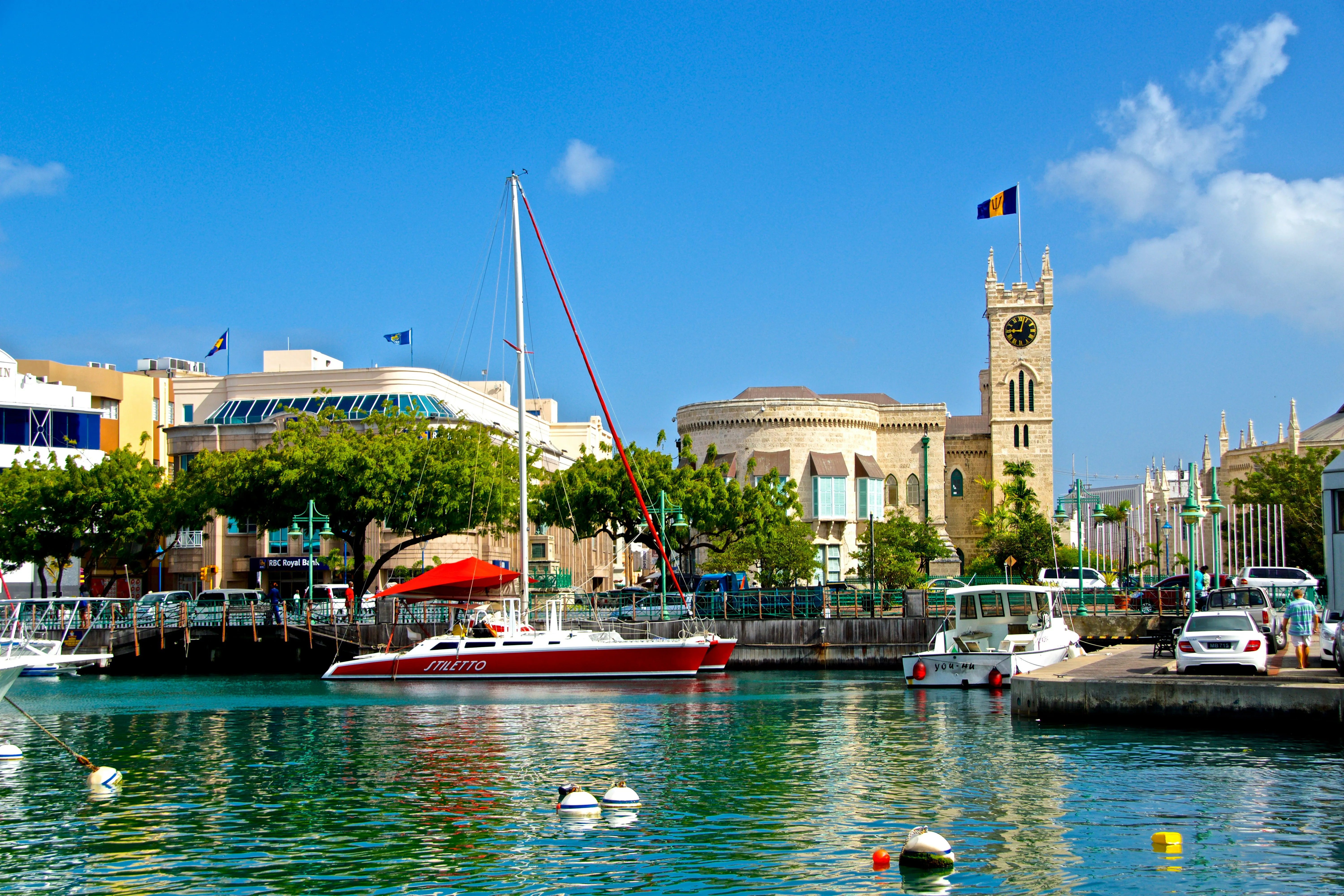
Barbados is an island that, despite its manageable size, offers a surprising diversity of landscapes and experiences that vary notably from one coast to another. To understand the essence of this destination, it is fundamental to explore Bridgetown, its capital. This city, along with its Military Garrison, has been declared a World Heritage Site by UNESCO. Walking through its streets allows you to observe the British colonial heritage reflected in buildings like the Parliament, while The Careenage area offers a view of the city’s port pulse. The Garrison historic area houses museums and fortifications that tell centuries of military history in an environment that combines ancient architecture with green spaces.
The west coast, often called the Platinum Coast, is known for its calm waters and historic urban centers. Holetown is a point of great relevance, as it was the site of the first European settlement on the island; today it is a meeting hub with access to light sand beaches and streets where the old and modern mix. Further north is Speightstown, a town that preserves a more traditional and bohemian air, with restored historic buildings and a leisurely atmosphere that invites strolling through its small port and local art galleries.
In contrast, the south coast presents a different dynamism, being an area very frequented by those seeking outdoor activities and entertainment. Here you will find the popular Oistins market, famous for its evening gatherings where local gastronomy and music are the protagonists. This region also stands out for its promenades and beaches ideal for nautical sports. It is a perfect transition zone between the calm of the west and the force of the east, offering modern infrastructure without losing contact with the island’s cultural roots.
The east coast of Barbados offers a radical change of scenery. Bathed by the Atlantic Ocean, this area is much more rugged and wild, with Bathsheba as its most emblematic point. In this place, enormous rock formations detached from the cliffs and the constant surf create a natural landscape of great beauty. Although it is not a recommended area for swimming due to currents, it is the favorite spot for photographers and nature lovers seeking hiking trails and panoramic views away from the more urbanized circuits.
Towards the interior of the island, the terrain becomes more rolling and lush, revealing the geological richness of the region. One of the most prominent points of interest is Harrison’s Cave, a system of crystalline caverns with stalactites, stalagmites, and underground water streams that can be toured in an organized way. Nearby, in central districts like Saint Thomas, there are botanical gardens and natural gullies where tropical vegetation grows freely, offering a cool, green refuge that contrasts with the brightness of the beaches.
The agricultural heritage of Barbados is also very present in the rural landscape through ancient plantation houses. St. Nicholas Abbey, one of the oldest and best-preserved mansions, functions today as a museum that allows you to learn about the history of sugar production and the architecture of the era. These places, scattered through the central highlands, offer an educational perspective on the country’s economic past and are surrounded by fields that still define the local economy of many rural parishes.
For those seeking high views, the Cherry Tree Hill area offers one of the best panoramas of the island, from where you can appreciate the Scotland District and the Atlantic coastline. The network of secondary roads that crosses the center of the island allows you to discover small parish churches built in volcanic stone and wood, which are the center of community life in the less touristy areas. These tours through the heart of the country show a more authentic and serene face of Barbadian culture.
Tip: You cannot miss visiting Harrison’s Cave, the most emblematic place in the country.
✈️ Best Time to Travel
Barbados enjoys a mild tropical climate all year round, with temperatures ranging constantly between 24°C and 30°C. The choice of the ideal time for a visit usually depends on the preference between dry, clear weather or the possibility of enjoying the island with fewer travelers. Traditionally, two periods are distinguished: the dry season, which coincides with the cooler months, and the wet season, where rainfall is more frequent but usually brief.
For those seeking outdoor activities and enjoying the coasts without interruptions, the months from December to May offer the most stable conditions. However, traveling in the rainy season also has its advantages, as the landscape becomes much greener and lusher, and it is possible to participate in cultural events of great local relevance. In any season of the year, the northeast trade winds provide a pleasant breeze that moderates the thermal sensation in coastal areas.
| Season | Months | Typical Climate | What to Expect | Tourist Influx |
|---|---|---|---|---|
| Spring | Mar – May | Sunny and dry, with low humidity and constant breezes. | Long days ideal for diving, surfing, and sailing competitions. | ⭐⭐⭐ (Medium/High) |
| Summer | Jun – Aug | Warmer temperatures and increased environmental humidity. | Celebration of the Crop Over festival, with parades and Caribbean music. | ⭐⭐ (Medium) |
| Autumn | Sep – Nov | Higher probability of tropical rains and humid environment. | Exuberant landscapes and the Food and Rum festival. | ⭐ (Low) |
| Winter | Dec – Feb | Very pleasant climate, with cool nights and clear skies. | High season with a festive atmosphere and optimal beach conditions. | ⭐⭐⭐⭐ (High) |
🗣️ Basic Vocabulary
Although the official language of Barbados is English, in day-to-day life you will notice that local inhabitants use “Bajan,” a dialect with its own rhythm and vocabulary. Knowing some typical expressions will not only facilitate communication in everyday situations, such as buying at a market or asking for directions, but will also allow you to connect more naturally with the island’s culture.
It is not necessary for you to master the local grammar, but showing interest in these words is usually well-received by Barbadians. Here is a selection of terms and phrases that will be practical during your stay:
- Wuh gine on?: A common way to greet someone that is equivalent to “how’s it going?” or “what’s up?”.
- Liming: Refers to the act of relaxing, hanging out with friends, or enjoying free time without rushing.
- Cheese on bread!: An exclamation of surprise or wonder used similarly to “wow!” or “my goodness!”.
- Sea-bath: The term they use to refer to going swimming or taking a dip in the sea.
- Wuhloss: A very versatile expression denoting surprise, frustration, or even impatience, depending on the context.
- Bless: Usually used as a farewell or to wish someone the best at the end of a conversation.
- The road: Used generically to refer to any direction or route; it is very common to hear it when asking for directions to a place.