


Costa Rica
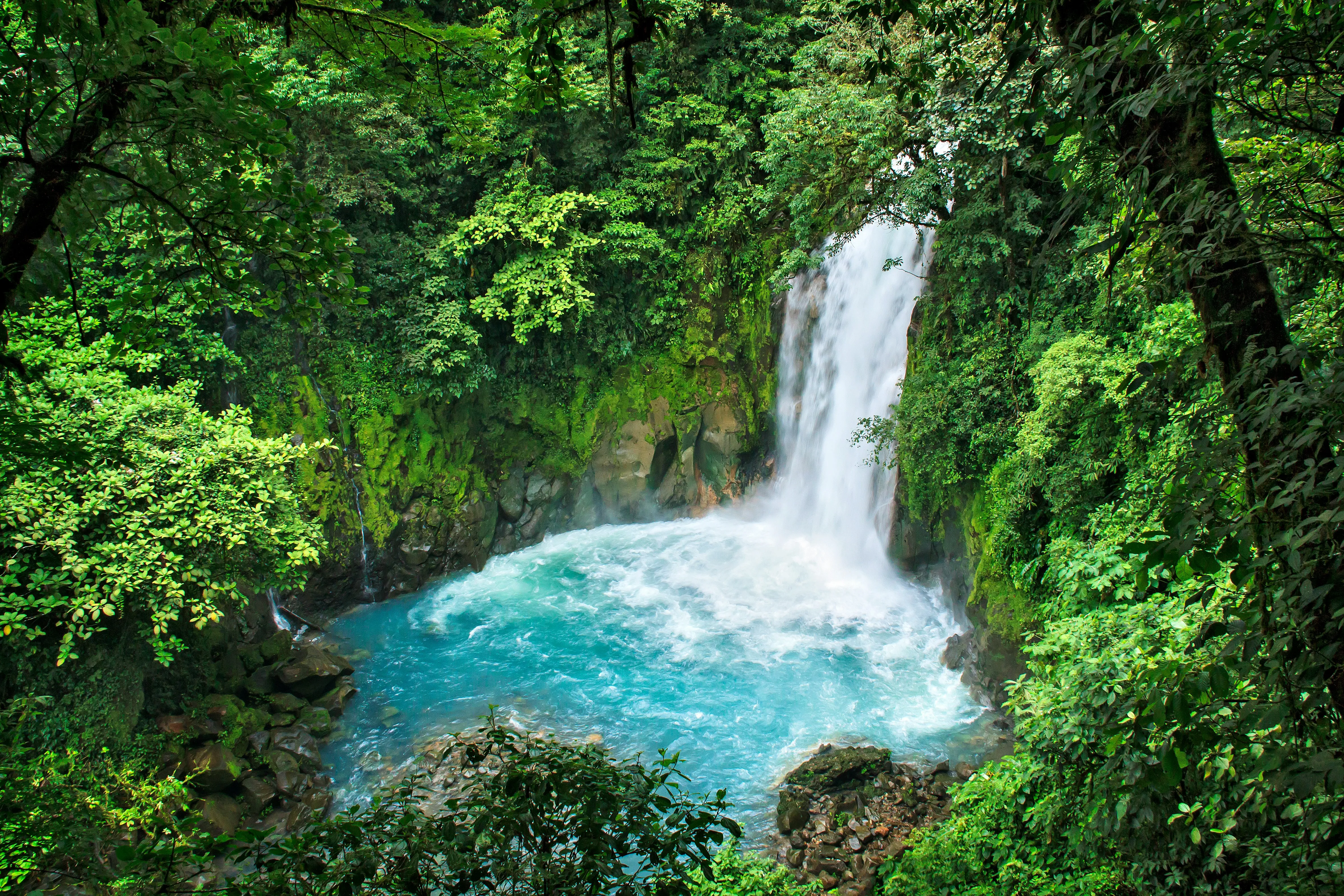
Discover a paradise of exceptional biodiversity where majestic volcanoes, lush jungles, and paradisiacal beaches combine to offer a unique and unforgettable natural experience.
Quick Facts
- Capital
- San José
- Language
- Spanish
- English
- Currency
- Costa Rican Colón (CRC), US Dollar (USD)
- Best time to visit
- From December to April, during the dry season to enjoy the sun and nature.
- Budget per day
- $50 - $150 per day
- Climate
- Tropical climate with warm temperatures all year round, divided into a dry and a rainy season with high humidity.
- Connectivity
- good
- Very easy to obtain at airports and authorized kiosks, with wide availability of local eSIM cards.
- Electricity
- Type A/B (120V)
- Local transport
- acceptable
- Card usage
- widespread
- Tipping
- optional
🌎 Introduction
Costa Rica sits between two oceans, functioning as a narrow bridge of land where nature sets the pace of daily life. Its geography, defined by a chain of volcanoes that crosses the territory, offers a mosaic of climates ranging from the coolness of the highlands to the warm humidity of the coasts. It is a corner of the world where the passing of the seasons is primarily distinguished by the intensity of the green in its landscapes and by the ripening of coffee on its mountain slopes.
The essence of the country manifests in everyday scenes, such as the aroma of corn and beans in kitchens or the persistent sound of the wildlife that inhabits its jungles. Traditions remain alive in the simplicity of its towns and in festivities that celebrate the land, reflecting a culture that values tranquility and well-being. This harmony between the natural environment and a relaxed identity shapes a varied destination, where the hospitality of its inhabitants allows one to understand daily life from a more peaceful perspective.
🛡️ General Safety
Costa Rica is widely recognized as one of the safest and most stable destinations in Latin America. Often described as the “Switzerland of Central America,” the country offers a quiet and welcoming environment for international tourism.
General safety level
- The safety level in Costa Rica is considered medium-high compared to other countries in the region.
- Most visits pass without incident, as the country has a long democratic tradition and a structure specifically dedicated to visitor care.
- Although a constant state of alert is not necessary, it is essential to apply common sense and follow basic safety recommendations that would apply in any popular tourist destination.
Crime and common risks
- The most common risk for tourists is petty theft/theft of unattended items. This includes the theft of backpacks, cameras, or mobile phones on beaches, at bus stops, or in very crowded areas.
- There is a modality known as “tacha” (vehicle break-in), which consists of forcing the lock or breaking the window of a rental car to steal valuables left in sight.
- Minor scams can occasionally occur, especially with unofficial transport services or people offering unsolicited help with luggage.
- Violent incidents affecting tourists are infrequent, but it is advisable not to resist in the event of such an encounter.
Safety in cities and tourist areas
- In urban centers, especially in San José, greater vigilance must be maintained. It is recommended to avoid walking through the center of the capital at night, especially on poorly lit or lonely streets.
- Neighborhoods like Escazú or Santa Ana in the capital are generally very safe, while in coastal areas like Puerto Viejo or Jacó, one should be more cautious after dark.
- On beaches, the greatest risk is not crime, but leaving belongings unattended while swimming. It is recommended not to leave valuables on the sand unsupervised.
Transport safety
- Public bus transport is safe and efficient for moving between cities, although suitcases in luggage compartments and hand luggage should always be watched.
- Official taxis are red and must carry a yellow triangle on the doors and use the taximeter (known locally as “maría”). At airports, official taxis are orange.
- The use of private transport applications is common and is considered a safe and reliable option in urban areas.
- In Costa Rica, driving is on the right. If you rent a vehicle, be aware that roads may have potholes, be narrow, or lack lighting. It is recommended to avoid night driving in rural or mountainous areas.
Natural and climatic risks
- The most relevant natural risk for swimmers is rip currents. Many beaches do not have lifeguards, so it is vital to inquire locally before entering the sea.
- Costa Rica is a country with seismic and volcanic activity. Most tremors are mild, but there are clear evacuation protocols in hotels and public buildings.
- The rainy season (from May to November) can generate flash floods or landslides that affect roads. It is important to check the weather before going on hiking routes or long journeys.
Legislation and local norms
- Costa Rica has extremely strict laws regarding environmental protection. It is prohibited and punishable to collect shells, stones, plants, or to feed wildlife.
- Drug consumption and possession are illegal and can lead to prison sentences, regardless of the quantity.
- It is mandatory to always carry an official identification (or a copy of your passport and the entry stamp) in case authorities request it.
- Failure to comply with traffic regulations can lead to high fines that must be paid before leaving the country.
Safety for specific groups
- Solo female travelers: Costa Rica is a safe destination for women traveling alone, although it is recommended to follow standard precautions, such as avoiding walking in isolated areas or lonely beaches at night.
- LGTBIQ+ travelers: It is one of the most progressive countries in the region, with legalized equal marriage. There is a general attitude of respect, especially in tourist and urban areas.
- Children and the elderly: The country is a family destination par excellence. Infrastructures are usually well-adapted, although in national parks the terrain can be uneven, requiring appropriate footwear and caution.
Emergencies and assistance
- The universal emergency number is 9-1-1. Through this number, you can contact the police, ambulances, and firefighters.
- The Tourist Police is a specialized body that patrols the areas with the highest visitor flow and usually speaks English to facilitate communication.
- In case of loss or theft of documents, you must go to the nearest delegation of the Judicial Investigation Department (OIJ) to file a report, an indispensable document for consular procedures.
Tip: Always use guarded parking lots (parqueos) to leave your rental car and avoid leaving any object, even clothes or food, visible from the windows to prevent theft attempts.
📝 Entry requirements
To plan a stay in Costa Rica, it is essential to have a valid passport in optimal physical condition. The validity of this document must extend for the entire duration of the visit, and it is recommended that it has a validity margin of several months from the time of entry to avoid inconveniences at immigration controls. In most situations related to short-term international tourism, a prior visa application is usually not required, thus facilitating access for travelers visiting for leisure or rest.
The maximum duration of stay under the tourist category is usually set at a period of up to ninety days. It is common that, upon arrival at border posts or airports, officials request the presentation of an exit ticket from the country, whether by air, land, or sea, confirming the visitor’s intention to leave the national territory within the allowed period. Likewise, proof of economic solvency may be required to demonstrate that the traveler has sufficient financial resources to cover their living and accommodation expenses during the trip.
Regarding customs controls, there are standard restrictions aimed at protecting the natural environment. The entry of fresh organic products, such as fruits, vegetables, seeds, or unprocessed meat products, is limited to prevent the introduction of pests. In the case of medications, it is recommended that these be transported in their original packaging and, in the case of specific treatments or controlled substances, it is prudent to have a copy of the medical prescription justifying their personal use. Personal items and photographic or sports equipment are usually allowed without major complications, provided the quantity does not exceed what is reasonable for an individual traveler.
From a health perspective, complex protocols for entry are not frequently required. However, an international vaccination certificate against yellow fever may be requested if the traveler has recently stayed in areas where the disease is considered endemic. It is advised to keep the general vaccination schedule up to date and, although it is not a strict requirement at all points of entry, having travel insurance with broad medical coverage is a standard practice to guarantee peace of mind during the journey through the country’s various destinations.
- Essential documentation: Passport with adequate validity and in good condition.
- Stay permit: Generally, a period of up to three months is granted for tourist activities.
- Travel proof: Necessity to show a return ticket or a ticket for onward travel to another destination.
- Financial means: Demonstration of sufficient funds for the planned stay.
- Customs regulations: Restrictions on the entry of fresh food and agricultural products.
- Health and vaccines: Verification of the yellow fever vaccine according to the history of previously visited countries.
- Personal luggage: Standard regulations on personal items and prescription medications.
🏥 Basic health considerations
In Costa Rica, you will find one of the most advanced health systems in all of Latin America. The country has a network of public hospitals managed by the Costa Rican Social Security Fund, although as a visitor, you will most likely use private medicine. You will see that the quality of care in private clinics, especially in the San José area, is top-tier and meets international standards. You must take into account that medical care costs for foreigners can be quite high, so any consultation or procedure will have a significant impact on your budget if you are not prepared. Regarding communication, you will not have problems as a large part of the health personnel in private centers speaks English fluently.
Although it is not currently a legal requirement to cross the border, taking out travel medical insurance is absolutely essential for your peace of mind. We recommend looking for a policy that offers high coverage, including hospitalization, emergency surgical interventions and, very importantly, medical repatriation in case of need. Having this support will allow you to enjoy adventure activities and nature without the concern of facing astronomical medical bills in the face of any unforeseen event.
Regarding vaccines, there is no mandatory vaccination to enter the country, unless you come from an area where yellow fever is endemic, in which case they will ask for the international vaccination certificate. For most travelers, it will be enough to have your usual vaccination schedule up to date. However, some travelers prefer to consult with their doctor about Hepatitis A and B or tetanus vaccines as an extra precaution, depending on the rural areas you plan to visit.
If you follow a specific treatment, you will find it essential to carry your medication from home in its original packaging. It is always a good idea to have your medical prescription or a report from your doctor translated, especially if you travel with drugs that may be considered under special control. You will see that pharmacies, called locally “boticas,” are very well stocked in the cities, but if you venture into more remote or jungle areas, the availability of certain specific medications will be much lower.
The most common health risks you could experience are related to the tropical environment. Moving through jungle or coastal areas, you will be exposed to mosquito bites that can transmit diseases such as dengue, zika, or chikungunya. Therefore, the use of an effective repellent and appropriate clothing will be your best defense. You should also pay attention to the sun, which is extremely strong at these latitudes, and to hydration to avoid heatstroke. Regarding altitude, you might only feel some slight discomfort if you decide to climb the highest volcanoes, but generally, it does not represent a major risk for the average tourist.
One of the best pieces of news you will receive is that tap water is potable in almost the entire country, which greatly facilitates daily hygiene. However, in some very isolated coastal areas or in the Caribbean area, you may prefer to consume bottled water to avoid minor stomach upsets. Regarding food, the levels of food hygiene are high. You will be able to try local cuisine in the famous “sodas” with considerable safety, always applying the common sense you would use in any other international destination.
In case you find yourself in a critical situation, the emergency number is 911. This service coordinates assistance from ambulances, firefighters, and police. You should know that, although the care is efficient, in mountainous zones or very remote rural areas, response times may be longer due to the characteristics of the terrain and the state of some secondary roads.
To finish your preparation, we advise you to carry a basic first-aid kit with disinfectant, bandages, painkillers, and something for mild digestive discomfort. It is also highly recommended that you always use high-factor sunscreen and stay well-hydrated during your excursions. If you follow these simple guidelines, you will find that your stay in the country will be comfortable, safe, and free of health complications.
🚌 Transport within the country
To travel around Costa Rica, travelers usually opt for car rentals, the public bus, or domestic flights. A car offers great autonomy to reach natural spots, while the bus network connects the main population centers and destinations of interest regularly. In specific coastal areas, the use of the ferry is common to cross gulfs and shorten journeys that would be much longer by road.
The public transport system is functional, although it requires some foresight from the visitor. Bus terminals are usually centralized in cities and, although signage can be simple, the language greatly facilitates communication with drivers and station personnel. Ticket management is usually done in person at terminal ticket offices or directly when boarding the transport on short routes.
There is a notable contrast between the urban environment and more isolated areas. In the capital and its surroundings, mobility is frequent and even features an interurban train network that connects several metropolitan points. In contrast, in rural or mountainous areas, frequencies are lower and the condition of the roads can influence travel time, requiring a more measured and patient pace of travel.
Taxis and transport services via mobile apps are common and easy to locate in urban areas and in towns with a higher influx of visitors. These vehicles allow for agile mobility for short journeys or specific transfers, generally operating with distance measurement systems to determine the trip fare clearly.
Regarding the feeling of comfort and reliability, transport in the country meets the necessary standards for international tourism. Although the terrain’s orography and weather conditions can occasionally affect punctuality, services maintain adequate consistency. For those looking to optimize their time, domestic flights are an efficient alternative for connecting the ends of the territory in a few minutes.
Tip: It is advisable to plan road trips well in advance, taking into account that short distances can take more time than expected due to the nature of the terrain.
🤵 Culture and etiquette
Social interaction in Costa Rica is distinguished by marked cordiality and mutual respect. Communication is usually measured and supported by constant polite formulas, where the use of “usted” is frequent even in circles of trust, reflecting a natural deference toward the interlocutor. The concept of “Pura Vida” transcends a simple greeting to become a philosophy of life that promotes optimism and tranquility; therefore, visitors are expected to maintain a patient and kind attitude in their daily dealings.
In greetings and physical contact, closeness predominates. It is common to greet with a handshake in formal contexts, while in social settings, a single kiss on the cheek is the standard gesture between women or between men and women. In public spaces, maintaining a moderate voice volume and discreet behavior that does not disrupt the peace of the environment is valued, especially in natural or rural areas where coexistence with the environment is a cultural priority.
Regarding punctuality, there is a clear distinction between formal and social commitments. While time precision is required in tourist services and businesses, in informal meetings the perception of time is more flexible, with a courtesy delay being common. In conversations, there is a tendency to avoid direct conflict or sharp negative answers, preferring a more diplomatic and soft communication style that preserves harmony in interpersonal relations.
In eating establishments, meetings are usually unhurried and the act of eating is understood as a social activity. Regarding the gratuity system, it is common for the bill to already include a percentage for table service, although it is customary to leave an additional tip if the service was outstanding. When visiting religious spaces or participating in local traditions, it is recommended to maintain a respectful observational attitude and dress appropriately for the environment, avoiding behaviors that could be disruptive during ceremonies.
“Tip”: It is fundamental to practice verbal courtesy, always using initial greetings and words of thanks before making any inquiry, as kindness in form greatly facilitates any interaction with the local population.
🍛 Typical gastronomy
Costa Rican cuisine stands out for its simplicity and the use of fresh ingredients, offering a balanced diet based mainly on products obtained directly from the land. The fundamental base of the daily diet is rice and black beans, which are combined in various ways to create the most representative dishes of its culture. Unlike other countries in the region, Tico flavors are not usually spicy, preferring the use of fresh herbs, peppers, and onions for seasoning.
The rhythm of meals is closely marked by sunlight and traditional agricultural customs. Breakfast is considered the most important meal of the day to face the day with energy. Lunch is the main and most abundant meal, while dinners tend to be lighter and earlier. In the mid-afternoon, it is very common to take a break for the cafecito, a deeply rooted social habit where local coffee is shared with a sweet or savory accompaniment.
To taste authentic cuisine, travelers usually go to sodas, small family establishments that offer homemade and traditional food. In these places, the atmosphere is informal and welcoming, reflecting local hospitality. Regarding drinks, frescos naturales (freshly squeezed tropical fruit juices) and agua dulce (an infusion made from sugar cane juice) predominate.
The use of tubers such as cassava (yuca) or chayote and the different ways of preparing plantains (fried, boiled, or mashed) are constants on the table. Additionally, the country’s geographical location allows for a great variety of fish in coastal areas, while in the interior, poultry, pork, and beef cooked slowly predominate.
| Dish | Description | Main ingredients | Where to try it | Tip |
|---|---|---|---|---|
| Gallo Pinto | Traditional breakfast mixing rice and beans from the previous day. | Rice, black beans, pepper, onion, and cilantro. | Sodas and accommodations throughout the country. | Accompany it with eggs, fresh cheese, and a slice of fried plantain. |
| Casado | The most common lunch, served as a very complete combined plate. | Rice, beans, salad, ripe plantain, and a protein (beef, chicken, or fish). | Any soda or restaurant at lunchtime. | It is the best option to taste the flavor of a Costa Rican home in a single dish. |
| Olla de Carne | A hearty beef stew or soup with abundant vegetables. | Beef, cassava, potato, carrot, chayote, and plantain. | Traditional food restaurants, especially on weekends. | It is usually served with a side portion of white rice to add to the broth. |
| Chifrijo | A contemporary dish usually served as an appetizer or light lunch. | Layers of rice, beans, pork rinds (chicharrón), and pico de gallo. | Bars and informal restaurants in the Central Valley. | It is best enjoyed accompanied by crispy corn tortillas. |
| Rondón | A thick soup of Caribbean origin with an aromatic flavor profile. | Fish, coconut milk, local tubers, and Caribbean spices. | Especially in the province of Limón and the Caribbean coast. | It is the ideal dish to discover the Afro-Caribbean influence of the area. |
📷 Zones and places to visit
Costa Rica is defined by a surprising geographical diversity that allows for travel between very different landscapes in short journeys. The starting point for many is the Central Valley, where the capital, San José, is located. Much of the cultural and historical offer is concentrated in this city, highlighting the National Theater of Costa Rica, an architectural gem from the late 19th century, and the Pre-Columbian Gold Museum, which houses a vast collection of indigenous objects. Walking through neighborhoods like Amón or Escalante allows one to observe the contrast between old wooden mansions and the modernity of its gastronomic spaces and local markets.
Towards the north of the country, the landscape changes radically upon reaching the area of La Fortuna, situated at the foot of the Arenal Volcano. This environment is known for its geothermal activity, which allows for the enjoyment of natural hot springs surrounded by tropical vegetation. Very close by are the highlands of Monteverde, famous for its cloud forest. Here, the constant mist creates a unique ecosystem where one can cross hanging bridges and observe exceptional biodiversity, including emblematic birds and flora that vary according to the altitude of the trails.
The Pacific coast offers a wide variety of options depending on the region visited. In the province of Guanacaste, to the northwest, plains and tropical dry forests predominate, with extensive beaches ideal for surfing or resting in less humid environments. Moving down toward the Central Pacific, Manuel Antonio National Park stands out as one of the points where the jungle and the sea meet most directly. Its trails allow for easy viewing of capuchin monkeys, sloths, and various species of birds that live just a few meters from the shore.
The Caribbean coastline presents a distinct cultural and natural character, with a strong influence from Afro-Caribbean heritage. In the northern part of this coast is Tortuguero National Park, a network of navigable channels that cross the jungle and is a fundamental site for the nesting of sea turtles. Further south, towns like Puerto Viejo and Cahuita offer a relaxed atmosphere, combining coral reef beaches with a local gastronomy based on coconut and spices, reflecting the multicultural identity of the region.
For those looking for total immersion in the most remote nature, the Osa Peninsula in the south is the destination of choice. There lies Corcovado National Park, considered one of the places with the highest biological intensity in the world. It is a difficult-to-access area that preserves primary forests and pristine beaches, where hiking routes require more preparation but offer a view of the country in its purest state. On the other hand, the interior of the country houses valleys dedicated to coffee cultivation, where one can learn about rural traditions and the importance of this bean in the nation’s economic history.
Tip: You cannot miss visiting Manuel Antonio National Park, the most emblematic place in the country.
✈️ Best season to travel
Costa Rica has a tropical climate that is mainly divided into two periods: the dry season and the rainy season, also known as the green season. The choice of the ideal date to visit the country depends largely on the activities to be performed. While the months with less precipitation facilitate access to national parks and mountain areas, the rainy months transform the landscape into an environment of intense vegetation and allow for the observation of specific natural phenomena, such as sea turtle nesting or the passage of whales.
In general, temperatures tend to stay constant and warm throughout the year, with more marked variations according to the altitude of the area visited. The Pacific and Caribbean slopes present different climatic behaviors, allowing for regions with good weather in almost any month. Traveling during the transition periods offers a balance between lush landscapes and days with plenty of sunshine hours, ideal for those seeking a varied experience in contact with nature.
| Season | Months | Typical climate | What to expect | Tourist flow |
|---|---|---|---|---|
| Spring | Mar – May | Transition from dry to humid. Warm temperatures. | Flowering of tropical species and traditional local festivities. | ⭐⭐⭐ (Medium - High) |
| Summer | Jun – Aug | Sunny mornings with brief rains in the afternoon. | Humpback whale watching and very green landscapes. | ⭐⭐ (Medium) |
| Autumn | Sep – Nov | Rainy season in the Pacific, but dry days in the Caribbean. | Optimal season to visit the Caribbean coast and observe turtles. | ⭐ (Low) |
| Winter | Dec – Feb | Dry climate, clear skies, and cool winds. | Outdoor activities, hiking, and enjoying sunny beaches. | ⭐⭐⭐⭐ (Very high) |
🗣️ Basic vocabulary
Although Spanish is spoken in Costa Rica, Costa Ricans use unique expressions that are part of their cultural identity. Knowing some of these local terms will be very useful for moving with ease in daily situations, whether greeting, ordering food in a restaurant, or asking for directions.
It is not necessary to master the local slang, but using these words facilitates a closer and smoother interaction with the inhabitants of the country. Below are some of the most common terms you will hear and can use during your trip.
- Pura vida: The most famous expression in the country. It is used to say hello, goodbye, thank you, or to indicate that everything is fine.
- Tico / Tica: Colloquial and affectionate name used to refer to the inhabitants of Costa Rica.
- Regáleme: A common and polite way to ask for something when you are buying or requesting a service (for example, “regáleme un café” is equivalent to “give me a coffee”).
- Soda: A small local restaurant serving homemade, traditional food, generally more economical than tourist restaurants.
- Pulpería: A small neighborhood store where one can buy food, drinks, and essential items.
- Con gusto: The standard response when you say thank you, equivalent to “you’re welcome.”
- Pajilla: Term used to refer to a drinking straw.
- Cien pesos: Although the official currency is the colón, it is common for locals to refer to units of money as “pesos.”