


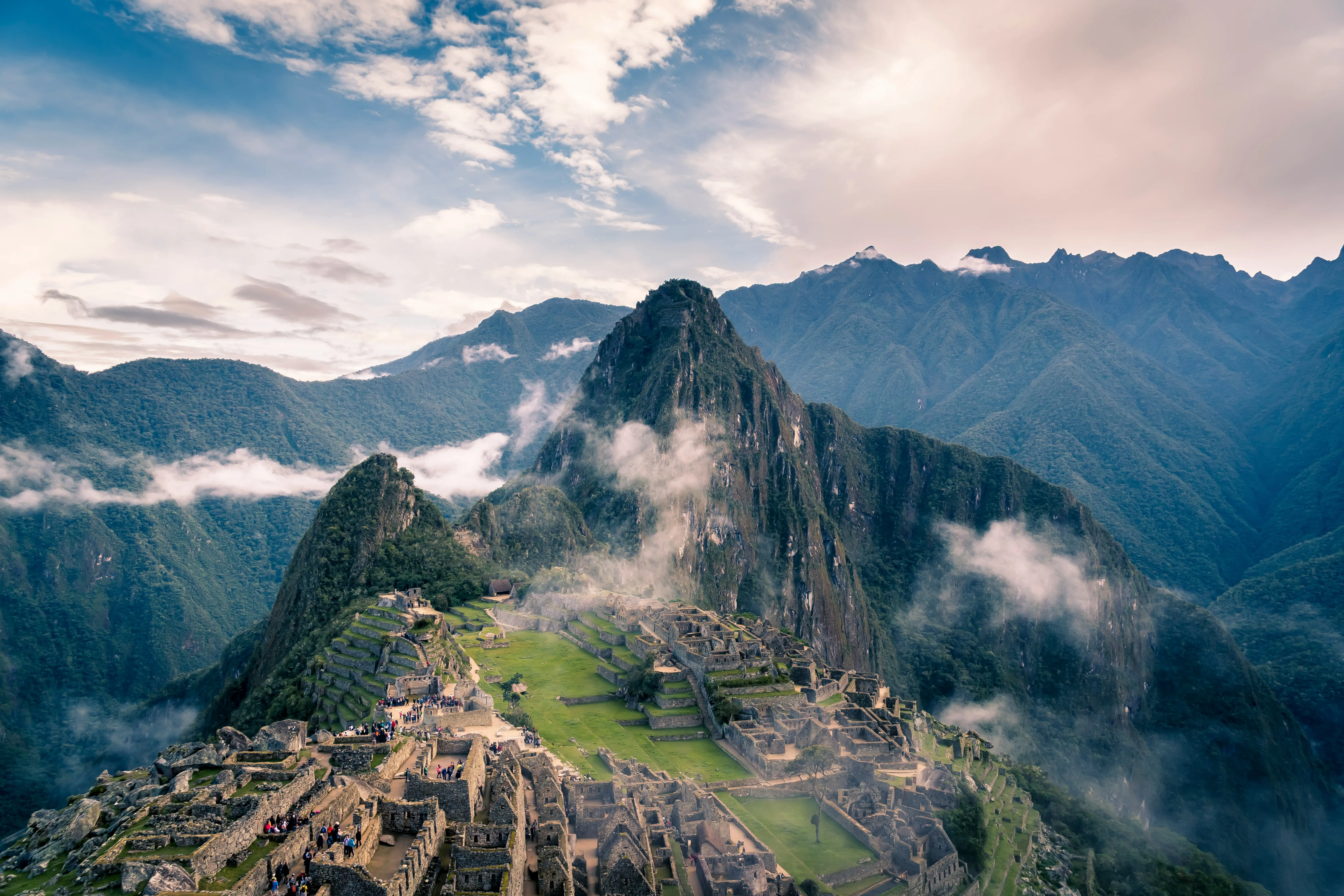
Peru
Discover the magic of the Andes, the majesty of Machu Picchu, and a world-class gastronomy that combines millenary tradition with unique modern flavors.
Quick Facts
- Capital
- Lima
- Language
- Spanish
- Quechua and Aymara
- Currency
- Sol (PEN)
- Best time to visit
- From May to October, coinciding with the dry season in the Andean region.
- Budget per day
- $30 - $120 per day
- Climate
- Very diverse climate depending on the region: arid on the coast, temperate and cold in the highlands, and tropical in the jungle.
- Connectivity
- medium
- Very easy to acquire at airports and authorized establishments in major cities.
- Electricity
- Type A/C (220V)
- Local transport
- acceptable
- Card usage
- acceptable
- Tipping
- optional
🌎 Introduction
Between the murmur of the Pacific and the peaks of the Andes, the Peruvian landscape unfolds in a succession of contrasts that define its identity. It is a territory where the mist of the coast gives way, after a few hours of travel, to the clear air of the mountains or the dense greenery of the Amazonian plain. This varied geography not only shapes the climate but also the rhythm of life of its inhabitants, who live with a millenary heritage naturally integrated into the daily life of their towns and cities.
The richness of this land is clearly perceived in its markets, where the diversity of local ingredients tells a story of centuries of cultural exchange. In the squares, traditional festivities and Andean sounds blend with the vitality of modern life, creating an atmosphere where the ancient and the contemporary constantly meet. Gastronomy, far from being just an external reference, is here a common language that reflects respect for the products of the land and the heritage of those who cultivate them.
Traveling through its regions allows one to observe how the nuances change according to the season, from the clear skies of the highlands during the dry months to the exuberance brought by the rains to the jungle. It is an environment that invites leisurely observation, offering a balanced experience between nature and a living culture manifested in every fabric, in the aromas of its kitchens, and in the hospitality of its people.
🛡️ General safety
Peru is a destination that receives millions of visitors every year and, in general terms, offers a safe and welcoming environment for international tourism. Most trips pass without incident, provided basic common sense guidelines are followed and an informed attitude is maintained.
General safety level
- The safety level in Peru is considered medium, similar to other countries in the region with a high influx of tourists.
- The most visited areas, such as historic centers and archaeological sites, have a reinforced police presence (Tourist Police) to assist travelers.
- The context for the traveler is one of tranquility, although it is necessary to be aware that there are marked contrasts between residential or tourist areas and the peripheral zones of large cities.
Crime and common risks
- The most common risk is petty crime, such as pickpocketing of wallets or mobile phones in crowded places, markets, or transport stations.
- Currency exchange scams on the street are possible; it is recommended to always use official exchange houses or banking entities.
- There are infrequent risks, but worth considering, such as “distraction thefts” in restaurants where the traveler hangs their bag on the back of the chair.
- Displaying high-value objects or flashy jewelry in unmonitored public places should be avoided to not attract unnecessary attention.
Safety in cities and tourist areas
- In cities like Lima, safety varies significantly by district. Areas such as Miraflores, Barranco, or San Isidro are very safe and have constant surveillance.
- In historic centers, such as those of Cusco or Arequipa, it is safe to walk during the day, but extreme caution should be exercised after dark in streets away from the main square.
- Mass public transport (such as the Metropolitano in Lima) is efficient, but hand luggage should always be watched due to passenger saturation.
- It is recommended to avoid traveling on foot through peripheral neighborhoods or industrial zones that are not integrated into the usual tourist circuits.
Transport safety
- In Peru, you drive on the right. Traffic rules may be less respected than in other countries, so extreme caution is recommended if you decide to rent a vehicle.
- The use of transport applications (such as Uber or Cabify) or taxis requested by phone is much safer than hailing a random vehicle on the street.
- For interprovincial travel, it is essential to hire premium category bus companies, which have private terminals, passenger control, and superior security measures.
- Railway transport to Machu Picchu is highly safe and specifically designed for tourist comfort.
Natural and climatic risks
- Peru is located in a zone of seismic activity. Most tourist buildings and hotels are prepared and have “Safe Zone” signage for earthquakes.
- The El Niño phenomenon can cause intense rains and flooding, mainly in the north and in the Andean zone, between the months of January and March.
- Altitude sickness (soroche) is a real health risk in cities like Cusco or Puno. Progressive acclimatization, constant hydration, and avoiding heavy meals during the first few days are recommended.
- In the Amazon jungle, it is important to protect yourself from insect bites and follow health recommendations regarding vaccination if visiting remote areas.
Local legislation and norms
- Peruvian laws regarding drug trafficking and consumption are extremely strict, with high prison sentences that do not distinguish between residents and tourists.
- It is illegal and severely punished to attempt to take original cultural heritage pieces (ceramics, textiles, or archaeological remains) or protected flora and fauna species out of the country.
- It is advisable to always carry a copy of your passport and the entry stamp to the country, leaving the original document in the hotel safe.
- Non-compliance with rules in archaeological zones, such as climbing prohibited structures, can lead to immediate expulsion from the site and administrative sanctions.
Safety for specific groups
- Female travelers: Peru is a safe destination for women traveling alone. However, it is advisable to avoid walking through poorly lit areas at night and to use transport services recommended by the accommodation.
- LGTBIQ+ travelers: In tourist areas and large cities, there is an attitude of respect and tolerance. In more traditional rural areas, society can be more conservative, so discretion is recommended to avoid uncomfortable situations.
- Traveling with children and the elderly: The country has adequate services, although the topography of archaeological sites can be demanding. It is recommended to plan transfers in advance to avoid unnecessary waits.
Emergencies and assistance
- 105: National Police of Peru (General emergencies).
- 116: Firefighters.
- 911: Centralized emergency number (available in some areas).
- The Tourist Police has offices in major cities, and its agents usually have language training to facilitate assistance to foreigners.
- In case of an incident, it is vital to request a copy of the police report to process claims with travel insurance or manage the replacement of documents.
Tip: Always use official app taxis or services recommended by your hotel, especially at night, to ensure GPS tracking of your journey.
📝 Entry requirements
To undertake a trip to Peruvian territory, the first aspect travelers must consider is the possession of a valid passport. Generally, it is suggested that this document be valid for at least six months from the moment of entry into the country to avoid inconveniences at checkpoints. It is essential that the passport is in perfect physical condition and has free pages for the corresponding stamps.
Regarding entry for leisure purposes, a large portion of international visitors usually do not require a prior tourist visa before travel. However, the maximum permitted stay is usually at the discretion of the immigration authorities at the time of access, reaching periods that usually hover around 90 days. It is recommended to check the granted stay status to ensure it fits the planned travel plans.
During the entry process, agents may request the presentation of an exit ticket from the country, either back to the place of origin or to a third destination, as proof that the intention of the visit is strictly temporary. Likewise, on certain occasions, a demonstration of financial solvency or sufficient financial resources to cover maintenance and accommodation during the days of stay in the nation might be required.
Controls at airports and land borders include routine security and customs reviews. Tourists can enter with their personal use items and common electronic equipment without major difficulties. However, there are strict regulations on the introduction of agricultural products, fresh food, or seeds, in order to protect the local ecosystem. If the traveler is carrying specific medications, it is advisable that these be in their original packaging and that a copy of the medical prescription justifying their use is available.
From a health point of view, there is usually no requirement for vaccines for all visitors in a generalized manner. However, for those planning to travel to tropical jungle regions, immunization against yellow fever is usually recommended. It is considered a prudent practice to have international medical assistance insurance and to consult with a health professional in advance to receive recommendations on common vaccines for international travel.
- Essential documentation: Passport with sufficient residual validity and in good condition.
- Visa status: General exemption for short tourist stays depending on the origin.
- Stay period: Usual terms of up to three months, subject to the decision of the immigration authority.
- Proof of exit: Need to have proof of transport to the outside of the country.
- Personal goods: Allowance for standard travel items and limitations on unprocessed food products.
- Health recommendations: Suggestion of vaccination for jungle areas and advisability of private medical insurance.
🏥 Basic health considerations
When planning your trip through Peru, you will find that the country has a health system that combines public and private care. In major cities like Lima, Cusco, or Arequipa, you will find high-quality private clinics offering modern services and specialized care. However, you must keep in mind that the cost of private healthcare for foreigners is usually high, so the prices of any consultation or treatment can rise quickly. Medical staff in these centers usually speak Spanish, although in the most touristy areas, it is common to find professionals who also communicate in English.
Hiring travel medical insurance is highly recommended, as although it is not a mandatory requirement to cross the border, it will provide the necessary peace of mind in case of any unforeseen event. It is essential that your policy includes broad coverage for hospitalization, medical transfers, and repatriation. Given the country’s rugged geography, with high mountain areas and deep jungle, an emergency transfer can be extremely expensive if you do not have professional backing.
Regarding vaccines, there are no mandatory vaccination requirements to enter the country. However, for your own safety, it is very advisable to be up to date with the standard vaccination schedule. If your itinerary includes visits to the Amazon jungle, the yellow fever vaccine is strongly recommended, which must be administered at least ten days before your arrival in those areas. It will be enough to consult your primary care physician a couple of months in advance to check if you need any specific boosters.
You can carry your usual medication with you without legal problems, as long as it is justified. It is very important that you travel with the original prescriptions and that the medications are in their original containers to avoid confusion at customs controls. If you need a very specific drug, it is convenient to bring a sufficient supply for the entire trip, as although you will find pharmacies easily in cities, certain commercial names or compounds might vary.
One of the most common health risks you will experience is altitude sickness or soroche, especially if you visit places located at high altitudes such as Cusco, Puno, or the Colca Canyon. You will notice that your body needs an adaptation period, so you might feel fatigue or slight headaches during the first few days. Other factors to consider are the strong solar radiation in Andean areas and the presence of mosquitoes in jungle and northern coast regions, so the use of sunscreen and repellent will be part of your daily routine.
Regarding hygiene and food, you must remember that tap water is not potable for visitors. You will find bottled water everywhere, and it is what you should use even for brushing your teeth if you have a delicate digestive system. Peruvian gastronomy is excellent and you can try delicious dishes in a great variety of establishments, but it is wise to be cautious with street food and always ensure that raw vegetables and fruits have been properly washed with purified water.
If you find yourself in a medical emergency situation, the main number you should know is 106, which corresponds to SAMU (Mobile Emergency Medical Care Service), which offers free assistance and ambulance transport. You can also dial 117 if you need to contact the social security system. Keep in mind that in more remote areas, the rapid response infrastructure may be limited, so in mild cases, it is usually more practical to travel on your own to the nearest health center or hospital.
As final recommendations for your stay to be perfect, remember to hydrate constantly to combat the effects of altitude, avoid intense physical effort as soon as you land in high cities, and do not skimp on the quality of your travel insurance. Following these simple tips, you can fully dedicate yourself to enjoying the wonders that await you in every corner of the country.
🚌 Transport within the country
To move across the territory, travelers have various alternatives that adapt to the complex geography of the region. The airplane is the preferred means to cover large distances between the coast, the highlands, and the jungle in a short time, avoiding many hours of road travel. For its part, the long-distance bus is a very widespread option for connecting cities, offering different levels of equipment. In specific regions of the Andes, the train becomes a fundamental transport to access certain mountain areas, while in the Amazon region, the ferry or river vessels are the main resource for mobility.
The ease of use of transport is adequate for international visitors. Signage in terminals and airports is usually clear and functional, facilitating orientation. The purchase of tickets can be done in person at stations or through digital platforms. Although the primary language is Spanish, in hubs with a higher influx of visitors, it is common to find staff who can provide basic assistance in other languages to facilitate the organization of journeys.
A notable difference is perceived between the infrastructure of large cities and rural areas. In larger urban centers, there are more structured transport systems that include bus networks and, in some cases, urban rail services. In contrast, in more remote areas, transport is usually simpler and depends on smaller vehicles or shared services that travel on roads that can present challenges due to the terrain’s relief.
The use of taxis and transport services managed through mobile applications is very frequent and accessible in urban areas. These services offer a direct alternative for moving between specific points in cities in a simple way. It is a valued option for its flexibility, especially for direct transfers to accommodations or places of interest without depending on the fixed stops of collective transport.
Regarding comfort and reliability, the services most used by travelers usually meet correct standards, especially on main routes. However, punctuality can sometimes be conditioned by external factors such as traffic density in capitals or weather conditions in high mountain areas. In general terms, the transport network allows for effective travel across the country if the extent of the territory and the particularities of its relief are taken into account.
“Tip”: It is convenient to check the weather forecast before making long journeys, as the climate can influence the duration of road trips or the scheduling of internal flights.
🤵 Culture and etiquette
Peruvian society deeply values courtesy and kind treatment in daily interactions. When starting any conversation or entering an establishment, it is common to use formal greetings such as “buenos días” (good morning) or “buenas tardes” (good afternoon). The use of informal address (tuteo) is usually reserved for people of trust or the same age, so addressing elders or strangers using “usted” (formal you) is considered a fundamental sign of respect. In initial introductions, a firm handshake is the norm, while in closer circles, a kiss on the cheek is frequent between women or between men and women.
Regarding verbal communication, the tone is usually calm and respectful, avoiding raising the voice in public spaces. There is an inclination towards indirect communication, where kindness prevails over direct confrontation, so it is important to pay attention to nuances and always maintain constructive language. Regarding punctuality, although rigor is expected in professional environments, there is greater flexibility in social meetings, though as a visitor, punctuality is appreciated as a gesture of consideration towards the host.
Gastronomy occupies a central place in daily life, and meals are moments of leisurely socialization. It is common to wait until all diners are served before starting to eat and to always give thanks at the end. In dining establishments, although service can sometimes be included in the bill, it is most common to leave a voluntary tip of around ten percent of the total if the service was satisfactory. When visiting private homes, bringing a small detail or gift for the hosts is a very well-received gesture that reinforces social bonds.
Respect for historical and religious heritage is a priority. When visiting temples, churches, or archaeological sites, it is recommended to maintain silent and decorous behavior, avoiding touching millenary structures or intervening in local ceremonies. In rural areas and indigenous communities, it is essential to request permission before taking photographs of people or their belongings, always showing an attitude of listening and openness towards their traditions, clothing, and community hierarchies.
Tip: To avoid misunderstandings, it is recommended not to rush transactions or requests for information with excessive urgency; dedicating a few seconds to a cordial greeting and briefly asking about the well-being of the interlocutor before making any request will greatly facilitate communication and mutual understanding.
🍛 Typical gastronomy
The cuisine of Peru is the result of a rich cultural fusion that integrates indigenous traditions, European and African influences, and a marked Asian heritage. This diversity is reflected in a geography that divides flavors between the coast, the Andean highlands, and the Amazon jungle. On the Peruvian table, the main ingredients revolve around an enormous variety of potatoes, different types of corn, and the essential use of ajíes (peppers), which provide color and a characteristic aroma to most of its preparations.
Regarding eating habits, the midday meal is the main moment of the day. It is common to find establishments that offer a daily menu, and hours are usually between 1:00 PM and 3:00 PM. At night, the tendency is to have a lighter dinner. In coastal areas, there is a cultural custom of consuming raw fish dishes, such as ceviche, preferably during daylight hours to ensure the freshness of the product caught that day.
Beverages also occupy a central place in the culinary experience. Chicha morada, a non-alcoholic drink made from purple corn, fruits, and spices, is the most common accompaniment to family meals. On the other hand, pisco is the national spirit par excellence, frequently used as a base for cocktails in social gatherings. When visiting a restaurant, a welcoming atmosphere is perceived where hospitality is a rule and sharing different portions is a common practice among diners.
Restaurant etiquette is generally informal, although in large cities, there are more formal establishments that require prior reservation. It is common for dishes to be prepared to order, highlighting the use of fresh herbs such as cilantro or huacatay. Although many dishes include some type of ají, the level of spiciness is usually moderate in standard recipes, allowing the traveler to discover the complexity of local flavors without needing a high tolerance for spice.
| Dish | Description | Main ingredients | Where to try it | Tip |
|---|---|---|---|---|
| Ceviche | Raw fish marinated in citrus and spices. | White fish, key lime, red onion, and ají. | Cevicharías on the coast and major cities. | Taste it preferably at midday for the freshness of the fish. |
| Lomo Saltado | Beef stir-fry with Oriental influence served with rice. | Beef, onion, tomato, soy sauce, and french fries. | Traditional restaurants and chifas. | Mix the meat juices with the rice to appreciate all the flavor. |
| Ají de Gallina | Creamy and mild slightly spicy stew. | Shredded chicken, yellow ají, bread, milk, and walnuts. | Criollo cuisine restaurants. | It is usually accompanied by black olives and boiled egg. |
| Causa Limeña | Layered cold potato puree cake. | Yellow potato, lemon, yellow ají, tuna or chicken, and avocado. | Starter in almost any restaurant in the country. | It is an ideal dish for those seeking mild flavors and delicate textures. |
| Rocoto Relleno | Spicy pepper stuffed with meat and baked with cheese. | Rocoto pepper, minced meat, onion, olives, and melted cheese. | Traditional picanterías, especially in Arequipa. | Check the spice level, as rocoto is a pepper with character. |
📷 Areas and places to visit
Peru is a country that stands out for its immense geographical and cultural diversity, offering the traveler a constant transition between the desert coast, the high Andean mountains, and the Amazon jungle. This variety is reflected in its cities, where vestiges of millenary civilizations coexist with colonial architecture and modern districts. Exploring this territory allows one to understand the historical evolution of South America through its landscapes and its urban centers.
The capital, Lima, is usually the entry point for most visitors. Located facing the Pacific Ocean, the city presents a marked contrast between its Historic Center, declared a World Heritage Site for its colonial churches and balconies, and more contemporary neighborhoods like Miraflores or Barranco. In the latter, the bohemian atmosphere and art galleries define the environment. For those seeking to delve into the pre-Columbian past without leaving the city, the Larco Museum offers a detailed vision of ancient cultures, while sites like Huaca Pucllana show the presence of pyramidal structures in the heart of the metropolis.
Towards the south, the region of Cusco represents the core of the ancient Inca Empire. The city of Cusco impresses with its perfectly joined stone walls upon which colonial buildings sit. Walking through the neighborhood of San Blas or visiting the Qorikancha are essential activities to understand this cultural fusion. Nearby, the Sacred Valley of the Incas unfolds a landscape of agricultural fields and traditional towns like Pisac and Ollantaytambo, where local markets and stone fortresses keep the Andean heritage alive.
One of the points of greatest historical interest is, without a doubt, the citadel of Machu Picchu. This archaeological complex, harmoniously integrated into the vegetation of the cloud forest, allows one to observe the advanced engineering and astronomy of the Incas. The routes leading to it, whether on foot via historical trails or through railway journeys crossing deep valleys, offer some of the most representative panoramas of the Andes.
In the southern zone lies Arequipa, known as the “White City” due to the use of sillar, a light-colored volcanic stone, in its main constructions such as the Cathedral and the Santa Catalina Monastery. From here, one can access the Colca Canyon, one of the deepest in the world, where it is possible to observe the flight of the condor and visit rural communities that preserve ancestral clothing and customs. Continuing east, Lake Titicaca in Puno offers a unique high-altitude landscape, with its famous Uros floating islands and the islands of Taquile or Amantaní, where daily life passes at a slow pace.
The southern coast also houses the Ica desert, famous for the enigmatic Nazca Lines, large-scale geoglyphs that can only be fully appreciated from the air. Nearby, the Paracas National Reserve and the Ballestas Islands allow for the spotting of marine fauna such as sea lions and Humboldt penguins, showing the biological richness of the Peruvian coastline.
For those seeking a different experience, the Peruvian Amazon occupies a vast portion of the country. From cities like Iquitos, accessible only by air or river, or Puerto Maldonado in the south, incursions into the jungle can be made to observe biodiversity in reserves like Manu or Tambopata. Contact with nature and local communities’ knowledge of medicinal plants and the river ecosystem provide a different perspective of the national geography.
Finally, Northern Peru reveals the grandeur of cultures preceding the Incas. Near Trujillo lies Chan Chan, the largest mud city in America, and the Huacas of the Sun and the Moon. Further north, in Chiclayo, the Royal Tombs of Sipán Museum guards the treasures of the Moche culture, constituting one of the most relevant archaeological milestones of recent decades due to the quality and preservation of its gold and precious stone pieces.
“Tip”: You cannot miss visiting Machu Picchu, the most emblematic place in the country.
✈️ Best time to travel
Peru is a destination of great geographical diversity that allows for visits to be planned during almost any time of the year, although the experience varies notably according to the region. Generally, the period between May and September is highly valued by travelers wishing to explore the Andean zone and the jungle, as it coincides with the dry season. During these months, clear skies facilitate the visibility of mountain landscapes and outdoor activities such as hiking or visits to archaeological complexes.
Conversely, the Peruvian coast shows its best face when temperatures are higher, offering an ideal environment for enjoying the beaches and marine gastronomy. It is important to keep in mind that, due to the presence of the Andes mountain range and the Amazon jungle, the climate can change drastically over short distances, so the choice of travel time will largely depend on the specific regions to be visited and the type of activities sought.
| Season | Months | Typical climate | What to expect | Tourist influx |
|---|---|---|---|---|
| Spring | Mar – May | Decrease in rain in the Andes and temperate climate on the coast. | Intensely green mountain landscapes and Holy Week festivities. | ⭐⭐ Medium |
| Summer | Jun – Aug | Dry season in the highlands; sunny days with cold nights and clear skies. | Optimal conditions for the Inca Trail, visits to Cusco, and high mountain routes. | ⭐⭐⭐ High |
| Autumn | Sep – Nov | Mild temperatures with appearance of sporadic rain and mist on the coast. | Lower attendance at archaeological sites and good opportunities for wildlife spotting. | ⭐⭐ Medium |
| Winter | Dec – Feb | Rainy season in the highlands and jungle; warm, humid, and very sunny climate on the coast. | Ideal season for northern beaches and urban cultural events. | ⭐ Low / Medium |
🗣️ Basic vocabulary
Learning some local expressions is a simple way to facilitate communication during your stay in Peru. Although the official language is Spanish, the use of certain idioms and specific terms will allow you to better understand directions and move more naturally in daily situations, whether in a market, a restaurant, or using public transport.
It is not necessary to master technical vocabulary, but familiarizing yourself with these words will help you navigate more fluidly. Knowing these basic terms is a useful tool for solving practical needs and showing respect for the local culture during the trip.
- Luca: Colloquial name given to one sol (the national currency).
- Soroche: Term used to refer to altitude sickness, common in Andean areas.
- Ya: Usually used to indicate agreement, that something has been understood, or as confirmation.
- Chifa: Name given to Chinese-Peruvian fusion cuisine restaurants, very popular throughout the country.
- Polo: Short-sleeved t-shirt.
- Micro: Bus or urban public transport.
- Chamba: Word used to refer to work or employment.
- Céntimos: Coins worth less than a sol, necessary for exact payments in small businesses or transport.