


Senegal
Senegal captivates with its vibrant culture, landscapes ranging from desert to jungle, golden beaches, and the unique hospitality of its people, the Teranga.
Quick Facts
- Capital
- Dakar
- Language
- French
- Wolof, Serer, Pulaar, Mandinka
- Currency
- West African CFA franc (XOF)
- Best time to visit
- From November to May, coinciding with the cool dry season.
- Budget per day
- $35 - $110 per day
- Climate
- Tropical climate with a dry season from November to May and a wet season from July to October; temperatures moderated by the ocean.
- Connectivity
- medium
- Very easy to obtain at official stores and many local kiosks.
- Electricity
- Type C / D / E / K (230V)
- Local transport
- acceptable
- Card usage
- cash is more common
- Tipping
- optional
🌎 Introduction
At the westernmost tip of the continent, where the Atlantic bathes shores of light sand and fishing villages, the landscape transforms to the beat of the seasons. From the northern plains, dotted with wide-trunked baobabs and singular silhouettes, to the intense green of the mangroves and forests that define the south, the environment invites a slow pace, marked by the warm light that envelops daily life.
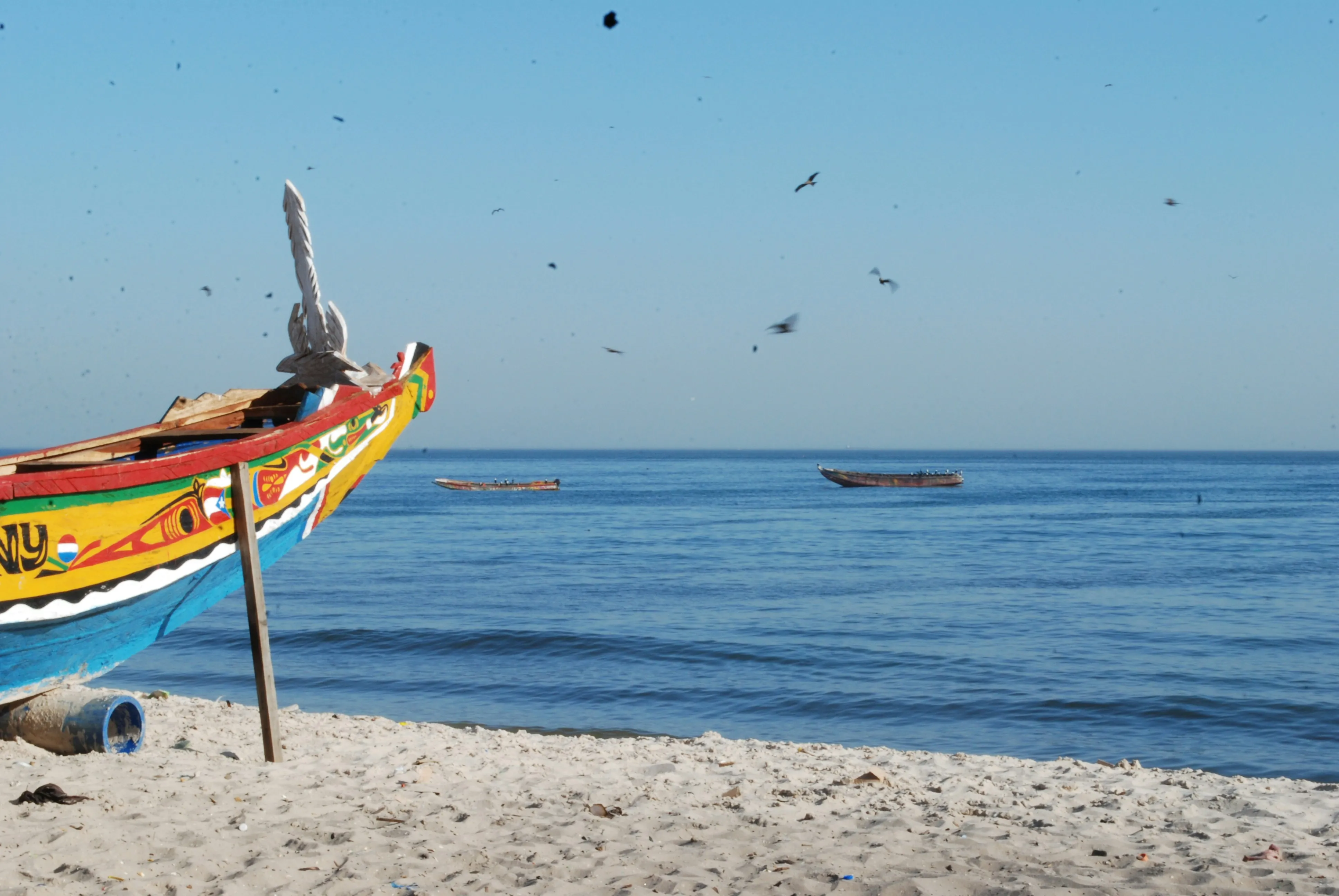
The identity of these lands is felt in the bustle of its markets and in the colorful pirogues that return to the shore at sunset with the day’s catch. It is a place of encounters where hospitality is understood as a natural way of life, manifesting in the gesture of sharing a plate of rice with fish or in the leisurely ritual of tea in the shade of trees. Music and oral tradition remain the common thread that unites different communities, keeping deep roots alive in a context of modernity.
Traveling through these latitudes means looking into a diversity that goes beyond the obvious, where vibrant cities coexist with villages that preserve an ancestral calm. Whether during the dry months, when the air is lighter, or after the rains that awaken nature, the country offers a serene and authentic atmosphere that allows for connection with a reality rich in nuances, far from the faster circuits.
🛡️ General safety
Senegal is internationally known as the country of “Teranga” (hospitality in Wolof), which translates into a welcoming environment for visitors. In general terms, it is one of the most stable and safe countries in West Africa, with a long democratic tradition and peaceful coexistence.
- The level of safety for tourists is considered medium, being comparable to other international developing tourist destinations.
- The country is a quiet destination, although, as on any trip, safety depends largely on common sense and following certain basic prevention guidelines.
- The current context shows a country that greatly values tourism, so authorities are usually attentive and protective of foreign travelers.
Crime and common risks
Most visits to Senegal pass without incident, although it is necessary to be aware of minor risks that may arise, especially in crowded areas.
- The most frequent crimes are minor thefts, such as bag snatching or theft of mobile phones and wallets. These usually occur in markets, crowded beaches, and busy areas.
- Scams or cons by people offering themselves as “spontaneous guides” are common. It is frequent for them to approach to strike up a conversation and then ask for money for an unsolicited service or to inflate prices in shops.
- Although very rare, it is advisable to avoid walking in isolated areas or poorly guarded beaches during the night, as the risk of assault can increase in the dark.
- It is recommended not to flaunt valuables, such as expensive jewelry or professional cameras, in places that are not strictly touristy.
Safety in cities and tourist areas
The safety situation varies slightly depending on the location, with large cities requiring more attention.
- In Dakar, the capital, it is necessary to take extra precautions in neighborhoods like Plateau, Medina, and in the Sandaga or Kermel markets. These are safe areas by day but require vigilance due to the crowds.
- Coastal tourist areas, such as Saly Portudal or Gorée Island, present very high safety levels and a relaxed atmosphere, with a discreet but effective police presence.
- In urban public transport, such as the popular “cars rapides,” it is important to always watch personal belongings due to the close contact between passengers.
- It is recommended to always use official guides accredited by the Ministry of Tourism for excursions or visits to historic centers.
Transportation safety
Transportation in Senegal is varied but requires adaptation by the traveler to local customs.
- Driving in Senegal is on the right, just as in most of Europe and America.
- Taxis are the most recommended means for tourists. It is essential to agree on the price before starting the journey, as they do not usually use taximeters.
- Rental vehicles are a valid option, although it is recommended to hire a local driver if you do not have previous experience driving in the country, as signage can be scarce and traffic in cities is intense and chaotic.
- Traveling by road at night outside of cities is strongly discouraged. Lighting is poor, and there are risks of encountering animals on the road or broken-down vehicles without signaling.
- The condition of main roads is generally good, but secondary routes may have significant potholes or sections of dirt track.
Natural and climatic risks
Senegal is not a country with relevant seismic or cyclonic activity, but the climate imposes its own conditions.
- Extreme heat is the primary risk, especially between the months of March and June. Temperatures can exceed 40 degrees in the interior of the country, leading to risks of dehydration and heat stroke.
- The rainy season or “hivernage” (from July to October) can cause sudden flooding in some urban areas of Dakar and make travel on secondary roads in the south of the country difficult.
- During the dry season, the harmattan may occur, a wind laden with desert dust that reduces visibility and can affect people with respiratory problems.
- It is recommended to always drink bottled water and avoid consuming ice or raw food at street stalls to prevent digestive problems.
Local legislation and norms
Respecting local laws and customs is fundamental to avoiding misunderstandings or serious legal problems.
- Senegal is a country with a predominantly Muslim population, so it is important to dress respectfully and modestly, especially when visiting religious sites or rural areas.
- The consumption, possession, or trafficking of drugs is severely punished with heavy fines and effective prison sentences.
- It is forbidden to photograph government buildings, military facilities, bridges, or security forces personnel. It is always advisable to ask permission before photographing local people.
- Failure to comply with local norms can lead to arrests and long judicial processes, where ignorance of the law does not excuse its fulfillment.
Safety for specific groups
- Female travelers: Senegal is a safe destination for women traveling alone, although they may receive unwanted attention or persistence from vendors and “guides.” It is recommended to dress discreetly and act with firmness and courtesy.
- LGTBIQ+ travelers: Same-sex relationships are penalized by law in Senegal and there is a strong social stigma. It is recommended to avoid any public display of affection to prevent legal incidents or aggression.
- Children and elderly: The country is very welcoming to families. The main risk for these groups is the climate (heat) and health conditions, so it is vital to travel with extensive health insurance coverage and maintain hydration.
Emergencies and assistance
In case of an incident, it is important to remain calm and contact the competent authorities.
- Police: 17
- Firefighters: 18
- Medical emergencies (SAMU): 1515
- The police are usually friendly to tourists, although bureaucratic procedures can be slow. In case of theft, it is essential to go to a police station to file a report (procès-verbal) for any subsequent insurance claim.
- It is highly recommended to register with the traveler services of your respective countries before starting the trip and to have international travel insurance that includes medical repatriation, as high-quality health services are concentrated almost exclusively in Dakar.
”> Tip: Always carry a photocopy of your passport with you and leave the original document in your accommodation’s safe to avoid major problems in case of loss or accidental theft.”
📝 Entry requirements
To plan a trip to this destination, it is essential to have a valid passport with a recommended minimum validity of at least six months from the time of entry. Local authorities usually require the document to have enough space for the corresponding stamps, so it is advised to have several free pages in the passport before starting the journey.
In terms of access permits, most international visitors traveling for leisure reasons can enjoy a visa exemption for temporary stays. The maximum period of stay under this modality is usually ninety days, allowing travel through the territory for tourism purposes without the need for complex bureaucratic procedures prior to arrival.
When presenting at border control points, whether at airports or land crossings, it is common for immigration personnel to request proof of an onward or return ticket. Likewise, travelers may be asked to demonstrate that they have sufficient financial means to cover the expenses of their stay, whether through cash, credit cards, or bank statements.
Security and customs checks are part of the standard entry routine. It is recommended to maintain a cooperative attitude and have accommodation reservation documents or contact details for the places where you will be staying ready. These controls aim to ensure that the flow of visitors is orderly and complies with local security regulations.
Regarding customs regulations, there are limitations on the introduction of certain goods. Personal use items are permitted, but products such as specific medications must be transported in their original packaging and, preferably, accompanied by a medical prescription justifying their use. The entry of fresh food, plants, or animal products is usually restricted or subject to rigorous sanitary inspections.
In the health section, it is essential to stay informed about vaccination recommendations. Depending on the area of origin or the general epidemiological situation, it may be necessary to present the international certificate of vaccination against yellow fever. Additionally, it is highly advisable to have travel insurance that offers broad medical coverage to face any medical eventuality during the stay.
- Identity document: A passport with at least six months’ validity and available pages is required.
- Permitted stay: Usual period of up to ninety days for tourist activities.
- Proof of exit: Frequent need to show a return ticket or one to another destination.
- Financial support: Possible request to check funds for the duration of the trip.
- Luggage and medicines: Use of original packaging and prescriptions for specific drugs.
- Preventive health: Recommendation to consult international vaccination centers and hire medical insurance.
🏥 Basic health considerations
In urban areas, especially in Dakar, you will find private health centers with acceptable quality standards and modern equipment. However, you must keep in mind that in more remote or rural regions, the infrastructure is much simpler and resources are limited. Access to private healthcare is the most recommended option for tourists, although prices are often high and upfront payment or a financial guarantee is generally required before receiving treatment. Medical and nursing staff usually communicate primarily in French, so speaking this language or having a translator will make things much easier for you in case of need.
Having travel medical insurance is not a mandatory requirement to enter the country, but it is something absolutely essential that you should not overlook. It is very important that your policy includes broad coverage for hospitalization and, above all, that it covers medical repatriation by air ambulance. In serious situations, the best option is likely a transfer to another country with more specialized facilities, and the costs of such operations are extremely high if you do not have insurance to back them up.
Regarding vaccines, the yellow fever vaccine is mandatory for all travelers arriving from countries with a risk of transmission, although it is often requested generally of any tourist, so carrying your international vaccination certificate will save you complications. Additionally, you should keep your routine vaccination schedule up to date, including tetanus-diphtheria, hepatitis A and B, and typhoid fever. Given that Senegal is an area with the presence of malaria year-round, you should visit a doctor before your trip so they can prescribe the most suitable preventive treatment for you.
If you need to carry personal medication, make sure to always transport it in its original packaging and accompanied by a medical prescription signed by your doctor, preferably translated into French. You won’t find severe restrictions for common personal-use medications, but having the documentation at hand will save you unnecessary questions at border controls. It is highly recommended that you prepare a small first-aid kit with pain relievers, anti-diarrheals, and a potent insect repellent containing a high concentration of DEET.
The most common health risk you will face is intense heat, which can cause dehydration or sunstroke if you do not protect yourself properly. Mosquito-borne diseases, such as malaria, dengue, or zika, are the most relevant risks in almost the entire territory, especially during the rainy season. I also advise you to avoid swimming in fresh water, such as rivers or lakes, to prevent bilharzia, a parasitic disease that does not exist in seawater or chlorinated pools.
Regarding hygiene, tap water is not considered safe for travelers to consume, so you should always drink bottled water and ensure the bottle is opened in your presence. It is preferable to avoid ice in drinks and raw vegetables if you are not certain they have been washed with potable water. In street food stalls, you can try incredible local flavors, but always look for places where food is cooked to order and served very hot.
For any serious medical emergency, the phone number to dial is 1515, which corresponds to the ambulance and urgent care service (SAMU). You should be aware that ambulance response times can be slow due to traffic or distance, so in critical situations, it is sometimes faster to transport the patient directly to one of the main private clinics in a private vehicle while you contact your insurance company.
As final practical tips, remember to apply sunscreen frequently and wear light clothing made of natural fabrics that covers most of your body at sunset to protect yourself from bites. Stay constantly hydrated even if you don’t feel thirsty and try to avoid intense physical efforts during the central hours of the day when the sun is strongest. With these basic cares, your experience traveling through Senegalese landscapes will be much safer and more pleasant.
🚌 Transport within the country
Moving around Senegal offers various options adapted to different travel needs. The train is a modern alternative for specific routes near the capital, while domestic flights allow for quick connections between Dakar and southern regions. For road travel, buses and shared transport vehicles are the most common means between different towns, complemented by the ferry, which is essential for maritime routes to areas like Casamance.
For the visitor, using public transport requires a certain capacity for adaptation. Although signage can be scarce in some places, communication is usually fluid thanks to the use of French, which facilitates ticket purchasing and orientation at stations. The process of acquiring tickets is mostly in person, handled directly at departure points before starting the journey.
The transport experience changes significantly between large cities and rural areas. In urban centers, taxis are the most comfortable and frequent resource for tourists, operating constantly throughout the day. In contrast, in more remote areas, vehicles usually depend on filling all seats before starting the journey, which implies a slower travel pace linked to the daily activity of local residents.
Regarding comfort and reliability, standards vary depending on the chosen service. While more recent transport maintains notable regularity, long-distance road journeys can be affected by infrastructure conditions or traffic density. Generally, it is advisable to face travel with a flexible attitude, as rigorous punctuality is not always the norm in more traditional transport methods.
Tip: It is recommended to always confirm the exact departure point and seat availability in advance, allowing for a wide time margin for long-distance journeys.
🤵 Culture and etiquette
Social interaction in Senegal is deeply marked by the concept of Teranga, a term defining hospitality, a warm welcome, and solidarity towards others. Greetings occupy a central place in daily life; they are not considered a mere formality but a fundamental part of mutual recognition. It is common to spend time exchanging questions about well-being and family before starting any conversation, procedure, or commercial transaction. Personal interaction is usually slow and friendly, with patience and maintaining a moderate tone of voice in public spaces being highly valued, avoiding loud outbursts.
In the interpersonal sphere, respect for hierarchies and elders is an essential rule of coexistence. It is recommended to address adults with deference and courtesy. Regarding physical contact, greetings between people of the same sex can be prolonged and affectionate, while between different genders, greater discretion is usually observed. The right hand plays a very important symbolic and practical role, as it is the one that must always be used for greeting, giving or receiving objects, and for eating, especially in traditional contexts.
Customs related to food reflect the country’s strong sense of community. It is very common for food to be served in a collective bowl shared by all diners, generally using the right hand. Before starting, a ritual hand washing is performed. If invited to a private home, it is a common courtesy to remove shoes before entering the rooms. Regarding tips, they are well received in tourist and catering services as a gesture of gratitude for the attention provided, always on a voluntary basis.
Spiritual and religious life has a constant presence in society, so behavior in places of worship and rural areas must be respectful and discreet. When visiting religious spaces, it is advisable to dress in a way that covers shoulders and knees, and remove footwear when necessary. Before taking photographs of people or scenes of daily life, it is fundamental to request permission beforehand, showing respect for others’ privacy. In general, observing the environment and acting with an attitude of listening and openness allows for a natural integration into the local pace of life.
“Tip”: When interacting with anyone, always remember to start the conversation with a slow and full greeting before asking any questions or requests, as skipping this step is considered a basic lack of courtesy.
🍛 Typical gastronomy
The gastronomy of Senegal is a reflection of its rich tradition of hospitality, known locally as Teranga. The foundation of its cuisine rests on local products such as rice, millet, and fresh fish, the latter due to its extensive coastline. It is common for meals to become a social act of union, where diners often gather around a large shared bowl placed in the center, reinforcing community ties.
Senegalese flavors are characterized by the balanced use of lemon, onion, garlic, and various local spices that add depth to stews without necessarily being spicy. Peanuts are another essential ingredient, frequently used to thicken sauces or as a base for hearty dishes. Regarding cultural customs, it is important to remember that, in traditional settings, one usually eats with the right hand, maintaining an etiquette of courtesy and respect toward other diners.
Meal times tend to be flexible, though lunch represents the main moment of the day. In urban areas, restaurants and small local eateries offer personal and leisurely service. To accompany the dishes, it is common to find natural drinks made from local products, such as bissap (cold hibiscus flower infusion) or bouye (creamy drink from the baobab fruit). At the end, it is customary to participate in the Ataya ceremony, a green tea with mint served in three successive glasses with different flavor intensities.
| Dish | Description | Main Ingredients | Where to try it | Tip |
|---|---|---|---|---|
| Thieboudienne | Considered the national dish, it consists of rice cooked in tomato sauce. | Fresh fish, rice, carrot, eggplant, and cassava. | Traditional restaurants in Saint-Louis or Dakar. | Try the rice at the bottom of the bowl, which is usually more toasted and flavorful. |
| Yassa Poulet | A chicken stew marinated with a very characteristic citrus flavor. | Chicken, large amounts of onion, lemon, and mustard. | Cascarones (local eateries) and coastal stalls. | It is ideal for those who prefer acidic flavors and soft textures of caramelized onions. |
| Mafé | A dense and nutritious stew with a creamy nut sauce. | Beef or lamb, peanut paste, tomato, and rice. | Inland restaurants and rural areas. | It is recommended to always accompany it with white rice to balance the intensity of the sauce. |
| Dibi | Grilled lamb meat with a smoky touch. | Chopped lamb, raw onion, and mustard. | Dibiteries (local specialized grills). | It is usually served on brown paper and is best enjoyed fresh off the coals. |
| Soupou Kandja | A thick stew of vibrant color and particular texture. | Okra, palm oil, dried fish, and seafood. | Home cooking local spots in southern areas. | It is a strong-flavored dish; it’s best to try a small portion first due to its oily texture. |
📷 Areas and places to visit
Senegal is a country of marked contrasts where urban modernity coexists with ancestral traditions and diverse nature. The gateway is usually Dakar, the capital, a vibrant city located on the Cape Verde peninsula. In this metropolis, the traveler can explore the Plateau district, the nerve center with colonial-era buildings, or get lost in the energy of markets like Sandaga. The African Renaissance Monument, which overlooks one of the city’s hills, offers a contemporary perspective on the country’s spirit, while the Museum of Black Civilizations allows for a deep dive into the continent’s cultural richness.
A short distance from the capital’s coast lies Gorée Island, a place of great historical importance and collective memory. Declared a World Heritage site, its narrow streets and pastel-colored facades house the House of Slaves, a site for reflection on the transatlantic past. The island’s quiet atmosphere, where no cars circulate, contrasts sharply with the frantic pace of the capital, offering a space for peaceful walking and historical learning.
To the north, the city of Saint-Louis stands out for its geographical and architectural uniqueness. Located on an island at the mouth of the Senegal River, this former capital preserves a nostalgic air with its wooden-balconied houses and the imposing Faidherbe Bridge. It is also the ideal starting point for exploring natural sites like the Djoudj National Bird Sanctuary, one of the world’s most prominent migratory bird sanctuaries, where thousands of pelicans and flamingos can be observed in their natural habitat.
In the center of the country, Lake Retba or Pink Lake attracts numerous visitors due to the particular hue of its waters and the traditional salt harvesting activity. Not far from there, the Lompoul Desert offers a landscape of orange dunes that allows for a Saharan atmosphere without traveling great distances. These natural environments show the most arid and fascinating side of Senegalese geography, ideal for those seeking routes outside urban centers.
The Sine-Saloum Delta region represents the most amphibious and serene Senegal. It is a labyrinth of mangroves, sand islands, and channels usually explored in traditional pirogues. This area is perfect for bird watching and for visiting small fishing villages where time seems to stand still. The interaction between the fresh river water and salty seawater creates a unique ecosystem that defines the lifestyle of the local communities.
To the south, separated by the enclave of The Gambia, lies Casamance, considered the country’s granary for its lush vegetation and rice fields. This region is notably different from the rest due to its dense forests of baobabs and kapok trees, as well as the strong cultural identity of the Diola people. In this area, you can visit the famous impluvium houses and enjoy the extensive beaches of Cap Skirring, known for their fine sand and sunsets, which are one of the main draws for coastal relaxation.
Finally, the interior of Senegal houses treasures like the holy city of Touba, whose Great Mosque is one of the most important religious buildings in West Africa and a first-rate spiritual center. For wildlife lovers, the Niokolo-Koba National Park in the southeast offers the chance to traverse extensive savannas and gallery forests inhabited by lions, hippos, and various species of antelope, thus completing a tour of the enormous diversity of landscapes and experiences the country offers the visitor.
Tip: You cannot miss visiting Gorée Island, the most emblematic place in the country.
✈️ Best time to travel
Senegal is characterized by a tropical climate with two well-defined periods: the dry season and the rainy season. Most travelers choose to visit the country between November and May, when temperatures are more moderate and the atmosphere is less humid. During these months, the weather facilitates wildlife viewing in national parks and allows visitors to enjoy the beaches of the Petite Côte with clear days and a pleasant sea breeze.
On the other hand, the rainy season, which lasts from June to October, transforms the Senegalese landscape into a setting of lush vegetation, especially in the southern Casamance region. Although heat and humidity increase considerably, it is a time of great natural beauty and an option for those who prefer to travel with fewer visitors, keeping in mind that some routes in rural areas may be more difficult to access due to rainfall.
| Season | Months | Typical weather | What to expect | Tourist influx |
|---|---|---|---|---|
| Spring | Mar – May | Dry and hot, especially inland. Constant breezes on the coast. | Migratory bird watching and optimal conditions for water activities. | Medium ⭐⭐⭐ |
| Summer | Jun – Aug | Start of the rains. High temperatures and high environmental humidity. | Landscapes beginning to turn green and local cultural celebrations. | Low ⭐⭐ |
| Autumn | Sep – Nov | Transition from end of rains to dry weather. Warm temperatures. | Natural environment in its maximum green splendor and end of bird breeding season. | Medium ⭐⭐⭐ |
| Winter | Dec – Feb | Dry climate and cooler, pleasant temperatures (24-30 °C). | Ideal time for photo safaris, cultural visits, and enjoying the coastline. | High ⭐⭐⭐⭐⭐ |
🗣️ Basic vocabulary
Although French is the official language of Senegal, in daily practice, the most widely used language by the population is Wolof. Knowing some basic words in this local language not only facilitates communication in everyday situations, such as shopping or using public transport, but is also a simple way to show respect for the country’s culture.
You don’t need a deep knowledge of the language to manage comfortably. Senegalese people value it positively when visitors try to use simple greetings and courtesy formulas, which usually helps interactions with local people be more fluid and friendly from the start.
- Salaam aleikum: Usual greeting to say hello (literally, “peace be with you”).
- Maaleikum salaam: Obligatory response to the previous greeting.
- Na nga def?: How are you?
- Mangi fi: I am well (response to the previous question).
- Jerejef: Thank you.
- Waaw: Yes.
- Deedeet: No.
- Ñaata la?: How much does it cost?
- Ba beneen yoon: See you next time or goodbye.