


Solomon Islands
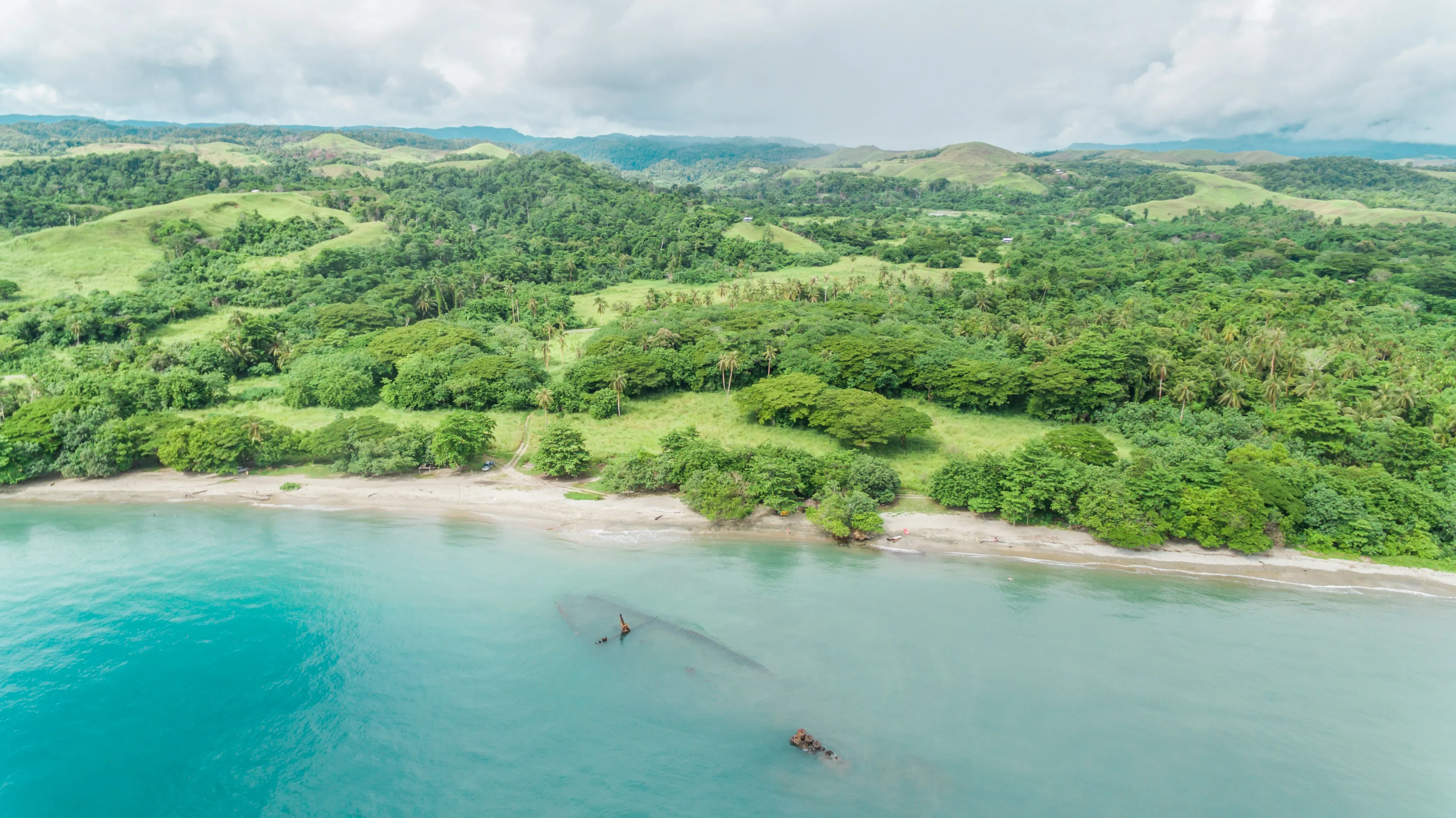
Discover a pristine archipelago in the Pacific, famous for its coral reefs, historic shipwrecks, and an authentic and welcoming Melanesian culture.
Quick Facts
- Capital
- Honiara
- Language
- English
- Solomon Islands Pijin
- Currency
- Solomon Islands Dollar (SBD)
- Best time to visit
- From May to October, during the dry and cooler season.
- Budget per day
- $65 - $220 per day
- Climate
- Warm and humid tropical climate throughout the year, with a rainy season between November and April.
- Connectivity
- low
- Easy to obtain at Honiara airport and main urban centers.
- Electricity
- Type G / Type I (230V)
- Local transport
- limited
- Card usage
- more cash is used
- Tipping
- no
🌎 Introduction
In the waters of the South Pacific, east of Papua New Guinea, lies an archipelago of hundreds of islands where the rhythm of life is marked by the natural environment. This corner of Melanesia combines vegetation-covered volcanic peaks with tranquil lagoons, offering a landscape where the green of the jungle and the blue of the ocean coexist in balance. It is a place where time seems to pass differently, far from the rush, and where the geography invites a leisurely look at the diversity of its ecosystems.
The identity of these islands is found in the simplicity of their daily life and in the warmth of their communities, which maintain a close bond with their roots. Traditions such as artisanal carving or the use of shell money in social events coexist with the vestiges of contemporary history that the tropical forest has been assimilating. In the local markets, amidst the aroma of taro and fresh fish, one perceives a rich and varied culture expressed in multiple languages and a way of understanding hospitality based on closeness and respect for shared customs.
🛡️ General safety
The Solomon Islands are a fascinating and remote destination that offers an authentic experience in the South Pacific. Generally speaking, the country is considered a destination with a moderate level of safety for travelers. Although most visits occur without incident, it is important to understand that the country has a less developed tourism infrastructure than other regional neighbors, requiring a proactive and respectful attitude from the visitor.
The social context is heavily influenced by the “wantok” (kinship and mutual support system) and traditional laws or “kastom”. The atmosphere is usually relaxed and welcoming, especially outside the capital, where the pace of life is slow and local hospitality is one of the hallmarks of the archipelago.
Crime and common risks
Crime in the Solomon Islands is not massive, but there are risks that tourists should be aware of to avoid setbacks:
- Petty theft and minor robberies: These are the most frequent incidents, especially in crowded places like markets, ferry terminals, and commercial areas of the capital.
- Snatching and muggings: Although uncommon, cases of robbery with intimidation have been reported during the night or in isolated areas. It is recommended not to walk alone after sunset.
- Scams: Sophisticated scams are not common, but it is always convenient to agree on prices for services or transport clearly and in advance to avoid misunderstandings.
- Land disputes: Much of the territory is communal property. Entering certain beaches, trails, or reefs without permission (or without paying a small local fee called a “kastom fee”) can generate tension with local owners.
Safety in cities and tourist areas
There is a notable difference between the capital and the rest of the islands:
- Honiara: As the main urban center, it is where the most attention should be paid. It is recommended to avoid the Point Cruz areas, the main markets, and informal settlements after dark. During the day, the city is walkable, but always keep an eye on personal belongings.
- Rural areas and provinces: In islands like Gizo, Munda, or Malaita, the atmosphere is usually much safer and quieter. The local community is often very attentive to visitors, and crime against tourists is exceptionally low.
- Practical tips: Use hotel safes to store original documents and large amounts of cash. Carry only what is necessary for the day.
Safety in transport
Moving around the Solomon Islands presents logistical challenges rather than personal safety risks:
- Road transport: In the Solomon Islands, people drive on the left. Many roads are in poor condition, especially outside Honiara, so extreme caution is recommended if renting a vehicle.
- Taxis: They are a safe and common means of transport in Honiara. They do not have meters, so it is essential to agree on the price before starting the journey.
- Public minibuses: They are economical and generally safe, although they are often very full and do not have fixed schedules.
- Maritime transport: This is the main way to move between islands. It is recommended to use reputable operators and avoid vessels that appear overloaded or lack visible life jackets.
Natural and climatic risks
Due to its geographical location, the archipelago is exposed to various natural phenomena:
- Tropical cyclones: The cyclone season usually runs between November and April. During these months, heavy rains can cause flooding and service disruptions.
- Seismic activity: The islands are located on the Pacific “Ring of Fire,” so earthquakes are possible. It is important to know tsunami evacuation protocols if you are staying near the coast.
- Heat and humidity: The climate is extreme tropical year-round. The risk of dehydration and heatstroke is real, so drinking bottled water and protecting yourself from the sun is fundamental.
- Environmental health: There is a risk of malaria and dengue. Preventive safety here involves the constant use of repellents and mosquito nets.
Legislation and local norms
Respect for local customs is key to a safe stay without legal conflicts:
- Land ownership: Almost the entire territory is customary property. Always ask for permission before taking photographs of people or entering places that seem private (including beaches).
- Alcohol consumption: Public alcohol consumption may be frowned upon in certain rural communities. It is best to limit it to hotels and authorized establishments.
- Drugs: Laws against the trafficking and consumption of narcotics are extremely strict, with severe prison sentences.
- Clothing: Outside of resorts, it is recommended to dress modestly (shoulders and knees covered), especially in villages and religious areas, to avoid causing offense.
Safety for specific groups
- Solo female travelers: Generally safe, but it is advised to avoid walking alone at night and to dress discreetly to align with conservative local customs.
- LGTBIQ+ travelers: Homosexual acts are illegal in the Solomon Islands and can lead to prison sentences. There is no open social acceptance, so maximum discretion is recommended, and public displays of affection should be avoided.
- Traveling with children and the elderly: The main risk is the lack of advanced health infrastructure outside the capital. It is recommended to travel with comprehensive medical insurance that includes air evacuation.
Emergencies and assistance
In case you need help, these are the key points:
- Emergency numbers: The general number for Police, Ambulance, and Firefighters is 999.
- Medical services: The main hospital is in Honiara (National Referral Hospital). In the provinces, there are small clinics for first aid, but evacuation is necessary for serious cases.
- Police: Police presence is visible in Honiara but limited in the outer islands. In the event of any incident, the ideal approach is to first contact your accommodation staff, as they usually have direct links with local authorities.
”> Tip: Always carry a small amount of cash in local currency (SBD) spread across different pockets, as many islands do not have ATMs and card payments are practically non-existent outside of large hotels.
📝 Entry requirements
To organize a visit to the Solomon Islands, it is essential to have a valid passport whose validity extends, generally, at least six months beyond the planned date of departure from the territory. This document must be in good condition and have free pages for the corresponding stamps. The entry process is usually straightforward for international travelers, who commonly receive a visitor’s permit upon arrival at authorized entry points, provided the purpose of the trip is strictly tourist.
This temporary stay permit allows remaining in the country for a specific period, which usually ranges between 30 and 90 days, depending on the regulations in force at the time of arrival. It is common for immigration authorities to request the presentation of a confirmed onward or return ticket to a third country or the place of origin, as well as proof of having sufficient economic funds to cover all expenses during the planned stay in the archipelago.
At airport checkpoints, travelers usually go through biosecurity inspections that are particularly rigorous. Due to the fragility of local ecosystems, there is strict surveillance over the introduction of fresh products, seeds, or unprocessed foods. Regarding personal items, standard exemptions for tobacco and alcohol apply, while the transport of specific medications must be accompanied by its corresponding medical prescription, preferably written in English to facilitate the work of customs agents.
From a health perspective, specific vaccines are not usually required to enter the country in a generalized manner, unless the traveler comes from an area with a risk of transmission of certain tropical diseases, in which case the international certificate of vaccination against yellow fever might be required. Nevertheless, it is recommended to keep the standard vaccination schedule up to date and consider the usual precautions against insects in tropical environments to ensure a peaceful and safe travel experience.
Below is a summary of the key aspects for entering the territory:
- Main documentation: Passport with a minimum validity of six months from the date of arrival.
- Tourist permit: Generally processed upon arrival for short-term stays.
- Transport: It is necessary to present proof of a return or onward travel ticket.
- Financial solvency: Proof of financial means for the stay may be requested.
- Biosecurity restrictions: Prohibition on bringing in fresh food, plants, or animal products without declaring them.
- Luggage and customs: Control over prescription medications and standard limits for tobacco and alcohol.
- Health: Yellow fever certificate only if coming from endemic areas.
- Controls: Routine baggage and document inspections at the international airport.
🏥 Basic health considerations
If you plan to travel to the Solomon Islands, you should keep in mind that you are heading to a destination with limited health infrastructure. You will find the main hospital, the National Referral Hospital, in the capital, Honiara, although its resources and standards are usually basic compared to those of Western countries. In more remote areas or on other islands, care is reduced to small clinics or health posts with very elementary means. Health personnel usually speak English, which is the official language, so you will not have problems communicating if you master this language. Regarding costs, although public health exists, as a tourist you will be forced to go to private centers or pay fees for emergency services, which can be high depending on the treatment.
Taking out travel medical insurance is not a legal requirement to enter the country, but it is absolutely essential and highly recommended. You must ensure that your policy includes very broad coverage for medical evacuation and repatriation, preferably to Australia, since in the face of any serious health problem or complex surgical intervention, you will most likely need to be moved out of the islands. Check that your insurance also covers high-risk activities if you plan to practice diving, which is very common in this destination.
As for vaccines, there are none mandatory to enter the Solomon Islands, unless you come from a country where yellow fever is endemic, in which case they will ask for the vaccination certificate. It is fundamental that you have your standard vaccination schedule up to date, which includes vaccines such as tetanus, diphtheria, and MMR. Additionally, vaccination against hepatitis A, hepatitis B, and typhoid fever is usually recommended. As recommendations can vary according to your state of health, the ideal is to consult with a travel medicine center well in advance.
If you need to carry personal medication, it is vital that you transport it in its original container and accompanied by a medical prescription translated into English. Pharmacies on the islands are often undersupplied or have a very limited variety of products, so it is best to bring everything you anticipate needing, including a basic first-aid kit with analgesics, antihistamines, disinfectants, and material to treat small wounds. There are no unusual legal restrictions for common medications, but it is always prudent to declare any strong drug at customs to avoid misunderstandings.
The main health risks are related to the tropical climate. The risk of contracting malaria is real and persistent throughout the country, so you should talk to a doctor about the convenience of taking preventive medication. Other mosquito-borne diseases, such as dengue or Zika virus, are also present, so the use of strong repellents and long-sleeved clothing at dusk will be your best defense. The extreme heat and humidity can cause dehydration or heatstroke if you don’t take care of yourself, and you should pay special attention to skin wounds or coral cuts, as they tend to get infected very easily in this climate.
Regarding the consumption of water and food, the general recommendation is that you always drink bottled water or water that has been previously boiled or filtered. Tap water is not considered safe for human consumption. As for food, you can try the local cuisine without great fear, although it is better to opt for dishes that are well-cooked and served hot. Hygiene at street stalls can vary, so use common sense and wash your hands frequently or use hydroalcoholic gel before handling food.
In case of a medical emergency, the telephone number you should dial is 999 or 911, which centralize emergency services. However, you should know that the ambulance service is very limited and often slow, so in critical situations it is usually faster to seek private transport to reach the nearest medical center. Urgent care is mainly centralized in Honiara, so if you are on a remote island, assistance may be significantly delayed.
As final practical recommendations, I suggest you always stay well hydrated and use high-factor sun protection constantly, as the sun is very strong at these latitudes. Always carry a small bottle of hand sanitizer with you and avoid walking barefoot in vegetated areas or beaches to prevent parasites or small injuries. If you follow these basic guidelines and act with caution, you can enjoy your stay in this paradise with much more peace of mind.
🚌 Transport within the country
Getting around the Solomon Islands archipelago requires combining different modes of transport, with planes and boats being the main axes for moving between different provinces. Internal flights connect the capital with the most distant islands quickly, while passenger ferries and smaller motorized vessels are fundamental for covering shorter distances by sea, adapting to the fragmented geography of the country.
In urban settings like the capital, land transport is mainly based on minibuses and taxis. Minibuses follow established routes along main roads and are a common means for short journeys. For their part, taxis offer a more direct and private service; it is common for these vehicles not to use automatic metering systems, so communication with the driver about the destination is essential before starting the journey.
The ease of using public transport varies considerably depending on the location. While there is a higher frequency of vehicles in areas with more activity, in rural areas or remote islands mobility is more limited and depends almost entirely on the availability of local boats. Signage is not always abundant, but the use of English as one of the official languages greatly facilitates obtaining information and the necessary directions to find one’s way.
It is important to keep in mind that transport in this destination is closely linked to weather conditions and a slow pace of life. The reliability of schedules can be variable, especially in maritime services, and the comfort of transport means is usually simple and functionality-oriented. Traveling through the country requires flexibility and an open attitude towards possible changes in planned arrangements.
Tip: It is advisable to always check the weather forecast before planning transfers by boat or light aircraft, as sea and wind conditions often determine the operability of the journeys.
🤵 Culture and etiquette
Solomon Islands society is governed by a deep sense of community and respect for ancestral traditions, known locally as kastom. When interacting with inhabitants, it is common to encounter a reserved but hospitable attitude. The most common greeting is a gentle handshake, usually accompanied by brief eye contact and a smile. In rural areas, it is frequent for people to maintain a low and slow tone of voice, as effusive displays or excessive noise in public spaces are generally considered inappropriate.
The concept of time in the archipelago is usually more flexible than in other urban contexts. Punctuality is interpreted loosely, so it is advisable to approach appointments and services with patience and an open attitude toward the unexpected. This calm is also reflected in communication, where avoiding direct confrontation is valued. If a misunderstanding arises, maintaining serenity and speaking softly greatly facilitates the resolution of any situation and the maintenance of social harmony.
Regarding clothing, the local population usually prefers modesty, especially in villages and near places of worship. It is recommended to dress simply, maintaining a certain discretion in attire in public settings to align with local customs. Religion plays a central role in daily life, especially on Sundays, which are days dedicated to rest and attending religious services; during this day, the pace of activity decreases significantly, and it is important to show respect toward this space of community reflection.
A fundamental aspect is the relationship with land and sea, which are usually community or family property. Before accessing a beach, taking a hike in nature, or taking photographs of people and places, it is essential to request permission from members of the local community. This practice is a recognition of traditional authority and the importance of their roots. Finally, regarding gastronomy and services, tipping is not an established custom nor is it expected, as hospitality is understood as a gesture of mutual courtesy.
“Tip”: Before swimming at a beach, diving on a reef, or exploring a trail, always ask if it is a free access place or if it requires the payment of a small fee called a kastom fee, which is given to the local owners for the maintenance of the environment.
🍛 Typical gastronomy
The cuisine of the Solomon Islands is a direct reflection of its natural environment, where the resources of the Pacific Ocean and the fertility of its volcanic lands dictate the daily menu. The basis of the diet focuses on tubers, tropical fruits, and a wide variety of fresh fish. As an archipelago with a strong Melanesian heritage, food is perceived as a communal and simple act, far from sophisticated elaborations but rich in natural flavors and varied textures.
One of the fundamental pillars of their diet is starches, represented mainly by taro, sweet potato, cassava, and yam. These ingredients are usually accompanied by coconut milk, which provides a creamy texture and a characteristic mild flavor of the region. Fish, especially tuna and snapper, is consumed daily, whether grilled, boiled, or prepared in mild curries. Green leafy vegetables, such as slippery cabbage (a type of edible hibiscus), are the essential side dish to nutritionally balance the plates of every home.
The most traditional and respected cooking method is the Motu, an oven dug into the ground where food is wrapped in banana leaves and cooked slowly over hot stones. This process allows the ingredients to retain all their moisture and absorb the aromas of the leaves and wood. Regarding social habits, food is usually relaxed and without strict schedules, although dinner is the main time for family gathering. In more rural areas, it is common to share large platters of food, while in urban centers, local markets are the epicenter of gastronomic life.
To accompany meals, green coconut water is the most widespread and refreshing drink, available in almost any corner of the islands. Although alcohol consumption is not as widespread outside of tourist areas, it is possible to find varied options in the capital. In local restaurants, the etiquette is informal and the service is friendly, although it is always recommended to show respect for local customs and have patience, as the preparation of dishes usually follows a slow pace, always prioritizing the use of fresh ingredients of the day.
| Dish | Description | Main Ingredients | Where to try it | Tip |
|---|---|---|---|---|
| Motu | Traditional feast cooked in an earth oven. | Meat or fish, tubers, and coconut milk. | Traditional villages and celebrations. | It is the best way to taste the authentic smoky flavor of the islands. |
| Poi | Dense and smooth paste that serves as a basic side dish. | Mashed and fermented taro root. | Local markets and private homes. | Its flavor is neutral, so it pairs perfectly with savory fish. |
| Slippery Cabbage | Green leafy vegetable sautéed or boiled with coconut. | Edible hibiscus leaves and coconut cream. | Local cuisine restaurants in Honiara. | It is the most common side dish; try it freshly made to appreciate its texture. |
| Cassava Pudding | A popular dense and sweet dessert or snack. | Grated cassava, coconut, and sometimes sweet potato. | Street food stalls and markets. | It is usually sold wrapped in banana leaves, ideal for taking on an excursion. |
| Grilled Bonito | Fresh fish prepared simply over charcoal. | Skipjack tuna (Bonito) and local citrus. | Beach bars and coastal areas. | Ensure it was caught the same day to enjoy its maximum quality. |
📷 Areas and places to visit
The Solomon Islands archipelago unfolds in the South Pacific, offering a combination of contemporary history, ancient traditions, and vibrant nature. Exploration of the country usually begins in Honiara, the capital located on the island of Guadalcanal. This city acts as the administrative and cultural center, where the Central Market serves as the heart of daily activity. In this space, visitors can observe the interaction between different communities and discover local products. For those interested in the region’s past, the Solomon Islands National Museum and various World War II memorials, scattered across the surrounding hills, offer a detailed view of the war events that marked these lands.
To the west lies the Western Province, a region that stands out for its maritime environment and the serenity of its landscapes. The town of Gizo is the main hub of this area and serves as a base for touring coral reefs and clear-water lagoons. In this province, it is essential to mention Marovo Lagoon, an extensive lagoon system dotted with hundreds of small islands. The area is recognized for the mastery of its artisans, especially in wood and shell carving, and for activities related to the marine environment, such as diving in historic wrecks and biodiversity observation in the coral gardens surrounding the islets.
The island of Malaita offers a fascinating contrast focused on culture and traditional life. It is especially known for its artificial islands in Langa Langa Lagoon, built manually with coral blocks over the centuries. In this region, the visitor can learn about shell money, a traditional currency still used in important ceremonies and marriages. The interior of the island, with its mountainous terrain and dense forests, allows for visiting villages that preserve a lifestyle closely linked to the land and the customs of their ancestors, offering a different perspective from the more traveled coastal areas.
In the central part of the country, the Florida Islands house Tulagi, the former capital from the colonial era. Walking through its streets allows one to appreciate an atmosphere from another time, with remains of old buildings and a history closely linked to navigation. On the other hand, the nearby island of Savo is a destination of interest for geology and wildlife enthusiasts, thanks to its hot springs and the nesting grounds of the megapode, a curious bird that uses the volcanic heat of the sand to incubate its eggs. These areas represent the balance between natural phenomena and the administrative history of the archipelago.
Finally, Rennell island, in the far south, is home to Lake Te Ngano, which is the largest body of fresh water in the insular Pacific and has been recognized for its ecological value. This environment is surrounded by high coral cliffs and primary forests that house numerous endemic species. Visiting this area allows one to understand the importance of conservation in the islands, showing a landscape where water and vegetation merge uniquely. The diversity between the urban regions of Guadalcanal and the remote environments of the outer islands shapes the identity of this destination.
“Tip”: You cannot miss visiting Marovo Lagoon, the most emblematic place in the country.
✈️ Best time to travel
The Solomon Islands have a humid tropical climate throughout the year, which guarantees constantly warm temperatures. However, the travel experience varies according to the rainfall regime. The most recommended time to visit the archipelago coincides with the months of lower humidity and more moderate rainfall, which facilitates movement between islands and the practice of outdoor activities in a very well-preserved natural environment.
During the drier period, the waters offer excellent visibility for diving and snorkeling, two of the main attractions of the region. Conversely, the months of higher rainfall offer a landscape of intense green and a quieter atmosphere for those seeking to disconnect, although it is necessary to keep in mind that tropical rains can be frequent and sudden, occasionally affecting maritime or air communications.
| Season | Months | Typical Climate | What to Expect | Tourist Influx |
|---|---|---|---|---|
| Spring | Mar – May | Transition toward dry weather. Temperatures between 25°C and 30°C. | Gradual decrease in rain and calmer seas for navigation. | Medium (⭐⭐) |
| Summer | Jun – Aug | Dry season. Pleasant breezes and lower relative humidity. | Optimal conditions for hiking, cultural festivals, and surfing on the south coast. | High (⭐⭐⭐) |
| Autumn | Sep – Nov | Warm and humid. Rains start becoming more frequent by the end of November. | Excellent underwater visibility and local wildlife spotting in the jungles. | Medium (⭐⭐) |
| Winter | Dec – Feb | Wet season. Heavy rainfall and very hot environment. | Lush landscapes, fewer crowds in accommodations, and a very relaxed atmosphere. | Low (⭐) |
🗣️ Basic vocabulary
In the Solomon Islands, although English is the official language and is used in administrative contexts, the most widespread language is Pijin. Learning some basic expressions in this local language is a practical tool to facilitate daily interactions, whether in markets, transport, or when talking to the inhabitants of the different islands.
It is not necessary to master the grammar to communicate effectively in common situations. Being a language with many English roots, some words will seem familiar to you, and the effort to use them is usually well-received by the local population, helping the trip to proceed more smoothly.
- Halo: Hello.
- Tanggio: Thank you.
- Gud moning: Good morning.
- Hao mas?: How much does it cost?
- Wea nao…?: Where is…?
- Iu save helpem mi?: Can you help me?
- Lukim iu: Goodbye or see you later