


Brazil
A vibrant destination combining pristine jungles, iconic beaches, and cosmopolitan cities full of culture, music, and a diverse gastronomy that captivates the traveler.
Quick Facts
- Capital
- Brasilia
- Language
- Portuguese
- None
- Currency
- Brazilian Real (BRL)
- Best time to visit
- From March to May or from September to November to avoid heavy rains.
- Budget per day
- $45 - $130 per day
- Climate
- Predominantly tropical with warm temperatures all year round, varying from humid in the Amazon to more temperate in the south.
- Connectivity
- good
- Very easy to obtain at airports and official mobile phone stores.
- Electricity
- Type N / Type C (127V / 220V)
- Local transport
- acceptable
- Card usage
- very widespread
- Tipping
- optional
🌎 Introduction
Often, the mere mention of Brazil evokes a palette of vibrant colors and an energy that seems to flow constantly. Traveling through its regions, one perceives a geography that changes drastically between the lushness of its jungles and the serenity of its extensive coasts, where the pace of life naturally adapts to the proximity of the water or the calm of the interior. It is a territory defined by its scale and by the simplicity with which the natural environment integrates into the daily routine of its inhabitants.
Beyond the well-known landscapes, the country’s identity manifests in a diverse gastronomy and in traditions that are the result of centuries of shared influences. From the aroma of coffee in the mornings to the spontaneous sound of a guitar in a plaza at sunset, there is a hospitable essence that invites quiet observation. The seasons, which vary according to latitude, mark the character of its people and the way they celebrate life, offering a mosaic of everyday scenes where modernity and tradition coexist without discord.
This cultural richness, born from the encounter of different origins, has given rise to a creative and plural society. In its cities and towns, contrasts are presented harmoniously, allowing an appreciation of an authentic and balanced way of being. It is a place that reveals itself through small details, in the warmth of its light, and in the vitality emanating from every corner.
🛡️ General safety
Brazil is a country of continental dimensions with a complex social reality, which translates into a moderate safety level for tourists. While the vast majority of visits occur without incident, it is a destination that requires a proactive and conscious attitude from the traveler. Compared to other international destinations, Brazil presents greater challenges in large urban centers, but the key lies in following basic prevention guidelines and staying informed about the local environment.
The context for the traveler is one of contrasts: while in rural areas or small towns tranquility is the norm, in large metropolises inequality generates risk situations that must be managed with common sense.
Crime and common risks
Crime is one of the factors that most concerns those visiting the country. The most common risks include:
- Pickpocketing and bag snatching: These are frequent in crowded areas, busy beaches (especially in Rio de Janeiro and Salvador), and during massive festivities such as Carnival.
- Card scams: There is a risk of card cloning at unofficial ATMs or through tampered devices. It is recommended to use ATMs inside banks or shopping centers.
- Robberies with intimidation: Although less frequent than simple theft, they can occur, especially if the traveler walks through secluded or poorly lit areas at night.
- Tourist scams: Small deceptions in transportation prices or services on beaches. It is important to agree on prices beforehand.
- Uncommon risks: Express kidnappings (forcing someone to withdraw money from an ATM) have notably decreased in tourist areas, but it is worth mentioning them as a possibility to which one should never offer resistance.
Safety in cities and tourist areas
Safety varies drastically according to the city and, within these, according to the neighborhood. Historical centers and urban beaches usually have more surveillance, but they also concentrate more pickpockets.
- Rio de Janeiro and São Paulo: These are cities where surveillance is high in hotel zones, but one should avoid entering favelas (informal settlements) inadvertently without an authorized guide or outside established tourist circuits.
- Tourist neighborhoods: During the day they are usually safe, but at night many central areas (such as downtown São Paulo) become deserted and less recommended.
- Practical recommendations: The concept of “não dar bobeira” (a common expression meaning not to tempt fate) is fundamental. It is recommended not to flaunt valuables, such as jewelry, expensive watches, or professional cameras hanging from the neck, and to use mobile phones discreetly.
Safety in transportation
Moving around Brazil is simple, but requires choosing the transportation method well according to the time and place:
- Public transport: The metro in cities like Rio or São Paulo is modern, clean, and generally safe. Urban buses can be more chaotic and are where more minor thefts occur.
- Taxis and private transport: The use of transport applications (such as Uber or Cabify) is strongly recommended as they allow the trip to be tracked and the driver’s identity to be known. If taking a taxi, it is better if it is from an official stand or requested via an app.
- Rental vehicles: This is a good option for touring coastal areas. It is important to remember that in Brazil people drive on the right.
- Driving rules: Traffic in large cities can be aggressive. In some cities, for safety, there is a social custom (not always legal) of not stopping completely at red lights during the night in isolated areas, although the tourist should exercise extreme caution if deciding to follow this practice.
Natural and climatic risks
Brazil is a country mostly free of large-scale natural disasters like earthquakes or hurricanes, but it presents seasonal risks:
- Torrential rains: During the southern summer (December to March), heavy rains are common and can cause flash floods or landslides in mountain areas.
- Extreme heat: In the north and northeast, temperatures can be very high. Constant hydration and sun protection are vital to avoid heatstroke.
- Sea currents: On many Atlantic beaches, currents are strong. Lifeguard signaling flags should always be respected.
Legislation and local norms
It is fundamental to respect local laws to avoid serious legal complications:
- Identification: It is mandatory to always carry photo identification. A copy of the passport is usually sufficient, keeping the original in a safe place.
- Drugs: Brazil has very strict laws against drug trafficking and consumption. Prison sentences are severe and do not distinguish between residents and tourists.
- Environmental protection: In national parks and protected areas (such as Fernando de Noronha), fines for damaging the ecosystem, disturbing fauna, or extracting plant species are very high.
Safety for specific groups
- Solo female travelers: Brazil is a destination that many women visit alone without problems. However, it is common to receive unwanted comments on the street. It is recommended to avoid walking alone through sparsely populated places at night.
- LGTBIQ+ travelers: It is a country with advanced legislation and very “friendly” cities (such as São Paulo and Rio). Nevertheless, outside urban and modern circuits, a conservative mentality may persist, so discretion is recommended in rural areas.
- Children and the elderly: Brazilians are usually very kind to families and elderly people. The main precaution should be the sun, hydration, and the pace of travel, which can be exhausting due to the distances.
Emergencies and assistance
In case of needing help, these are the main channels:
- Military Police (Emergencies): 190. It is the main number for reporting crimes in progress.
- SAMU (Ambulances/Medical Emergencies): 192.
- Firefighters: 193.
- Tourist Police (DEAT): In cities like Rio de Janeiro, there are specialized police stations to assist tourists with staff who usually speak several languages.
If you are a victim of a robbery, the first thing is to remain calm and not offer resistance. Subsequently, go to the nearest police station to file a “Boletim de Ocorrência” (police report), an indispensable document for any insurance claim or document replacement.
Tip: Carry a “dummy wallet” with a small amount of cash and an expired card to hand over in case of a hypothetical mugging, keeping your main money and documents in an inner belt or “money belt” under your clothes.
📝 Entry requirements
To plan a trip to Brazilian territory, the first fundamental step consists of checking the validity of personal documentation. Usually, immigration authorities require travelers to carry a passport with a minimum validity of six months from the moment of entry into the country. It is advisable for the document to have blank pages for the corresponding stamps placed at border control points.
Regarding access permits, a large number of international visitors do not require a tourist visa for short-term stays. This benefit usually applies to leisure or recreation trips, allowing a maximum stay that generally reaches 90 days. In some cases, there is the possibility of requesting an extension of this stay from public safety authorities, provided that the total limits allowed per year for a tourist are not exceeded.
Upon arrival at airports or land entry points, it is common for control personnel to request certain proofs to authorize entry. These documents usually include the exit ticket from the country, demonstrating the intention to leave the territory before the stay permit expires. Likewise, proof of sufficient financial solvency to cover expenses during the trip may be required, as well as a confirmation of accommodation, either through hotel reservations or a contact reference at the destination.
Customs regulations are a relevant aspect to avoid delays. Common restrictions exist on the entry of fresh food, unprocessed plant or animal products, in order to protect local ecosystems. Regarding medications, it is recommended that the traveler carries the original medical prescription, preferably if it concerns specific treatments or substances requiring special supervision. It is also important to consider that the entry of large amounts of cash must be declared if it exceeds the thresholds established by local regulations.
From a health perspective, requirements may vary according to the global context, although generally, attention is paid to certain preventive measures. In various regions of the country, immunization against yellow fever is a frequent recommendation for travelers, and the presentation of international certificates may even be suggested depending on the origin or previous destinations visited. Keeping an updated health schedule is always an advisable practice to enjoy the experience with peace of mind.
The main points to consider for entry as a tourist are detailed below:
- Basic documentation: Valid passport with at least six months of validity beyond the entry date.
- Stay permit: Visa exemption for many nationalities for periods of up to 90 days.
- Proof of exit: Need to have a return or onward ticket to another destination.
- Financial support: Possible requirement to demonstrate sufficient funds for the duration of the trip.
- Customs control: Limitations on the transport of perishable products and regulation of prescription drugs.
- Health prevention: Vaccination recommendations, especially against yellow fever, depending on the areas to be visited.
🏥 Basic health considerations
When preparing for your trip to Brazil, you will notice that the country has a dual health system that functions very distinctly. On one hand, you will find the Unified Health System (SUS), which is public and free for anyone, including tourists, although it is often quite crowded in large cities. On the other hand, you will see that private healthcare is of excellent quality, especially in hubs like São Paulo or Rio de Janeiro, where hospitals feature cutting-edge technology. However, private consultation and treatment prices are high, so any care you receive outside the public system will have a considerable cost. Regarding language, it is common for staff to speak Portuguese, although in private centers in the most touristy areas, you are likely to find professionals who can manage in English.
Taking out travel health insurance is not a mandatory legal requirement to enter the country, but it is something you will need to travel with total peace of mind. It is highly recommended that your policy includes broad coverage for hospitalization, surgical interventions, and medical repatriation. Having this support will allow you to directly access the best private clinics without having to face bills that could ruin your vacation budget.
In the vaccination section, there are currently none that are mandatory for all travelers in general, unless you are coming from a specific area with active outbreaks. However, you will find that the yellow fever vaccine is highly recommended if you plan to visit jungle areas, waterfalls, or rural inland areas. Ideally, you should have your regular vaccination schedule up to date and consult with an international medicine center a few weeks before your departure to assess if you need boosters for hepatitis or typhoid fever according to your itinerary.
If you need to carry personal medication, remember to always transport it in its original packaging and accompanied by the medical prescription preferably translated into Portuguese or English. In Brazilian pharmacies, which you will easily find on every corner, you can buy many common medicines, but local laws are strict with psychotropic drugs or antibiotics, for which they will mandatorily ask for a prescription from a doctor registered in the country.
Regarding health risks according to the climate, the main factor you will notice is the intense heat and humidity, especially in the north and northeast. This leads to the presence of mosquitoes that can transmit diseases such as dengue, Zika, or chikungunya. It is not something that should scare you, but it will require you to use repellent constantly and to wear light clothing that covers the skin at dawn and dusk. In coastal areas, the sun is very strong, so sunburn is a real risk if you do not use high protection.
Regarding the consumption of water and food, the main recommendation is to always drink bottled or filtered water, as tap water is not always suitable for human consumption in all regions. You will be able to try delicious Brazilian street food, but we advise you to choose stalls where you see a lot of people turnover and where hygiene is visible. Tropical fruits are a wonder you will find everywhere; just make sure to wash or peel them yourself.
In case you find yourself in a medical emergency situation, the number you should dial is 192, which corresponds to SAMU (Urgency Mobile Care Service). This ambulance service is free and works well in urban centers, although in remote areas response times may be longer.
To finish your preparation, we suggest you pack a basic first-aid kit with pain relievers, gastric protectors, and some antiseptic. Maintaining good daily hydration and using comfortable walking shoes will help you avoid the most common health problems among tourists. If you follow these practical tips, your only concern will be enjoying the landscapes and culture that await you in this destination.
🚌 Transportation within the country
Given the vast size of the territory, the airplane is the most frequent means of transport for covering long-distance journeys between different states and regions. For regional travel or between nearby cities, there is an extensive network of long-distance buses that connect main urban centers regularly and with various levels of equipment for traveler comfort.
In large cities, the metro presents itself as an efficient and easy-to-use alternative to avoid traffic, usually featuring clear signage at stations. Urban buses complement the network by reaching almost all points of interest, though their use requires more attention to routes. Tickets are generally purchased in person at ticket offices or inside the vehicle itself, and the language barrier is not usually a critical impediment for the visitor.
The mobility experience changes significantly when moving away from urban centers toward rural areas or natural environments. In certain regions, such as the north of the country, ferries and river boats are essential for transportation, while in other areas a rental car offers the necessary flexibility to discover spots where public transport frequency is lower.
Taxis and mobile app transportation services are common options and are very useful for direct or nighttime trips. These services provide a sense of security and comfort, allowing the traveler to move quickly without needing to know the local line system in depth.
Punctuality and reliability of transportation in the most frequented areas are usually correct, allowing for smooth itinerary organization. However, it is advisable to keep in mind that in high-population density cities, journey durations can vary notably depending on the state of traffic at any given time.
“Tip”: It is recommended to plan urban trips sufficiently in advance to adapt to the rhythm of local traffic during peak hours.
🤵 Culture and etiquette
Social interaction in Brazil is distinguished by a natural warmth and a close manner that facilitates visitor integration. Greetings usually include physical contact, with a handshake being the norm in professional contexts, while in social settings it is common to exchange kisses on the cheeks. It is normal for personal space to be smaller than in other regions, which translates into gestural and expressive communication, where the voice volume may be animated without this denoting a lack of courtesy or conflict.
Regarding time management, there is a notable flexibility in scheduling for social events. Arriving with a small delay to a private invitation is considered an acceptable practice and, at times, expected so as not to inconvenience the hosts. However, this laxity is usually less in the workplace or for formal appointments. In public spaces, a relaxed and sociable atmosphere prevails, although kindness and the constant use of expressions of gratitude are highly valued in any daily interaction.
Table customs also present relevant particularities. In dining establishments, it is common for the service fee to already be itemized in the final bill, so it is not necessary to add an extra tip unless one wishes to highlight exceptional service. A very widespread practice is avoiding direct hand contact with foods like pizza or sandwiches, using a napkin or cutlery instead, a habit reflecting the importance placed on hygiene during meals.
Respect for religious diversity and local traditions is fundamental to maintaining a harmonious relationship with the environment. The country possesses a rich cultural heritage that integrates diverse beliefs, and showing an observant and discreet attitude in places of worship or during traditional festivities is essential. Likewise, treatment of the elderly is usually marked by special deference, respecting their turns to speak and prioritizing their comfort in shared spaces.
“Tip”: When attending a social gathering at a private home, it is recommended to arrive between fifteen and thirty minutes after the scheduled time, as extreme punctuality might surprise the hosts while they finish preparations for the meeting.
🍛 Typical gastronomy
The cuisine of Brazil stands out for its great regional diversity and a rich blend of indigenous, African, and European influences. The basic ingredients forming the base of the daily diet throughout the country are rice, beans (feijão), and cassava flour (farinha de mandioca), which are usually accompanied by proteins such as beef, chicken, or fish depending on the geographical area. This simple but nutritious combination reflects the essence of everyday Brazilian eating.
Lunch is traditionally considered the main meal of the day. It is very common to find establishments that operate on a by weight (por quilo) basis, where each diner serves themselves from a varied buffet and pays based on the weight of their plate, representing a practical and balanced option for travelers. Another deeply rooted custom in the country is the rodízio de carne, a continuous service where waiters offer different cuts directly at the table.
Regarding drink culture, coffee is a fundamental part of social life, often served for free in small doses called cafezinho after meals. Natural tropical fruit juices are omnipresent and made with a surprising variety of fresh seasonal pieces. The consumption of coconut water directly from the fruit is also frequent in coastal areas and at city street stalls.
Table etiquette is simple, though there is a notable preference for using cutlery even for foods that in other cultures are eaten with hands, or using paper napkins to hold small snacks or appetizers. Eating is understood as a leisurely social act, especially during weekends, when groups of friends and families gather to share dishes that require more laborious preparation.
| Dish | Description | Main ingredients | Where to try it | Tip |
|---|---|---|---|---|
| Feijoada | Hearty stew considered the national dish. | Black beans, variety of pork meats, and sausages. | Traditional restaurants, especially on Saturdays. | It is accompanied by rice, chopped kale, and orange slices. |
| Pão de queijo | Small round rolls with an elastic and soft texture. | Cassava starch, cheese, eggs, and milk. | Coffee shops and stalls in stations or airports. | It is ideal for breakfast or as a snack when freshly baked. |
| Moqueca | Fish or seafood stew cooked slowly. | White fish, coconut milk, palm oil, and peppers. | Coastal regions, especially in Bahia and Espírito Santo. | It is traditionally served in clay pots that maintain the heat. |
| Acarajé | Fried bun of African origin with a creamy interior. | Black-eyed pea dough, palm oil (dendê), and shrimp filling. | Street stalls of the “baianas” in Salvador de Bahia. | You are usually asked if you want it with or without spicy sauce; be cautious. |
| Açaí na tigela | Cold, dense cream served in a bowl. | Açaí fruit pulp, often with cereals and fruit. | Juice stalls, gyms, and beach areas. | It is a very energetic and refreshing option for hot days. |
📷 Areas and places to visit
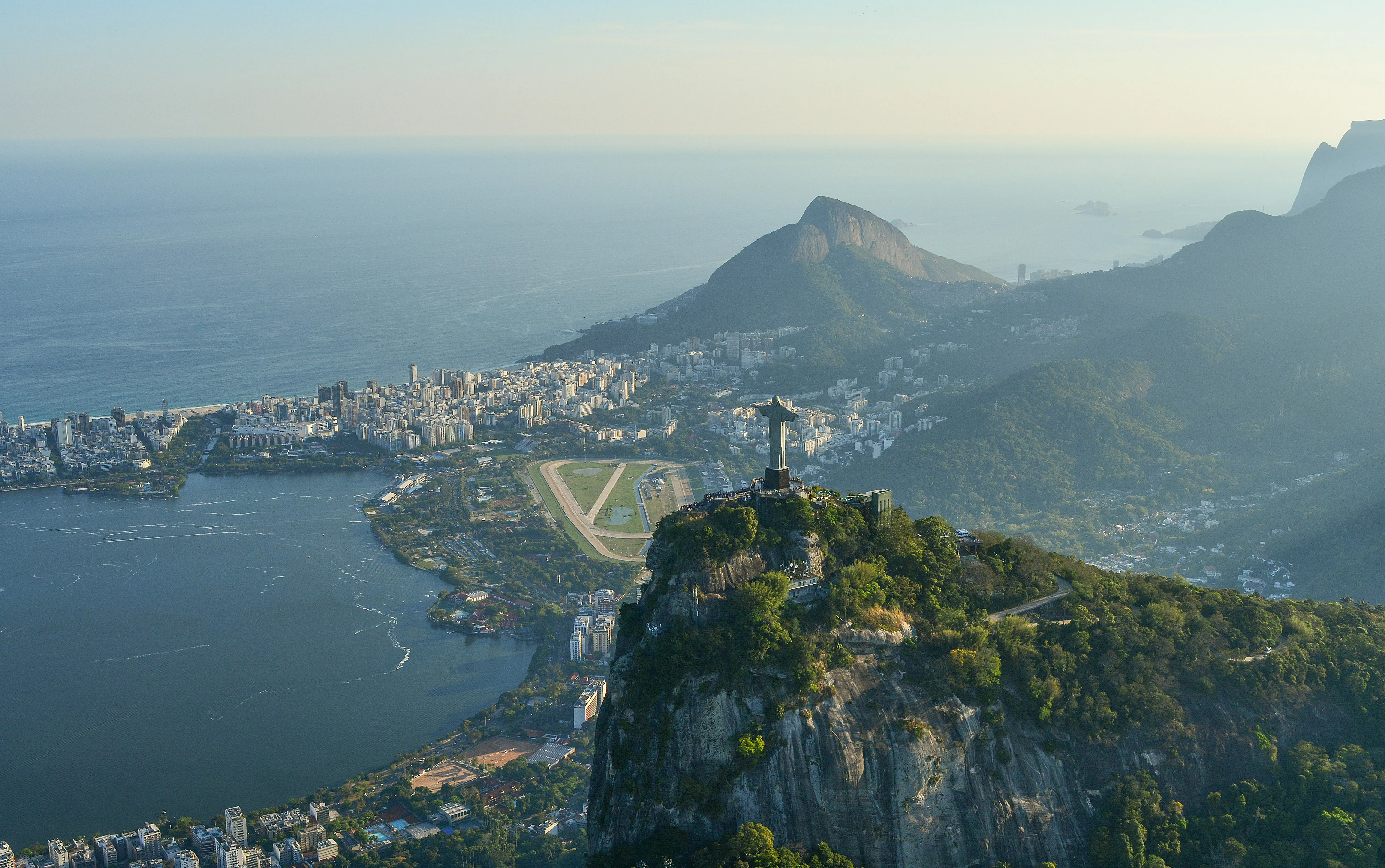
Brazil offers a geographic and cultural diversity manifested in its large urban centers and its protected natural spaces. One of the most frequent stops is Rio de Janeiro, where the integration between the mountains and the sea defines the landscape. In this city, it is possible to tour historic neighborhoods like Santa Teresa, known for its cobblestone streets and artistic atmosphere, or enjoy the coast at the beaches of Copacabana and Ipanema. The presence of landmarks like the Corcovado hill and Sugarloaf Mountain allows for observing the bay’s configuration from above, while the Botanical Garden offers a sample of tropical flora in the middle of the urban environment.
Toward the interior and the south, the panorama changes drastically. São Paulo presents itself as the economic and cultural hub of the country, standing out for its range of museums and vibrant urban activity. The São Paulo Museum of Art (MASP) is a fundamental architectural and artistic reference, located on the busy Avenida Paulista. On the other hand, the city of Brasilia, designed by Oscar Niemeyer, shows an evident contrast with its modernist architecture and geometric planning, being a point of great interest for fans of urbanism and contemporary political history.
Colonial heritage and cultural roots are especially visible in the northeast. Salvador de Bahia preserves in its historic center, the Pelourinho, a baroque architecture of bright colors and plazas that testify to the country’s past. In this region, local traditions, music, and gastronomy carry fundamental weight in the visitor’s experience. If seeking a more rustic and preserved environment, the colonial cities of Minas Gerais, such as Ouro Preto, offer a trip back in time through their ornate churches and stone streets in a setting of hills and mountains.
Regarding natural heritage, the country has ecosystems of world relevance. The Iguazu Falls, located on the southern border, allow for walking along boardwalks next to large waterfalls surrounded by subtropical jungle. Toward the north, the Amazon rainforest has Manaus as its main gateway, from where river routes are organized to experience the biodiversity of the river and the forest. Another highlighted enclave is the Pantanal, an extensive floodplain ideal for observing native fauna in its natural habitat.
For those seeking the tranquility of the coast, there are options ranging from the dunes of the Lençóis Maranhenses, with their temporary freshwater lagoons, to the archipelago of Fernando de Noronha. The latter is recognized for the preservation of its marine environment and its diving zones. The variety of Brazilian landscapes ensures that each region has its own identity, combining traditional festivals, local markets, and architecture that moves between the ancient and the avant-garde.
Tip: You cannot miss visiting Christ the Redeemer, the most emblematic place in the country.
✈️ Best time to travel
Brazil is a destination of continental dimensions that can be visited at any time of the year thanks to its predominantly tropical and subtropical climate. The choice of the ideal moment depends largely on the experiences sought, whether it is relaxing on the extensive coasts of the northeast, exploring the biodiversity of the Amazon rainforest, or immersing oneself in the energy of its large metropolises.
Although heat is a constant in most of the territory, variations in rainfall patterns and humidity define the seasons. While the middle months of the year are usually drier and conducive to wildlife spotting in regions like the Pantanal, the period at the end and beginning of the year coincides with the greatest cultural effervescence and peak temperatures, offering a vibrant atmosphere in coastal areas.
| Season | Months | Typical climate | What to expect | Tourist influx |
|---|---|---|---|---|
| Spring | Mar – May | Mild temperatures and a progressive decrease in tropical rains. | Very green landscapes after the wet season; an ideal period for cultural visits and urban walks. | ⭐⭐ |
| Summer | Jun – Ago | Dry and sunny weather in the center; cooler and pleasant temperatures in the south. | Ideal time for observing fauna in the Pantanal and Amazonia due to the lowering of river levels. | ⭐⭐⭐ |
| Autumn | Sep – Nov | Temperate climate with a gradual increase in humidity and temperatures. | Flowering of native species and less crowded beaches, allowing for a quieter experience. | ⭐⭐ |
| Winter | Dec – Feb | Intense heat in almost the entire country with frequent but brief tropical showers. | Large popular festivities like Carnival, a lot of activity on the beaches, and a very lively atmosphere. | ⭐⭐⭐⭐ |
🗣️ Basic vocabulary
Learning a few basic words and phrases in Portuguese will allow you to navigate your stay in Brazil with greater ease. Although it is possible to communicate simply in many tourist spots, knowing the local language facilitates daily tasks such as greeting, asking for directions, or thanking someone for a service.
It is not necessary to delve deep into grammar to improve the travel experience; using these expressions is enough to make communication more fluid and practical in common situations like visits to restaurants, shops, or using public transport.
- Oi / Olá: Hello.
- Tudo bem?: How are things? / Is everything okay?
- Obrigado / Obrigada: Thank you (used ending in “o” if you are a man and in “a” if you are a woman).
- Por favor: Please.
- Com licença: Excuse me / Pardon me (to ask to pass or get someone’s attention).
- Onde fica…?: Where is…? / Where is it located…?
- Quanto custa?: How much does it cost?
- A conta, por favor: The bill, please.