


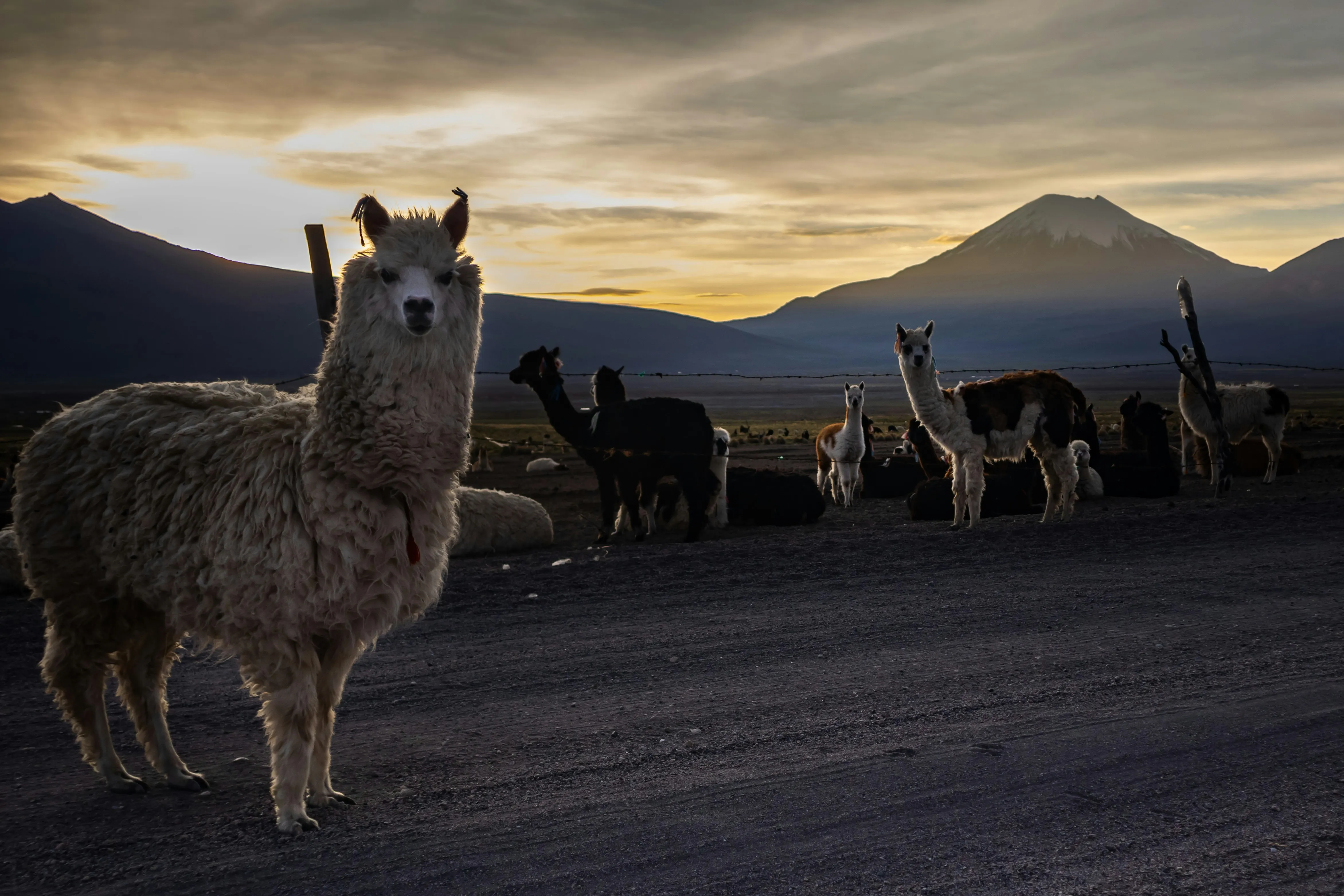
Bolivia
A destination of contrasts where the majesty of the Andes blends with the Amazon and the Salar de Uyuni captivates the adventurous traveler.
Quick Facts
- Capital
- Sucre and La Paz
- Language
- Spanish
- Quechua, Aymara, and Guaraní
- Currency
- Boliviano (BOB)
- Best time to visit
- From May to October, during the dry season, to enjoy clear skies in the Altiplano.
- Budget per day
- $25 - $75 per day
- Climate
- Extremely diverse climate that ranges from freezing cold in the high Andean peaks to humid tropical heat.
- Connectivity
- medium
- Very easy to obtain at airports or local stores by presenting a passport.
- Electricity
- Type A/C (220V/115V)
- Local transport
- acceptable
- Card usage
- cash is used more
- Tipping
- optional
🌎 Introduction
Bolivia unfolds in the heart of South America as a mosaic where very different geographies and rhythms coexist. In the highlands, the air is crisp and the horizons seem endless, marked by the presence of mountain ranges and salt flats that reflect the sky. Descending towards the east, the landscape transforms into a lush green expanse, where tropical humidity and the murmur of rivers mark a slower pace of life. This transition between the mountains and the jungle defines the essence of a territory that maintains a close bond with its natural environment.
The country’s identity is clearly manifested in the daily life of its towns and cities. It is perceived in the atmosphere of the markets, where products of the land and handcrafted textiles provide a unique palette of colors, and in the calendar of festivities that dress the streets in music and tradition. From the aroma of coffee and freshly baked salteñas to the soft light of sunset over the waters of Lake Titicaca, the experience of traveling through these places allows one to observe a culture that cares for its roots while coexisting naturally with modernity.
🛡️ General safety
Bolivia is a country that offers a unique and authentic experience in the heart of South America. In general terms, the safety level for tourists is considered medium, falling within a range similar to other countries in the region. Most visits take place without serious incidents, provided that basic guidelines of common sense and precaution are followed.
The context for the traveler is that of a country with great cultural and natural wealth, where tourism is well received. However, it is important to be aware of economic gaps and that, in certain urban centers or high-traffic areas, the tourist may be seen as a target for petty crimes. The key to traveling through Bolivia is prevention and staying informed about the social situation, as the country is prone to demonstrations or roadblocks which, while usually not violent against tourists, can alter travel plans.
Crime and common risks
Crime in Bolivia is usually non-violent, although it is advisable to be alert to various situations:
- Theft and pickpocketing: These are the most frequent crimes. They usually occur in crowded markets, bus stations (especially in La Paz and Santa Cruz), and main squares. Pickpockets often act in groups using distraction techniques.
- Common scams: There is the “fake police” or “fake guide” scam. Individuals dressed in civilian clothes or with unconvincing uniforms may approach the tourist asking to check their passport or money under the pretext of narcotics control or counterfeit currency. Never hand over your belongings or get into a vehicle with someone who is not properly identified at an official office.
- Express kidnappings: Although not frequent, cases have been reported, mainly in large cities. They consist of detaining the victim for a short period of time to force them to withdraw money from ATMs. To avoid this, it is essential to use only official radio taxis requested by phone or applications.
- Currency exchange: It is recommended to exchange currency only at official exchange houses or banks to avoid receiving counterfeit bills.
Safety in cities and tourist areas
Safety varies significantly depending on the city and the neighborhood:
- La Paz: It is a vibrant but complex city. The Sopocachi and South Zone (Zona Sur) areas are generally safe and residential. The historic center and the Sagárnaga Street area are safe during the day but require greater caution after dark. It is recommended to avoid the El Alto area late at night if you are not familiar with the place.
- Santa Cruz de la Sierra: Being a more extensive and commercial city, it is necessary to pay attention in peripheral markets and avoid walking through poorly lit areas of the “first ring” (primer anillo) during the night.
- Sucre and Potosí: These are usually much quieter and safer cities for walking, with a slower pace and lower incidence of crimes against tourists.
- Practical recommendations: Avoid flaunting valuables such as jewelry or professional cameras in crowded places. It is preferable to carry money divided and leave the original passport in the hotel safe, carrying a photocopy instead.
Safety in transportation
Transportation is one of the points where the traveler should pay the most attention:
- Land transport: Long-distance buses (called “flotas”) are the most common medium. It is recommended to travel with recognized companies and, if possible, opt for “lecho” (full-bed) or “semi-lecho” (semi-bed) services, which usually have better maintenance standards.
- Taxis and private transport: In cities, never hail just any taxi on the street, especially at night. Use Radio Taxis (vehicles that carry the phone number and company name on the roof) or internationally recognized transportation apps.
- Driving: In Bolivia, driving is on the right. If you decide to rent a vehicle, keep in mind that the topography is very rugged, with mountain roads that can be dangerous due to altitude, fog, and the state of the pavement. Driving at night on the highway is not recommended due to lack of lighting and the possible presence of animals or vehicles without lights.
Natural and climatic risks
Bolivia presents specific risks derived from its geography:
- Altitude sickness (Soroche): Although not a “natural” risk in the catastrophic sense, it is the greatest health hazard for the tourist. Upon arriving in cities like La Paz, Potosí, or the Salar de Uyuni (above 3,600 meters), it is vital to take the first few days slowly, hydrate a lot, and avoid heavy meals.
- Rainy season: It extends from November to March. During these months, flooding and, above all, landslides on mountain roads (especially in the Yungas area) can occur, which can lead to prolonged road closures.
- Seismic activity: Although it is not the most active zone on the continent, there are risks of minor earthquakes in the west of the country.
Local legislation and norms
It is essential to respect Bolivian laws to avoid serious legal problems:
- Drugs: Bolivian legislation is extremely severe regarding the possession, consumption, or trafficking of narcotic substances. Prison sentences are high and judicial processes can be very slow.
- Social conflicts: Roadblocks and strikes are a common form of protest. If you encounter one, do not attempt to walk through it or argue with the protesters. The most prudent thing is to wait or look for alternative routes by checking with local authorities or your hotel.
- Cultural respect: Respect for indigenous traditions and the coca leaf (which is legal and culturally important in its natural state) is essential. Do not confuse the traditional use of the coca leaf with the consumption of derived substances.
Safety for specific groups
- Women travelers: Bolivia is a safe country for women traveling alone, but it is common to receive unwanted comments or attention (catcalling). It is recommended to avoid walking alone in isolated areas at night and to use safe, recommended transportation.
- LGTBIQ+ travelers: Although homosexuality is legal, Bolivia is a predominantly conservative society. Public displays of affection may generate uncomfortable stares or comments, especially in rural areas or less cosmopolitan cities. In large cities like La Paz or Santa Cruz, there is greater openness.
- Children and the elderly: The main challenge is the altitude and the infrastructure (uneven sidewalks, stairs). Full coverage medical insurance is recommended, and altitude ascents should be made very gradually.
Emergencies and assistance
In case of needing help, these are the key points:
- Emergency numbers:
- 110: National Police (Citizen service).
- 118: Ambulances / Medical emergencies.
- 119: Firefighters.
- Police assistance: There is a unit called the Tourist Police (Policía Turística) in the main cities (La Paz, Copacabana, Uyuni), which is specifically trained to help foreign visitors in case of theft or loss of documents.
- Recommendation: If you are a victim of a crime, you must file a report with the FELCC (Special Force to Fight Crime) so that any travel insurance can process your claim.
Tip: Always use trusted radio taxis requested from your hotel or restaurant, and never accept the taxi driver picking up other passengers during your journey.
📝 Entry requirements
To undertake a trip to this South American destination, the first fundamental step consists of having a valid passport. Generally, it is recommended that the document has a minimum validity of six months from the date of arrival in the territory and that it has enough blank pages for the corresponding immigration control stamps. It is advisable for the document to be in good condition to avoid inconveniences during the identification processes at border posts.
Regarding access permits, the need to obtain a prior tourist visa varies according to the traveler’s origin, although a large part of international visitors can enter with an authorization that is processed directly at the entry points. The period of stay allowed for tourist purposes is usually initially 30 days, with the possibility of requesting extensions at the corresponding migration offices up to a maximum of 90 calendar days within the same year.
During the entry process, authorities usually request the presentation of a return ticket from the country or a reservation confirming the continuation of the trip to a third destination. Likewise, it is frequent that proof of having sufficient economic resources to cover the planned expenses during the stay is required, either by showing credit cards, bank statements, or cash.
Controls at airports and border crossings include the inspection of luggage items to ensure compliance with customs regulations. There are standard limitations on the introduction of unprocessed plant or animal products, as well as restrictions on the quantities of new personal objects or medications that do not have their proper medical prescription. It is advised to declare any element that may be considered of a commercial nature to facilitate the entry process.
From a health point of view, it is advisable to be aware of the recommendations regarding vaccination. Although requirements can vary according to the specific areas to be visited, immunization against yellow fever is usually an aspect to consider, especially if the itinerary includes travel through tropical, jungle, or lowland regions. Keeping an updated record of health recommendations is a useful practice to guarantee a peaceful trip without setbacks during internal travel.
- Identity document: Passport with a recommended minimum validity of six months.
- Permit type: Tourist stay authorization or visa according to the traveler’s category.
- Length of stay: Usually 30 days, extendable up to a maximum of 90 days per year.
- Supporting documentation: Proof of departure from the country and proof of financial solvency.
- Customs control: Restriction of fresh foods and regulation of prescription medications.
- Health and well-being: Recommendation of yellow fever vaccine for lowland and tropical areas.
🏥 Basic health considerations
The healthcare system in Bolivia presents significant contrasts that you should know about. In major cities like La Paz, Santa Cruz, or Cochabamba, you will find private clinics with good equipment levels and trained personnel. However, in rural or remote areas, care is often more limited and basic. Tourists usually turn to private healthcare, as it offers shorter waiting times and better facilities. You must keep in mind that costs can be high for foreigners, so they will ask for payment guarantees or the use of insurance before treating you. The main language of communication is Spanish, although in private centers in large cities it is possible to find staff who speak English.
Taking out travel medical insurance is not a mandatory legal requirement to enter the country, but it is highly recommended for your peace of mind. A good insurance policy should cover hospitalization, ambulance transfers, and, above all, medical repatriation. Due to the country’s geography and the difficulty of accessing certain areas, a rescue or emergency transfer can be extremely costly if you do not have a policy that fully supports it.
Regarding vaccines, the yellow fever vaccine is mandatory if you plan to visit tropical, jungle areas or lowland national parks, and you may be asked for the certificate when entering the country or moving between regions. For the rest of the territory, it is enough to have an updated routine vaccination schedule including tetanus, diphtheria, and hepatitis. If your trip includes long stays in very rural areas, you might consult a professional about the typhoid fever vaccine.
If you take any medication regularly, it is best to bring enough for the entire trip in its original packaging. It is essential to carry the medical prescription or a certificate justifying its use to avoid any inconvenience at customs controls. In cities, you will find well-stocked pharmacies for common problems, but for specific or chronic medications, it is preferable not to rely on local supply and bring your own as a precaution.
The greatest health risk you will encounter in Bolivia is altitude sickness or soroche, as a large part of the tourist route takes place above 3,000 meters of elevation. You may feel headache, fatigue, or nausea if you do not allow your body to acclimatize gradually. Other important risks include high solar radiation in high areas, which requires constant protection, and intense cold during the nights in the Altiplano. In lowlands and Amazonian areas, the main risk is mosquito bites that can transmit diseases like dengue or malaria, so the use of repellent and long clothing is essential in those regions.
Tap water in Bolivia is not potable, so you should always consume bottled or treated water, even for brushing your teeth if you want to avoid gastric discomfort. Regarding food, the local gastronomy is very varied and you will love it, but we advise you to be cautious with street stalls. Look for places where food turnover is high and the food is well-cooked and hot. Avoid raw salads or fruit that already comes peeled at informal markets to prevent possible intestinal infections.
For any medical emergency, the number you should dial is 118 to request an ambulance or 911 as a general emergency number. You should be aware that the ambulance service can be slow due to the topography and dense traffic in the cities, so in urgent cases, many people choose to go directly by taxi to the nearest private clinic.
To enjoy your trip without setbacks, remember to constantly hydrate with bottled water to help your body with the altitude and avoid heavy meals or alcohol during your first days in the high areas. Don’t forget to carry a small first-aid kit with painkillers, gastric protectors, and hand sanitizer, as they will be very useful on your tours through nature or local markets.
🚌 Transport within the country
Moving around Bolivia involves adapting to a diverse geography that significantly conditions travel times. The bus is the most widely used means of transport to connect different regions, with a network that reaches almost every corner of the territory. To bridge large distances between main cities quickly, the plane is a common option, as road journeys can be long due to mountainous or jungle topography.
In urban areas, public transport is mainly organized through minibuses and microbuses that run fixed routes constantly. Although signage is not always exhaustive, communication in Spanish makes it easy for the traveler to check destinations with drivers. In cities like La Paz, the cable car (teleférico) has been integrated as a modern and efficient means of transport that allows avoiding traffic, while in rural areas journeys tend to be simpler and depend on less frequent schedules.
The use of taxis is very common throughout the country and is an easy way to get from door to door. Generally, these vehicles do not use meters, so the route is usually agreed upon before starting the journey. In specific regions, such as the Lake Titicaca area, transport is complemented by wooden boats or ferries that allow passage between different points and coastal communities.
The feeling of comfort and punctuality can vary according to the journey and the type of service chosen. On long-distance road trips, it is frequent to find vehicles with different levels of seat recline to improve the traveler’s experience. It is important to keep in mind that, in mountain areas, terrain and weather conditions can influence the expected duration of the journeys, so it is recommended to plan travel with flexibility.
Tip: When planning travel between regions with different altitudes, it is advisable to choose routes that allow for a gradual adaptation to the environment.
🤵 Culture and etiquette
Social interaction in Bolivia is usually characterized by kindness and a respectful treatment of the interlocutor. When entering an establishment or meeting someone, it is customary to greet with a “buenos días” (good morning) or “buenas tardes” (good afternoon), even to strangers. In formal contexts, a handshake is the norm, while in closer circles, a greeting with a single kiss on the cheek or a brief hug is common. The use of courtesy titles such as “señor” or “señora” when addressing others is valued positively, especially if there is a notable age difference, reflecting respect for hierarchy and experience.
The tone of voice in public spaces tends to be moderate and quiet. Maintaining a low volume on transport or in restaurants is considered a gesture of consideration towards those sharing the space. Regarding punctuality, although rigor is expected in official appointments and transport services, there is greater time flexibility in social encounters. It is useful for the traveler to adopt a patient and understanding attitude towards possible delays, understanding that the daily rhythm can vary according to the region or the context of the meeting.
Gastronomy occupies a central place in social life. When sharing a table, it is appreciated to wait until all diners are served before starting to eat. In restaurants, the tip is not usually included as mandatory on the bill, it being a common practice to leave a percentage close to ten percent if the service is considered satisfactory. In local markets, the relationship between buyer and seller is close and cordial; it is recommended to make purchases politely, always valuing the artisanal or agricultural work behind each product.
There is a deep respect for ancestral traditions and religious beliefs, which coexist naturally in daily life. When visiting temples, participating in festivities, or witnessing ritual ceremonies, such as offerings to Pachamama, it is recommended to maintain an observant, silent, and prudent attitude. It is fundamental to show special sensitivity towards local customs and community authorities, recognizing the cultural diversity that defines the country and avoiding any behavior that could be intrusive in sacred or communal spaces.
“Tip”: Before taking photographs of people, ceremonies, or market stalls, it is advisable to verbally request permission, as in some communities it is considered an intrusion into privacy or a lack of respect for their traditions.
🍛 Typical gastronomy
The gastronomy of Bolivia is a faithful reflection of its enormous geographical and cultural diversity, merging the traditions of native peoples with Spanish influences. When traveling through the country, a clear distinction is perceived between the cuisine of the highlands (the Altiplano), where carbohydrates and hearty soups predominate to fight the cold, and the lowlands (the East), where dishes are fresher and usually include rice, cassava (yuca), and tropical fruits. It is an honest cuisine, based on local products and with a strong sense of identity.
The fundamental ingredients that structure the Bolivian diet include an amazing variety of potatoes and tubers, corn or choclo, quinoa, and beef, chicken, or pork. In Andean areas, the consumption of llama meat stands out, valued for being very lean and healthy. Although the use of ajíes (hot peppers) is common to provide color and depth of flavor, most dishes are not excessively spicy for the traveler, as the spice is usually served optionally in a separate sauce called llajua.
Regarding eating habits, lunch is the main meal of the day and is usually quite complete. It is very common to see local residents enjoying a mid-morning snack, with the salteña being the absolute queen of this time. In popular markets, which are the heart of social life, it is frequent to share long tables with other diners, always maintaining a respectful and calm manner. Etiquette in restaurants is generally informal, although basic courtesy is appreciated and rushing during service is not common.
To accompany the food, natural drinks are very popular, such as mocochinchi (dried peach juice) or corn chicha. In higher altitude regions, it is a widespread practice to consume herbal infusions, especially coca or muña, which help with digestion and adaptation to the mountain climate. Singani, a muscat grape distillate, is the national spirit and is usually served in simple mixed drinks that accompany celebrations.
| Dish | Description | Main Ingredients | Where to try it | Tip |
|---|---|---|---|---|
| Salteña | A juicy baked pastry containing a stew with broth. | Beef or chicken, potato, egg, olives, and sweet/spicy broth. | Bakeries and street stalls throughout the country (mornings). | It should be eaten by hand, tilting it carefully so as not to spill the broth. |
| Pique Macho | A hearty, chopped dish ideal for sharing. | Pieces of beef, sausages, french fries, onion, tomato, and egg. | Restaurants in Cochabamba and local typical food spots. | It is a very generous portion; it is recommended to order it to share between two people. |
| Sopa de Maní | Creamy and nutritious soup, considered one of the most emblematic. | Crushed peanuts (maní), meat, potatoes, vegetables, and noodles. | Central markets and daily menu restaurants. | It is usually served with very thinly sliced french fries on top for a crunchy touch. |
| Silpancho | A dry dish consisting of a rice base and a thin slice of meat. | Flattened and breaded beef, rice, boiled potatoes, and fried egg. | Especially in the Cochabamba region. | Mix it with the tomato and onion salad that accompanies it to balance the flavors. |
| Majadito | Traditional dish from eastern Bolivia, with a soft or toasted texture. | Rice, charque (dried meat), fried egg, and fried plantain. | Santa Cruz, Beni, and Amazonian regions. | Ask for the “batido” version if you prefer a creamier texture, similar to a risotto. |
📷 Zones and places to visit
Bolivia is a country that stands out for its geographical and cultural diversity, offering the traveler a constant transition between Andean peaks and Amazonian plains. The journey usually begins in La Paz, a city nestled in a natural bowl surrounded by mountains. Walking through its streets allows one to observe the contrast between modernity and local traditions, especially in areas like the Witches’ Market, where handcrafted objects and elements of Aymara culture are found. A standard activity is to use the cable car system, which functions as public transport and offers a complete perspective of the urban topography and Mount Illimani.
A short distance from the seat of government is Tiwanaku, a fundamental archaeological center for understanding pre-Columbian civilizations. Here you can visit monuments like the Gate of the Sun and various temples that show the advanced engineering of the time. Continuing west, Lake Titicaca is another essential stop. From the coastal town of Copacabana, it is possible to board a boat to the Island of the Sun and the Island of the Moon, where trails connect small rural communities and Inca archaeological remains in an environment of blue waters and clear skies.
In the central valleys zone lies Sucre, known as the white city due to the preservation of its colonial architecture. Walking through its historic center allows you to visit places of great historical relevance, such as the House of Liberty, where the act of independence was signed, or the ASUR Indigenous Art Museum. Very close to Sucre is Potosí, a city marked by its mining past. The Cerro Rico dominates the landscape, and the National Mint (Casa Nacional de Moneda) is considered one of the most important museums in the region for its collection of sacred art and historical machinery.
The landscape changes drastically when heading towards the Salar de Uyuni, a vast salt plain that offers a unique visual experience. During the visit, points of interest such as Incahuasi Island, populated with giant cacti, and the train cemetery are toured. Further south, the route continues through the Eduardo Avaroa Andean Fauna National Reserve, where colored lagoons can be observed, such as the Laguna Colorada, frequented by flamingos, and geological formations shaped by the wind in a high mountain environment.
To the east, the climate becomes tropical in Santa Cruz de la Sierra. This area represents the most modern and dynamic face of the country, serving as a gateway to the Jesuit Missions of Chiquitos. These towns preserve wooden temples declared World Heritage Sites, where baroque music and local traditions are still very present. For those seeking contact with virgin nature, the Madidi National Park and the Rurrenabaque area offer excursions through the jungle and the river, allowing for the sighting of exceptional biodiversity including jaguars, exotic birds, and river dolphins.
Finally, the Cochabamba region stands out for being the country’s gastronomic center and for its temperate climate. The Cristo de la Concordia, located on the San Pedro hill, offers panoramic views of the city and its surroundings. In local markets, such as La Cancha, the agricultural wealth of the valleys is perceived, being an ideal place to get to know native products and the daily life of the inhabitants of the central region.
Tip: You cannot miss visiting the Salar de Uyuni, the most emblematic place in the country.
✈️ Best season to travel
Bolivia offers very different experiences depending on the time of year it is visited, mainly due to the transition between the dry and rainy seasons. Having a geography that spans from high Andean peaks to the Amazonian plain, the climate varies significantly from one region to another. However, the determining factor for planning is usually mobility and the type of landscape one wishes to find.
The choice of dates allows for prioritizing certain attractions. While the middle months of the year are favorable for hiking and mountain exploration thanks to the absence of rainfall, the rainy period transforms certain environments, such as the Salar de Uyuni, into reflecting surfaces that attract numerous travelers. The climatic stability in the central valleys also offers a temperate refuge during most of the year.
| Season | Months | Typical climate | What to expect | Tourist influx |
|---|---|---|---|---|
| Spring | Sep – Nov | Mild temperatures in the valleys and winds in the Altiplano. | Transition towards rains, local festivals, and natural environments in the process of blooming. | ⭐⭐ Medium |
| Summer | Dec – Feb | Intense rainy season and warm temperatures in the lowlands. | Very green landscapes, “mirror effect” phenomenon in the salt flats, and Carnival celebrations. | ⭐⭐⭐ High |
| Autumn | Mar – May | Gradual decrease in rains and cool temperatures. | Clearer skies, more accessible roads after the rains, and agricultural landscapes during harvest. | ⭐⭐ Medium |
| Winter | Jun – Aug | Dry and sunny, but with very low temperatures at night in the Andes. | Clear skies ideal for photography and hiking; optimal conditions for mountain routes. | ⭐⭐⭐ High |
🗣️ Basic vocabulary
Although Spanish is the main language in Bolivia, the country has a great linguistic wealth where Quechua and Aymara are very present in daily life. Learning some local words and expressions will help you communicate better in markets, transport, and rural areas, facilitating closer interaction with the inhabitants.
You don’t need to master the grammar, but knowing these basic terms will allow you to move with more ease and show respect for the local culture during your stay.
- Jallalla: Greeting or expression of good wishes and unity (comes from Aymara and Quechua).
- Casera / Casero: Common and affectionate way to address sellers in markets.
- Yapa: A small extra or addition that sellers usually give as a gift after a purchase.
- Sorojchi: Name given to altitude sickness, an essential term if you visit areas like La Paz or the Salar de Uyuni.
- Buen provecho: Phrase used always before eating or when passing near someone who is eating.
- ¿A cuánto es?: Direct and common expression to ask for the price of a product or service.
- Permiso: Essential word to politely make your way in crowded places or public transport.