


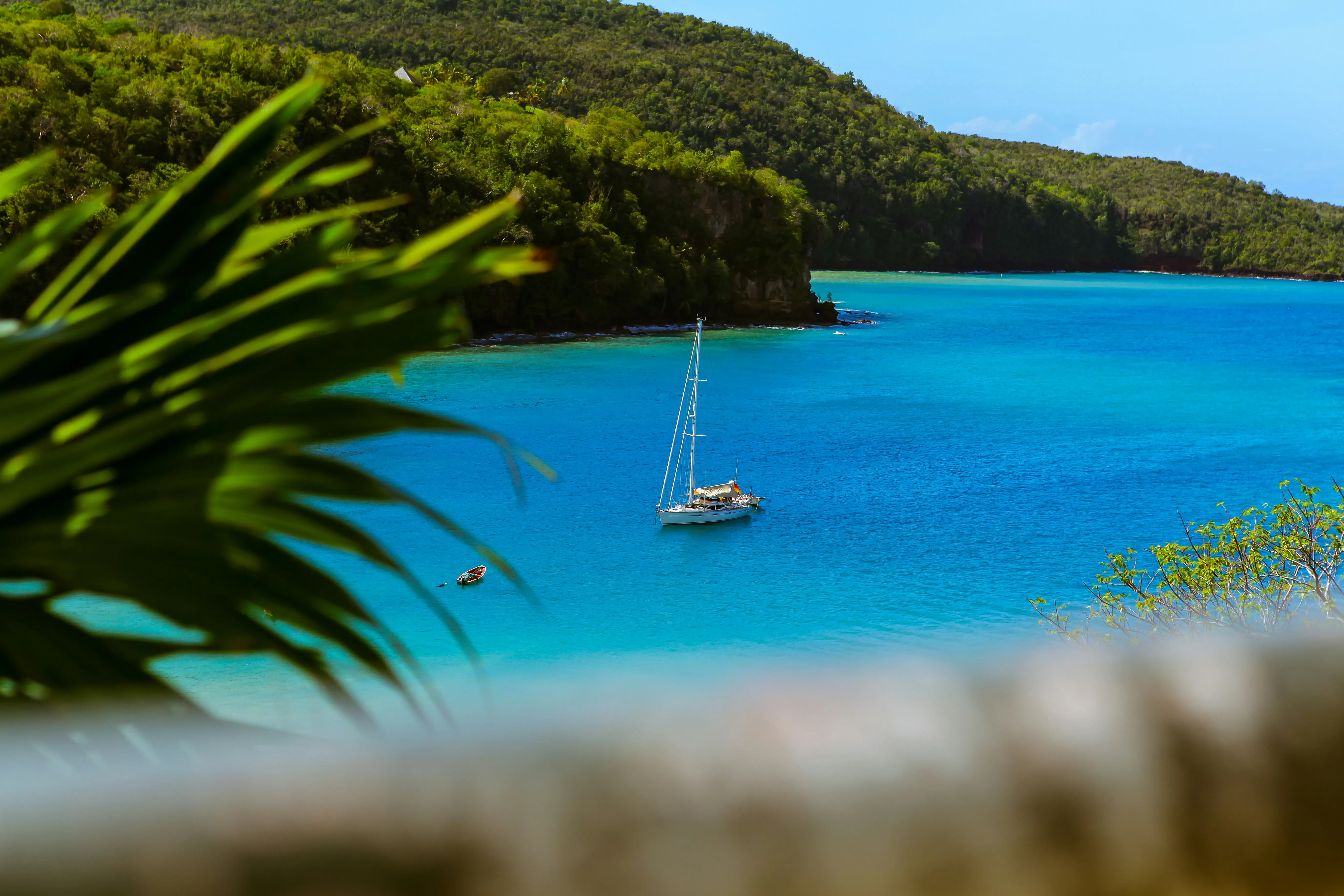
Saint Lucia
A Caribbean gem famous for its majestic Piton mountains, white sand beaches, lush tropical rainforest, and a vibrant local culture full of hospitality.
Quick Facts
- Capital
- Castries
- Language
- English
- Saint Lucian Creole
- Currency
- East Caribbean Dollar (XCD)
- Best time to visit
- From December to May, during the dry season
- Budget per day
- $80 - $250 per day
- Climate
- Warm and humid tropical climate year-round, with a rainy season between June and November and constant maritime temperatures.
- Connectivity
- medium
- Easy to obtain at the airport and local stores from operators such as Digicel or Flow
- Electricity
- Type G (230V)
- Local transport
- acceptable
- Card usage
- acceptable
- Tipping
- optional
🌎 Introduction
Located in the Lesser Antilles arc, Saint Lucia is a corner of the Caribbean where volcanic relief and dense vegetation coexist naturally. The silhouette of its twin mountains, emerging from the sea, presides over an environment that alternates between valleys dedicated to cocoa cultivation and trails that lead deep into the jungle. It is a place where French and British legacies intertwine in the Creole language and in an architecture that preserves the pulse of a diverse and multicultural history.
The island’s identity is present in the atmosphere of its markets and in the aroma of a gastronomy based on local products and spices. Throughout the year, the warm climate accompanies both traditional festivities, rich in music and color, and the serenity of its bays and fishing villages. In this setting, life unfolds at its own pace, offering a balanced combination between the energy of its customs and the constant presence of a nature that defines the character of its people.
🛡️ General Safety
Saint Lucia is generally considered a safe destination for international tourism. The island maintains a welcoming and relaxed atmosphere, typical of Caribbean nations that depend on tourism. Compared to other destinations in the region, the risk level is in the medium-low range, allowing travelers to enjoy its attractions with peace of mind, provided common sense is applied and basic prevention guidelines are followed.
General Safety Level
- The overall rating for the country is positive, being a destination frequently visited by cruise ships, honeymooners, and families.
- The environment is mostly peaceful, although, as in any global tourist destination, it is not exempt from minor incidents.
- The context for the traveler is one of freedom of movement, especially in areas developed for tourism and hotel resorts.
Crime and Common Risks
- The most common crimes that can affect tourists are petty theft and pickpocketing, especially on crowded beaches, markets, and nightlife areas.
- It is recommended to take extra precautions in crowded places and avoid leaving valuables in plain sight in vehicles or unattended on the beach sand.
- Although rare, cases of robbery with intimidation have been reported in isolated areas or less-traveled trails. It is preferable to go on hiking excursions in groups or with authorized guides.
- Scams are not widespread, but it is advisable to agree on the prices of informal services (such as spontaneous street guides) before accepting them.
Safety in Cities and Tourist Areas
- In urban centers like Castries (the capital) and Vieux Fort, it is recommended to walk along main streets and avoid dark alleys or less-traveled peripheral areas, especially after dark.
- The Rodney Bay area and the surroundings of Soufrière are very safe due to the high presence of visitors and private security services at hotels.
- To move around with peace of mind, the ideal approach is to stay on marked tourist routes and use transportation services recommended by accommodations.
Transportation Safety
- Public transportation consists mainly of privately managed minibuses. They are economical and safe, although they tend to travel at high speeds on winding roads.
- Taxis are a very reliable option. They are distinguished by having a blue license plate with the prefix TX. It is advised to confirm the fare before starting the trip, as they do not usually use meters.
- In Saint Lucia, driving is on the left. If you decide to rent a vehicle, be aware that roads can be narrow, steep, and have very sharp turns.
- It is necessary to obtain a temporary local driving permit, which is generally provided by the car rental agency itself after presenting your original driver’s license.
Natural and Climatic Risks
- The most relevant natural risk is the hurricane and tropical storm season, which officially runs from June to November.
- During the rainy season, localized flooding or small landslides can occur in mountain areas due to the island’s volcanic orography.
- Extreme heat and solar radiation are constant. It is vital to stay hydrated and use high-factor sunscreen to avoid heatstroke.
- Saint Lucia is an island of volcanic origin. Although the Sulphur Springs volcano is a tourist attraction (a “drive-in” volcano), seismic activity is constantly monitored by local authorities.
Local Legislation and Rules
- A very specific and strict rule in Saint Lucia is the prohibition of wearing camouflage clothing. It is illegal for civilians to wear any garment with this print (including children and accessories), as it is reserved exclusively for security forces.
- The consumption and possession of illicit drugs carry severe penalties, including heavy fines and prison terms.
- Respectful behavior in public places is the norm. Nudism and topless sunbathing are not permitted by law and can be offensive to the local population.
Safety for Specific Groups
- Solo female travelers: Saint Lucia is safe for women traveling alone, although they may receive unwanted comments or persistent attention. It is recommended to ignore these interactions and avoid walking in isolated places or lonely beaches unaccompanied at night.
- LGTBIQ+ travelers: Saint Lucian society is mostly conservative. While violent incidents are not commonly recorded, public displays of affection between same-sex individuals may draw disapproving looks or uncomfortable comments. Discretion is recommended outside of international resort environments.
- Children and the elderly: The country is very welcoming to families and seniors. The main precaution should be the uneven terrain in some tourist areas and the intensity of the Caribbean sun.
Emergencies and Assistance
- The main number for emergencies (Police, Fire, and Ambulance) is 911 or 999.
- The tourist police actively patrol areas of greatest interest and are usually friendly and willing to help visitors.
- In case of any incident or loss of documents, you should go to the nearest police station to file the corresponding report, which is necessary for any subsequent travel insurance claim.
Tip: Always use hotel safes to store your original documents and valuables, and carry only a copy of your passport and the money needed for the day.
📝 Entry Requirements
To undertake a trip to Saint Lucia, the primary document that every visitor must possess is a valid passport. Generally, it is recommended that this document has a minimum validity of at least six months from the time of entry into the territory. Regarding the need for a visa for tourist stays, most international travelers visiting for holiday reasons usually do not require this prior procedure for short-term visits, which facilitates the trip planning process.
The maximum duration of stay allowed under the tourist category is usually ninety days, although this period may be subject to the decision of the control officers at the point of entry. It is common that, during the entry process, authorities request the presentation of an onward ticket from the country or to another destination, as well as proof of having sufficient funds to cover the expected expenses during the stay on the island.
Regarding standard controls at airports and ports, visitors must go through immigration and customs procedures where documentation and the purpose of the trip are verified. There are customs restrictions to keep in mind, such as the prohibition on bringing in fresh food or unprocessed agricultural products to protect local biodiversity. When transporting medications, it is advisable that they are in their original containers and accompanied by a clear medical prescription. A distinctive aspect in this region is the restriction on the use or transport of camouflage clothing, which is usually reserved for official use.
In terms of health, it is important to check health requirements before departure. While vaccines are not generally required for all travelers, a yellow fever vaccination certificate may be requested from those coming from areas where this disease is considered endemic. It is highly recommended to have travel insurance with extensive medical coverage to ensure peace of mind during the stay, thus guaranteeing a satisfactory experience in this Caribbean destination.
- Necessary documentation: Valid passport with a recommended validity of six months.
- Tourist visa: Not usually required for most short recreational stays.
- Length of stay: The standard limit for tourist activities is ninety days.
- Exit requirements: Presentation of a return ticket or transit ticket to another country.
- Financial solvency: Possibility of requiring proof of financial means for the stay.
- Customs regulations: Control over fresh products, prescription medications, and camouflage items.
- Health recommendations: Verification of specific vaccines according to origin and advisability of medical insurance.
🏥 Basic Health Considerations
On your trip to Saint Lucia, you will find medical infrastructure that is acceptable for minor issues, although somewhat limited if a serious complication arises. On the island, you will see public centers coexisting with private clinics. As a tourist, you are most likely to receive care in one of the latter, as they usually offer faster care adapted to visitors. Keep in mind that costs can be high and most centers require upfront payment or a guarantee of solvency, so paying for a consultation out of pocket can be quite expensive. Health personnel speak English, which is the official language, making it easier for you to communicate with them during assistance.
Taking out travel medical insurance is not a mandatory requirement to enter the country, but it is something totally recommended if you want to travel with peace of mind. Your policy should include broad coverage for hospitalization, diagnostic tests, and, above all, medical repatriation. Due to the island’s geography, in cases of extreme gravity, you might need a medicalized plane transfer to other destinations with more advanced hospitals, a cost that is preferable for an insurer to cover.
Regarding vaccines, there are no mandatory requirements for most travelers, unless you come from an area where yellow fever is endemic, in which case they will request the international vaccination certificate. For everyone else, it is usually enough to be up to date with the standard vaccination schedule. Depending on the type of activities you are going to do, you might consult with your doctor about hepatitis A and B vaccines, but generally, you will not find great risks that require extraordinary measures.
If you are undergoing any specific treatment, the ideal is to bring all the personal medication needed for the days you are away, always in its original container and with the leaflet. Do not forget to include a copy of the medical prescription or a report from your doctor explaining your treatment, especially if you travel with drugs that may be considered controlled substances. This will avoid any inconvenience at customs controls when entering the country.
Saint Lucia’s tropical climate involves certain risks that you can easily manage. Mosquitoes are common and can transmit diseases such as dengue or zika, so you will see that using a good repellent is essential, especially at dawn and dusk. Another factor to consider is the intense heat and humidity, which can cause dehydration or heatstroke if you do not protect yourself properly. Otherwise, you will not find risks from altitude or seasonal diseases with a major impact on the average tourist.
Regarding the consumption of water and food, tap water in the main areas and in hotels is usually drinkable and safe for human consumption, although its taste can be somewhat strong due to treatment. If you have a sensitive stomach, you will find bottled water easily in any store. Food hygiene on the island is generally quite good. You can try local gastronomy and street food with confidence, as long as you follow the logical rule of choosing places that have good customer turnover and a clean appearance.
If you find yourself in a medical emergency situation, the telephone number to dial is 911 or 999. Ambulance service is available, although you should know that in more rural areas or those far from urban centers like Castries, the response time may be somewhat slower than you expect. For minor incidents, you can always go to local pharmacies, where the staff is usually very helpful.
To make your stay perfect, I recommend carrying a small travel first-aid kit with pain relievers, basic wound care materials, and gastric protectors. Always use a high-factor sunscreen, as the Caribbean sun is much stronger than it seems at first glance. Finally, always keep a digital copy of your insurance on your mobile phone so you can access the contact details and your policy number at any time without needing an internet connection.
🚌 Transportation within the country
Moving around Saint Lucia is mainly done by road, as the island does not have a railway or metro network. Travelers usually use local minibuses, which function as the main means of public transportation, or opt for car rentals to explore the territory with greater autonomy. Being an island with rugged terrain, it is also common to use water taxis to travel between different points on the coast, which allows avoiding the curves of the inland roads.
The public bus system is functional and relatively easy for the visitor to understand. The vehicles are vans that cover specific routes and, although they do not always have conventionally marked stops, the use of English greatly facilitates interaction with drivers. Payment is made directly when getting on or off the vehicle, which simplifies the process as it does not require the prior purchase of complex passes.
There is a clear distinction between the north and the south of the island. In areas like Castries or Rodney Bay, transportation frequency is high and communications are fluid. Conversely, in rural areas and the mountainous interior, roads are narrower and more winding, making travel slower. In these areas, the availability of public transport decreases, making taxis or private cars more common options for tourists.
The taxi service is extensive and is considered a safe and comfortable option for direct trips, especially for transfers from airports or to specific points of interest. Although public transport does not stand out for strict punctuality based on fixed schedules, as buses usually leave when they are full, the reliability of the system is acceptable for those traveling without haste and looking to integrate into the local rhythm.
“Tip”: It is recommended to always check the vehicle’s destination with the driver before boarding, especially in areas where routes may be less direct.
🤵 Culture and Etiquette
Social interaction in Saint Lucia is based on constant courtesy and mutual recognition between people. It is common and considered a basic rule of politeness to greet those present when entering an establishment, boarding public transport, or simply when crossing paths with someone in less urban environments. Using phrases like “good morning” or “good afternoon” before starting any inquiry is essential to establish a bond of respect from the first contact. Likewise, treatment toward elderly people or those in positions of authority is usually formal, using courtesy titles followed by the surname to show consideration.
Regarding behavior in public spaces, communication is usually friendly and open, although maintaining a moderate voice volume and avoiding behaviors that could be disruptive is valued. There is a clear distinction between tourist leisure spaces and urban or residential centers; therefore, visitors are expected to dress appropriately and discreetly outside of beaches or hotel complexes. Wearing swimwear or walking shirtless in streets, shops, or government buildings is not a common practice, and it is appreciated if travelers cover themselves appropriately when leaving swimming areas.
The pace of life can be more slow and flexible compared to large metropolises, which is reflected in a less rigid perception of time in informal social contexts. This attitude invites visitors to practice patience and adaptability, understanding that human interactions are usually prioritized over the urgency of the clock. However, in the professional sphere and organized tourist services, efforts are made to maintain established punctuality to ensure the correct functioning of activities.
In the culinary and service fields, tipping is a widespread and appreciated practice. Although some establishments include a service charge on the bill, it is common to reward good service with an additional percentage that usually ranges between 10% and 15%. If you have the opportunity to visit a private home, it is a gesture of courtesy to bring a small gift for the hosts. During meals, leisurely conversation is valued, avoiding topics that may be excessively controversial or personal during the first encounter.
Respect for traditions and beliefs is a fundamental pillar of coexistence. When visiting places of worship, it is essential to maintain an attitude of utmost reverence and follow dress codes that require covering shoulders and knees. Similarly, before taking photographs of people or their homes, the correct thing to do is to always request prior permission. This gesture demonstrates sensitivity toward the privacy of residents and helps maintain a harmonious and balanced relationship between the visitor and the local community.
“Tip”: Starting any conversation with a cordial greeting before asking for information or making a purchase greatly facilitates communication and is the best way to demonstrate respect for local customs.
🍛 Typical Gastronomy
The cuisine of Saint Lucia is a vibrant reflection of its history, fusing Creole, African, and European influences to create intense and comforting flavors. The island’s culinary identity is based on the use of fresh products obtained directly from its fertile volcanic lands and the Caribbean Sea. Fundamental ingredients include the so-called ground provisions, such as yams, sweet potatoes, and plantains, which usually accompany fish and meats seasoned with a blend of local spices including nutmeg, ginger, and cloves.
Regarding eating habits, lunch is usually the main and most substantial meal of the day. It is common for the island’s inhabitants to opt for one-pot dishes that combine proteins and carbohydrates in a balanced way. In the morning, it is very traditional to start the day with a handcrafted cocoa tea, a thick and aromatic drink that is far from conventional hot chocolate. Restaurant etiquette is generally informal and relaxed, with hospitality and the leisurely enjoyment of food being highly valued, in line with the quiet rhythm of Caribbean life.
Celebrations and social life are often linked to street food and local markets, where simple but flavor-filled preparations can be tasted. The most common drinks to accompany dishes include freshly squeezed tropical fruit juices, such as mango or passion fruit, and the local lager-style beer. Gastronomy in Saint Lucia is not just sustenance, but a cultural meeting point that manifests especially in barbecues and community events in coastal areas during weekends.
| Dish | Description | Main Ingredients | Where to try it | Tip |
|---|---|---|---|---|
| Green fig and saltfish | National dish consisting of boiled green bananas and salted fish. | Green bananas (figs), salted cod, onion, and peppers. | Local restaurants and food stalls in Castries. | Try it with a bit of local pepper sauce to enhance the flavor of the fish. |
| Bouyon | A thick and nutritious stew slow-cooked over low heat. | Meat (pork or chicken), dumplings, yam, pumpkin, and lentils. | Municipal markets and small home-style food establishments. | It is a very filling dish, ideal for a complete lunch after a morning excursion. |
| Accras | Fried fish fritters, popular as an appetizer or snack. | Flaked fish, flour, aromatic herbs, and spices. | Street stalls and coastal food festivals. | They are best enjoyed when freshly fried and crispy, accompanied by a cold drink. |
| Callaloo | Creamy, deep green soup with a very smooth texture. | Callaloo leaves (similar to spinach), coconut milk, and okra. | Restaurants specializing in traditional Creole cuisine. | Sometimes it includes seafood; ask about the variant of the day before ordering. |
| Lambie | Sea conch prepared in various ways, usually stewed or grilled. | Conch meat, garlic, onion, and a blend of Caribbean spices. | Beach shacks in fishing villages like Anse La Raye or Gros Islet. | It has a firm and unique texture, highly appreciated by those seeking authentic marine flavors. |
📷 Areas and Places to Visit
Saint Lucia is distinguished by being an island of contrasts where volcanic nature and historical legacy coexist in a balanced environment. The north of the island is usually the starting point for many travelers, especially the Castries area, the capital. In this city, one can observe the pulse of local life by visiting its central market, a space where agricultural products and traditional crafts are exchanged. Nearby, Derek Walcott Square offers an urban respite surrounded by buildings that preserve colonial architecture, while the Cathedral of the Immaculate Conception stands out for its interior murals that fuse religious motifs with Caribbean art.
Continuing toward the northern tip, you will find Pigeon Island, a national park that connects the island’s military past with coastal landscapes. This islet, now connected to the mainland by a causeway, houses ruins of British fortifications and small museums that narrate the naval battles between France and England for control of the region. In this same area, the Rodney Bay zone represents the most modern and dynamic facet, with a wide range of leisure, services, and the extensive Reduit Beach, frequented by those seeking calm waters and clear sands.
The south of the island offers an experience more linked to the natural environment and agricultural heritage. The town of Soufrière, the country’s former capital, is the heart of this region. Its appearance is marked by the presence of The Pitons, two volcanic spires called Gros Piton and Petit Piton that emerge directly from the sea and are the quintessential national symbol. In the surroundings of this town, you can explore Sulphur Springs Park, known for being an accessible volcano where geothermal activity manifests in mud springs and thermal waters. The area’s biodiversity is complemented by the Diamond Falls Botanical Gardens, which feature a mineralized waterfall and an extensive collection of tropical flora.
The central area and the east coast offer a different, more rural, and less explored vision. The interior is dominated by the rainforest, largely protected by forest reserves that allow for hiking routes such as the Enbas Saut trail. These paths cross dense forests and allow for the sighting of indigenous birds, providing a perspective on the ecological richness of the mountainous interior. On the other hand, the Atlantic coast shows a more rugged and virgin landscape, with fishing villages like Dennery or Micoud, where the pace of life is slow and local traditions remain very present.
For those looking for spots with a particular charm, Marigot Bay presents itself as one of the most sheltered natural harbors in the Caribbean, surrounded by forested hills and small beaches that have served as a refuge for sailors for centuries. Regarding festivities and living culture, towns like Gros Islet are famous for their nightly community gatherings where music and local gastronomy are the protagonists, offering an opportunity to interact with the local population in a relaxed and authentic atmosphere.
“Tip”: You cannot miss visiting The Pitons, the most emblematic place in the country.
✈️ Best Season to Travel
Saint Lucia enjoys a warm tropical climate all year round, allowing for visits at almost any time. However, the travel experience varies depending on the alternation between the dry season and the rainy season. Those looking for clear days and moderate humidity usually opt for the months between December and May, while those who prefer more intense green landscapes and a quieter atmosphere find the second half of the year to be an interesting option.
The balance between mild temperatures and the frequency of rainfall defines the island’s dynamics. The cultural calendar also plays a relevant role, as events such as the jazz festival or carnival are distributed throughout the year, allowing for an exploration of local heritage in different climatic contexts. Ultimately, the choice depends on whether meteorology predictability or the possibility of enjoying a more serene environment is prioritized.
| Season | Months | Typical Climate | What to Expect | Tourist Influx |
|---|---|---|---|---|
| Spring | Mar – May | Warm and mostly dry, with refreshing breezes. | Lush blooms and the celebration of the Saint Lucia Jazz & Arts Festival. | ⭐⭐⭐ |
| Summer | Jun – Aug | High temperatures and increased humidity and brief rains. | Festive atmosphere with the celebration of Carnival and optimal conditions for diving. | ⭐⭐⭐ |
| Autumn | Sep – Nov | Humid climate with frequent rains and possibility of tropical storms. | Very green landscapes, tranquility on the beaches, and Creole Heritage Month celebrations. | ⭐⭐ |
| Winter | Dec – Feb | Very pleasant temperatures and predominant dry weather. | Whale watching, clear skies, and vibrant cultural and social activity. | ⭐⭐⭐⭐⭐ |
🗣️ Basic Vocabulary
Although English is the official language of Saint Lucia, in daily life, local inhabitants usually communicate in kwéyòl (Saint Lucian Creole), a language with French and African roots. Knowing some basic expressions in this language not only facilitates interaction in markets or shops but is also a sign of courtesy that residents usually appreciate.
To navigate the trip smoothly, it is not necessary to delve into grammatical rules; memorizing a few key words is enough. These terms will help you greet people, ask for basic information, or simply show gratitude in a more personal and authentic way.
- Bonjou: Good morning.
- Bonswa: Good afternoon or evening.
- Souple: Please.
- Mèsi: Thank you.
- Sa ka fèt?: How are you? or What’s up?
- Tout bway: Everything’s fine.
- Orevwa: Goodbye.
- Konmen sa yé?: How much does this cost?
- Wi / Non: Yes / No