


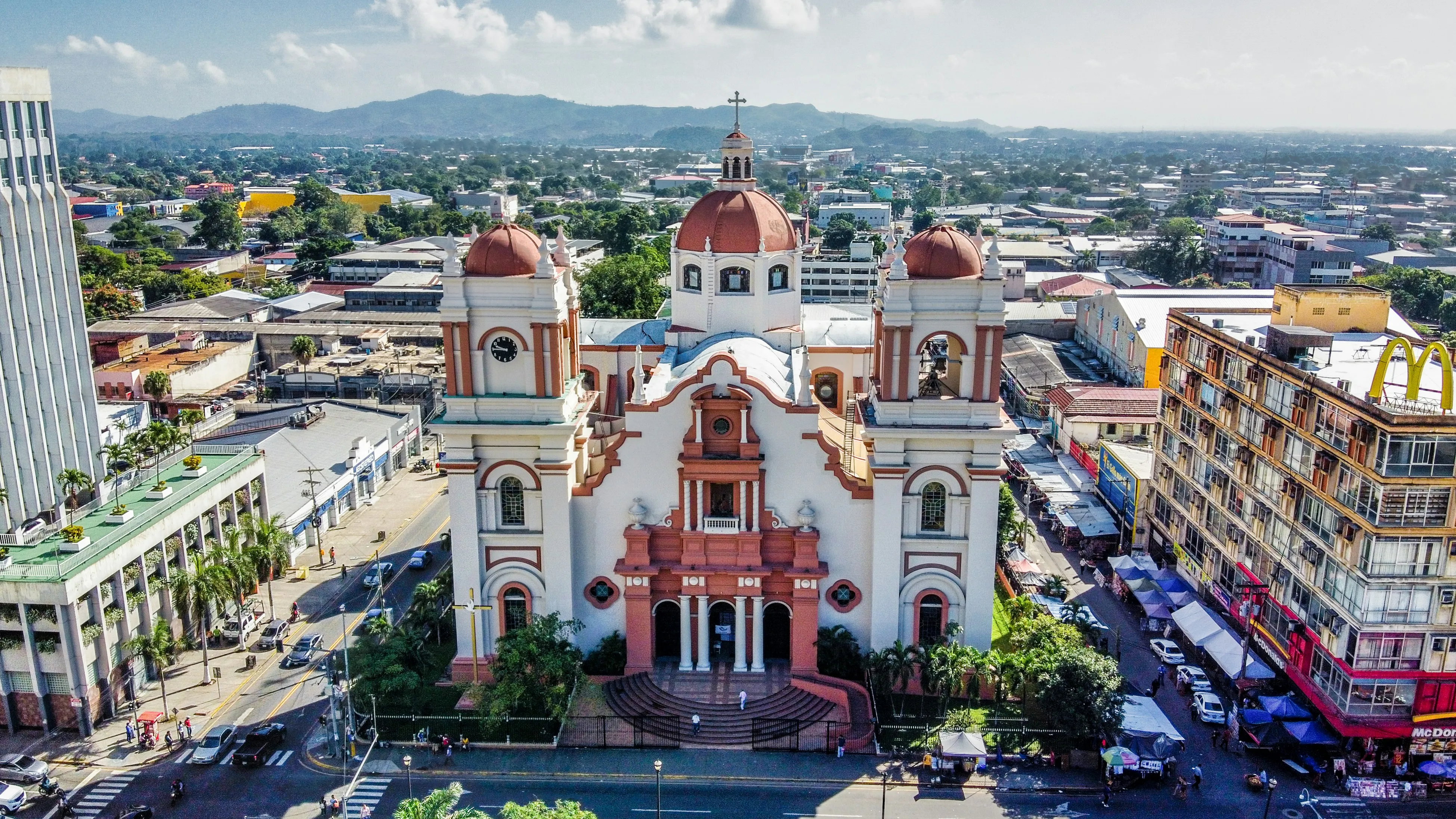
Honduras
Honduras offers untouched jungles, Mayan treasures, dreamlike Caribbean beaches, and great biodiversity for those seeking adventure, culture, and pure authentic nature.
Quick Facts
- Capital
- Tegucigalpa
- Language
- Spanish
- Garifuna, Bay Islands English
- Currency
- Lempira (HNL), US Dollar (USD)
- Best time to visit
- From December to April, coinciding with the dry season to enjoy the sun.
- Budget per day
- $35 - $110 per day
- Climate
- Warm tropical climate on the coasts and more temperate in the mountainous areas of the country's interior.
- Connectivity
- medium
- Very simple to obtain prepaid SIM cards at airports, kiosks, and authorized stores.
- Electricity
- Type A/B (110V)
- Local transport
- limited
- Card usage
- cash is used more
- Tipping
- optional
🌎 Introduction
In the heart of the Central American isthmus, the landscape is drawn through deep valleys and mountain ranges that often dawn shrouded in mist. It is a territory where tropical vegetation naturally coexists with towns of colonial heritage and ancient Mayan remains that still guard the legacy of a millenary civilization. Traveling along its roads, one perceives an atmosphere where time seems to move at its own pace, marked by the aroma of freshly roasted coffee in the highlands and the murmur of local markets.
Towards the coast, the landscape transforms to give way to Caribbean influence and Garifuna culture, while in the interior, cloud forests and pines that freshen the environment predominate. The country’s identity is manifested in daily details: from the artisanal preparation of the corn tortilla to the patron saint festivities that fill the town squares with color. It is a diverse destination that balances its historical wealth with nature present in every corner, offering a genuine vision of life in Central America.
🛡️ General Safety
Honduras is a country of great natural and cultural wealth that attracts thousands of travelers every year. Generally speaking, safety for tourists is at a medium level, with significant variations depending on the area visited. While purely tourist enclaves are usually very safe, large urban areas require greater attention and the following of basic prevention guidelines.
The context for the traveler is one of peaceful coexistence as long as they stay within recommended circuits. Most visits pass without incident, especially in destinations focused on international tourism where surveillance is tighter and the local community is very committed to protecting the visitor.
Crime and common risks
Most incidents affecting tourists are non-violent and related to carelessness. Among the most common risks are:
- Theft and snatching: These are common in crowded places, such as markets, transport terminals, or main squares of large cities.
- Minor scams: These can occur during street currency exchange or with inflated prices in unofficial transport services.
- Theft of belongings from vehicles: Leaving valuables in sight inside rental cars can attract thieves.
- Infrequent risks: Although incidents involving weapons exist in the country, these rarely affect tourists who stay in safe areas and avoid peripheral neighborhoods of large urban centers.
Safety in cities and tourist areas
There is a marked difference between urban centers and nature or beach destinations. To move around with peace of mind, it is advisable to consider the following:
- High-security zones: The Bay Islands (Roatán, Utila, and Guanaja) and the archaeological site of Copán Ruinas have very high safety levels, similar to any first-rate international destination.
- Urban centers: In cities like Tegucigalpa and San Pedro Sula, maximum caution should be exercised. It is recommended not to walk through the historic center or unknown neighborhoods after dark.
- Tourist neighborhoods: In cities, it is preferable to stay and move through modern residential or commercial neighborhoods that have private security and good lighting.
- Practical recommendation: While moving on foot, it is advisable not to show expensive electronic devices or flashy jewelry to maintain a low profile.
Safety in transportation
Transportation is a key aspect of traveler safety. Honduras has a varied infrastructure where the choice of method is fundamental:
- Public transport: The use of urban buses (locally known as “rapiditos”) is generally not recommended for tourists due to a lack of safety and the risk of theft.
- Taxis and private transport: It is advised to use exclusively radio-frequency taxis, services requested from the hotel, or internationally recognized transport applications. Avoid taking random taxis on the street, especially at night.
- Rental vehicles: This is an excellent option for touring the country, but driving is recommended only during daylight hours. Roads may have potholes or a lack of signage in rural areas.
- Driving rules: In Honduras, driving is on the right. The use of seat belts is mandatory, and the use of a mobile phone while driving is strictly prohibited.
Natural and climatic risks
Honduras has a tropical climate that entails certain seasonal risks that the traveler should be aware of:
- Hurricanes and tropical storms: The official season runs from June to November. During these months, heavy rains can cause flooding or cuts on secondary roads.
- Seismic activity: Although large-magnitude earthquakes are not frequent, the country is located in an area with some seismic activity.
- Extreme heat: In coastal areas and the south of the country, temperatures can be very high. It is vital to maintain constant hydration and use sun protection.
- Prevention: It is recommended to follow the instructions of the Permanent Contingency Commission (COPECO) and stay tuned to weather warnings if traveling during the rainy season.
Legislation and local norms
Compliance with local norms is essential to avoid legal problems during the stay. Some key points include:
- Prohibited substances: Honduras has very strict laws against drug consumption and trafficking. Prison sentences are severe and distinctions are usually not made for foreigners.
- Heritage protection: It is forbidden to remove flora, fauna, or archaeological remains from the country. This includes sea shells, corals, or stone pieces from historic sites.
- Identification: It is advisable to always carry a photocopy of your passport and the entry stamp to the country, leaving the original document in the hotel safe.
- Consequences: Non-compliance with coexistence regulations or local laws can result in heavy fines or immediate deportation.
Safety for specific groups
- Women travelers: Honduras is an accessible destination for women traveling alone, although it is recommended to avoid walking unaccompanied in isolated areas or lonely beaches at night.
- LGTBIQ+ travelers: Although tourism in areas like the Bay Islands is very open and tolerant, a conservative culture prevails in the rest of the country. Discretion is recommended regarding public displays of affection in rural areas or non-tourist cities.
- Traveling with children and the elderly: There are no specific additional risks. Main destinations have adequate medical services and families are usually very well received by the local population.
Emergencies and assistance
In case of needing help, the traveler has several assistance channels:
- Main emergency number: 911 is the centralized number for police, firefighters, and medical emergencies throughout the national territory.
- Tourist Police: In areas of high tourist influx, there are specialized units of the Tourist Police, identifiable by their uniforms and armbands, who are trained to specifically assist foreigners.
- Medical assistance: In large cities, there are high-quality private hospitals. It is strongly recommended to travel with comprehensive medical insurance that includes evacuation if necessary.
”> Tip: Always use ATMs located inside shopping centers or bank branches with surveillance, and avoid performing banking operations on the street or in poorly lit places.”
📝 Entry Requirements
When planning a trip to Honduras, it is essential to ensure that your passport has sufficient residual validity, which is usually at least six months from the moment of entry into the territory. Most international visitors traveling for tourism purposes do not usually require a prior visa for short stays, generally allowing a maximum stay of up to 90 days. It is convenient to check that the identity document is in perfect condition to facilitate procedures at checkpoints.
Upon arrival, migration authorities at airports and land borders may request the presentation of an exit ticket from the country or, failing that, proof of transport to a third destination. Likewise, it is common to be asked to demonstrate possession of sufficient economic funds to cover the expenses planned during the stay. Entry processes are usually simple, typically consisting of a brief interview about the purpose of the trip and the corresponding stamping in the passport to formalize the legal stay.
Regarding customs regulations, travelers can bring in their personal belongings duty-free, provided they are not for commercial purposes. There are standard restrictions on the entry of fresh animal or plant products, seeds, and other organic elements to preserve the local ecosystem. If transporting prescription medications, it is recommended to carry medical documentation justifying their use. Additionally, large amounts of cash must be declared to the competent authorities at the point of entry.
From a health perspective, it is suggested that travelers have their routine vaccination schedule up to date. Depending on the tourist’s origin or the destinations previously visited on their itinerary, a yellow fever vaccination certificate might be necessary. Having travel insurance with broad medical coverage is a highly recommended practice to ensure adequate assistance during the journey through the country’s various regions.
- Main document: Passport with a minimum recommended validity of six months.
- Period of stay: Generally up to ninety days are granted for tourist activities.
- Departure from the country: Need to prove a return or onward travel ticket.
- Solvency: Possible requirement for proof of financial means.
- Health: Recommendation of basic vaccines and international health insurance.
- Customs: Control of fresh products, specific drugs, and currency declaration.
🏥 Basic Health Considerations
On your trip to Honduras, you will find a health system that combines public and private networks. Private medical care in major cities like Tegucigalpa, San Pedro Sula, or in tourist areas like Roatán, is the most recommended option as it has higher quality standards and shorter waiting times. You should keep in mind that the costs in these clinics can be high for visitors, so having resources to face an unforeseen event is fundamental. In most medical centers, the staff communicates in Spanish, although in private hospitals in large cities and coastal areas, it is common to find professionals who speak English.
Taking out medical travel insurance is not a legal obligation to enter the country, but it is an essential recommendation so that you can enjoy your stay with total peace of mind. We advise that your policy include broad coverage for hospitalization, surgical interventions, and, very importantly, medical repatriation. Having this support will allow you to access the best private hospitals without having to pay large sums of money out of pocket.
Regarding vaccines, currently none are mandatory to enter Honduran territory, unless you come from a country where yellow fever is endemic, in which case you must show your international vaccination certificate. The most practical thing is to have your routine vaccination schedule up to date. Depending on the areas you are going to visit or the time you plan to stay, you might consider with a professional the recommendation for vaccines against hepatitis A and B or typhoid fever.
If you need to bring your own medication, we recommend that you transport it in its original packaging and always accompanied by a copy of the medical prescription or a report from your doctor. You will not find major restrictions for common use medications, but if you follow a treatment with controlled substances, it is better to carry an official certificate that justifies it. You can find well-stocked pharmacies in urban centers, but it is always useful to carry a small personal first-aid kit with pain relievers, gastric protectors, and antihistamines.
The most common health risks are related to the tropical climate. You will find that mosquitoes are common, especially during rainy seasons, and can transmit diseases such as dengue, Zika, or Chikungunya. The use of a good insect repellent and wearing clothes that cover the skin at dawn and dusk will be your best prevention tools. In addition, the heat and humidity can be tricky, so you should protect yourself from the sun with high-protection creams and maintain constant hydration to avoid heat stroke.
As for water and food, you should know that tap water is not suitable for consumption. You will always find bottled or purified water at your disposal, and that is what you should use even to brush your teeth if you want to avoid stomach upsets. You can try the delicious local cuisine in many places, but we suggest you opt for establishments that maintain good hygiene. If you decide on street food, make sure the food is well-cooked and served hot at the moment.
If you find yourself in a medical emergency situation, the number you should dial is 911. This service centralizes emergency care and coordinates the dispatch of ambulances or police assistance. In the islands and more remote areas, infrastructure may be more limited, so in serious cases, transfers to hospitals in the major cities are usually used.
As final tips for your well-being, we remind you of the importance of washing your hands frequently or using disinfectant gel. Don’t forget to pack a water-resistant sunscreen and a quality repellent. Maintaining these basic precautions will allow you to focus solely on enjoying the landscapes and hospitality that this destination offers.
🚌 Transport within the Country
To travel through Honduran territory, the most used medium is the bus, which connects the main cities and towns of the country. Long-distance journeys are usually made in larger vehicles, while for short distances or rural routes, the use of smaller units is common. Regarding fast connections between key points such as the capital, the north coast, or the Bay Islands, the domestic flight is a common option to save time. To reach island destinations from the mainland, the ferry is the standard transport, with regular departures from the main coastal ports.
Using public transport is relatively simple, although signage is not always abundant outside the main terminals. Tickets are usually purchased at the bus stations themselves or authorized points of sale before boarding. Although the staff usually speaks mainly Spanish, the willingness to help the traveler facilitates basic orientation. It is important to keep in mind that the country does not have a metro or passenger train network, so land mobility depends exclusively on the road and path network.
There is a notable difference between mobility in large cities and rural areas. In the main cities, traffic can be dense and the transport offer is very wide and varied. In contrast, in the rural environment, frequencies are lower and the state of the roads can significantly influence the duration of the trip. In urban areas, taxis are a very common alternative and are easily found at strategic points, their use being common for quick trips within population centers.
Comfort and punctuality are usually acceptable in long-distance services that connect the most important urban centers. However, on local routes, flexibility is greater and schedules may vary according to the flow of passengers. In general, the transport system is functional and allows reaching the main points of interest, although it requires some prior planning, especially if you intend to visit less-connected areas or those far from the country’s main communication axes.
Tip: When planning long road trips, it is preferable to opt for services that make direct journeys between cities to reduce travel time and increase comfort during the journey.
🤵 Culture and Etiquette
Social interaction in Honduras is based on kindness and interpersonal treatment marked by courtesy. It is an essential rule of coexistence to greet when entering any establishment, public transport, or when joining a group, using formulas such as “buenos días” (good morning) or “buenas tardes” (good afternoon). Treatment is usually respectful and, in first encounters, a certain formality is maintained that relaxes as a relationship of trust is established.
In the area of introductions, the handshake is the standard gesture for both men and women in formal contexts or when there is no prior link. Among people who already know each other, closer contact is common, such as a kiss on the cheek or a brief hug. The use of academic or professional titles (such as “licenciado” or “doctor”) or the use of “don” and “doña” followed by the name is a very common sign of respect towards older people or those in a position of authority.
Regarding punctuality, there is a tendency towards flexibility in purely social contexts, where events may start with a certain delay from the scheduled time. However, in the professional environment and in the provision of official tourist services, punctuality is valued and expected. In terms of communication, the volume of voice is usually moderate and a calm conversation tone is appreciated, avoiding direct confrontations or behaviors that may be strident in public spaces.
In the context of meals and visits, hospitality is a central value. If an invitation to a home is received, it is considered a gesture of good manners to accept the offers of food or drink, as sharing these elements is a way to strengthen bonds. In restaurants, the tip is usually 10%, and it is common for it to already appear included in the bill under the concept of “servicio sugerido” (suggested service); otherwise, leaving a similar amount is appreciated if the treatment has been satisfactory.
Respect for traditions and religious beliefs is fundamental for harmonious coexistence. During liturgical celebrations or when visiting temples, it is important to maintain calm behavior and dress discreetly. Likewise, it is recommended to show a receptive and respectful attitude towards family and social hierarchies, as well as towards the various cultural manifestations that coexist in the country.
“Tip”: The use of “usted” (formal you) is the most appropriate and safest way to address any person until explicitly told that we can use a more familiar treatment or “tutear” (informal you).
🍛 Typical Gastronomy
The gastronomy of Honduras is a reflection of a vibrant cultural melting pot, where indigenous roots, Spanish influences, and the legacy of Afro-descendant Caribbean communities are intertwined. This diversity translates into a cuisine that varies significantly according to geography. While in the interior of the country corn, beans, and dairy products are the fundamental pillars, in the coastal regions and the islands, coconut, plantain, and seafood define the identity of their kitchens.
Local eating habits usually include three main meals, with breakfast and lunch being the most important times. The traditional breakfast is particularly substantial, designed to provide energy throughout the day. Unlike other nearby regions, Honduran corn tortillas are usually small and somewhat thicker, serving as the indispensable accompaniment that is never missing from the center of the table, regardless of the dish being served.
Regarding etiquette, the experience of eating in Honduras is generally relaxed and close. In rural areas and markets, it is very common to enjoy food at simple stalls where interaction with the cooks is natural. In city restaurants, service is friendly and formal dress is not required unless otherwise stated. Drinks are usually served in generous formats, highlighting fresh natural fruit juices and, of course, local coffee, which enjoys great prestige for its quality and aroma.
Celebrations and family gatherings usually revolve around the preparation of dishes that require time and dedication. It is common for the weekend to be reserved for enjoying consistent soups or preparations wrapped in plantain leaves. Food is not just sustenance, but a social act of hospitality, where sharing a simple dish is considered a gesture of welcome for any visitor who wishes to know the essence of the country through its flavors.
| Dish | Description | Main ingredients | Where to try it | Tip |
|---|---|---|---|---|
| Baleada | A folded flour tortilla that is the icon of local fast food. | Flour tortilla, refried beans, cheese, and cream. | Street stalls and markets throughout the country. | Order it “con todo” (with everything) if you want it to include egg, avocado, or meat. |
| Sopa de caracol | Creamy and aromatic soup with a coconut milk base. | Conch, coconut milk, yucca, green plantain, and cilantro. | Restaurants on the north coast and the Bay Islands. | Make sure the conch is tender, as it requires precise cooking. |
| Plato típico | A combination plate offering a sample of the basic components of the diet. | Grilled meat, beans, rice, fried plantain, cheese, and avocado. | Homemade food restaurants or “comedores”. | It is the ideal option to try several local flavors at once. |
| Tapado olanchano | A historic and substantial stew of smoked meats and vegetables. | Salted beef, pork rib, plantain, and coconut milk. | Olancho region and Creole food restaurants. | It is a very filling dish, so it is best to have it as a main lunch. |
| Nacatamal | Corn dough filled and steamed inside plantain leaves. | Corn, pork or chicken, rice, potato, and spices. | Gastronomic fairs and homemade sales on weekends. | It is usually consumed hot and is a traditional option for Sunday breakfasts. |
📷 Zones and Places to Visit
Honduras offers a remarkable diversity of landscapes and historical enclaves that allow for a deep understanding of Central America’s cultural heritage. In the western part of the country, the archaeological site of Copán is one of the most significant stops. This ancient ceremonial center of the Mayan civilization stands out for its detailed stone stelae and the Hieroglyphic Stairway, which contains the longest glyphic text in the world. Nearby, the town of Copán Ruinas maintains a welcoming atmosphere with cobblestone streets and museums dedicated to pre-Hispanic sculpture, as well as nature reserves oriented towards the conservation of birds such as the scarlet macaw.
Towards the interior of the territory, colonial history is present in cities like Comayagua. This former capital preserves a well-structured historic center where you can visit the cathedral, famous for housing one of the oldest clocks in the world still in operation. On the other hand, the current capital, Tegucigalpa, presents an interesting contrast between its traditional neighborhoods with Baroque-style churches and modern commercial activity areas. Near the capital, the towns of Valle de Ángeles and Santa Lucía are known for their mountain architecture and their artisanal production of ceramics and wood.
Nature is another of the country’s pillars, personified in Lake Yojoa. It is the only lake of volcanic origin in the region and a key point for sighting hundreds of bird species. In its surroundings, visitors can hike in Cerro Azul Meámbar National Park or visit the Pulhapanzak falls, where it is possible to explore caves and river trails. This area connects the central region with the north, offering a landscape of cloud forests and coffee plantations.
On the Caribbean coast, the city of La Ceiba acts as a gateway to various natural adventures. Pico Bonito National Park allows for excursions through the tropical jungle and activities on the Cangrejal River. Nearby, in the town of Tela, is the Lancetilla botanical garden, which has one of the most extensive collections of tropical flora on the continent. In this same coastal strip, Jeannette Kawas National Park combines mangroves, lagoons, and white sand beaches that can be explored in local boats.
The Bay Islands, located in the Caribbean Sea, are world-renowned for their proximity to the Mesoamerican Barrier Reef. Roatán is the largest island and offers a developed infrastructure with crystal clear water beaches and diving centers. For its part, Utila is valued for its simpler atmosphere and for being one of the best places to observe whale sharks at certain times of the year. Activities on these islands focus on snorkeling, diving, and exploring the rich marine life that inhabits their reefs.
Finally, the southwestern zone invites you to travel the Lenca Route, which passes through towns like Gracias and La Esperanza. In this region, the traditions of the original peoples are preserved, and you can visit the Fort of San Cristóbal or climb the Celaque Mountain National Park, where the highest point of the Honduran landscape is located. It is an area that stands out for its pine landscapes, its thermal waters, and a cooler climate, offering a different perspective of the country’s geographical diversity.
Tip: You cannot miss visiting Copán Ruinas, the most emblematic place in the country.
✈️ Best Time to Travel
Honduras has a tropical climate that allows for visits at any time of the year, although the traveler’s experience varies according to the rainfall regime. Generally, the months between November and April are considered the most favorable for those looking to enjoy the Caribbean coasts and the Bay Islands, as they coincide with the dry season and offer sunny days ideal for outdoor activities and diving.
During the rest of the year, the landscape transforms and acquires an intense green tone due to the rainy season. Although rainfall can be frequent in certain areas, it usually occurs in the form of afternoon or night showers, allowing tourist activities to continue during the day. This time is especially attractive for visiting nature reserves and archaeological zones, as the environment becomes more exuberant and the influx of visitors is lower.
| Season | Months | Typical climate | What to expect | Tourist influx |
|---|---|---|---|---|
| Spring | Mar – May | Hot and dry, with high temperatures in the interior. | Holy Week celebrations and excellent diving conditions in Roatán. | ⭐⭐⭐ (High) |
| Summer | Jun – Aug | High temperatures with intermittent rains and humidity. | Very green landscapes, local festivals, and wildlife spotting in national parks. | ⭐⭐ (Medium) |
| Autumn | Sep – Nov | Higher probability of rain and cloudy skies. | Optimal river flow for rafting and nature at its maximum splendor. | ⭐ (Low) |
| Winter | Dec – Feb | Cooler and more pleasant temperatures, stable weather. | Clear skies, year-end festive atmosphere, and ideal conditions for hiking. | ⭐⭐⭐ (High) |
🗣️ Basic Vocabulary
Learning some local expressions before traveling to Honduras will help you connect better with the inhabitants and move around more easily in your daily life. Although the main language is Spanish, there are specific terms and idioms that are constantly used in everyday situations, such as when making purchases, using public transport, or asking for directions on the street.
Knowing this basic vocabulary not only facilitates practical communication but is also a gesture of courtesy that helps create a closer atmosphere in your interactions with Hondurans. Here is a selection of useful terms that you will hear frequently during your stay.
- Cheque: Everything is fine, agreed, or understood.
- Pisto: Money.
- Pulpería: Small neighborhood store where you can buy food and basic products.
- Alero: Close friend or companion.
- Cipote: Child, youth, or boy.
- Birria: Colloquial way to refer to a beer.
- Jalar: To give a lift or take someone in a car.
- Tránsito: Term commonly used to refer to traffic or vehicle jams.