


Uruguay
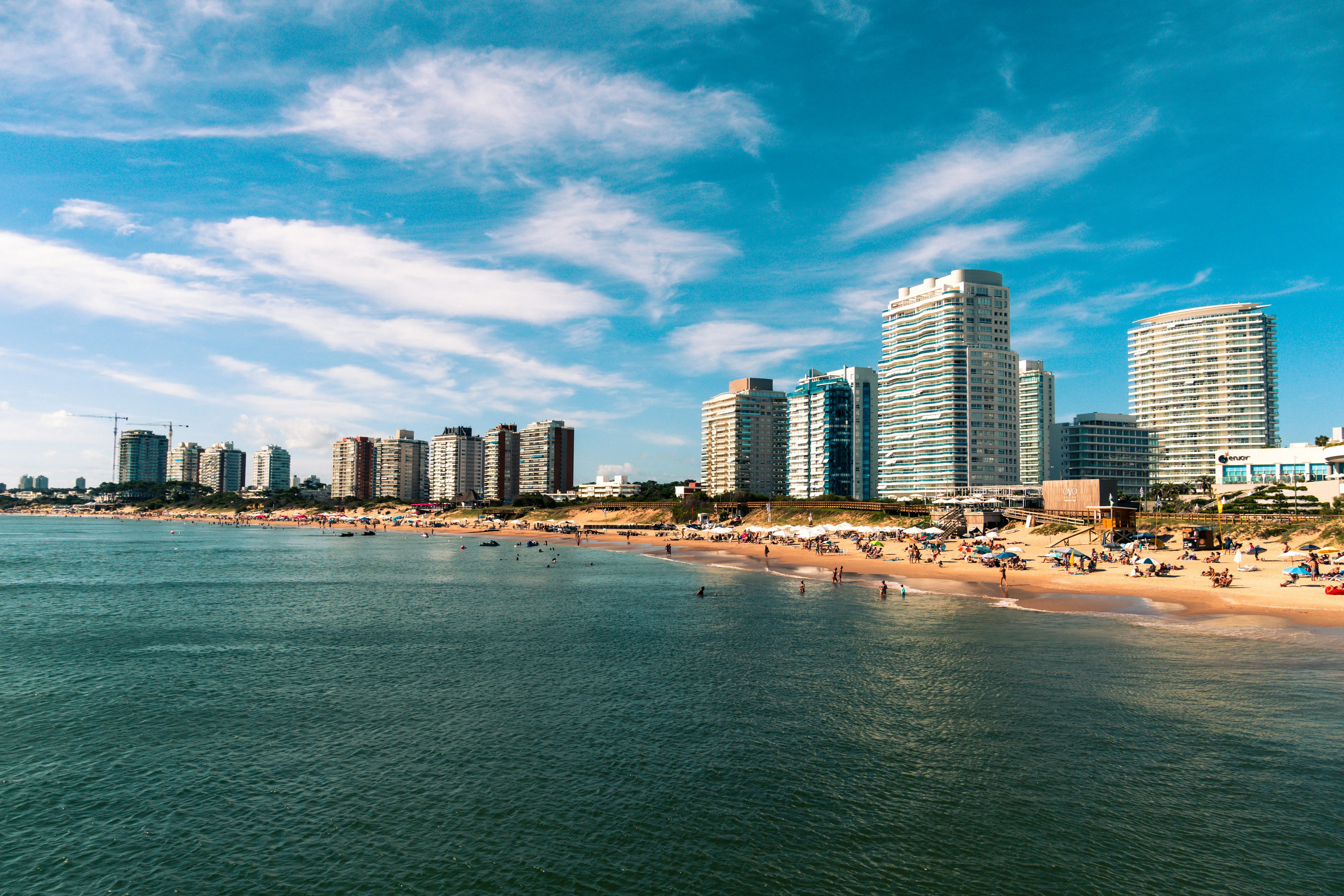
Discover a quiet country with serene beaches, historic cities, and a mate culture that invites you to enjoy every corner with absolute calm.
Quick Facts
- Capital
- Montevideo
- Language
- Spanish
- None
- Currency
- Uruguayan Peso (UYU)
- Best time to visit
- From October to March, coinciding with the southern spring and summer.
- Budget per day
- $50 - $150 per day
- Climate
- Temperate and humid climate with warm summers and cool winters, without extreme temperatures or dry seasons during the year.
- Connectivity
- good
- It is very simple to purchase a SIM card or eSIM at airports and local shopping centers.
- Electricity
- Type C / L (230V)
- Local transport
- acceptable
- Card usage
- widespread
- Tipping
- optional
🌎 Introduction
Nestled between the Río de la Plata and the Atlantic, Uruguay presents itself as a corner of slow rhythms and clear horizons. It is a place where time seems to pass with its own cadence, inviting one to observe daily life through its infinite waterfronts (ramblas) and its gently rolling countryside. The country’s geography, marked by green plains and coasts that change character according to the light of day, defines a serene environment that transforms subtly with the passing of the seasons.
Its identity is perceived in small gestures, such as slow talks over a mate or the sound of candombe drums echoing through the neighborhoods as evening falls. Between the elegance of its historic architecture and the simplicity of rural life, deep-rooted traditions such as the asado and viticulture coexist, reflecting a close and unpretentious hospitality. It is a destination that balances the tranquility of the interior with the cultural dynamism of its cities, always maintaining a human and welcoming scale.
🛡️ General safety
Uruguay is internationally recognized as one of the most stable and safe destinations in Latin America. For the traveler, this translates into a generally calm experience, where it is possible to enjoy both urban life and its famous coasts with a high level of relaxation.
General level of safety
- The level of safety in Uruguay is considered high compared to the regional average. The country enjoys solid political and social stability that minimizes the risks of civil conflict or serious unrest.
- The context for the traveler is one of tranquility; however, one should not let their guard down completely, especially in crowded areas, applying the usual common sense of any international trip.
- There are no significant terrorist threats, and violent crime rates affecting tourists are very low.
Crime and common risks
- The most frequent crime is non-violent theft, such as the theft of backpacks, cameras, or wallets due to carelessness. “Punguistas” (pickpockets) usually operate in crowded places.
- “Arrebatos” (snatching of bags or chains) can occur in central areas of large cities, although they are not the norm.
- It is recommended to avoid displaying high-value objects, such as expensive jewelry or large sums of cash, to avoid attracting unnecessary attention.
- Scams against tourists are uncommon, but it is always advisable to verify prices on restaurant menus and agree on the cost of services before hiring them.
Safety in cities and tourist areas
- In Montevideo, areas such as the Ciudad Vieja (Old City), the Centro, and the Rambla are safe during the day. However, after nightfall, some parts of the Ciudad Vieja and the port area can become lonely, so it is recommended to travel by taxi or private transport.
- In beach resorts like Punta del Este, Cabo Polonio, or Piriápolis, safety is very high, especially during the peak summer season. Even so, it is advised not to leave belongings unattended on the beach sand.
- Public transport in cities is generally safe, but it is wise to watch your belongings on buses (called “ómnibus”) during peak hours.
Transport safety
- Uruguay drives on the right, just like most countries in the Americas and Europe.
- Main roads are in good condition, although secondary routes may have poor lighting at night. It is recommended to drive with caution after dark due to the possible presence of loose animals in rural areas.
- Taxis are safe and regulated; they have taximeters. Private transport applications such as Uber or Cabify also operate normally in major cities.
- The use of seat belts is mandatory for all vehicle occupants, and there is a zero-tolerance policy for alcohol while driving.
Natural and climatic risks
- Uruguay does not present risks of earthquakes, hurricanes, or volcanic eruptions. It is a country with a very stable geography.
- The main meteorological risks are severe storms or intense winds (locally known as “pamperos” or “sudestadas”), which can cause localized flooding or occasional fallen trees.
- During the summer (December to March), the ultraviolet radiation index is very high. The use of high-factor sunscreen is recommended, as well as avoiding direct sun exposure during the central hours of the day to prevent serious burns.
Local legislation and norms
- Uruguayan legislation is modern and liberal. It is important to know that while the consumption and sale of cannabis are regulated by the State, legal purchase in pharmacies is reserved exclusively for registered Uruguayan residents. Cannabis tourism is illegal, and selling to foreigners can lead to sanctions.
- Alcohol consumption in public spaces is not prohibited, but disruptive behavior under its influence can be grounds for police intervention.
- Failure to comply with traffic rules leads to high fines that can be claimed even after leaving the country if a vehicle has been rented.
Safety for specific groups
- Solo female travelers: Uruguay is a safe destination for women traveling alone. There are no restrictive dress codes, and respect toward women is the general norm, although the logical precautions of not walking alone in isolated areas at night apply.
- LGTBIQ+ travelers: The country is a pioneer in civil rights and is considered one of the most friendly and respectful destinations in the world for this group. Equal marriage is legal, and discrimination is punishable by law.
- Traveling with children and the elderly: Infrastructure is adequate, and Uruguayan society is very hospitable toward families. Medical services are of high quality in case of need.
Emergencies and assistance
- The unique emergency number for Police, Fire, and Ambulance is 911.
- Cities have a wide network of public and private health centers. It is always recommended to travel with private medical insurance, as the costs of medical care for foreigners in private clinics can be high.
- The Uruguayan police are known for being honest and helpful. In case of theft, you should go to the nearest police station (seccional) to file a report, a document that will be essential for any insurance claim or replacement of documents at consulates.
”> Tip: When enjoying the Montevideo Rambla or the beaches, avoid leaving your mobile phone or backpack on the ground behind you while watching the sunset; always keep your belongings within your field of vision.
📝 Entry requirements
To organize a trip to Uruguay, it is essential to keep in mind that the primary international identification document is a valid passport. It is generally recommended that this document has sufficient residual validity from the date of arrival in Uruguayan territory. In most cases, visitors traveling for leisure or tourism do not require a prior visa, allowing a stay that usually extends up to 90 calendar days.
During the entry process at border posts, ports, or airports, migration personnel may request additional information to verify the nature of the trip. It is common to be asked to show a return ticket or a continuation of the trip to a third destination, as well as some proof of the financial funds available for maintenance during the visit. It is also common to be asked about the planned accommodation for the first nights of the stay in the country.
Regarding customs regulations, there are preventive controls to avoid the entry of products that could affect agricultural health. Generally, access is restricted for fresh food, seeds, or unprocessed artisanal products of animal or vegetable origin. Personal use items, such as clothing and electronic devices for personal use, are usually tax-free, while the transport of certain medications must be duly justified with medical documentation if it concerns specific treatments or high quantities.
Regarding health conditions, mandatory vaccination requirements are not usually applied in a generalized manner for international travelers. However, it is considered good practice to review general health recommendations before departing and to have international medical insurance with broad coverage. This type of protection makes it easier to manage any health assistance that might be required during the stay, ensuring a calmer experience for the traveler.
- Essential documentation: Passport with recommended minimum validity at the time of entry.
- Stay permit: Generally granted for up to 90 days for standard tourist purposes.
- Visas: Exemption for a wide variety of international nationalities for short-term trips.
- Departure checks: Possible request for a return ticket or departure to another country.
- Financial resources: Advisability of proving economic solvency for the intended period of stay.
- Phytosanitary control: Significant restrictions on the entry of organic products, plants, and unprocessed foods.
- Health assistance: Recommendation to have travel insurance with broad medical protection coverage.
🏥 Basic health considerations
Uruguay has one of the most solid and advanced health systems in the region, so you can travel with considerable peace of mind. You will find a care network divided between the public sector and private centers, locally known as mutualistas. Medical quality is very high, especially in Montevideo, where the most reputable specialists are concentrated. Health personnel usually speak very clear Spanish and, in many cases, you will also be able to communicate in English in private centers in the most touristy areas. However, you must keep in mind that private medicine for foreigners has a high cost, so any simple consultation or intervention could affect your travel budget.
Although it is not a strict legal requirement to enter the country, taking out travel medical insurance is highly recommended. Ideally, your policy should have broad coverage that includes hospitalization, diagnostic tests, and medical repatriation if necessary. Having this support will allow you to directly access the best private clinics without having to pay large sums of money upfront, which will give you great peace of mind while you explore its beaches or its inland towns.
Regarding vaccines, there are none that are mandatory to enter Uruguayan territory. By having your routine vaccination schedule up to date, the one we all usually follow from childhood, you will be more than protected. There are no endemic tropical diseases that require specific preventive treatments before flying, so you will simply have to worry about enjoying your stay.
If you follow a specific treatment, you will find that it is very easy to travel with your medicines as long as you carry them in their original packaging. It is very important that you bring the prescription or a medical report explaining your situation, especially if you need to buy controlled medication at local pharmacies or to avoid any questions at customs controls. Pharmacies in Uruguay are usually very well-stocked, but having your documentation at hand will make things much easier if you run out of supplies.
The most common health risk you will encounter in Uruguay is related to the weather, specifically the sun. Ultraviolet radiation is usually very intense in this part of the world, even on days when the sky appears overcast. It is essential to use high-factor sunscreen and to stay constantly hydrated. In more rural areas or during the summer, you might encounter mosquitoes, but with a good repellent, you will avoid any discomfort. There are no altitude risks, as the country’s terrain is mostly flat or with gentle hills.
Regarding hygiene and food, you can be very relaxed. Tap water is potable in almost the entire country, allowing you to drink it or wash fruit safely. Hygiene standards in restaurants are quite rigorous, so you will be able to try the famous asado or dishes from gastronomic fairs with total confidence. You will find a very clean and orderly country in this regard, which greatly facilitates the life of the tourist.
For any medical emergency situation, the phone number you should know is 911, which centralizes all emergencies. There is also the number 105, which is specific for public health ambulances. In urban areas and tourist centers like Punta del Este or Colonia, the emergency care service is fast and very professional.
As a final tip, it will be very useful to carry a small basic first-aid kit, such as bandages for walks or some common painkiller. Do not forget to always carry a copy of your identity document and the contact details of your medical insurance written down in your phone or on paper. If you stay hydrated and protect yourself well from the sun, you will find that your only concern will be choosing which place to visit the next day.
🚌 Transport within the country
The most common way to move around Uruguayan territory is through the use of buses and rental cars. Given the country’s geography and the absence of a subway network or frequent domestic flights between cities, road transport is the backbone of mobility. The long-distance bus service connects the capital with practically all points in the interior, offering a wide network that allows reaching the main points of interest directly.
Moving around the cities, especially in the capital, is easy thanks to clear signage and the presence of large terminals that centralize departures to the rest of the country. Tickets are usually purchased at the stations themselves or, in the case of urban routes, directly upon boarding the vehicle. The predominant language is Spanish, which facilitates communication with transport personnel to consult about specific routes or stops.
There is a notable difference between mobility in metropolitan areas and rural zones. In major cities, the frequency is constant and coverage reaches almost all neighborhoods. However, in rural environments or small towns, public transport availability is much lower. For this reason, many travelers consider that the use of a private vehicle is the most balanced option for exploring natural landscapes or remote locations without depending on limited schedules.
Taxi services and other shared transport platforms are widespread in urban centers and are considered a comfortable option for occasional trips. These vehicles operate in a regulated manner and are easy to locate at specific stands or via mobile applications. In general, the land transport system stands out for its reliability and punctuality, providing a calm travel experience because the distances between points of interest are not usually excessively long.
Although passenger trains and domestic flights are not common means of transport for tourists within Uruguay, the ferry is a relevant means for connection with the neighboring region, although its use is more specific for crossing river borders. The general feeling of the traveler is that of a functional transport system that allows for safe travel across the country, provided that trips to less populated areas are planned in advance.
Tip: It is advisable to always carry some cash for paying for tickets on urban buses or in small towns, as electronic payment methods might not be available in all vehicles.
🤵 Culture and etiquette
In daily interactions, a friendly and close attitude prevails. The standard greeting among acquaintances, and even when being introduced in informal settings, usually consists of a single kiss on the cheek, regardless of the people’s gender, although in professional contexts a handshake is more frequent. It is common for conversations to take place in a moderate tone of voice, as discretion and respect for others’ space in public places are valued.
Uruguayan society tends to be egalitarian, so treatment is usually simple and not very hierarchical. Although the use of “usted” (formal you) is reserved for highly formal situations or for addressing elderly people as a sign of deference, the use of “vos” (informal you) is the most frequent in daily life. Modesty is especially appreciated, and ostentation or excessively noisy behavior that might disturb the calm of the surroundings is not usually viewed favorably.
Regarding punctuality, there is a clear distinction depending on the context. In professional appointments or official procedures, the traveler is expected to be punctual. However, in social invitations to private homes or informal gatherings, times are usually more flexible, and arriving a few minutes after the agreed time is considered normal. When visiting a home, it is a gesture of courtesy to bring a small gift, such as pastries or something sweet to share.
During meals, the sobremesa (table talk) is a deeply rooted custom; the time spent talking quietly after finishing the dishes is highly valued. In gastronomic establishments, it is customary to leave a tip of about ten percent of the total bill if the service has been satisfactory. Likewise, the consumption of mate is an omnipresent social practice that symbolizes hospitality; if invited to participate, it is enough to simply say thank you if you prefer not to try it or when finishing your turn in the round.
Respect for local traditions and national identity is fundamental for smooth coexistence. This includes showing consideration toward national symbols, sporting passions, and historical memory sites. Maintaining an attitude of active listening and avoiding constant comparisons with other places greatly facilitates integration and good understanding with local residents during the stay.
Tip: To show respect when sharing the traditional drink in a group, it is important to say “gracias” (thank you) only when you no longer wish to drink more, thus indicating that you are returning the container and declining further turns.
🍛 Typical gastronomy
The gastronomy of Uruguay is defined mainly by its close link with livestock production and a strong heritage of European immigration, especially Spanish and Italian. The central element of the Uruguayan table is beef, internationally recognized for its quality. Cooking over embers is not just a technique, but a social act that brings together families and friends, especially during weekends around the figure of the asado.
Beyond meat, Mediterranean influence is very visible in the regular consumption of pasta and pizza. It is very common for families to gather on Sundays to eat artisanal pasta, a deep-rooted tradition that remains alive in most homes and restaurants. In the realm of sweet flavors, dulce de leche is the star ingredient, present in most desserts, cakes, and daily snacks.
Regarding eating habits, the Uruguayan rhythm is usually slow. Breakfast is often light, while lunch and dinner are the main meals. A distinctive cultural feature is the consumption of mate, an infusion of yerba mate that Uruguayans drink at any time of the day, usually carrying their thermos and container in the street, parks, and workplaces. It is a symbol of hospitality and companionship that defines the country’s identity.
For those visiting local restaurants, it is useful to know that dinner times are usually late, generally starting from 9:00 PM. Regarding etiquette, it is customary to leave a 10% tip of the service value, although it is not mandatory. Establishments usually offer a relaxed and close atmosphere, where food is enjoyed without haste, respecting the importance of the “sobremesa.”
| Dish | Description | Main ingredients | Where to try it | Tip |
|---|---|---|---|---|
| Asado | Various cuts of meat cooked slowly on a wood-fired grill. | Beef, coarse salt and, optionally, offal. | Steakhouses (parrilladas) in markets and restaurants across the country. | Accompany it with chimichurri sauce for a more traditional flavor. |
| Chivito | A complete and substantial sandwich, considered the national dish. | Beef tenderloin, ham, cheese, egg, lettuce, and tomato. | Bars, food carts, and specialized restaurants. | There is a “plated” (al plato) version if you prefer to avoid the bread. |
| Pasta with Caruso sauce | A pasta dish with a creamy sauce originally created in Uruguay. | Heavy cream, ham, mushrooms, cheese, and meat extract. | Italian-influenced restaurants and pasta houses. | It is recommended to try it with meat-filled “cappelletti.” |
| Tortas fritas | Traditional fried dough usually consumed as a snack. | Wheat flour, beef fat, water, and salt. | Street stalls in parks, plazas, and neighborhood fairs. | Try them on a cloudy or rainy day to experience the local tradition. |
| Milanesa | Thin meat fillet, breaded and fried until golden. | Beef or chicken, breadcrumbs, egg, and garlic. | Neighborhood bars and home-style restaurants. | The “Napolitana” version includes ham, cheese, and tomato sauce on top. |
📷 Areas and places to visit
Uruguay offers a variety of landscapes that combine the calm of its coasts with the historical richness of its urban centers. In the capital, Montevideo, the tour usually begins in the Ciudad Vieja (Old City), a neighborhood where colonial buildings, art galleries, and highly relevant museums like the Torres García Museum or the National Museum of Visual Arts coexist. Walking along the Rambla, the extensive promenade that borders the Río de la Plata, allows one to observe the social dynamics of the city while enjoying the horizon. In this city, the Mercado del Puerto stands out as a meeting point to see the iron architecture characteristic of the 19th century and the local gastronomy.
To the west lies Colonia del Sacramento, one of the oldest and best-preserved towns in the region, declared a World Heritage Site. Its cobblestone streets and dim lighting transport the traveler to past eras, showing a unique mix between Portuguese and Spanish colonial architecture. The Lighthouse, the ancient walls, and the Calle de los Suspiros (Street of Sighs) are essential points of interest for understanding the strategic history of this area. The tranquility breathed in its squares offers a notable contrast to the pace of more modern cities.
Following the coastline eastward, the landscape transforms upon reaching Punta del Este. This area is known for its extensive beaches, divided between the serenity of Playa Mansa and the waves of Playa Brava. In its surroundings, the Punta Ballena area houses Casapueblo, an iconic sculptural building that functions as a museum and art workshop. In addition to the leisure offer, the region allows for excursions to natural environments such as Isla de Lobos, home to one of the largest sea lion colonies in the world.
For those seeking more direct contact with untouched nature, the department of Rocha offers a different experience. Enclaves like Cabo Polonio, a small village surrounded by gigantic dunes and without conventional electricity, invite a simpler and slower lifestyle. For its part, Punta del Diablo maintains its essence as a fishing village with colorful houses and local craft fairs. These destinations are ideal for hiking through wetlands, visiting the Santa Teresa Fortress, or simply observing the local wildlife in its natural state.
The interior of the country reveals a facet linked to rural tradition and activities. In departments like Tacuarembó, one can delve into the figure of the gaucho and visit museums that explain the national identity. Toward the northern littoral, the cities of Salto and Paysandú are frequented for their thermal water complexes, which provide spaces for relaxation by the Uruguay River. In the field of industrial heritage, the city of Fray Bentos preserves the facilities of an old meat processing complex, now transformed into a museum that details the impact this industry had globally.
Tip: You cannot miss visiting Colonia del Sacramento, the most emblematic place in the country.
✈️ Best time to travel
Uruguay is characterized by a temperate climate and well-defined seasons that allow planning a trip according to each visitor’s preferences. The coastal strip reaches its greatest dynamism during the warmest months, when the beaches become the main draw, while the rural interior and historic cities like Colonia del Sacramento offer a more serene and stable atmosphere during the rest of the year.
The choice of the ideal time will depend on the type of experience being sought. While the months of higher temperature are ideal for enjoying the sea and outdoor social life, the intermediate seasons, such as spring and autumn, are highly recommended for those who prefer to go on cultural routes or visit wineries without the crowds typical of the summer period.
| Season | Months | Typical weather | What to expect | Tourist influx |
|---|---|---|---|---|
| Spring | Sep – Nov | Mild and pleasant temperatures, with moderate winds. | Green landscapes, flowering in the countryside, and wildlife watching in nature reserves. | ⭐⭐ (Medium) |
| Summer | Dec – Feb | Warm and humid, with clear skies and sea breezes. | Peak beach season, cultural festivals, and high activity in the resorts. | ⭐⭐⭐ (High) |
| Autumn | Mar – May | Cool and stable, with sunny days and fresh nights. | Harvest time in wine regions and ochre colors in parks and avenues. | ⭐⭐ (Medium) |
| Winter | Jun – Aug | Cold and windy, with occasional rain and gray skies. | Thermal tourism in the northern littoral, local gastronomy, and activities in museums and theaters. | ⭐ (Low) |
🗣️ Basic Vocabulary
Although Spanish is spoken in Uruguay, there are certain local idioms and expressions that will be very useful during your stay. Knowing these words not only facilitates communication in daily situations, such as buying in a shop or asking for directions, but also helps generate a more fluid and close interaction with residents.
The key lies in simplicity and courtesy. Integrating some of these terms into your daily conversations will allow you to move more naturally through the country and better understand the context of what is happening around you.
- Ta: It means “okay,” “it’s fine,” or “agreed.” It is the most common expression used to confirm that something has been understood.
- Bo: An informal filler to get someone’s attention, similar to “hey.” It is used mainly in contexts of high trust.
- Buen día: It is the standard greeting in the morning. In Uruguay, cordiality is highly valued, as is this gesture of courtesy when entering any place.
- Chau: The most common and widespread way to say goodbye or see you later in almost any situation.
- Permiso: It is used to ask for passage in crowded places or before entering a shop or room. It is an essential rule of politeness.
- Gurises: This is the local term used to refer to children or a group of young people.
- Por favor: An essential expression for requesting any type of help, service, or information in a respectful manner.