


Madagascar
Explore a unique biodiversity with millenary baobabs, fascinating lemurs, and pristine coasts bathed by the crystal-clear waters of the Indian Ocean on an unforgettable journey.
Quick Facts
- Capital
- Antananarivo
- Language
- Malagasy
- French
- Currency
- Malagasy Ariary
- Best time to visit
- From May to October during the dry season
- Budget per day
- $30 - $120 per day
- Climate
- Tropical climate on the coasts, temperate in the inland highlands, and semi-arid in the southern regions.
- Connectivity
- low
- Easy to acquire at the airport and local stores
- Electricity
- Type C / E (220V)
- Local transport
- limited
- Card usage
- cash is used more
- Tipping
- optional
🌎 Introduction
Separated from the African continent by the Mozambique Channel, this large island in the Indian Ocean displays its own identity, perceived in the reddish hue of its earth and the singular silhouette of the baobabs cutting across the horizon. It is a place where time seems to move at a different pace, marked by the alternation of seasons that transform the highlands into a mosaic of green rice paddies and the southern forests into arid and thorny settings.
Daily life in Madagascar revolves around traditions that closely link communities with their environment and history. While traveling through its villages, it is common to find local markets permeated with the aroma of vanilla and spices, or to witness scenes of herders leading zebu cattle along dusty roads under the evening light. This heritage, which intertwines diverse roots, is reflected both in a simple rice-based gastronomy and in the calm character of its inhabitants, forming a cultural mosaic as varied as its own landscapes.
🛡️ General safety
Madagascar is a fascinating destination that offers a unique experience for nature and adventure lovers. In general terms, the security level for tourists is considered medium risk, similar to that of other developing countries. Most visits pass without incident, provided that basic behavioral guidelines are followed and an attitude of common sense and precaution is maintained.
The country is known for the hospitality of its people; however, local socioeconomic conditions make it necessary to be attentive to the environment. The context for the traveler is that of a country with limited infrastructure where prevention is the best tool to guarantee a pleasant stay.
Crime and common risks
Crime affecting tourists is, for the most part, non-violent in nature. However, it is advisable to be aware of the most common risks:
- Pickpocketing and opportunistic theft: Common in crowded markets, transport stations, and very touristy areas. Pickpockets usually act in small groups.
- Minor scams: Situations of overcharging in unregulated services or guides who do not possess official accreditation can occur.
- Nighttime assaults: Although not the norm, cases of robbery with intimidation have been reported in isolated areas or poorly lit streets after dark.
- Bag snatching: In some cities, it is recommended not to carry bags hanging from one shoulder near the road to avoid snatching from moving vehicles.
Safety in cities and tourist areas
Safety varies significantly between the capital and coastal areas or national parks:
- Antananarivo (Tana): This is the area where the most caution should be exercised. Neighborhoods like Analakely or the vicinity of Independence Avenue require constant surveillance of belongings. It is strongly recommended to avoid walking around the city at night, even for short distances.
- Coastal areas and Nosy Be: Tourist enclaves like the island of Nosy Be are generally safer, although they are not exempt from thefts on beaches if items are left unattended.
- Practical recommendations: Always use the hotel safe to store passports and valuables, carrying only a copy of the document and the necessary cash for the day.
Transport safety
Transport in Madagascar presents specific challenges due to the state of the infrastructure:
- Taxi-brousse: This is the most common public transport. Although economical, vehicles are often overloaded and maintenance can be poor. Traveling in them at night is not recommended due to the lack of road lighting and potential risks of assaults on isolated routes.
- Urban taxis: They are a safe option. It is essential to agree on the price before starting the journey, as most do not use a taximeter.
- Rental vehicles: The most common and recommended option is to rent a car with a local driver, as they know the road conditions and local driving customs.
- Driving: In Madagascar, people drive on the right. Main roads (RN) are usually in acceptable condition, but secondary roads may require 4x4 vehicles. Driving at night outside of cities is totally discouraged.
Natural and climatic risks
Madagascar’s climate can condition travel safety and mobility:
- Cyclones: The cyclone season runs between January and March. During these months, torrential rains, floods, and road closures can occur, especially on the east coast.
- Extreme heat: In southern and western areas, temperatures can be very high. It is vital to maintain good hydration and sun protection.
- Prevention: If traveling in the rainy season, always check local weather forecasts and road conditions before starting a long journey.
Local legislation and norms
It is fundamental to respect the laws and, above all, the social customs of the island:
- The “Fady”: These are local taboos or prohibitions that vary by region and ethnicity. They can refer to sacred places, foods, or behaviors. It is very important to always follow the instructions of local guides so as not to offend the community.
- Drugs: The possession, use, or trafficking of narcotic substances is punishable by severe prison sentences and high fines.
- Photography: It is forbidden to photograph military installations, government buildings, or security personnel. Always ask for permission before photographing local people.
Safety for specific groups
- Women travelers: Madagascar is a safe destination for women, although it is recommended to avoid walking alone in isolated places or deserted beaches, especially at sunset. Dressing discreetly helps to avoid unwanted attention.
- LGTBIQ+ travelers: Although homosexuality is not illegal, Malagasy society is conservative. Public displays of affection (for both same-sex and opposite-sex couples) are not common and can be uncomfortable for locals. Discretion is recommended.
- Children and elderly: The main risk is health-related (mosquito-borne diseases or digestive problems). It is essential to have comprehensive travel insurance that includes air evacuation.
Emergencies and assistance
Emergency services can be slow outside the main cities due to the country’s geography:
- Police / Gendarmerie: 117 or 118.
- Firefighters: 124.
- Medical assistance: In case of a serious incident, the ideal is to contact the nearest private medical center or the insurance company directly.
- Recommendation: Always keep the contact of your embassy or consulate and your travel insurance contact details at hand.
Tip: Before visiting any rural area or natural park, always consult with your guide about the local “fady” of the area to avoid uncomfortable situations and show respect for Malagasy traditions.
📝 Entry requirements
To plan a trip to Madagascar, it is essential to take into account certain aspects related to documentation and health. Most international travelers need to present a passport with a minimum validity that usually extends to six months after the planned date of departure from Malagasy territory. Likewise, it is convenient for the document to have at least two blank pages for the entry and exit stamps imposed by the border authorities.
Regarding stays for leisure purposes, obtaining a tourist visa is usually necessary. This permit can commonly be processed at the main points of entry to the country, such as international airports, or through online management systems in advance. The duration of the stay allowed is usually subject to different time segments, commonly reaching a maximum of ninety days depending on the fee paid and the type of permit requested.
During the entry process, immigration authorities may request the presentation of a return ticket or departure to a third destination to confirm the intention to leave the country. In some cases, proof of sufficient financial funds to cover expenses during the stay on the island might also be required. Controls at border posts are usually standard, focusing on verifying the identity and the purpose of the visitor’s trip.
Regarding customs regulations, there are restrictions on the introduction of certain products. It is recommended to carry personal-use medications with their corresponding medical prescription and always in their original packaging to avoid confusion. The transport of fresh food, plants, or products derived from protected species is usually strictly regulated. As for currencies, it is common that the entry of high amounts of foreign currency must be declared if they exceed the limits established by local regulations.
From a health point of view, it is important to find out about health recommendations before departure. Although not universally required for all visitors, the yellow fever vaccine is usually a requirement for those travelers who have transited through or come from areas where the disease is endemic. It is also common for international health services to recommend preventive measures against malaria, as well as other vaccines related to food and environmental hygiene depending on the area planned to be visited.
- Necessary documentation: Passport with minimum validity of six months and free pages.
- Visa management: Usually available upon arrival at the airport or electronically.
- Length of stay: Tourist stays that usually range between 30 and 90 days.
- Exit checks: Possible request for a confirmed return ticket.
- Customs regulations: Control over pharmaceuticals, currencies, and items of natural or animal origin.
- Health requirements: Yellow fever vaccination certificate depending on the country of origin and recommendations against malaria.
- Solvency: Authorities may request proof of financial means for the trip.
🏥 Basic health considerations
When you prepare for your trip to Madagascar, you will see that the healthcare system presents significant contrasts. In the capital, Antananarivo, you will find some private clinics that offer acceptable standards of care for minor problems or stabilization. However, in the rest of the country, infrastructure is very basic and limited. Health personnel usually speak French in addition to Malagasy, so it will be easier for you to communicate if you have basic notions of that language. Costs in private centers for foreigners can be high, so payment in advance is required.
Hiring travel medical insurance is not just a recommendation, but an absolute necessity before landing on the island. You will see that any serious health problem will require a transfer to another country with better infrastructure. Your policy must mandatorily include medical repatriation and medical evacuation in a medicalized plane, in addition to broad coverage for hospitalization expenses.
Regarding vaccines, currently there is no vaccination obligation to enter the country, unless you come from an area where yellow fever is endemic, in which case they will ask for the international certificate. Nonetheless, it is advisable for you to be up to date with the usual vaccination schedule including tetanus, diphtheria, and hepatitis A. For a trip of this type, vaccination against typhoid fever is also frequently recommended, as hygiene conditions can vary according to the area you visit.
If you need to carry your own medication and first aid kit, you will see it is the most sensible thing to do, as local pharmacies may have shortages or products of questionable quality. We recommend traveling with a kit that includes pain relievers, disinfectants, wound care material, and a broad-spectrum antibiotic. If you take chronic medication, you should carry a sufficient quantity for the entire trip and always accompanied by the translated medical prescription or the corresponding report to avoid problems at customs checks.
The most frequent health risks are related to the tropical environment. Malaria is present in almost the entire country throughout the year, so you will have to consult about preventive medication before leaving. You will also notice that the sun is very intense and the heat can cause dehydration quickly, so the use of sunscreens and insect repellents with high DEET concentration will be your best ally to avoid bites from mosquitoes that transmit other diseases like dengue.
About water, food, and hygiene, the golden rule you will follow is to consume only bottled water and ensure that the seal is intact. You will avoid ice in drinks and salads or fruits that you cannot peel yourself. You will find that street food has a tempting smell, but it is wise to be cautious and choose places where you see that food is cooked at high temperatures and served hot to avoid digestive disorders.
In case of medical emergencies, the general number you can dial is 124 to contact private ambulance services in the capital, although the service is not comparable to that of Western countries. In remote areas, urgent care is almost non-existent, so it is most common that you will have to manage your own transport to the nearest health center or clinic.
As final practical recommendations, we suggest visiting a travel medicine center weeks before your departure. During your stay, always maintain good hand hygiene using hydroalcoholic gels before eating. If you notice fever, strong muscle pains, or persistent gastric problems after returning home, you should inform your doctor that you have been in an area with the presence of malaria.
🚌 Transport within the country
Moving around Madagascar represents a fundamental part of the travel experience, marked by the island’s singular geography. The most common means of transport for long-distance travel is the taxi-brousse, a network of shared vans that connects the main towns. Due to the large size of the territory and the state of some infrastructure, internal flights are a common resource for travelers who wish to save time between distant regions. In certain coastal or river areas, boats and ferries become the only mode of access to certain natural destinations.
The use of public transport can be complex for the international visitor due to scarce signage and the fact that ticket purchasing is usually done in person at stations or departure points. Although French is useful for communicating in urban centers and stations, the logistics of journeys are not always intuitive. Punctuality is not a predominant characteristic, as many land services do not have a fixed schedule and only start the journey when the vehicle is completely full, which requires a patient attitude from the tourist.
There is a notable difference between mobility in large cities and in rural areas. In hubs like the capital, the taxi is the most comfortable and frequent means for visitors, along with simpler urban transport services. In rural areas, on the other hand, roads are often in precarious conditions, which significantly slows down travel. In smaller or flatter localities, the use of the pousse-pousse, a local human or mechanically powered means of transport for short distances, is very common.
The general sensation of comfort on road journeys is basic. Vehicles are usually old and the available space is limited, often shared with various goods. Therefore, the reliability of arrival times is low, making it necessary to plan for much longer journeys than usual for distances that, in other contexts, would be brief. Travel requires open planning and the capacity to adapt to the country’s local rhythms.
Tip: It is recommended to organize long-distance journeys in advance and prioritize traveling during daylight hours for greater safety and visibility.
🤵 Culture and etiquette
Malagasy society is founded on the concept of fihavanana, a cultural value that prioritizes social harmony, solidarity, and community ties. In daily interactions, greetings are a key piece of courtesy; it is common to dedicate a few moments to exchanging kind words before making an inquiry or starting a commercial transaction. Respect for elders and local authority figures is fundamental in the social structure, so it is recommended to address them with special deference, especially in rural settings or small communities.
Regarding interpersonal communication, a soft tone of voice and a calm attitude predominate. Excessive displays of impatience or gestures of anger in public are not usually well-received, as the ability to remain calm and composed in the face of the unexpected is valued. This rhythm of life is often summarized in the expression mora mora, which reflects a perception of time that is more flexible and relaxed than in other cultures. Therefore, punctuality can be interpreted elastically, especially in informal contexts or in transport, which requires a patient attitude from the visitor.
Life in the country is deeply linked to respect for ancestors and traditions, manifesting through the fady. These are systems of taboos or prohibitions that can affect places, foods, days of the week, or specific behaviors according to the region or clan. When visiting spaces considered sacred, such as tombs, certain trees, or natural spots, it is essential to follow the instructions of local guides and show a discreet and respectful attitude. In the area of dress, the use of clothing that covers shoulders and knees is appreciated when visiting places of worship or participating in ceremonies.
In social interactions and meals, physical contact is usually moderate, generally limited to a formal handshake. If one has the opportunity to visit a village, it is a gesture of courtesy to present oneself first to the local leader or chef de quartier. Regarding customs in establishments, tipping is a common and well-valued practice in the tourism sector, functioning as a recognition of the effort and attention received from guides, drivers, and hospitality staff.
“Tip”: Before photographing people or participating in local activities, it is recommended to ask for permission and consult your guide about the specific fady of the place, as some local traditions may prohibit pointing at certain sites with a finger or bringing certain objects into sacred areas.
🍛 Typical gastronomy
The basis of nutrition in Madagascar is rice (vary), which is consumed in practically every meal of the day. For the island’s inhabitants, rice is not just a side dish, but the main component around which other ingredients, known generically as laoka, are organized. These complements can consist of meat, fish, legumes, or vegetables, depending on the region and seasonal availability. The flavors of Malagasy cuisine are usually mild and natural, frequently relying on ginger, garlic, onion, and tomato as the aromatic base for its stews.
In the interior of the country, zebu meat is the most valued and representative ingredient, present in celebrations and daily meals. On the other hand, in coastal regions, the diet transforms to give prominence to fresh fish and shellfish, which are often prepared with coconut milk. A curious characteristic of the Malagasy table is that, although the dishes are not usually spicy by origin, they are almost always served accompanied by sakay, a very strong chili paste presented in a separate container so that each diner can add it according to their preference.
Regarding social habits, meal times are usually early; lunch is habitually served at noon and dinner shortly after sunset. The simplest local establishments are called hotely, where homemade food is offered in a functional atmosphere. A very widespread drink is ranovola, an infusion made with the toasted rice that remains stuck to the bottom of the pot after cooking, which is served hot and is valued for its digestive properties. Etiquette in restaurants is relaxed, although discretion and respect for local preparation times are appreciated.
| Dish | Description | Main ingredients | Where to try it | Tip |
|---|---|---|---|---|
| Romazava | Traditional broth considered the national dish, composed of meat and green leaves. | Zebu meat, anamamy (bitter green leaves), and ginger. | Local cuisine restaurants in Antananarivo. | It is usually served very hot; it is ideal for tasting the authentic flavor of zebu. |
| Ravitoto | Thick stew with a greenish appearance and intense flavor very common in the highlands. | Crushed cassava leaves and pork meat. | Eateries and hotely in the central area. | Always accompany it with a generous portion of white rice to balance its texture. |
| Mofogasy | Small circular bread rolls served mainly during the beginning of the day. | Rice flour, sugar and, occasionally, coconut milk. | Breakfast street stalls in any city. | Consume them freshly made when they still retain their spongy texture. |
| Henakisoa sy Voanjobory | Traditional stew that combines meat with a very nutritious local legume. | Pork meat and bambara nuts (a round legume). | Markets and traditional restaurants throughout the country. | It is a substantial dish, perfect for a main meal at midday. |
| Koba | Traditional dessert or snack sold wrapped in banana leaves. | Rice flour, ground peanuts, and brown sugar or honey. | Local markets and street vendors at transport stations. | It is sold by the slice; look for the ones that have a dark and shiny color to ensure freshness. |
📷 Areas and places to visit
Madagascar presents itself to the traveler as a territory of marked contrasts, where biological and cultural diversity defines each of its regions. The journey usually begins in Antananarivo, the capital located in the central highlands. This city spreads over several hills and stands out for its traditional and colonial architecture, with the Rova of Antananarivo or Queen’s Palace crowning the highest peak. Walking through its streets allows one to observe the pulse of local life in its markets and understand the country’s history through its brick and wooden constructions.
Towards the south, the city of Antsirabe offers a calmer atmosphere, known for its thermal springs and the constant presence of pousse-pousse, colorful human-powered carts that are the traditional transport of the area. This region is the heart of the highlands, characterized by a landscape of terraced rice fields and green hills that recall the country’s agricultural heritage. It is a strategic point to understand the transition between urban customs and the slower pace of rural life.
The landscape changes drastically when heading towards the Isalo National Park. Here, sandstone formations from the Jurassic period create deep canyons, palm oases, and natural pools of crystal-clear water. It is an ideal environment for hiking routes that allow for a close observation of endemic flora and various species of lemurs. The aridity of the rocks contrasts with the vegetation that emerges at the bottom of the ravines, offering a visual experience very different from that of the eastern jungles.
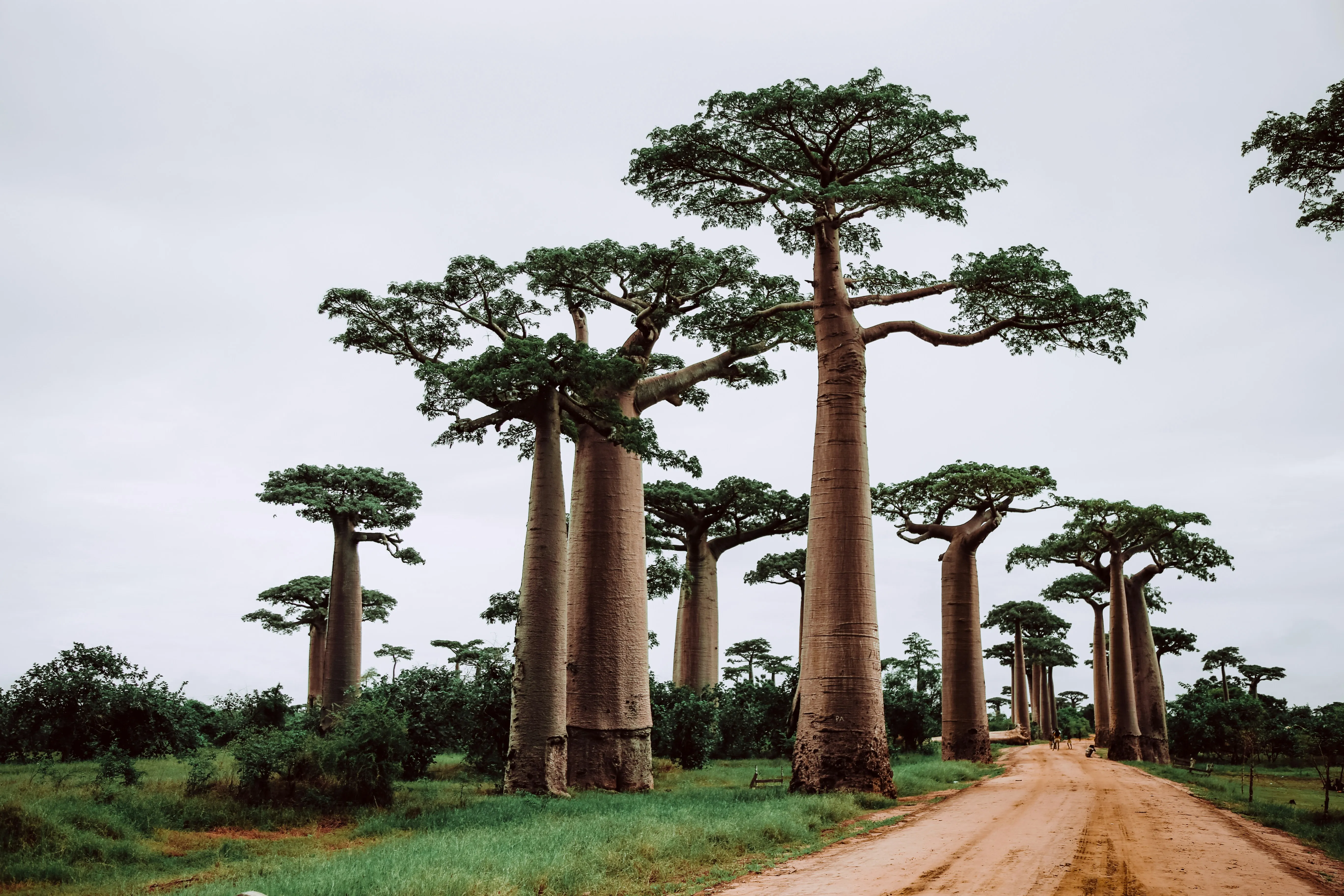
On the western coast, near the town of Morondava, lies one of the most internationally recognized spots: the Avenue of the Baobabs. These centenary trees with massive trunks line a dirt road, creating a singular image, especially during the hours of sunrise and sunset. Not far from there, the Tsingy de Bemaraha National Park presents a unique karst relief in the world, formed by sharp limestone needles that can be traversed via walkways and suspension bridges.
For those looking for contact with the humid tropical jungle, the Andasibe-Mantadia National Park is a mandatory stop. This dense forest is home to the Indri, the largest lemur, whose song echoes through the morning mist. The biodiversity here is dense and varied, with numerous species of orchids, chameleons, and birds inhabiting an ecosystem that seems to have stopped in time. It is an environment that invites calm observation and respect for the most pristine nature.
Finally, the coastal and island areas provide the more relaxed side of Madagascar. Nosy Be, in the northwest, is known for its ylang-ylang plantations and its calm waters, ideal for sailing and diving. On the opposite side, Sainte Marie Island or Nosy Boraha preserves a past linked to pirate stories and is a prominent place for humpback whale watching during certain months of the year. Both areas show a coastal culture influenced by the ocean, with fishing villages where the pace of life is marked by the tides.
Tip: You cannot miss visiting the Avenue of the Baobabs, the most emblematic place in the country.
✈️ Best time to travel
Madagascar has a tropical climate that divides the year mainly into two periods: a dry season and a rainy one. The choice of the ideal time to visit the island depends on the traveler’s priorities, whether to observe endemic fauna, visit national parks, or enjoy its coasts. Generally, the months that coincide with the period of lower precipitation allow for easier mobility through the country’s roads and trails.
During the stage of lower humidity, temperatures are cooler and access to natural reserves is optimal. On the contrary, the rainy season transforms the landscape into an environment of intense green and is the time of greatest activity for certain reptiles and amphibians, although it should be noted that rainfall can condition transport in the most remote areas.
| Season | Months | Typical weather | What to expect | Tourist influx |
|---|---|---|---|---|
| Spring | Mar – May | Transition from rains to dry; moderate temperatures. | Very green landscapes, flowing waterfalls, and flora in bloom. | ⭐⭐ Medium |
| Summer | Jun – Aug | Cool and dry; cold nights in the highlands. | Humpback whale watching and lemur spotting. | ⭐⭐⭐ High |
| Autumn | Sep – Nov | Warm and dry; gradual increase in humidity. | Lemur offspring, jacarandas in bloom, and excellent conditions for diving. | ⭐⭐⭐ High |
| Winter | Dec – Feb | Hot and very humid; risk of cyclones. | Lush vegetation, great activity of reptiles and orchids. | ⭐ Low |
🗣️ Basic vocabulary
Although French is an official language and is frequently used in the service sector, learning some expressions in Malagasy will be very useful during your stay. The inhabitants of Madagascar appreciate it when visitors try to communicate in their native language, which facilitates a closer relationship in everyday situations such as buying at a market, using public transport, or greeting upon arrival at an accommodation.
Having this small repertoire of words will help you move more fluently and show respect for the local culture, without the need to delve into complex grammatical rules. They are simple terms that you will notice are repeated constantly in the daily life of the island.
- Salama: Hello (general greeting).
- Misaotra: Thank you.
- Azafady: Please or sorry.
- Veloma: Goodbye.
- Eny: Yes.
- Tsia: No.
- Mora mora: Slowly or calmly (an essential expression that defines the pace of life in the country).
- Ohatrinona?: How much does it cost?