


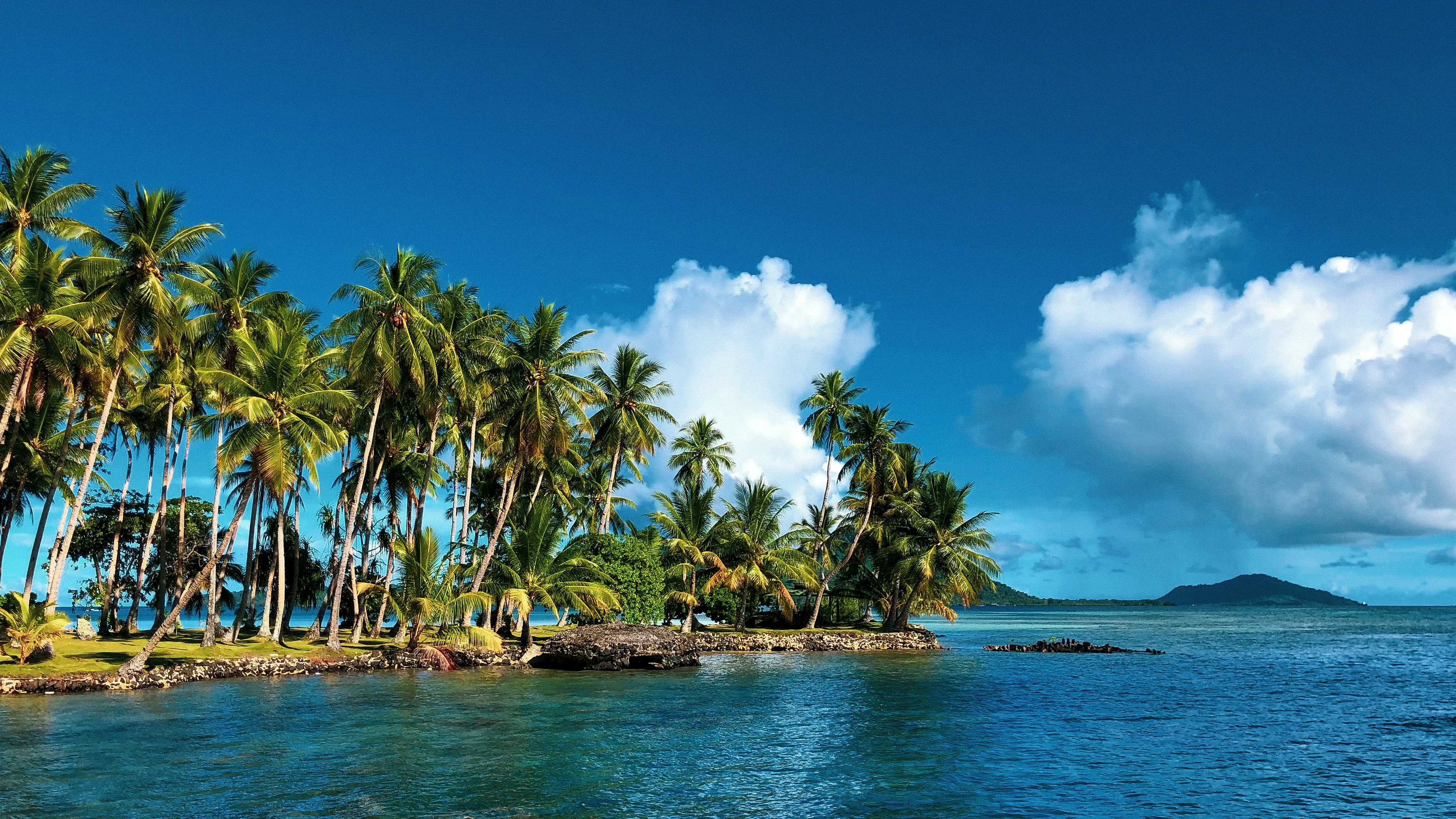
Micronesia
Pacific archipelago with coral atolls and archaeological ruins, ideal for lovers of diving, local culture, and pristine landscapes surrounded by turquoise waters.
Quick Facts
- Capital
- Palikir
- Language
- English
- Chuukese, Kosraean, Pohnpeian, Yapese
- Currency
- United States Dollar (USD)
- Best time to visit
- From December to April, coinciding with the driest season
- Budget per day
- $80 - $200 per day
- Climate
- Humid tropical climate with constant temperatures and abundant rainfall distributed throughout the year.
- Connectivity
- low
- Local SIM cards available at main telecommunications offices and some airports
- Electricity
- Type A/B (120V)
- Local transport
- limited
- Card usage
- cash is used more
- Tipping
- optional
🌎 Introduction
In the middle of the Pacific Ocean, where the map dissolves into small dots on the blue, lies an archipelago that holds one of the most particular identities in Oceania. The Federated States of Micronesia are spread across four main regions, each with its own rhythm and heritage. It is a place where time seems to be measured differently, marked by the sound of water on the reefs and the movement of boats that, for centuries, have connected its inhabitants with the immensity of the sea.
Walking through its lands means encountering a contrast between thick jungle and the traces of a millenary history. From the monumental stone structures of Nan Madol to the famous stone money pieces in Yap, culture manifests tangibly in daily life. Life is organized around the community and respect for an environment that alternates between periods of intense rain, which tint the landscape a deep green, and sunny days where fishing and gathering local fruits mark the activity in the villages.
The simple gastronomy, based on taro, coconut, and what the ocean offers every morning, reflects a way of understanding the world linked to natural resources. There are no great artifices; the essence of these islands resides in the continuity of their traditions, in the quiet hospitality of their people, and in that feeling of being in a territory where nature maintains absolute prominence. It is, in short, a mosaic of islands that allows a glimpse into a slow and authentic way of life.
🛡️ General Safety
The Federated States of Micronesia are, in general terms, a very safe destination for international travelers. Being a group of islands with small and closely-linked communities, the crime rate is low compared to other global tourist destinations. Most visitors enjoy a quiet and incident-free stay, provided that basic common-sense guidelines are followed and local culture is respected.
General safety level
- The safety rating for Micronesia is considered high, positioning it as a peaceful country where tourists are welcome.
- Compared to large international cities, the risk of suffering violent crimes is minimal.
- The context for the traveler is a relaxed atmosphere, although it is important to remember that infrastructure can be limited and the natural environment requires attention.
Crime and common risks
- The most common crime, though not frequent, is petty theft or opportunistic robbery in crowded areas or beaches.
- Isolated incidents of robberies in hotel rooms that do not have adequate security measures have been reported, so using safes is recommended.
- A risk rarely mentioned but real is excessive alcohol consumption in some areas during weekends, which can lead to verbal altercations. It is advised to avoid groups of people who appear to be under the influence of alcohol in poorly lit areas.
Safety in cities and tourist areas
- In urban centers like Kolonia (Pohnpei) or Weno (Chuuk), safety is good during the day. However, in Weno, it is recommended not to walk alone at night in peripheral areas.
- Tourist neighborhoods and diving areas are controlled and very safe environments.
- To move around peacefully, the ideal approach is to request information at your accommodation about which specific areas might be less recommended after dark.
Safety in transport
- Public transport is limited; the most common method is using shared taxis, which are usually safe and economical.
- If you decide to rent a vehicle, you should know that in Micronesia you drive on the right, although many vehicles have the steering wheel on the right side (imported from Japan), which requires extra attention.
- The condition of the roads varies considerably; many are narrow, lack lighting, and can have deep potholes or the presence of animals and pedestrians on the road.
- Transport between islands is done by boat or small plane. It is essential to verify that the vessels have life jackets and communication equipment before setting sail.
Natural and climatic risks
- The most relevant natural risk is the typhoon season, which usually occurs between the months of July and November, although they can form at any time of the year.
- Flash floods and landslides can occur after heavy rains, especially on high islands like Pohnpei.
- Extreme heat and high humidity are constant; the risk of dehydration and sunburn is high if precautions are not taken.
- It is recommended to follow the warnings of local authorities and consult weather forecasts regularly.
Legislation and local norms
- Micronesia has a very conservative and traditional culture. It is essential to dress modestly, especially outside of tourist resorts; on many islands, showing thighs (both for men and women) is considered offensive.
- Land ownership is private and sacred. Do not enter beaches or paths without permission, as you could be trespassing on private property; a small local fee is often required to access certain natural sites.
- Drug laws are strict, and possession or consumption carries severe prison sentences.
- Alcohol consumption is prohibited on some islands or specific communities (such as in certain areas of Chuuk), so it is advisable to find out before consuming outside of hotels.
Safety for specific groups
- Female travelers: Generally safe, but it is recommended to avoid walking alone in isolated places or deserted beaches at sunset to avoid unwanted attention. Dressing respectfully toward the local culture (covering shoulders and knees) significantly reduces any inconvenience.
- LGTBIQ+ travelers: Although there is no explicit legal criminalization in all states, society is deeply conservative and religious. Absolute discretion is recommended, and public displays of affection should be avoided to prevent uncomfortable situations or rejection.
- Travel with children and the elderly: It is a safe destination, but it must be taken into account that specialized medical services are limited. It is essential to travel with medical insurance that includes air evacuation.
Emergencies and assistance
- The general emergency number on most of the main islands is 911.
- Police and medical emergency services may have slow response times due to lack of resources and geographical difficulties.
- In case of an incident, the first thing to do is contact the local police and, subsequently, inform the corresponding embassy or consulate (which is often located in neighboring countries such as the Philippines or Guam).
Tip: Always carry a powerful flashlight and high-efficacy insect repellent with you; the lack of night lighting is common and mosquitoes can transmit local diseases such as dengue during rainy seasons.
📝 Entry Requirements
To organize a trip to the Federated States of Micronesia, the first step is usually to verify identity documentation. Travelers typically need a passport with sufficient validity, which must usually extend at least six months beyond the planned date of departure from the archipelago. In most cases, it is not necessary to arrange a tourist visa in advance for short stays, as this permit is usually provided simply at the time of arrival after completing the relevant immigration procedures at the points of entry.
The maximum duration allowed for standard tourist visits is usually thirty days, with the possibility of requesting extensions according to the needs of the trip and the visitor’s profile. It is common for control personnel to request proof that the traveler has a return ticket or continuation to another international destination, in addition to demonstrating that they possess sufficient financial funds to cover their stay independently without the need to engage in paid activities.
Controls at airports and access points are meticulous regarding the protection of the local ecosystem. There are customs restrictions that prevent the entry of products of animal or plant origin that are not properly processed, as well as certain fresh foods that could carry pests. Regarding personal use medications, it is recommended to carry the original translated prescription to avoid inconveniences, especially if it involves prolonged treatments or substances that require a clear medical justification.
Regarding health, there are usually no extraordinary health requirements for general entry, although it is recommended to have the basic vaccination schedule up to date. In specific situations, if the traveler has recently transited through areas where certain diseases are common, it may be necessary to present an immunization certificate. It is prudent to have travel insurance that offers broad medical coverage given the region’s particular geography and the distance between hospitals.
- Main document: Passport with a minimum recommended validity of six months after the stay.
- Stay management: Entry permit usually obtained upon arrival in the country for tourist purposes.
- Length of stay: Standard stay of up to thirty days with options for extension upon request.
- Proof of exit: Necessity to present a transport ticket confirming departure from the territory.
- Financial capacity: Possible requirement to demonstrate solvency to cover travel expenses.
- Preventive health: Recommendation of standard vaccines and health control if coming from high-risk areas.
- Customs control: General prohibition on introducing fresh food and strict regulation of personal medications.
🏥 Basic Health Considerations
When you prepare for your trip to Micronesia, you will see that the medical infrastructure is limited and basic compared to international standards. You will find public hospitals in the main centers of each of the four states, but these are intended for essential services. If you find yourself in a complex health situation, you will most likely need a medical evacuation to places like Guam, Hawaii, or the Philippines. Access to healthcare for tourists is paid, and prices can be high, so it is common to be charged for each consultation or treatment received. Healthcare personnel usually communicate in English, which will make it easier for you to explain any ailment you have.
Having travel medical insurance with broad coverage is absolutely essential, even if it is not a legal requirement to enter the country. It is vital that your policy specifically includes medical repatriation and medicalized plane transfer, as the costs of these services on your own are astronomical. Also, make sure the insurance covers high-risk activities if you plan to practice diving, one of the star activities you will find in its waters.
Regarding vaccines, no mandatory vaccines are required for entry unless you come from a country where yellow fever is endemic. In general terms, it will be enough to have your standard vaccination schedule updated. It is recommended that you check that your vaccines for hepatitis A and B, as well as typhoid fever, are up to date, especially if you plan to move through more rural or less touristy areas.
If you follow a specific treatment, it is very important that you carry all the personal medication necessary for the total duration of your stay, as local pharmacies may have shortages of certain drugs. You will find it essential to carry medications in their original packaging and accompanied by a medical prescription preferably in English. This will avoid unnecessary complications at customs controls and serve as a reference if you need to see a local doctor.
The most common health risk you will encounter is related to the tropical climate. Intense heat and high humidity can cause dehydration or heat stroke if you do not take precautions. You must also protect yourself from mosquito bites, which at certain times can transmit diseases like dengue or Zika, although these are not massive risks. In the marine environment, pay attention to cuts from coral or encounters with sensitive marine fauna, as wounds in this climate tend to get infected easily if not disinfected quickly.
Regarding the consumption of water and food, the safest thing is to always drink bottled water or water that has been previously boiled. You will not find a guaranteed potable water network on all islands, so it is better to avoid ice in drinks. As for food, you can try local delicacies with peace of mind, but it is always preferable that the food is well cooked and that you avoid street stalls that do not maintain minimum visible hygiene measures. The general level of hygiene is acceptable in tourist areas but decreases in more remote areas.
For any medical emergency requiring immediate attention, the emergency telephone number is 911. You should know that the ambulance service can be limited and slow, especially if you are outside the state capitals or on outer islands, where transport is usually by sea.
As final practical recommendations, I suggest you always carry a small first aid kit with disinfectant, bandages, painkillers, and antihistamines. Maintain constant hydration by drinking water frequently and use high-protection sunscreen throughout the day to avoid burns that could ruin your experience in this paradise.
🚌 Transport within the country
Moving around this destination requires understanding its geography fragmented into numerous islands. The main way to travel between the different states that make up the region is by plane, through internal flights that connect the main islands. For travel between smaller islands or nearby coastal areas, the most used medium is the boat or launch, whose availability is usually conditioned by sea conditions and local demand.
Structured public transport, such as train or metro networks, is non-existent in the territory. Instead, the visitor will find a much more informal and relaxed system. Signage is not abundant, but since English is one of the official and commonly used languages, it is easy to get oriented by asking residents. The management of transfers is usually done directly, without complicated booking processes.
In urban centers and capitals, the taxi is the most common resource for tourists. These vehicles usually operate on a shared basis, picking up several passengers who follow a similar route. Conversely, in rural areas or more remote islands, options are very limited, with vehicle rental being the most recommended option to maintain autonomy, as it allows traveling the main roads at one’s own pace.
The general feeling when traveling is one of tranquility and flexibility, as schedules are not always followed with rigorous punctuality due to climatic or logistical factors. Transport reliability depends largely on weather, so it is common for travel to adapt to the local rhythm. Comfort is decent on the main routes, though more basic in less developed areas.
“Tip”: It is recommended to organize transfers with enough lead time, especially if you plan to travel between islands, to avoid inconveniences from possible weather changes.
🤵 Culture and Etiquette
In Micronesia, social coexistence is governed by a deep sense of community and respect for ancestral traditions that coexist with modern life. Local inhabitants value discretion and modesty, both in public behavior and in dress. On most islands, it is considered appropriate to dress in a way that covers the shoulders and knees, especially when visiting villages or residential areas, as a show of deference to the sensitivity of residents and local values.
Interpersonal treatment is usually kind, slow, and polite, with a soft tone of voice predominating in conversations. In public spaces, it is appreciated to keep the volume low so as not to disturb the tranquility of the surroundings. Excessive physical contact or public displays of affection are not common and are usually reserved for the private sphere. Regarding punctuality, there is a flexible attitude in social encounters, where human interaction is prioritized over strictly following the clock, although in formal contexts, formality is appreciated.
Customs related to the table and visits reflect the hospitality of the region. If invited into a home, it is a gesture of courtesy to remove one’s shoes before entering if the hosts are observed to do so. Regarding tipping, it is not a mandatory practice nor is it generally expected in tourist or catering services, although it is accepted with gratitude if the visitor wishes to recognize exceptional service. Sharing is a central value, so showing an open and appreciative attitude toward local offerings facilitates natural integration.
It is fundamental to show special respect for private property and traditional hierarchies. Much of the land, including beaches, reefs, and trails, belongs to specific families or clans, so it is necessary to request permission before accessing these places or taking photographs of people and property. Likewise, traditional leaders hold a relevant place in the social structure; maintaining an observant attitude and following the example of local residents in ceremonies or places of worship guarantees behavior in line with the importance of these spaces.
“Tip”: Before exploring natural areas or beaches that seem uninhabited, it is essential to ask permission from nearby residents, as land ownership is family-based and this gesture is considered an essential rule of courtesy throughout the archipelago.
🍛 Typical Gastronomy
The cuisine of the Federated States of Micronesia is a faithful reflection of its natural environment, where the Pacific Ocean and fertile volcanic lands provide most of the food. The traditional diet is based on local proximity products, highlighting the use of tubers, tropical fruits, and an immense variety of fresh fish and seafood. It is a simple but nutritious gastronomy that avoids complex elaborations to highlight the original flavor of its basic ingredients.
The fundamental elements that define the Micronesian palate are taro, yam, breadfruit, and coconut. The latter is ubiquitous, using its water for hydration as well as its milk to add creaminess to stews or its pulp to make sweets. The most respected way of cooking is the uhm, a traditional hot stone oven dug into the ground, where food is wrapped in banana leaves so that it cooks slowly in its own juice, acquiring a subtle smoky aroma.
In the cultural aspect, food is a social act that reinforces community and family ties. Schedules usually adapt to sunlight, with early breakfasts and dinners served at nightfall. On islands like Pohnpei, the consumption of sakau is a fundamental ritual; it is a drink made from the root of a local plant that has relaxing effects and is consumed in ceremonies or social gatherings. In local establishments, the atmosphere is usually informal and relaxed, with friendly and unhurried service predominating.
When eating out, local markets are the best place to discover the authenticity of its cuisine. There, it is common to find ready-to-eat dishes, presented naturally and without artifice. Although external influence has introduced new ingredients, local inhabitants maintain deep respect for their ancestral recipes, especially those involving the catch of the day, which is consumed both cooked and raw in preparations similar to sashimi, but with a markedly island touch.
| Dish | Description | Main Ingredients | Where to try it | Tip |
|---|---|---|---|---|
| Koahpnoat | A traditional celebration dish that combines tubers and protein. | Yam, pork or fish, and coconut cream. | Pohnpei, especially during local festivities. | It is a hearty dish, ideal for sharing in a group. |
| Tuna Sashimi | Raw fish cut into thin slices, extremely fresh. | Bluefin or yellowfin tuna and local citrus. | Fish markets and coastal restaurants. | Accompany it with the potent local Pohnpei pepper for an authentic flavor. |
| Kon | A dense and soft paste that serves as the main accompaniment. | Pounded breadfruit. | Chuuk and traditional food stalls. | It is consumed at room temperature and is the ideal substitute for bread. |
| Fish in Uhm | Whole fish cooked slowly underground. | Catch of the day, banana leaves, and sea salt. | Rural communities and cultural demonstrations. | The smoky flavor provided by the banana leaf is unique and very delicate. |
| Tapioca with Coconut | A sweet and comforting dessert with a gelatinous texture. | Tapioca root, coconut milk, and natural sugar. | Market stalls and private homes. | Enjoy it as a snack while exploring local villages. |
📷 Areas and Places to Visit
The Federated States of Micronesia are divided into four main states, each with its own personality and a well-differentiated natural environment. The state of Pohnpei is usually the starting point for many travelers, as Palikir, the administrative capital, is located there. This island stands out for its mountainous relief and dense tropical jungle, which hides impressive waterfalls like the Kepirohi Falls. However, the place that defines the historical identity of the region is Nan Madol, an ancient city built on coral reefs with enormous basalt blocks. Walking among its channels and stone structures allows one to understand the magnitude of the civilizations that inhabited these islands centuries ago.
In the state of Chuuk, the geography transforms to give prominence to its immense lagoon, considered one of the most historically relevant underwater cemeteries. Beneath its crystalline waters lie the remains of a naval fleet from World War II, which has turned the area into a major point of interest for those who practice diving and snorkeling. Beyond the submerged vestiges, the islands that make up the atoll offer a serene atmosphere where one can observe the daily life of local communities, which maintain a slow pace linked to the sea.
The state of Yap is internationally recognized for being the place where traditions are most zealously preserved. It is famous for its stone money, huge calcite disks that line the villages and still possess fundamental cultural and symbolic value. Walking through its traditional paths allows one to discover meeting houses built with natural materials and to get to know local craftsmanship up close. In addition to its anthropological heritage, the waters of Yap are known for the constant presence of marine fauna, which motivates numerous observation excursions in its protected reefs.
Finally, the state of Kosrae offers a landscape dominated by mountains covered in emerald vegetation and a coastline of mangroves and quiet beaches. It is a less-traveled area, ideal for direct contact with nature through hiking routes that ascend to peaks with panoramic views of the entire archipelago. On this island, the ruins of Lelu are also found, another archaeological jewel composed of basalt walls and funerary pyramids that reflect the social organization of past eras. The contrast between these historical structures and the simplicity of modern settlements provides a balanced view of the evolution of this corner of the Pacific.
Tip: You cannot miss visiting Nan Madol, the most emblematic place in the country.
✈️ Best Season to Travel
Micronesia enjoys a tropical climate all year round, characterized by warm temperatures and constant humidity. However, the travel experience varies depending on the trade wind regime and rainfall. Generally, the most balanced time to visit the region coincides with the months when rains are less frequent, which facilitates outdoor activities and improves visibility in the crystalline waters of its atolls.
The choice of the ideal moment depends largely on the traveler’s interests. While diving and snorkeling fans usually seek the calm and clear waters of the dry season, those interested in the lush vegetation and most vibrant tropical landscapes may find the rainy season attractive, when nature is shown in all its splendor. Below are the characteristics of each period to facilitate travel planning.
| Season | Months | Typical Climate | What to Expect | Tourist Influx |
|---|---|---|---|---|
| Spring | Mar – May | Warm with light breezes; rains begin to increase towards May. | Excellent marine visibility for diving and favorable conditions for sailing. | ⭐⭐⭐ (Medium) |
| Summer | Jun – Aug | High temperatures and high humidity, with frequent tropical showers. | Intense green landscapes, marine fauna sightings, and traditional local festivities. | ⭐⭐⭐⭐ (High) |
| Autumn | Sep – Nov | Period of highest rainfall; very humid environment and possibility of storms. | Less congestion at points of interest and an ideal environment for nature photography. | ⭐⭐ (Low) |
| Winter | Dec – Feb | Dry season with constant trade winds that cool the environment. | Clear skies, calm sea, and optimal conditions for exploring historical remains. | ⭐⭐⭐⭐ (Medium/High) |
🗣️ Basic Vocabulary
Learning some basic words or phrases in the local language is a practical way to show respect and facilitate interaction with the inhabitants of the Federated States of Micronesia. Although English is the official language and is frequently used in tourist establishments, knowing elementary terms helps create a closer atmosphere in markets, transport, or daily situations.
Due to the country’s diversity, several languages exist depending on the state visited (Pohnpei, Yap, Chuuk, or Kosrae). However, mastering some Pohnpeian expressions, as it is the language of the capital area, is very useful for getting around easily during the first days of the trip.
- Kaselehlie: Hello or general greeting.
- Kalahngan: Thank you.
- Kaselehlie maing: Polite greeting or good morning.
- Ia dwen?: How are you?
- Mehu: Goodbye.
- Ehi: Yes.
- Soh: No.
- Wasahn kito: Bathroom or toilet.