


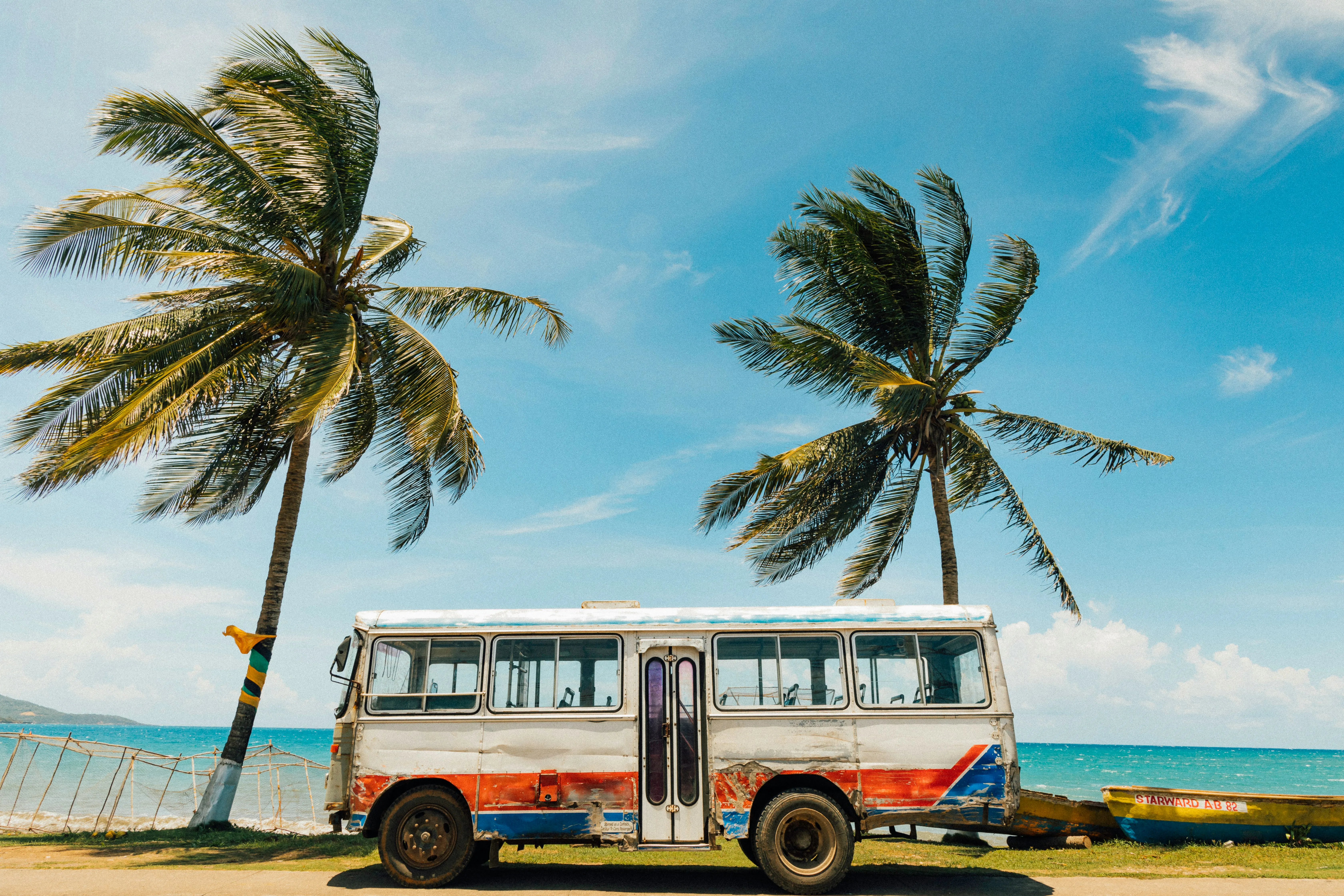
Jamaica
Jamaica offers Caribbean beaches with turquoise waters, mountains covered in lush vegetation, infectious reggae rhythms, and a rich culture that invites total relaxation.
Quick Facts
- Capital
- Kingston
- Language
- English
- Jamaican Patois
- Currency
- Jamaican Dollar (JMD)
- Best time to visit
- From December to April, coinciding with the dry and cool season.
- Budget per day
- $65 - $220 per day
- Climate
- Tropical warm and humid climate throughout the year, with stable coastal temperatures and cooler conditions in mountainous areas.
- Connectivity
- medium
- Very easy to obtain at airports and official stores of local operators.
- Electricity
- Type A/B (110V)
- Local transport
- acceptable
- Card usage
- acceptable
- Tipping
- yes
🌎 Introduction
In the heart of the Caribbean, the geography of this island is drawn between the deep blue of the sea and the dense green of its mountain ranges. Beyond its light-sand beaches, the interior rises into the Blue Mountains, where coffee cultivation and jungle humidity create a serene and fertile landscape. It is a territory that feels alive through its contrasts, where the sound of water in natural waterfalls blends with the calm of fishing villages and the constant movement of its main cities.
Jamaican culture is a reflection of its history, present both in the music that forms part of its identity and in a gastronomy marked by the use of spices and local products. In daily life, traditions remain present through the hospitality of its inhabitants and a pace of life that invites observing the surroundings without haste. From local markets filled with tropical fruits to the celebrations that mark the seasons, the island offers a distinct personality perceived in every everyday scene.
🛡️ General Safety
Jamaica is a destination that offers an unparalleled cultural and natural experience, being one of the most visited countries in the Caribbean. In general terms, the country presents a medium safety level for international travelers. While challenges exist in certain urban areas, the vast majority of visits occur without incident, especially when tourists stay within the usual routes and hotel complexes.
The context for the traveler is that of a country with a highly developed tourist infrastructure. The Jamaican government dedicates considerable efforts to protecting its primary industry, meaning tourist zones have closer surveillance. However, as in any destination with marked socioeconomic differences, it is fundamental to act with common sense and follow certain preventive guidelines.
Crime and common risks
Most incidents affecting tourists are minor and non-violent. Among the most common risks are:
- Theft and pickpocketing: These are common on public beaches, markets, and crowded areas. It is vital not to leave valuables unsupervised.
- Scams and “hustling”: It is frequent for people to approach offering guide services, product sales, or unsolicited help with the aim of insistently asking for money. It is recommended to decline these offers with a firm but polite “no, thank you.”
- Robbery with force: Although less frequent against tourists, they can occur if walking through isolated or poorly lit areas at night.
There are less common but present risks, such as credit card cloning at ATMs located on public streets. It is recommended to always use ATMs inside banks or within hotels themselves.
Safety in cities and tourist areas
Safety in Jamaica varies significantly depending on the geographical location and the type of environment:
- Tourist zones (Montego Bay, Negril, Ocho Rios): These are generally safe areas, especially within “all-inclusive” resorts. In these cities, moving during the day along main streets usually presents no problems, though it is advisable to avoid secondary alleys.
- Kingston: The capital requires greater caution. Although it has a vibrant cultural offer, there are neighborhoods with high crime rates (such as some areas of West Kingston) that tourists should not visit under any circumstances.
- Public transport: The use of local public buses is not recommended for travelers unfamiliar with the terrain, as they can be chaotic and prone to petty theft.
Safety in transport
Moving around the island requires planning to ensure the traveler’s peace of mind:
- Driving: In Jamaica, you drive on the left. Main roads are in good condition, but secondary ones can be narrow, winding, and poorly lit. It is recommended to avoid driving at night due to the presence of pedestrians or animals on the road.
- Taxis: It is fundamental to use only official taxis. These are recognized by their red license plates (letters “PPV” - Public Passenger Vehicle). Recommended taxis are those from the JUTA or JCAL associations, which usually operate from hotels and airports.
- Rental vehicles: This is a viable option, but one must be alert to the local driving style, which can be aggressive. Valuables should never be left in plain sight inside a parked car.
Natural and climatic risks
Jamaica is exposed to meteorological phenomena that travelers should consider depending on the time of year:
- Hurricanes: The official Atlantic hurricane season runs from June to November. During these months, there is a risk of strong tropical storms that can cause flooding and service outages.
- Extreme heat: Temperatures and humidity can be very high throughout the year, increasing the risk of dehydration or heat stroke.
- Earthquakes: Although high-magnitude ones are not frequent, the island is located in a seismically active zone.
It is recommended to stay informed through local meteorological services and always follow the instructions of authorities or hotel staff in case of a climatic emergency.
Legislation and local norms
It is important to know the legal framework of Jamaica to avoid misunderstandings or serious problems:
- Drugs: Despite the cultural image associated with the country, there are strict laws regarding narcotics. Marijuana consumption in public spaces is prohibited and can lead to fines. Drug trafficking is punished with long prison sentences.
- Behavior and clothing: Nudism or toplessness on public beaches is not well-regarded and can be grounds for a sanction. This practice is reserved exclusively for marked private beaches.
- Photography: It is polite to ask permission before photographing the local population or their private property.
Safety for specific groups
- Solo female travelers: Jamaica is a safe destination for women, although it is common to receive comments or unwanted attention on the street (“catcalling”). It is recommended to avoid walking alone in isolated places or deserted beaches, especially after sunset.
- LGTBIQ+ travelers: Jamaica is a conservative country in this aspect. There are laws that penalize sexual acts between people of the same sex. Although rarely applied to tourists, public displays of affection can generate hostility or uncomfortable situations. Absolute discretion is recommended.
- Children and the elderly: There are no specific additional risks. Resorts are usually perfectly equipped for these groups and have basic medical services.
Emergencies and assistance
In case of needing urgent help, these are the main channels:
- Police: 119.
- Ambulance and Fire Department: 110.
- Tourist Assistance: There is a specialized tourist police force (easily identifiable by their white uniforms and blue or green pants) in the main vacation areas.
In the event of an incident, you must go to the nearest police station to file a report (“police report”), an essential document for any subsequent travel insurance claim.
Tip: Always use transport services authorized by your hotel and avoid walking in poorly trafficked areas after dark; prevention is the key to enjoying the essence of the island without setbacks.
📝 Entry Requirements
To plan a trip to Jamaica, the first aspect to consider is identity documentation. Travelers must have a passport with current validity, and it is recommended that this extends at least six months beyond the planned departure date. The document must be in perfect physical condition, as immigration control officers often pay special attention to the integrity of pages and covers.
In most cases for leisure visits, the country offers facilities for entry without the need to process a prior visa. Tourists usually receive a stay permit for a determined period, which allows them to legally enjoy leisure activities. It is fundamental to keep in mind that this permit has a maximum duration, so it is advised to check the permitted times for rest and tourism before taking the flight.
Upon arrival at airports or ports, it is common for authorities to request proof that the traveler will leave the territory at the end of their vacation. Therefore, it is recommended to have your exit or return ticket to your place of origin at hand. Likewise, a demonstration of possessing sufficient economic funds to cover all accommodation and maintenance expenses during the stay on the island may be required.
Customs controls at entry points are exhaustive regarding the protection of local biodiversity. There is strict regulation on the introduction of fresh products, unprocessed foods, and plants, in order to prevent the entry of pests. In the case of traveling with specific medications, it is ideal for these to be accompanied by their respective medical prescriptions and in their original packaging to facilitate the inspection process.
From a health point of view, requirements may vary according to the flight’s origin, although generally, an extensive catalog of immunizations is not required. However, in certain cases, it is recommended to have a yellow fever vaccination certificate if you have traveled through risk zones. It is always a recommended practice to keep your standard vaccination schedule up to date and to have travel insurance that offers broad coverage.
- Main documentation: Valid passport in good condition.
- Stay permit: Generally granted for tourist purposes without the need for prior visa management.
- Proof of exit: Return flight ticket or one to a confirmed third destination.
- Financial resources: Ability to demonstrate economic solvency for the duration of the trip.
- Customs rules: Restrictions applied to agricultural products and controlled substances.
- Health and prevention: Recommendations on basic vaccines and general health protection.
🏥 Basic Health Considerations
On your trip to Jamaica, you will find a medical infrastructure that varies notably between the public and private sectors. If you need assistance, you will see that private hospitals in areas like Kingston or Montego Bay offer a very high level of care and modern equipment, although their costs are usually high for non-residents. Medical staff usually communicate in English, so you can easily explain what is happening to you if you speak this language. In more rural areas or public centers, waiting times can be longer and resources more limited.
Taking out travel medical insurance is not a mandatory requirement to enter the country, but it is something you should do for peace of mind. The costs of hospitalization or emergency transfer can be very high, so I recommend that your policy includes broad coverage for medical expenses and repatriation. Having this support will allow you to enjoy the island knowing that, in the face of any mishap, you will receive the best possible care without your budget being affected.
Regarding vaccines, you generally will not have to present any mandatory certificate, unless you come from an area where yellow fever is endemic. The most sensible thing is to have your official vaccination schedule up to date. Depending on the type of trip you are going to take, you might discuss common traveler vaccines like Hepatitis A or Tetanus with your doctor, but standard vaccines are usually more than enough to move around tourist areas.
If you need to bring your own medication, you can do so without problems as long as you transport it in its original packaging. It is highly recommended to carry the medical prescription or a report signed by your doctor, especially if it involves specific or chronic-use drugs. In local pharmacies, you will find basic products, but having your own first-aid kit with pain relievers, antihistamines, and gastric protectors will save you unnecessary searches during your days off.
The main health risks on the island are related to the tropical climate. With high temperatures, you could suffer from dehydration or heat stroke if you don’t take care, so drinking liquids constantly is essential. You will also find mosquitoes, especially in vegetation areas or at sunset, which can occasionally transmit diseases like dengue or zika. Using a good repellent and light clothing that covers the skin during those critical hours will be your best defense. There are no risks from altitude or extreme cold in usual tourist itineraries.
Regarding the consumption of water and food, you will see that in most hotels and urban areas, tap water is potable and safe for human consumption. Even so, many people prefer to drink bottled water to avoid any minor stomach upset from the change in mineralization. Hygiene in food establishments is usually good, and you can try local gastronomy, even at street stalls, as long as you use common sense and choose places that have good customer turnover and a well-kept appearance.
In case you find yourself in an emergency situation, the number you should dial is 110 to request an ambulance or fire assistance, while 119 is the direct contact for the police. You should keep in mind that in some areas far from main cities, the ambulance service may not be as fast as you would like, so sometimes moving by your own means to the nearest private clinic is often the quickest option.
As final tips for your stay, I would tell you not to skimp on using high-factor sunscreen, as the Caribbean sun is very intense even on cloudy days. Stay well hydrated, always carry a small bottle of hand sanitizer with you, and above all, travel with the peace of mind that, following these basic guidelines, your experience in Jamaica will be as safe as it is pleasant.
🚌 Transport Within the Country
Moving around Jamaica primarily involves traveling by road, as it is the predominant means of communication throughout the island. Car rental is a frequent option for those who prefer autonomy, always keeping in mind that driving is on the left side of the road. To connect the main population centers and areas of interest, there are bus services that offer direct routes and an infrastructure suitable for the visitor.
Public transport presents notable differences depending on the location. In the main cities, the service is more structured and departure points are usually identified, facilitating orientation thanks to the use of the English language on signage and in direct interactions. Conversely, in rural areas, mobility depends on smaller vehicles that do not always have fixed schedules, requiring a greater capacity for adaptation from the traveler.
Taxis are an essential resource for tourists and operate constantly throughout the territory. There are private services and also shared taxis that follow specific routes. It is important to identify vehicles that have an official license for passenger transport, which are normally distinguished by the color of their license plates, thus guaranteeing a standard of safety and regularity.
In the absence of an operational railway or metro network, the comfort and reliability of transport depend largely on the type of road. While main roads and highways connecting tourist spots are usually in good condition, travel into the mountainous interior can be slower. Generally speaking, the system is functional and allows for a leisurely tour of the country, integrating into the local rhythm.
Tip: When planning road trips, it is convenient to allow more time than maps initially indicate, as the topography of the interior and traffic conditions can slow down the pace of the trip.
🤵 Culture and Etiquette
In Jamaica, social interaction is based on a code of courtesy and mutual respect. It is fundamental to initiate any encounter, whether in a shop or a rural environment, with a formal greeting such as good morning, good afternoon, or good evening. This gesture is especially important when dealing with elderly people, to whom particular deference is usually shown by using titles like Mister or Mistress followed by their surname, reflecting the value the society places on generational hierarchy.
The rhythm of daily life and the perception of time tend to be more flexible than in other cultures, a concept often described as the Caribbean beat. Although punctuality is valued in professional environments and tourist services, it is common for schedules to be handled with a certain relaxation in social interactions. Regarding communication, the tone of voice can be high and energetic; this generally denotes enthusiasm and expressiveness in conversation, so it should be interpreted as a natural form of communication and not as a sign of confrontation.
In the realm of gastronomy and visits, if you receive an invitation to a private home, it is a very appreciated gesture to bring a small gift, such as local fruits or sweets. During meals, it is customary to wait for the host to give a brief introduction or indicate the start of dinner. In service establishments, such as restaurants and hotels, tipping is a widespread and expected practice, generally ranging between 10% and 15% of the total, as recognition for the service received.
Respect for traditions and beliefs is a pillar of coexistence. Since religion occupies a central place in the lives of many citizens, it is recommended to dress discreetly and modestly when visiting churches or participating in community events. Likewise, it is essential to show consideration for residents’ privacy, always asking for permission before taking photographs of people, their homes, or their stalls, ensuring an exchange based on dignity and understanding.
“Tip”: The initial greeting is the foundation of any successful interaction in the country; taking a moment to greet formally before asking a question or requesting a service will positively transform your experience.
🍛 Typical Gastronomy
Jamaican cuisine is a reflection of its history, fusing African, British, and Asian influences with the island’s local products. The result is a gastronomic proposal with its own personality, where intense flavors and the balanced use of spices are the true protagonists. It is not just about eating, but a fundamental part of the country’s cultural identity enjoyed both on the streets and in homes.
One of the pillars of its cuisine is the jerk technique, a slow cooking method that uses pimento wood to smoke meat, previously marinated with a mixture of spices where Scotch bonnet pepper (known locally as Scotch bonnet) and allspice (pimento) stand out. This way of preparing food extends throughout the island, from informal outdoor stalls to more formal establishments, offering a very characteristic smoky and spicy flavor.
Breakfast is usually the most important meal of the day, often including savory dishes that incorporate local fish and fruits. Basic ingredients always include tubers, breadfruit, or plantains, collectively known as “ground provisions.” Regarding drinks, local rum and Blue Mountain coffee enjoy a great reputation, along with refreshing ginger or hibiscus preparations that accompany meals.
In restaurants, the atmosphere is usually relaxed and friendly. Although most local spots are informal, it is common to find friendly service that invites you to enjoy the meal without haste. Meal times are similar to international standards, although in rural areas, it is common for culinary activity to begin very early with the first coffee and end at sunset.
| Dish | Description | Main Ingredients | Where to Try It | Tip |
|---|---|---|---|---|
| Ackee and Saltfish | National dish that combines a local fruit with salted fish. | Ackee fruit, dried cod, onion, and peppers. | Breakfasts in hotels and local eateries. | It is usually accompanied by fried plantains or bread rolls. |
| Jerk Chicken | Chicken marinated and slow-grilled with wood. | Chicken, allspice, Scotch bonnet pepper, and thyme. | Roadside stalls and “jerk centres” across the island. | Ask for the sauce on the side if you don’t have a high spice tolerance. |
| Curry Goat | Tender goat stew with a spice blend of Indian influence. | Goat meat, curry, potatoes, and coconut milk. | Lunches in local restaurants and celebrations. | Always accompany it with Rice and Peas. |
| Jamaican Patty | Flaky yellowish pastry filled with meat or vegetables. | Flour with turmeric, spiced minced meat, or vegetables. | Bakeries and fast-food kiosks in cities. | It is the ideal snack for a quick bite mid-morning. |
| Escovitch Fish | Fried fish marinated in a vinegar sauce with vegetables. | Whole fish (snapper), onion, carrot, and vinegar. | Beach restaurants, especially in Hellshire. | It is best consumed freshly made to appreciate the crispiness of the fish. |
📷 Areas and Places to Visit
Jamaica is an island of great geographical and cultural contrasts that offers a varied experience for those who decide to explore it. The trip usually begins in Kingston, the capital and the pulsing heart of the country. Located on the southeast coast, this city allows you to dive into contemporary history through the Bob Marley Museum, located in what was the musician’s residence, and the historic Devon House, a 19th-century mansion representing the colonial architecture of the era. Kingston is a center of constant activity where street markets and urban life show the most authentic and dynamic side of Jamaican society.
Very close to the capital, the landscape changes drastically as you ascend into the Blue Mountains. This mountain system, which houses the highest point on the island, is famous for its coffee plantations and hiking trails that cross cloud forests. It is an area that stands out for its biodiversity and for offering a rural and tranquil perspective, away from the bustle of the coast. In these elevations, you can visit small communities dedicated to traditional agriculture, providing a significant contrast to the more touristy coastal areas.
On the northwest end is Montego Bay, one of the primary hubs for receiving travelers. This region combines crystal-clear water beaches with an important historical heritage visible in the Great Houses or old plantation homes, such as Rose Hall. The city offers a mix of modern infrastructure and spaces where colonial heritage is still present in its squares and old buildings. It is a strategic point for understanding the commercial development of the island over the centuries.
Following the coast west, you reach Negril, an area known for its extensive sandy beaches and its limestone cliffs. Unlike other more urbanized regions, Negril has maintained an environment that prioritizes integration with the maritime setting. The cliffs of the West End are a common place to observe the horizon, while its beaches allow for water activities in a calm water environment. It is an area that reflects a slower lifestyle directly linked to the Caribbean Sea.
On the north coast, the Ocho Rios area stands out for its natural exuberance and fluvial formations. Here you will find the Dunn’s River Falls, a set of waterfalls that empty directly onto the beach and can be climbed on foot. In addition to this natural landmark, the region has numerous botanical gardens and parks where indigenous tropical flora is displayed. It is a destination that combines the island’s peculiar geological formation with a cultural offer based on the use of natural resources.
Finally, for those seeking an experience closer to untouched nature, the Port Antonio region in the northeast preserves an air of exclusivity and simplicity. This place was the refuge for travelers and artists for decades due to spots like the Blue Lagoon, known for its intense changing hues, and the Rio Grande, where it is traditional to take bamboo raft trips. Port Antonio represents the greenest and lushest Jamaica, where the tropical jungle abruptly meets small white sand coves, offering a balance between local history and landscape conservation.
“Tip”: You cannot miss visiting Dunn’s River Falls, the most emblematic place in the country.
✈️ Best Season to Travel
Jamaica is a destination with a tropical climate that maintains warm temperatures throughout the year, allowing for visits on almost any date. Choosing the ideal moment usually depends on the balance each traveler seeks between weather stability and the number of people at the island’s main points of interest.
Traditionally, the period between mid-December and April is considered very favorable due to the lack of rain and constant sunny atmosphere. However, those who prefer a quieter experience and wish to appreciate landscapes in a more intense green will find in the transition months an opportunity to enjoy beaches and natural settings with greater serenity and a slower pace.
| Season | Months | Typical Climate | What to Expect | Tourist Inflow |
|---|---|---|---|---|
| Spring | Mar – May | Mild temperatures and gradual increase in humidity towards May. | Lush flowering, Carnival cultural celebrations, and bright days. | ⭐⭐⭐ (Medium) |
| Summer | Jun – Ago | Intense heat and high humidity with brief, refreshing rains. | Traditional music festivals, seasonal tropical fruits, and very warm waters. | ⭐⭐⭐⭐ (Medium-High) |
| Autumn | Sep – Nov | Higher probability of rainfall and very humid environment. | Jungle landscapes at their peak splendor, clear beaches, and very quiet atmosphere. | ⭐⭐ (Low) |
| Winter | Dic – Feb | Dry weather, clear skies, and very pleasant constant temperatures. | Great dynamism in coastal areas, outdoor events, and optimal conditions for swimming. | ⭐⭐⭐⭐⭐ (High) |
🗣️ Basic Vocabulary
Although English is the official language of Jamaica, in daily life, Jamaican Patois is mostly used, a creole language with a very particular rhythm and phonetics. Knowing some basic expressions will be very useful for getting around the island, whether to greet someone, make purchases in local markets, or simply show courtesy towards the local inhabitants.
It is not necessary to delve into the complex grammatical rules of Patois to make yourself understood. It will be enough to integrate some key words into your daily conversations to facilitate interaction in common travel situations, such as transport or meals.
- Wah gwan: It is the most common greeting and is equivalent to a “how is it going?” or “what’s up?”.
- Irie: Used to express that everything is fine, that you feel good, or that something is excellent.
- Respect: A multi-purpose word that serves as a greeting, farewell, or to show gratitude and recognition.
- Walk good: A kind way to say goodbye, whose meaning is similar to “farewell” or “take care.”
- How much fi dis?: This is the practical phrase to ask the price of an item or service.
- Small up yuhself: Frequently used on public transport or in crowded spaces to ask someone to let you through or to make a little room.
- Bless up: A cordial greeting or farewell used to wish the other person well.