


Kenya
Kenya offers iconic safaris, the peak of Mount Kenya, and pristine Indian Ocean beaches, creating a diverse, vibrant, and very authentic African experience.
Quick Facts
- Capital
- Nairobi
- Language
- Swahili
- English
- Currency
- Kenyan Shilling (KES)
- Best time to visit
- From June to October for safaris and from January to February for warm weather.
- Budget per day
- $40 - $180 per day
- Climate
- Tropical on the coast and temperate in the interior, with dry seasons and two well-differentiated annual rainy periods.
- Connectivity
- medium
- Very easy to obtain local SIM cards or eSIMs at airports and official operator stores.
- Electricity
- Type G (240V)
- Local transport
- acceptable
- Card usage
- acceptable
- Tipping
- yes
🌎 Introduction
In the eastern strip of the African continent, the landscape transforms as one moves from the coasts washed by the Indian Ocean toward the interior highlands. The relief is marked by the presence of Mount Kenya and the deep fracture of the Great Rift Valley, which defines the region’s geography and climate. In these latitudes, the passage of time is dictated by the cycles of the rainy seasons, which renew the pastures and alter the riverbeds, directly influencing the rhythm of the plains and the fertile slopes dedicated to the cultivation of coffee and tea.
The country’s identity is a mosaic of influences where the Swahili heritage of the coast intertwines with the customs of diverse local communities. In the markets and meeting points, the aroma of spiced chai and the colorful traditional fabrics are part of a vibrant daily life that coexists with the growth of urban centers like Nairobi. It is a society that values closeness, where sharing a simple meal of ugali or conversing at sunset are gestures that define a calm and hospitable character, deeply linked to its roots and the land they inhabit.
🛡️ General Safety
Kenya is a destination that receives millions of tourists annually and, in general terms, offers a safe experience for the traveler. The vast majority of visits pass without incident, especially if the itinerary focuses on national parks and tourist areas on the coast.
- Safety level: The country is considered to have a medium safety level, similar to other emerging destinations. It is a friendly country for visitors, but it requires the traveler to maintain a vigilant attitude and follow basic safety recommendations.
- Context for the traveler: Most safety issues are concentrated in very specific urban areas and not in safari areas, which are very controlled and safe environments. Respect for local customs and common sense are the best tools for a trouble-free trip.
Crime and Common Risks
As in any destination with large tourist flows, there are minor risks that can be avoided with precaution.
- Pickpocketing and opportunistic theft: These are the most common incidents, especially in crowded places like markets, bus stations, or high-traffic tourist areas in cities.
- Tourist scams: Some travelers may encounter people offering unofficial guide services or safari packages at suspiciously low prices that turn out to be poor quality or non-existent.
- Infrequent risks: Although rare, there can be cases of snatching from moving vehicles or thefts in rented homes that do not have security. It is recommended not to show off luxury items or expensive electronic devices in public.
Safety in Cities and Tourist Areas
The security situation varies significantly between rural and urban environments.
- Urban centers: In cities like Nairobi and Mombasa, it is necessary to exercise extreme caution. It is recommended to avoid walking through the city after dark and to always use private transport or trusted transport applications.
- Tourist neighborhoods: Areas like Karen or Westlands in Nairobi are generally safe and have private security in most of their establishments.
- Practical recommendations: It is advisable to carry a copy of your documentation and leave the originals in the hotel safe. Likewise, it is convenient not to travel through poorly lit areas or those far from habitual commercial circuits.
Safety in Transport
Transport in Kenya is a fundamental part of the experience, but it requires knowing certain local rules and dynamics.
- Driving: In Kenya, driving is on the left. If you decide to rent a vehicle, you must keep in mind that road conditions can be irregular and signage scarce in rural areas.
- Public transport: Matatus (local minibuses) are the most common means for residents, but for the tourist, they can be chaotic and, at times, unsafe due to reckless driving.
- Private transport and taxis: The use of transport applications (such as Uber) or official taxis requested from the hotel or restaurant is strongly recommended. Rental vehicles with a driver are the safest and most comfortable option for long-distance transfers.
Natural and Climatic Risks
Kenya is not usually affected by major natural disasters, but the weather can influence travel safety.
- Floods: During the rainy seasons (March to May and October to December), flash floods can occur, cutting off roads or making access to certain national parks difficult.
- Extreme heat: In northern areas and on the coast, temperatures can be very high. It is vital to maintain constant hydration and protect yourself from the sun to avoid heatstroke.
- Prevention: If you travel during the rainy season, it is essential to have a 4x4 vehicle and check the status of the tracks before starting a journey to remote areas.
Local Legislation and Regulations
Kenya has very strict laws in certain areas that the tourist must know to avoid serious penalties.
- Use of plastics: The use, manufacture, and import of single-use plastic bags is strictly prohibited. Fines are very high, even for carrying them in your suitcase when entering the country.
- Tobacco consumption: Smoking is prohibited in public places in many cities, including the streets of Nairobi, except in specifically designated areas.
- Drones: The use of drones by tourists is highly regulated and requires prior permits that are difficult to obtain. Flying drones without official documentation is not recommended.
- Respect for authority: It is illegal to photograph government buildings, military installations, airports, or bridges.
Safety for Specific Groups
- Women travelers: Kenya is a safe destination for women traveling alone, although they may receive unwanted attention in the form of comments. It is recommended to dress discreetly in less touristy areas and avoid walking alone at night.
- LGTBIQ+ travelers: Same-sex relationships are illegal in Kenya, and there is strong social conservatism regarding this. Maximum discretion is recommended, and public displays of affection should be avoided to prevent incidents or legal problems.
- Children and the elderly: The country is very welcoming to families and the elderly. The main risk for these groups is fatigue from long journeys and the altitude in certain areas, so it is recommended to plan itineraries with frequent breaks.
Emergencies and Assistance
Having good travel insurance that covers medical evacuation is indispensable due to the distances between quality hospital centers.
- Emergency numbers: The main number for police, ambulance, and fire is 999 (or 112/911 from mobile phones).
- Medical assistance: In Nairobi, there are hospitals with international standards, but in safari areas, medical assistance can be limited.
- Procedure in case of an incident: In case of theft, go to the nearest police station to file a report (police report), which will be essential for any subsequent insurance claim.
Tip: Always carry an external battery for your mobile and download maps for offline use; staying communicated and located is your best preventive safety measure in the cities.
📝 Entry Requirements
To undertake a trip to Kenya, the main document needed is a valid passport, which is usually recommended to expire more than six months from the time of entry into the territory. It is essential that the document has some blank pages to allow for the stamping of the corresponding seals at border crossings. In most cases, international travelers must process a travel authorization or visa prior to their arrival, a process that is usually managed through digital platforms and enables a stay for tourism purposes for a period that does not usually exceed ninety days.
Upon arrival at international airports or land entry points, migration authorities may request the presentation of an exit ticket from the country or a continuation of the trip, which serves as a guarantee of the temporary nature of the visit. Likewise, it is common to be required to demonstrate having sufficient financial funds to cover expenses during the stay in the destination. Border controls are standard processes where documentation is verified and, occasionally, routine questions about the itinerary or planned accommodation may be asked.
In the area of customs, it is important to keep in mind that there are strict regulations for the preservation of the environment. One of the most prominent measures is the prohibition of the use and transport of single-use plastic bags, so it is recommended to avoid them in luggage. Regarding medications, it is advised to carry the corresponding medical prescription if it concerns specific treatments. On the other hand, the entry of products of plant or animal origin may be subject to inspections to avoid biological risks.
Regarding health, recommendations may vary depending on the traveler’s origin or the areas intended to be visited. A prior consultation with an international medicine center is usually suggested to review the schedule of recommended vaccines. In certain cases, a vaccination certificate against yellow fever may be requested, especially if the traveler has recently transited through countries where this disease is endemic. Maintaining a preventive criterion and having adequate travel insurance are standard practices to enjoy the experience with peace of mind.
Summary of considerations for the traveler:
- Primary documentation: Passport in good condition with a minimum validity of six months.
- Entry management: Prior procurement of the corresponding electronic authorization or visa.
- Permitted stay: Periods for tourist visits that generally reach three months.
- Proof of exit: Have a return ticket or a connection to another destination.
- Financial resources: Ability to demonstrate financial solvency for the duration of the trip.
- Environmental regulations: Prohibition of entry with plastic bags of any type.
- Special luggage: Need for prescriptions for drugs and permits for electronic equipment such as drones.
- Health prevention: Consultation of vaccines and possible requirement for a yellow fever certificate.
🏥 Basic Health Considerations
In Kenya, you will see that the healthcare system presents significant contrasts depending on where you are. In large cities like Nairobi or Mombasa, you will find excellent private hospitals that have modern technology and well-trained professionals. However, in rural areas or during safaris, the infrastructure is much more basic. As a tourist, it is common to always go to private centers, as public healthcare is usually saturated and has fewer resources. You must keep in mind that the cost of private medical care is quite high, so any consultation or treatment will represent a significant expense. Healthcare personnel usually communicate in English, which is an official language, so it will be easy for you to explain what you need.
Although it is not a mandatory legal requirement to cross the border, having travel medical insurance with broad coverage is absolutely essential. You do not want to face hospital bills on your own. It is fundamental that your policy includes medical evacuation and repatriation, as if you suffer an accident in the middle of a natural reserve, the transfer to Nairobi could be carried out by medical plane, something that has an astronomical cost if you are not covered.
Regarding vaccines, regulations can vary according to your recent travel history. The yellow fever vaccine is mandatory if you come from a country where this disease is endemic, although many travelers choose to get it as a precaution. It is highly recommended that you keep your official vaccination schedule up to date and that you consider protecting yourself against typhoid fever, hepatitis A and B, and tetanus. The most sensible thing is to request an appointment at an international health center at least one month before your departure so that a professional can evaluate your particular case.
If you need to take personal medication, it is convenient to always transport it in its original packaging and inside your carry-on luggage. To avoid any inconvenience with customs authorities, it is vital to carry the original medical prescription or a report from your doctor, preferably written in English. In the country, there are strict restrictions on certain psychotropic drugs, so carrying justifying documentation will save you misunderstandings.
When traveling through this country, you will notice that the climate and environment present specific challenges. The best-known risk is malaria, present in many areas of the country. You should consult with a doctor if you need preventive medication. Other factors to watch out for are the strong solar radiation due to the proximity to the equator and possible altitude sickness if you plan to visit high-altitude areas. On the other hand, you do not need to worry excessively about rare tropical diseases if you maintain basic precautions with insects.
Regarding the consumption of water and food, the golden rule is to never drink tap water. You will find bottled water easily almost anywhere, and you should always check that the seal is intact. Avoid ice cubes in drinks and raw vegetables if you are not in an environment with hygiene guarantees. Although street food has a tempting smell, we advise you to opt for foods that have been cooked at high temperatures and to peel the fruit yourself. In hotels and camps oriented toward tourism, hygiene levels are usually very rigorous and safe.
In case you suffer a medical emergency, the telephone number for emergencies is 999. You should know that the public ambulance service can be slow, so in critical situations, private emergency services or transfers organized by the medical insurance itself are usually used.
To make your stay as peaceful as possible, we recommend using insect repellent constantly, especially at dawn and dusk. It is also a good idea to wear light-colored clothing and long sleeves during those hours to minimize bites. Don’t forget to carry a small first-aid kit with basics to treat small wounds or digestive discomfort, and always stay well hydrated to combat the tropical heat.
🚌 Transport within the Country
To travel around Kenya, travelers have various options that connect the main urban centers and areas of natural interest. The long-distance train is one of the most modern and comfortable alternatives, especially for the route that joins the capital with the coastal area, offering punctuality and a unique landscape. On the other hand, internal air connections are frequent and are very useful for saving time when looking to go directly to national parks or islands, using light aircraft or short-haul commercial flights.
In the terrestrial sphere, buses and shared minibuses are the most common means of transport. Although the latter can be less intuitive for a visitor who does not know the routes, they are a very widespread option for short and medium journeys. Signage is usually present at key points, and the use of English, which is very widespread in the country, greatly facilitates communication when buying tickets or asking for directions at terminals and stations.
The transport experience changes significantly depending on the traveler’s location. In large cities, traffic is usually dense, so it is common to resort to taxis or transport services requested through mobile applications, which provide greater simplicity in management and journey tracking. In contrast, in rural areas or inside reserves, the condition of the roads can be more irregular, which makes travel slower and depends mainly on private vehicles or organized services.
The reliability of schedules is very high in the railway system, while on the road, the duration of trips can be variable. To travel through certain areas of the coast, it is also possible to find small ferries that facilitate crossing between shores easily. In general, transport in the country offers a balance between renovated infrastructure on the main axes and more traditional methods that require a greater capacity for adaptation on the part of the tourist.
“Tip”: When planning road travel between different regions, it is advisable to be flexible with arrival times, as the state of urban traffic and the characteristics of secondary roads can prolong the journey more than expected.
🤵 Culture and Etiquette
Kenyan society deeply values politeness and mutual recognition in daily interactions. A greeting is not considered a simple formality but an essential step to start any conversation, negotiation, or inquiry. It is common to dedicate a few moments to asking about the other person’s well-being before getting down to business, using a gentle and sometimes prolonged handshake. In the public sphere, a moderate tone of voice and discreet behavior are appreciated, as excessively effusive displays of affection or loud displays of anger are not usually common in the public space.
Time management and punctuality are perceived with some flexibility in social contexts, where human interaction is usually prioritized over strict adherence to the clock. However, in the service sector and in activities organized for travelers, an attempt is made to maintain a standard of punctuality in line with international expectations. In interpersonal communication, an indirect and diplomatic style is preferred, avoiding direct confrontations or sharp negative responses, always seeking to maintain harmony in the treatment.
In contexts related to food, customs reflect a strong sense of community and hospitality. It is a common practice to wash one’s hands before and after eating, even when cutlery is available. In more traditional or rural environments, the right hand is predominantly used for both eating and giving or receiving objects, as the left hand is usually reserved for personal hygiene tasks. If an invitation to a home is received, accepting at least a small part of what is offered is interpreted as a gesture of appreciation toward the host.
Respect for the elderly and social hierarchies is a fundamental pillar of coexistence, manifesting in preferential treatment and slow language. When visiting places of worship or areas with a marked religious tradition, it is important to dress modestly, covering shoulders and knees as a sign of deference toward the local community. Likewise, the act of asking permission before taking photographs of people or their belongings is an essential etiquette rule that avoids misunderstandings and fosters a relationship of mutual respect.
Regarding daily economic dynamics, tipping is a common and expected practice in the tourism sector, functioning as a recognition of the service provided in hotels, restaurants, and guided activities. Although the amount is discretionary, this gesture is fully integrated into the professional culture of the sector. Finally, it is worth remembering that patience and the use of basic formulas of politeness are the best tools to integrate naturally into the daily life of the country.
“Tip”: Before making any request, question, or purchase, always start the conversation with a calm and cordial greeting; this small gesture of politeness positively transforms the disposition of your interlocutor and facilitates any subsequent interaction.
🍛 Typical Gastronomy
The gastronomy of Kenya is a faithful reflection of its geographical and cultural diversity, where the traditions of indigenous peoples fuse with notable Arabic and Indian influences, especially visible along the coastal strip. The basis of the daily diet relies on local agricultural products, where cereals, legumes, and leafy green vegetables play a fundamental role. It is not a cuisine of artifices, but rather stands out for simple and direct flavors that seek satiety and energy intake.
Ugali is the central and most representative element of the Kenyan table. This dense dough made with cornmeal and water works as a universal accompaniment for stews, vegetables, and meats. The traditional way to consume it is with the hands, molding a small ball that serves as a utensil to pick up the rest of the food. Alongside it, Sukuma Wiki (a variety of kale) is usually present almost constantly, constituting the basic diet for much of the population.
In areas near the Indian Ocean, the flavor profile changes drastically thanks to the use of spices, coconut milk, and fresh fish. In this region, rice frequently replaces corn and is flavored with cloves, cardamom, and cinnamon, a heritage of historic trade routes. Conversely, in the interior and in pastoral areas, grilled meat takes on a special prominence, being the center of social gatherings and family celebrations.
Regarding social habits, Kenyans usually eat three meals a day, with lunch and dinner being the most important moments. In many local establishments, it is common for a bowl with water and soap to be offered to wash your hands at the table before eating. Regarding drinks, tea (Chai) prepared with milk and plenty of sugar is the most widespread option at any time of day, while tropical fruit juices and local beers are common in more informal or nocturnal contexts.
| Dish | Description | Main Ingredients | Where to try it | Tip |
|---|---|---|---|---|
| Ugali | Solid corn dough that serves as a basic side dish. | White cornmeal and water. | Throughout the country, in both homes and restaurants. | Always try it hot and accompany it with a stew with sauce. |
| Nyama Choma | Grilled roasted meat, the social dish par excellence. | Goat or beef meat and salt. | Specialized grills known as “choma zones”. | Be patient, the meat cooks slowly and usually takes time to be served. |
| Pilau | Spiced rice of Swahili origin, very aromatic. | Rice, meat, cardamom, cinnamon, cloves, and pepper. | Especially on the coast (Mombasa or Lamu). | Order it with “kachumbari”, a fresh tomato and onion salad. |
| Githeri | Nutritious and simple traditional stew. | Tender corn kernels and beans. | Rural areas and home-cooking restaurants. | It is an excellent dish to get to know the most authentic food of the highlands. |
| Mandazi | Fried bread with a slightly sweet flavor, similar to an unglazed donut. | Flour, milk, sugar, and a touch of cardamom. | Street stalls and cafes during breakfast. | It is the perfect accompaniment for a milk tea (Chai) in the mid-morning. |
📷 Areas and Places to Visit
Kenya offers a diversity of landscapes and experiences ranging from the infinite plains of the savanna to the coasts washed by the Indian Ocean. The trip usually begins in Nairobi, the capital, a city that shows the contrast between urban modernity and natural life. In its surroundings, it is possible to visit the Nairobi National Museum, which houses important collections on local history and art, or tour the Karen neighborhood, known for its historical legacy linked to the colonial era. The capital has the peculiarity of having a national park just a few kilometers from its financial center, allowing a first contact with the natural environment without moving away from urban comfort.
Toward the interior of the country, the Masai Mara National Reserve is positioned as one of the most internationally recognized regions. This territory is the setting for cyclic natural phenomena such as the migration of herbivores, offering a landscape of plains dotted with acacias where various species of fauna coexist. Activities in this area usually center on the observation of animals in the wild and knowledge of the Maasai culture, whose traditional settlements allow an understanding of a way of life that has endured for centuries in harmony with the environment.
The Great Rift Valley is another of the geographical areas that define Kenyan identity. In this geological fault are lakes of great ecological importance such as Lake Nakuru, famous for its bird populations, and Lake Naivasha, where the fresh water allows for boat tours and observation of lacustrine vegetation. Very nearby, Hell’s Gate National Park offers routes for walking or cycling among rock formations and volcanic chimneys, a different option from the usual motor vehicle tours.
For those looking for more direct contact with the mountains, Mount Kenya represents a challenge and a completely different landscape. It is the second-highest peak on the continent, and its slopes are covered with forests and alpine vegetation that contrast with the lowlands. Hiking routes in this area require preparation and allow for the discovery of a high-mountain ecosystem rarely seen in these latitudes. In the same region, Aberdare National Park offers a landscape of waterfalls and dense misty forests that house elusive species.
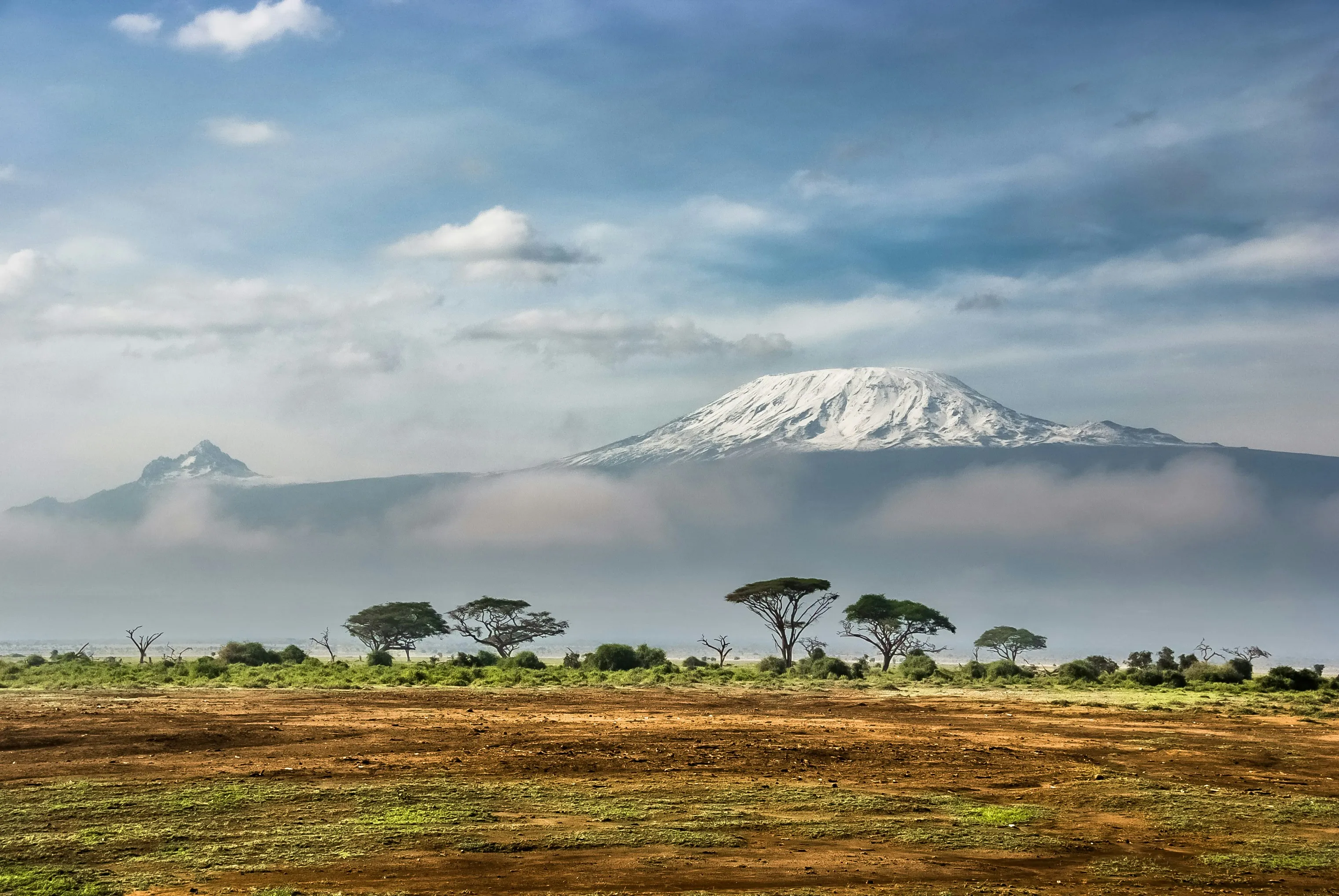
In the southeast, near the border with Tanzania, Amboseli National Park stands out for its panoramic views of Mount Kilimanjaro. This park is known for its wide plains and swampy areas that attract large groups of elephants. The combination of the snowy mountain in the background and the fauna in the foreground constitutes one of the country’s most iconic images. Not far away, the parks of Tsavo East and Tsavo West form one of the most extensive protected areas in the world, characterized by red earth and a wilder, less traveled environment.
The coastal area offers a radically different cultural and scenic experience. Mombasa, the main port city, is a melting pot of African, Arabic, and European influences reflected in its old town. Fort Jesus, a 16th-century Portuguese fortification declared a World Heritage Site, is an essential visit to understand the history of trade in the Indian Ocean. Further north, the Lamu Archipelago preserves one of the purest and oldest Swahili cultures, with narrow streets where no vehicles circulate and unique coral stone architecture.
Finally, the white sand beaches of Diani or Malindi are the ideal destination for rest and water activities. In these areas, it is possible to explore coral reefs through diving or snorkeling in protected marine parks. The contrast between the bustle of the local markets in the coastal cities and the serenity of their shores allows the traveler to experience the plurality of a country that balances its ancestral traditions with a constant openness to the international visitor.
Tip: You cannot miss visiting Masai Mara, the most iconic place in the country.
✈️ Best Season to Travel
Kenya is a destination that can be visited throughout the year thanks to its geographical location on the equator, which gives it a relatively temperate and constant climate. However, the travel experience is mainly marked by the rainfall regime, which divides the year into dry and wet periods. These cycles directly influence the condition of the roads, the visibility of wildlife in the national parks, and the type of landscapes the traveler will encounter.
The choice of the ideal time will depend on the priority activities. Dry seasons are usually more favorable for animal spotting, as the vegetation is less dense and species tend to concentrate around water points. Conversely, the rainy months transform the environment into a green and vibrant setting, ideal for bird watching and for those who prefer to tour the parks with more tranquility.
| Season | Months | Typical Climate | What to Expect | Tourist Influx |
|---|---|---|---|---|
| Spring | Mar – May | Warm and very humid. Period of intense and prolonged rains. | Very green landscapes, births of offspring, and great bird activity. Some areas may be difficult to access. | Low ⭐ |
| Summer | Jun – Aug | Mild temperatures and dry weather. Cool nights in high areas. | Start of the Great Migration in the Masai Mara. Excellent conditions for safaris and wildlife visibility. | High ⭐⭐⭐ |
| Autumn | Sep – Nov | Dry weather in September; start of brief and light rains in November. | End of the migration. The environment remains clear, and temperatures are pleasant for the coast. | Medium ⭐⭐ |
| Winter | Dec – Feb | Warmer temperatures and mostly dry environment. | Clear skies, ideal for enjoying the beaches and for hiking on Mount Kenya. | High ⭐⭐⭐ |
🗣️ Basic Vocabulary
Although English is an official language in Kenya and is widely used in the tourism sector, knowing some words in Swahili will help you connect better with the local population. Learning the most common greetings and polite expressions not only facilitates daily interactions in markets or accommodations but is also a sign of respect toward their culture that is usually very well received.
In daily life, these words will be very useful for getting around in common situations and understanding the rhythm of the country:
- Jambo / Habari: Hello / How are you?
- Asante: Thank you.
- Tafadhali: Please.
- Karibu: Welcome or you’re welcome (used in both contexts).
- Ndiyo / Hapana: Yes / No.
- Sawa: Okay / All right.
- Pole pole: Slowly (a very common expression to indicate that there is no rush).
- Kwa heri: Goodbye