


Valencia
Valencia travel guide: City of Arts and Sciences, Central Market, Turia Gardens, Albufera, authentic paella, Las Fallas, transport, safety tips and when to go.
Quick Facts
- Best time to visit
- March to June and September to October
- Budget per day
- $70 - $170 per day
🌎 Introduction
Valencia is the Spanish city that surprises people who expected only a beach stop. It has a medieval old town, one of the most ambitious modern architecture complexes in Europe, a huge central market, a nine-kilometre park built in a former riverbed, and a long city beach, all within a flat, bike-friendly layout. It is also the birthplace of paella, which gives it a serious claim in any food-focused trip to Spain. If you want to see what you can book before arriving, you can compare tours, tickets and activities in Valencia.
The city feels more relaxed than Madrid or Barcelona, with lower prices and a Mediterranean pace of life. This guide covers the sights, the right way to eat paella, how to move around by metro and bike, and when to visit, including the intense days of Las Fallas.
🎟️ Tours and Activities
Valencia is easy to explore independently, but a few experiences are worth booking in advance: the attractions in the City of Arts and Sciences, a sunset boat ride on the Albufera, and guided food and market tours. During Las Fallas, popular activities and accommodation fill early. You can browse activities and tickets in Valencia and compare cancellation conditions, durations and meeting points before you commit.
Tip: If you want to see the Albufera at sunset, book the boat ride for the last departure of the day and check weather conditions, since rain and wind can cancel trips.
📷 What to See
City of Arts and Sciences
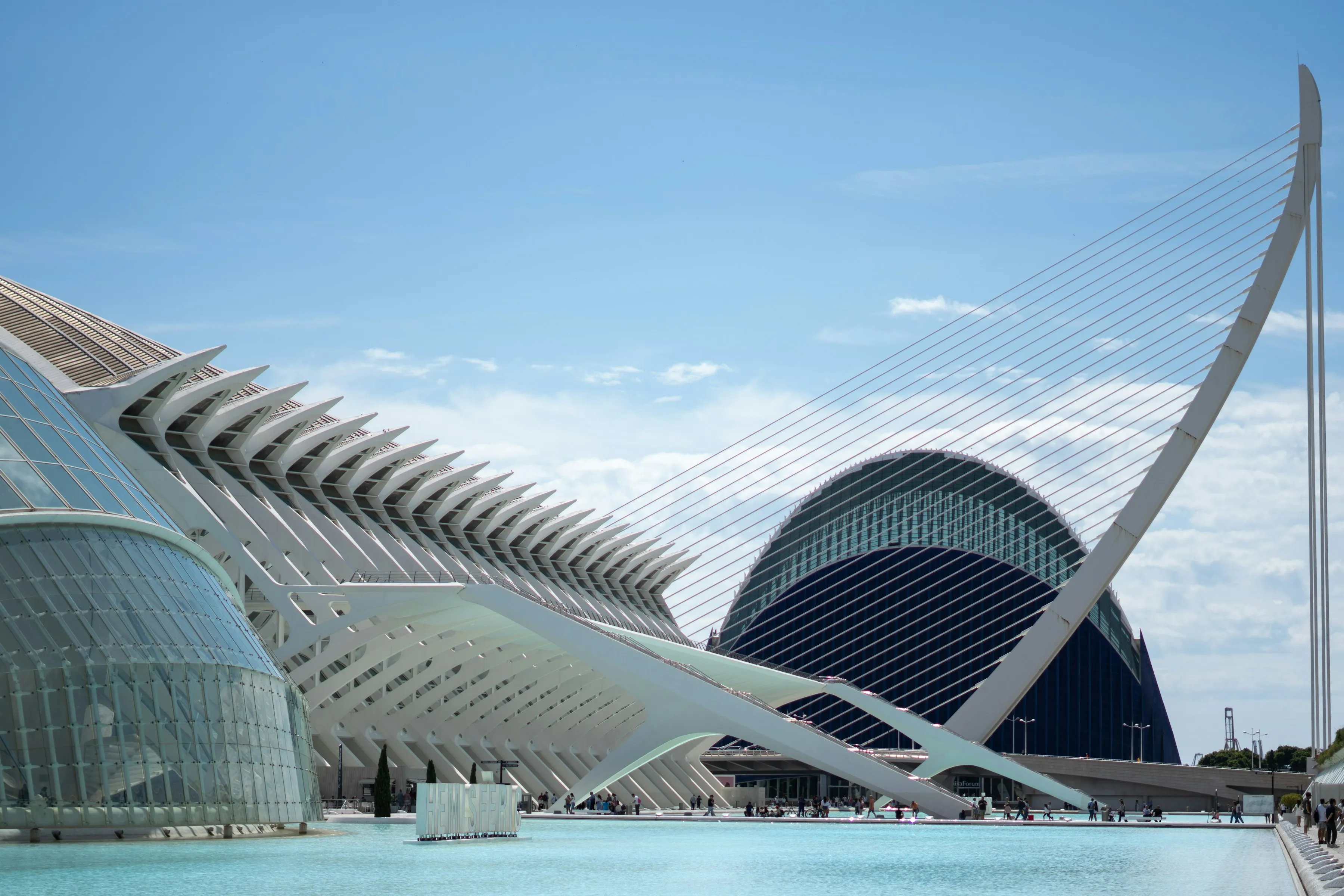
Designed largely by Santiago Calatrava and Félix Candela, this futuristic complex includes the Hemisfèric, the Science Museum, the Oceanogràfic aquarium, the Palau de les Arts opera house and the Ágora. Even if you do not enter every building, the walk along the pools is worth it, particularly in the late afternoon. Check the official website for the current schedule and combined tickets.
Turia Gardens
After a devastating flood in 1957, the river was diverted and the former riverbed became a long green park that crosses the city. It is ideal for walking, jogging or cycling from the old town to the City of Arts and Sciences.
Central Market and Silk Exchange
The Mercado Central is a modernist iron-and-glass market full of seafood, ham, spices and fresh produce. Facing it is the Lonja de la Seda (Silk Exchange), a late-Gothic merchant hall listed by UNESCO, with twisting columns inside.
Cathedral and the Micalet
The cathedral is a mix of styles, and climbing its bell tower, El Micalet, rewards you with a panoramic view. The cathedral also claims to house a chalice traditionally venerated as the Holy Grail.
Old town, Carmen and Ruzafa
The Barrio del Carmen is a maze of old streets with street art, bars and small squares. Ruzafa is the trendy area for cafés, brunch and nightlife. Both are best explored on foot, and the nearby Serranos Towers offer another viewpoint.
Beaches
The Malvarrosa and Las Arenas beaches lie a short metro or tram ride from the centre and are lively from late spring to early autumn.
Albufera
South of the city, the Albufera is a freshwater lagoon surrounded by rice fields and the landscape where paella originated. A boat ride at sunset is the classic visit.
Day trips
Valencia is a comfortable base for visits to Sagunto, Xàtiva or the beaches of Gandia. If you are building a longer route, the high-speed train links Valencia with Madrid and Barcelona, so you can combine it with Madrid or Barcelona.
🏘️ Neighborhoods and Where to Stay
- Ciutat Vella (the old town): the most convenient for sightseeing, with plenty of restaurants and nightlife.
- Ruzafa: a trendy area with cafés, galleries and many restaurants; good for travelers who prefer a local atmosphere.
- Carmen: atmospheric but can be noisy at night.
- Near the beach (Malvarrosa and Cabanyal): a good choice for a beach-oriented stay, with a calmer pace and sea views.
- Near the City of Arts and Sciences: modern and quiet, convenient for families and for the park.
🍛 Typical Gastronomy
Valencia is the home of paella, and one of the best things you can do is eat it the local way.
| Dish | Description | Where to try it | Tip |
|---|---|---|---|
| Paella valenciana | Rice with chicken, rabbit, green beans, garrofó beans and saffron, cooked over fire. | Restaurants around the Albufera and El Palmar | Traditionally a lunch dish, not for dinner. |
| Arroz a banda | Rice cooked in fish stock, served with allioli. | Seafood restaurants | Made with fish stock, not mixed meats. |
| Fideuà | A noodle dish similar to paella, often with seafood. | Restaurants near the coast | Often served for two or more. |
| Horchata and fartons | A cold drink made from tiger nuts with sweet pastries to dip. | Horchaterías in Alboraya and the old town | A classic afternoon break. |
| Agua de Valencia | A cocktail with orange juice, cava and spirits. | Bars | Sweeter and stronger than it tastes. |
Be careful with restaurants along the beach that display colour photos of paella; the best ones usually have a short menu and cook to order. For more ideas on market food and street food, read our foodie travel tips.
🚌 Getting Around
From the airport. The metro connects Valencia Airport with the centre, and there are also buses and taxis. Check the official transit website for current lines and fares.
Metro, tram and buses. The Metrovalencia network covers the city and the beaches, and the EMT buses cover the rest. A rechargeable card is the cheapest way to travel if you take several rides.
By bike. Valencia is flat and has a large network of bike lanes. The public bike-share system is popular with visitors. The Turia Gardens make for a pleasant ride.
On foot. The old town is walkable, but the City of Arts and Sciences is about 30–40 minutes away on foot, so you may prefer a bike, bus or metro.
Trains. High-speed trains connect Valencia with Madrid in under two hours and with Barcelona in around three. For more on how to use public transport in places you do not know, read our guide to public transport in unfamiliar countries.
🛡️ Safety and Common Scams
Valencia is a safe city. The main issues are small thefts in crowded areas, especially the old town, the market and the beach.
- Pickpockets in markets and busy streets: keep your phone and wallet in front pockets or in a zipped bag.
- Beach thefts: avoid leaving your belongings unattended while you swim.
- Distraction tricks: someone drops something or asks for help while a partner steals.
- Overpriced paella restaurants: check prices and portions before you order, and be careful with places that push tourist menus.
- Bike safety: lock your bike with a good lock, and use dedicated lanes where possible.
The emergency number is 112. For general advice on keeping your belongings safe, see our tips to avoid robberies and scams while traveling.
✈️ Best Time to Visit
| Season | What to expect | Notes |
|---|---|---|
| Spring (March–June) | Warm and sunny | Las Fallas takes place around March 15–19 with fireworks, parades and the burning of large figures; book early |
| Summer (July–August) | Hot and humid | Best for the beach, but heavy and busy at midday |
| Autumn (September–October) | Warm sea, fewer crowds | A great time for the beach and the city |
| Winter (November–February) | Mild, sunny | Good for walking, with few tourists and lower prices |
Las Fallas is a unique experience, but expect crowds, noise, road closures and higher prices. If you prefer a quieter visit, choose April–June or September–October. When you have your dates, look at tours and tickets in Valencia and book early.
Continue your route with Barcelona or Madrid, or read our full Spain travel guide.