


Barcelona
Barcelona travel guide: Gaudí's Sagrada Família and Park Güell, the Gothic Quarter, La Boqueria, beaches, day trips, transport, safety tips and the best time to go.
Quick Facts
- Best time to visit
- April to June and September to October
- Budget per day
- $90 - $220 per day
🌎 Introduction
Barcelona gives you a city break and a beach holiday in the same trip. In one day you can stand under Gaudí’s unfinished basilica, eat at a century-old market and end the evening with your feet in the Mediterranean. It is the capital of Catalonia, a region with its own language and strong identity, and it is one of the most visited cities in Spain. That popularity is both its strength and its challenge: the best sights need planning, and crowds are real. If you want to see what is available before you build your itinerary, you can compare tours, tickets and day trips in Barcelona.
This guide focuses on what actually matters for a first visit: which tickets to book ahead, which neighborhoods suit which kind of traveler, what to eat beyond the obvious tapas, how to use public transport, and how to avoid the pickpocket hotspots that have given the city a reputation.
🎟️ Tours and Activities
In Barcelona, booking ahead pays off more than in almost any other Spanish city. The most popular monuments sell timed tickets, and the most convenient slots disappear first in spring and summer. Beyond monument tickets, guided walks through the Gothic Quarter, tapas and market tours, and day trips to Montserrat or the Costa Brava are very popular. You can browse activities and tickets in Barcelona and compare options, meeting points and cancellation conditions before you commit.
Tip: For the Sagrada Família and Park Güell, buy tickets with a fixed time and arrive 10 minutes early. Do not rely on buying at the door in high season.
📷 What to See
Sagrada Família
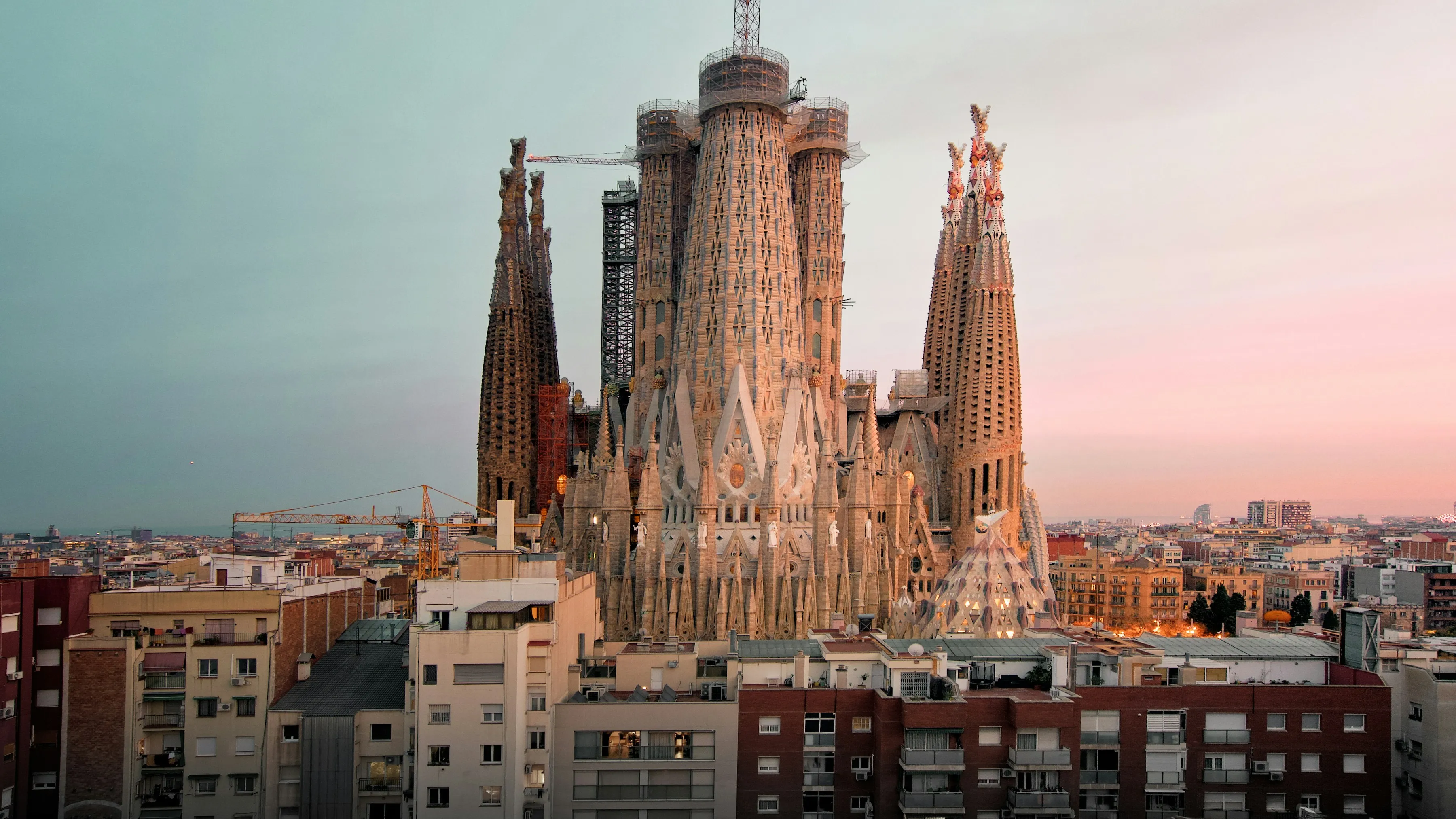
Antoni Gaudí’s basilica is the symbol of the city, and construction has continued for well over a century. Inside, the columns branch like trees and the stained glass fills the nave with colour. Tickets are for a specific time slot, and the version that includes a tower gives you a view over the city. Check the official website for the current opening hours and for what is open on the day you plan to go.
Park Güell
Gaudí’s hilltop park mixes mosaics, odd rock-like structures and one of the best views over Barcelona. The central “monumental zone” with the mosaic bench is ticketed and limited by time slots, while the rest of the park is easier to enter. Wear comfortable shoes: it involves a lot of uphill walking.
Casa Batlló and La Pedrera
Two of Gaudí’s most famous townhouses stand on or near Passeig de Gràcia, the city’s grand shopping avenue. Casa Batlló is known for its scaly façade and skylight; La Pedrera (Casa Milà) for its undulating stone and rooftop chimneys. Visit one inside and admire the other from the street if your time or budget is tight.
Gothic Quarter and El Born
The Barri Gòtic is the medieval core: narrow lanes, the cathedral, small squares and old Roman remains. Next door, El Born has the Picasso Museum, stylish bars and the Santa Maria del Mar church. Both are best explored on foot, early in the morning or in the evening.
La Boqueria and La Rambla
La Boqueria is the city’s most famous market, a feast of fruit, ham and fresh juices. The stalls near the entrance are the most touristy and expensive; walk deeper inside for better prices. La Rambla itself is more a place to walk through than to linger in, and it is also a pickpocket hotspot.
Montjuïc
This hill above the port has gardens, museums, a castle and views over the sea, plus the evening shows of the Magic Fountain. A cable car and a funicular make the climb easy.
Beaches: Barceloneta and beyond
Barceloneta is the city’s closest beach and the most crowded one. For more space, walk or ride north along the coast. In the evening, the beachfront chiringuitos fill with locals as well as visitors.
Day trips: Montserrat, Sitges and Girona
Montserrat is a serrated mountain with a Benedictine monastery, reachable by train plus rack railway or cable car. Sitges is a seaside town on the commuter line. Girona has a beautifully preserved old quarter and is under an hour away by high-speed train. If you also plan to visit Valencia or Madrid, there are fast trains for both.
🏘️ Neighborhoods and Where to Stay
- Eixample: the grid district with Gaudí’s townhouses, good restaurants and metro access. A comfortable, central choice for first-timers.
- Barri Gòtic and El Born: charming and walkable, but noisy at night and full of tourists.
- Gràcia: a village-like neighborhood with squares, independent shops and local restaurants. Great if you like a relaxed atmosphere.
- Barceloneta and the Port Olímpic: handy for the beach, with a seaside feel and more crowded streets.
- Poble-sec and Sant Antoni: popular with locals and visitors for tapas and bars, with lower prices than the very centre.
Before you book, check our list of what to check before booking accommodation.
🍛 Typical Gastronomy
Catalan cuisine has its own character: more sea and mountain than the rest of Spain, with sauces and flavours you will not find in Madrid.
| Dish | Description | Where to try it | Tip |
|---|---|---|---|
| Pa amb tomàquet | Bread rubbed with ripe tomato, garlic and olive oil. | Almost any traditional restaurant | The ideal base for ham, cheese and anchovies. |
| Escalivada | Grilled vegetables, usually peppers, aubergine and onion. | Catalan restaurants and tapas bars | Often served as a starter or on toast. |
| Fideuà | A noodle-based cousin of paella, often with seafood. | Seafood restaurants by the sea | Usually served for two or more. |
| Bombas | Fried potato croquettes with meat and a spicy sauce. | Bars in Barceloneta | A typical beer snack. |
| Crema catalana | Custard with a burnt sugar crust. | Restaurants and pastry shops | The classic Catalan dessert. |
Calçots, sweet grilled spring onions eaten with a nut-and-pepper sauce, are a winter and early spring tradition (roughly January to March). Pair meals with a glass of cava, the sparkling wine from nearby Penedès. For more ideas on eating like a local, read our foodie travel tips: markets and street food.
🚌 Getting Around
From the airport. El Prat connects with the city by the Aerobús, by the Rodalies regional train to the centre and by metro Line 9 Sud. A taxi is convenient for groups. Check the official transit website for current routes and fares.
Metro, bus and tram. Barcelona’s public transport is dense and covered by integrated tickets. For several rides, a multi-trip card is cheaper than single tickets. Ask the ticket machine for the current options and check the official website before you travel.
On foot. Barri Gòtic, El Born and the Eixample are walkable. Montjuïc and Park Güell involve hills, so combine walking with the metro or bus.
Trains and buses to other cities. Rodalies regional trains serve Sitges, Montserrat and many coastal towns, and high-speed trains run to Madrid and Girona. Book well ahead for the best fares. Our guide to public transport in unfamiliar countries explains how to read maps and buy tickets.
Language. Catalan is widely used alongside Spanish. A few words go a long way: Bon dia (good morning), Gràcies (thank you), Adéu (goodbye). Everyone in tourist areas speaks Spanish and many speak English.
🛡️ Safety and Common Scams
Barcelona is generally safe, but it has a higher rate of petty theft than most Spanish cities. Be most careful in La Rambla, the Gothic Quarter, the metro, Barceloneta beach and the Sagrada Família queue.
- Pickpockets on the metro and La Rambla: stay alert when boarding and leave valuables in zipped pockets or a front-facing bag.
- Bag snatching from motorbikes: do not hang a phone or bag loosely over a street-side chair or table edge.
- Fake petitions and distraction tricks: someone asks for a signature or drops something near you to distract you.
- Beach thefts: do not leave a bag or phone unattended on the sand, even for a short swim.
- Overpriced restaurants on tourist streets: check prices on the menu before sitting down and avoid places with someone at the door trying to lure you in.
Keep your passport copy in the hotel and carry your ID or a photocopy. The emergency number is 112. For practical protection, see how to protect your luggage from theft or loss.
✈️ Best Time to Visit
| Season | What to expect | Notes |
|---|---|---|
| Spring (April–June) | Mild, sunny, long days | Sant Jordi (April 23) fills streets with books and roses |
| Summer (July–August) | Hot and humid, beaches full | The busiest and most expensive period; book ahead |
| Autumn (September–October) | Warm sea, fewer crowds | La Mercè festival, around September 24, brings parades and concerts |
| Winter (November–March) | Mild, quieter, occasional rain | Best prices and easier ticket availability |
For a first visit, late spring or September are the sweet spot. Once you have chosen your dates, look at tickets and tours in Barcelona and secure the timed entrances first.
Keep exploring: Madrid has the great art museums, Valencia offers a calmer Mediterranean alternative, and the full Spain travel guide will help you plan a longer route.