


Seville
Seville travel guide: the Real Alcázar, Cathedral and Giralda, Plaza de España, Triana, flamenco, local food, getting around, heat tips and the best time to visit.
Quick Facts
- Best time to visit
- March to May and October to November
- Budget per day
- $70 - $180 per day
🌎 Introduction
Seville is the city most people picture when they imagine southern Spain: orange trees along the streets, whitewashed courtyards, flamenco after dark and a skyline led by a tower that was once a minaret. It is the capital of Andalusia, and its compact historic centre makes it one of the easiest Spanish cities to enjoy on foot. If you want to see what you can book before you travel, you can compare tours, tickets and flamenco shows in Seville.
The city rewards slow travel. Its best moments are often unplanned: a late tapas dinner in a side street, a walk along the river at sunset, a quiet courtyard you find by following a gate left open. This guide covers the big sights and the small practical details that make a trip smoother, from where to stay to how to deal with the summer heat.
🎟️ Tours and Activities
Seville has a few must-see monuments with timed entry, plus several experiences that are better with a local guide: the Jewish quarter and Santa Cruz, flamenco, a tapas walk, and day trips to nearby places. You can browse tours and activities in Seville, and it is worth reading the meeting point and cancellation conditions before you book. In spring and during the major festivals, popular tickets sell out well ahead.
Tip: Visit the Real Alcázar and the Cathedral in the morning, and keep the afternoon for the shade of María Luisa Park or a long lunch. In summer, plan your day around the heat.
📷 What to See
Real Alcázar
The Alcázar is a royal palace that still serves as a residence of the Spanish monarchy and is famous for its Mudéjar rooms, tiles and gardens. It is part of a UNESCO World Heritage site together with the cathedral and the Archivo de Indias. Book a timed ticket in advance and allow at least two hours.
Cathedral and Giralda
Seville’s Cathedral is one of the largest Gothic churches in the world and holds the tomb of Christopher Columbus. The Giralda, its bell tower, started life as the minaret of the former mosque, and visitors climb a ramp rather than stairs to reach the top, with sweeping views over the old town.
Plaza de España and María Luisa Park
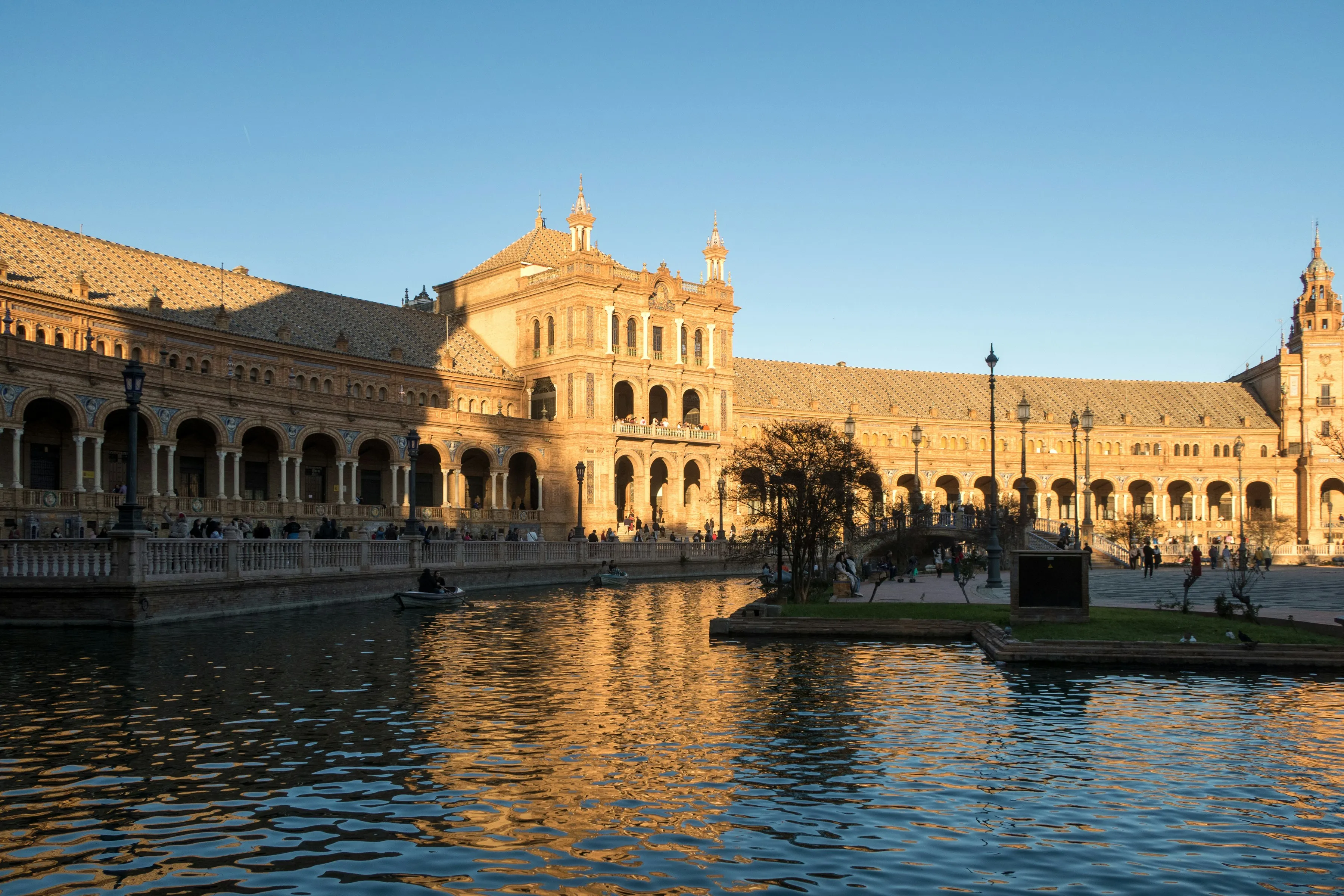
Built for the 1929 Ibero-American Exposition, the Plaza de España is a semicircular brick-and-tile building with a canal, bridges and benches decorated with the provinces of Spain. Its surrounding María Luisa Park is a green escape with shade and fountains. It is one of the best places in the city for photographs, especially in the early morning.
Barrio de Santa Cruz
The old Jewish quarter is a maze of narrow lanes, small squares and flower-filled patios. It can get very crowded in the middle of the day, so go early or in the evening.
Triana
Across the river, Triana has long been the neighborhood of potters, sailors and flamenco artists. Its market, ceramics shops and riverside bars give it a local atmosphere. It is a good place for a casual lunch.
Metropol Parasol
Locals call it Las Setas (the mushrooms): a wooden, waffle-like structure over the Encarnación square. A walkway on top offers a modern view of the city and a good sunset spot.
Flamenco
Seville is one of the best places in the world to see flamenco. Look for a small venue (tablao) rather than a large dinner show, and check reviews before booking. Some performances are not suitable for children or start very late.
Day trips
Córdoba is under an hour away by high-speed train, and it is easy to combine with Córdoba on a longer trip. Other popular excursions include Granada and the Alhambra, Ronda and the white villages, Cádiz and Jerez.
🏘️ Neighborhoods and Where to Stay
- Santa Cruz and the Cathedral area: the most atmospheric base and the most convenient for sights, but busy and pricier.
- Arenal and El Centro: central, with good transport and plenty of tapas bars.
- Triana: authentic, near the river, with a local feel and good food. Easy to reach on foot over the bridge.
- Alameda de Hércules: a young, alternative area with bars and restaurants, livelier at night.
- Near Santa Justa station: practical if you arrive by train and want to leave early, but farther from the old town.
If you are unsure whether to choose a hotel or an apartment, our comparison of hostels, hotels and apartments can help.
🍛 Typical Gastronomy
Seville’s cuisine is based on fried fish, local olive oil, stews and the habit of eating in small portions standing at a bar.
| Dish | Description | Where to try it | Tip |
|---|---|---|---|
| Espinacas con garbanzos | A warm dish of spinach and chickpeas with cumin and garlic. | Traditional taverns | A classic tapa, especially in winter. |
| Pescaíto frito | Fried fish and seafood from the nearby coast. | Bars and restaurants in the centre and Triana | Best eaten freshly fried and shared. |
| Tortillitas de camarones | Thin crispy fritters with tiny shrimp. | Tapas bars | Ask for them while still hot. |
| Solomillo al whisky | Pork loin with garlic and whisky sauce. | Local taverns | A very common Sevillian tapa. |
| Montadito | A small toasted sandwich with various fillings. | Almost any bar | Great for sampling several flavours cheaply. |
Many bars let you order half a portion (media ración) so you can try more dishes. Seville’s oranges are bitter, so they are mainly used for marmalade rather than eating. For more ideas on how to enjoy local markets and street food, see our foodie travel tips.
🚌 Getting Around
From the airport. San Pablo Airport is connected to the centre by a dedicated airport bus. A taxi is easy and has set rates for the central zone. Check the official transit website for the current route.
On foot and by bike. The historic centre is compact and mostly flat. The city also has a public bike-sharing system and many cycle lanes, which makes bikes a pleasant option outside the hottest hours.
Bus, tram and metro. The Tussam buses cover the city. The metro has a single line, and there is a short tram in the centre. Most visitors do not need them.
Trains. The Santa Justa station has high-speed trains to Madrid (around 2.5 hours), Córdoba (under an hour), Málaga and other Andalusian cities. Book in advance for lower fares.
🛡️ Safety and Common Scams
Seville is a safe city, and violent crime against visitors is rare. As in other tourist cities, watch for pickpockets in crowded places such as the Cathedral area, Santa Cruz and during festivals.
- The rosemary scam: someone offers you a sprig of rosemary “for luck” or to read your palm, then insists on payment. Say no firmly and walk on.
- Flamenco and restaurant touts: people in the street offering “special” shows or menus at inflated prices; book through a reliable source.
- Overpriced horse-drawn carriages: ask for the price before you get in.
- Crowds during Semana Santa and the Feria: keep valuables close and agree on a meeting point if you are with a group.
The heat is a safety topic too. In July and August temperatures can exceed 40 °C. Drink water, wear a hat, and plan outdoor activities for early morning or evening. The emergency number is 112.
✈️ Best Time to Visit
| Season | What to expect | Notes |
|---|---|---|
| Spring (March–May) | Warm, orange blossom in the air | Semana Santa (the week before Easter) and the April Fair draw large crowds and raise prices |
| Summer (June–August) | Very hot, often above 38 °C | Plan around the heat; some venues have long siestas and local life moves to the evening |
| Autumn (October–November) | Mild, pleasant | A very good period with fewer crowds |
| Winter (December–February) | Cool, sunny days | Cheapest period; some rain |
Spring and autumn are the best seasons. If your dates are fixed, compare tours and tickets in Seville and book the Alcázar early.
Keep exploring Andalusia with Córdoba, or head north to Madrid. For the full picture of the country, read our Spain travel guide.