


Córdoba
Córdoba travel guide: the Mosque-Cathedral, Jewish Quarter, Roman Bridge, Medina Azahara and the May patios, with food, transport, heat tips and the best time to go.
Quick Facts
- Best time to visit
- March to May and October to November
- Budget per day
- $60 - $150 per day
🌎 Introduction
Córdoba was one of the largest and most advanced cities in Europe a thousand years ago, and it still carries that history in its streets. Today it is a small, walkable city in Andalusia where a mosque, a synagogue and a cathedral stand within a few minutes of each other. It is easy to reach from Seville and Madrid by high-speed train, which makes it perfect either as a day trip or as a relaxed overnight stay. If you want to see what is on offer before you go, you can compare tours and tickets in Córdoba.
Many visitors only see it in a few hours, but the city is at its best in the late afternoon and evening, when the heat eases and the old streets fill with locals. This guide covers the main sights, how to avoid the hottest hours, what to eat and the practical details of getting here.
🎟️ Tours and Activities
Córdoba’s compact centre is easy to explore on your own, but a guided visit to the Mosque-Cathedral or the Jewish Quarter adds a lot of context. You can browse guided visits, tickets and day trips in Córdoba. A tour of Medina Azahara, which lies a few kilometres outside the city, is also worth considering because transport and timing are easier when they are included. Check meeting points and cancellation conditions before booking.
Tip: Córdoba is one of the hottest cities in Europe in summer. If you come between June and August, start your day early and take a break at midday.
📷 What to See
Mosque-Cathedral
The Mezquita-Catedral is the city’s great monument and one of the most remarkable buildings in Spain. Its forest of red-and-white arches and hundreds of columns lead to a Renaissance cathedral built inside the former mosque. It is part of the UNESCO-listed historic centre of Córdoba. Tickets can be bought online, and there has traditionally been a free-entry slot in the early morning; check the official website for the current hours and conditions.
Jewish Quarter and Calleja de las Flores
The Judería is a maze of whitewashed lanes around the mosque. The Calleja de las Flores, a tiny alley whose walls are covered in flower pots, offers one of the most photographed views of the cathedral tower. The city’s medieval synagogue is one of the few that remain in Spain.
Roman Bridge and Calahorra Tower
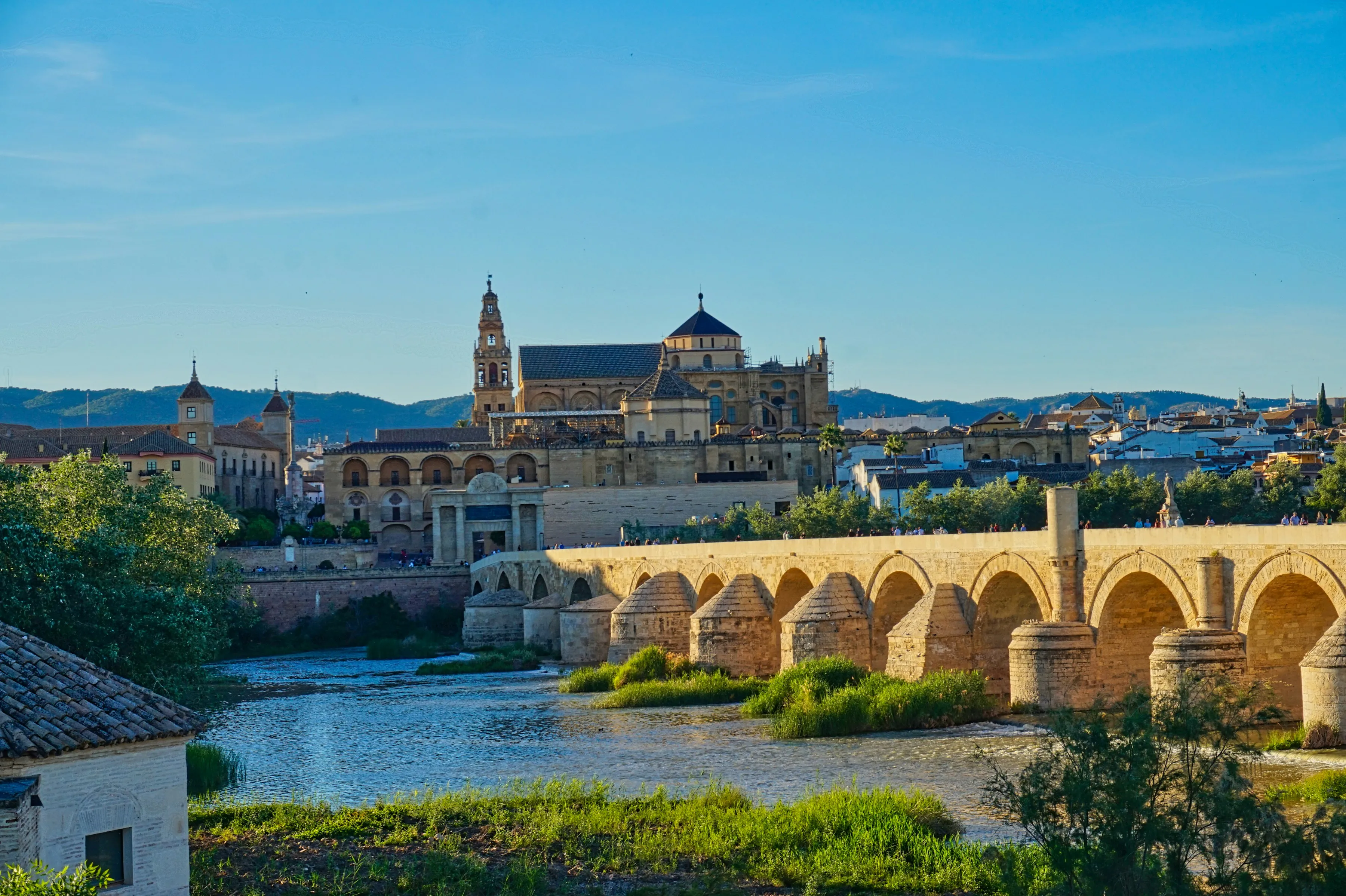
The Roman Bridge crosses the Guadalquivir and is the best place to see the Mosque-Cathedral from the water side, especially at sunset. On the far bank, the Calahorra Tower houses a small museum about the city’s history.
Alcázar of the Christian Monarchs
A fortress-palace with gardens, ponds and a view over the old town, where the Catholic Monarchs received Columbus. The gardens are especially pleasant in spring.
Medina Azahara
About eight kilometres west of the city, Medina Azahara is the ruin of a vast 10th-century palace-city, and a UNESCO World Heritage site. A visitor centre and a shuttle make the visit easy. It is closed on some days, so check ahead.
Patios and the May festival
Córdoba’s flower-filled courtyards are a UNESCO-recognised tradition. The Festival de los Patios, in the first half of May, opens private homes to the public, and it is the best time to see the city, although also the busiest.
Other places worth a stop
The Palacio de Viana has a dozen patios and a museum of an aristocratic home. Plaza del Potro and the Plaza de las Tendillas are lively squares good for a drink in the evening.
🏘️ Neighborhoods and Where to Stay
- Judería and around the Mosque-Cathedral: the best choice for atmosphere and sightseeing, but touristy and busy.
- Centro and Plaza de las Tendillas: lively, with shops and restaurants, easy access to the train station.
- San Basilio and the Alcázar Viejo: quieter, with white-walled houses and courtyards.
- Near the train station: practical for short stays and for early trains, although you will walk about 20 minutes to the old town.
🍛 Typical Gastronomy
Córdoba’s cuisine is simple and strongly seasonal, and many of its dishes are served cold in the summer.
| Dish | Description | Where to try it | Tip |
|---|---|---|---|
| Salmorejo | A thick, cold tomato cream topped with ham and egg. | Almost any restaurant in the old town | A summer staple; ask for it as a starter. |
| Flamenquín | A rolled ham-and-pork cutlet breaded and fried. | Tapas bars and taverns | Often served with fries. |
| Rabo de toro | Slow-cooked oxtail stew in a rich sauce. | Traditional restaurants | A heavy dish for winter. |
| Berenjenas con miel de caña | Fried aubergine with sugar-cane honey. | Tapas bars | A sweet-and-salty favourite. |
| Pastel cordobés | A pastry filled with squash jam. | Bakeries | Perfect with coffee. |
Córdoba is also close to the Montilla-Moriles wine region, known for dry fino and sweet Pedro Ximénez wines. For ideas on how to enjoy local food markets and street food in any city, see our foodie travel tips.
🚌 Getting Around
Arriving by train. Córdoba Central station is on the high-speed line between Madrid (under two hours) and Seville (under an hour), with direct services to Málaga as well. It is the easiest way to arrive, and trains are frequent. Book in advance for better fares.
On foot. The historic centre is flat and compact. From the Mosque-Cathedral you can walk to almost every sight in 10 to 20 minutes. Buses connect the station with the centre if you do not want to walk.
To Medina Azahara. A shuttle and a dedicated bus connect the city and the site. Check the official visitor website for schedules and tickets, as the route and frequency change by season.
Bikes and taxis. Taxis are inexpensive and useful in the heat or when you are carrying luggage. For guidance on using transit in places where you do not know the system, read our guide to public transport in unfamiliar countries.
🛡️ Safety and Common Scams
Córdoba is a calm and safe city. As in other tourist places, pickpockets are the main concern around the Mosque-Cathedral and the Judería, especially in crowded hours.
- Rosemary or “good luck” offers: someone hands you a sprig of rosemary and then asks for money. Politely decline.
- Unofficial guides: people near the Mosque-Cathedral offering a tour at a high price; book a reputable visit or use the official audio guide instead.
- Restaurants with menus at the door: check prices before sitting down in the most touristy streets.
- Heat and dehydration: the largest risk for most visitors. Carry water, wear a hat and avoid the midday sun in summer.
Keep valuables in a zipped bag and your phone in a front pocket. The emergency number is 112.
✈️ Best Time to Visit
| Season | What to expect | Notes |
|---|---|---|
| Spring (March–May) | Warm and sunny, with flowers | The best season; the Patios Festival is in early to mid May |
| Summer (June–August) | Extremely hot, often above 40 °C | Visit early and late; take siesta hours seriously |
| Autumn (October–November) | Mild, pleasant | A very good period with fewer visitors |
| Winter (December–February) | Cool and sometimes cold in the morning | Quiet and cheap; good for the Mosque-Cathedral |
Spring and autumn are the best choices. When you are ready, look at tickets and tours in Córdoba and plan your day around the shade.
Córdoba combines well with Seville in a southern route or with Madrid on the way down. For more of the country, read our Spain travel guide.