


Marseille
Marseille travel guide: the Vieux-Port, Notre-Dame de la Garde, the MuCEM and Le Panier, the Calanques, bouillabaisse and France's oldest city.
Quick Facts
- Best time to visit
- April to June and September to October
- Budget per day
- $65 - $160 per day
🌎 Introduction
Marseille is France’s oldest city — Greek sailors founded it around 600 BC — and its most stubborn: 2,600 years of port life have produced a place that feels closer to Tangier or Naples than to Paris, with the sincerity, the noise and the light to match. The Vieux-Port anchors it; the Mediterranean defines it; and behind the postcard sits a young, immigrant, creative city that renews itself street by street.
The 2013-European-capital-of-Marseille renaissance left museums and promenades, but the soul is older: the fish market at dawn, the pastis at eleven, the football on Sunday. If you want to organize ahead, you can compare tours and activities in Marseille before you travel.
🎟️ Tours and Activities
The essentials: boat trips to the Calanques and Château d’If, food walks through the markets (Noailles and the Vieux-Port), the electric-cart or on-foot tours of Le Panier, and kayak and hiking guides for the national park. Book the Calanques boats for the morning; in summer, check the park’s access rules first — the massif closes to hikers on high-fire-risk days announced by the prefecture.
Tip: the Marseille CityPass bundles metro, boats to the Château d’If, museums and the little tourist train; it pays for itself in a full day of sightseeing — see the official marseille-tourisme site for current contents.
📷 What to See
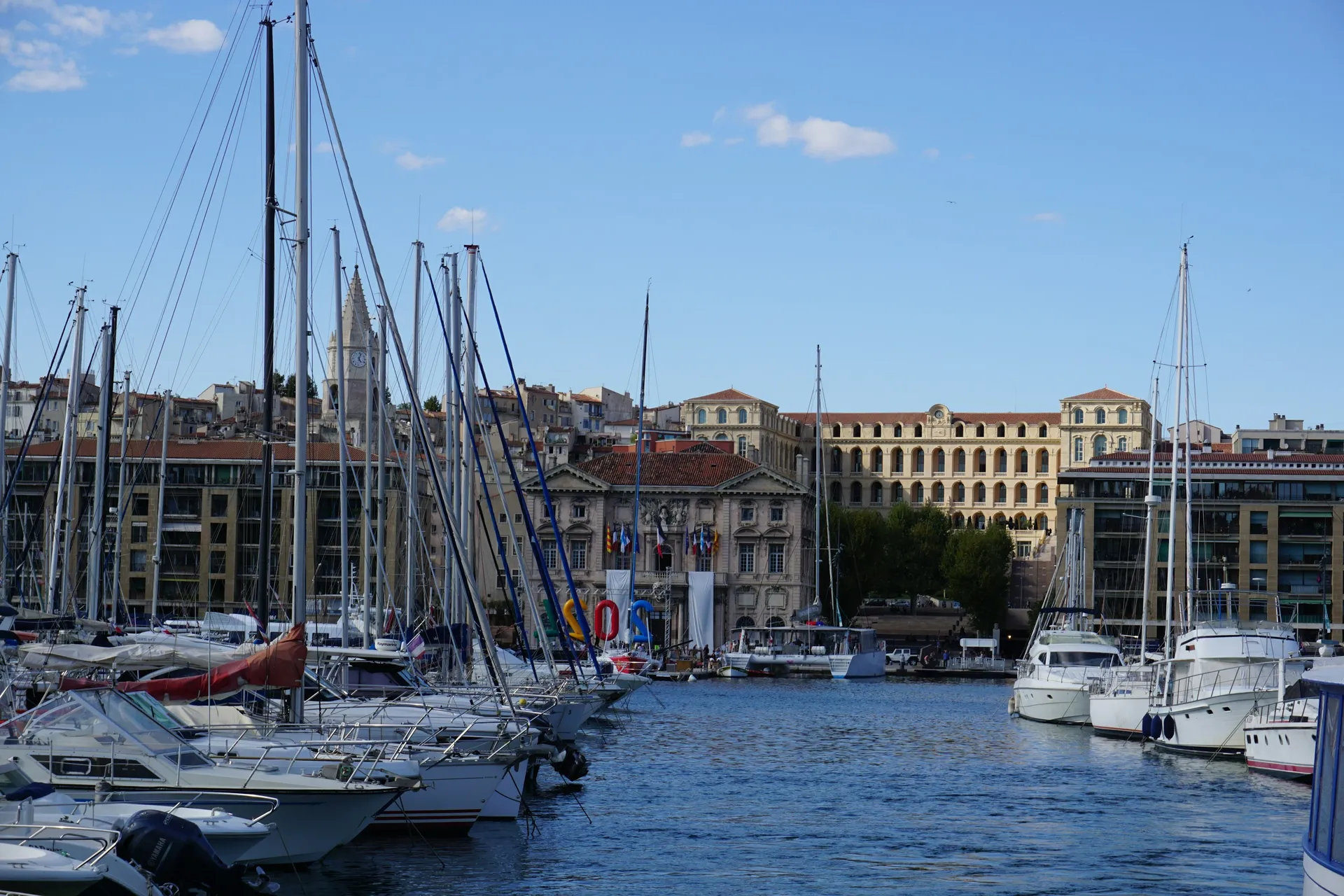
Vieux-Port
The old port is the city’s heart and compass: fishing boats and yachts under a Norman Foster mirror canopy, the daily fish market on the quai des Belges, and two forts guarding the entrance. Every Marseille walk starts here, and the evening apéritif ends here.
Notre-Dame de la Garde
The basilica on the highest hill — la Bonne Mère, the Good Mother — watches the city and the sea from under a gilded Virgin. The interior of ex-voto boats and the 360° terrace view (city, islands, the Estaque) repay the bus ride or the climb.
MuCEM and Fort Saint-Jean
The Museum of European and Mediterranean Civilizations, in a concrete-lattice cube joined by a flying footbridge to the restored fort, remade the waterfront: exhibitions of Mediterranean cultures, rampart walks and the best sunset spot in town on the outer jetty.
Le Panier
The oldest quarter climbs the hill behind the MuCEM: washed lanes, workshops, street art corners, the Vieille Charité — a 17th-century alms house around a quiet courtyard with an oval-domed chapel, now museums — and cafés that feel like living rooms. Marseille at its most walkable.
The Calanques National Park
The white limestone fjords between Marseille and Cassis: turquoise coves under cliffs, reachable by hiking trails from Luminy or Callelongue, or by boat from the Vieux-Port. The jewels are Sugiton and En-Vau; the rules matter — in summer, access is regulated on days of fire risk (the prefecture publishes closures), and swimming from the rocks is at your own caution.
Château d’If
The island fortress-prison in the bay, immortalized by Dumas’s Count of Monte Cristo, is a 20-minute boat from the quai du port. The cells, the views back at the city and the island’s seabirds make it half a morning well spent.
La Corniche and the beaches
The Kennedy cliffside promenade runs south from the port to the beaches of the Prado and the Grotte Rolland — locals’ beach territory — with the Mediterranean on one side and 19th-century villas on the other.
🏘️ Neighborhoods and Where to Stay
- Vieux-Port / Opéra: central, walkable, hotel-heavy; the first-visit choice.
- Le Panier: atmospheric and quiet at night; small hotels and B&Bs on lanes.
- Le Panier-side of Joliette / Euroméditerranée: the new business district, modern hotels near the MuCEM and the tram.
- Endoume / Notre-Dame heights: village feel, sea views, stairs; buses to the centre.
- Prado beaches / Pointe Rouge: the seaside option, calm, with the metro and buses inland.
🍛 Typical Gastronomy
Marseillais cooking is the sea plus Provence, without ceremony.
| Dish | Description | Where to try it | Tip |
|---|---|---|---|
| Bouillabaisse | The famous fish stew, traditionally with rascasse and served with rouille and croutons. | The classic tables around the Vieux-Port | The genuine article comes with the whole fish presented at the table — order it for two, at dinner. |
| Navettes | Orange-blossom boat-shaped biscuits, the centuries-old Candlemas pastry. | Four des Navettes by Saint-Victor | Buy the paper bag, eat within days. |
| Panisse | Chickpea fries, crisp outside, soft inside. | Kiosks and trattorias | The street-food answer to socca. |
| Pieds paquets | Feet and tripe stewed in white wine — the old-school Sunday dish. | Traditional tables off the port | For the adventurous; order early (it sells out). |
| Pastis | The anise aperitif of the port, with water and ice. | Any café terrace | Order “un pastis” and take your time. |
| Savon de Marseille | The cube of olive-oil soap, made here for centuries. | Local soap shops | A souvenir that actually gets used. |
🚌 Getting Around
From the airport. Marseille-Provence links to Saint-Charles station by a 25-30 minute shuttle bus; compare airport transfers for late arrivals. Saint-Charles, on its monumental staircase, is also the TGV hub to Paris (about 3 hours).
Metro, tram, buses. Two metro lines and several tram lines cover the centre; buses reach the Calanques trailheads and the Prado. A day pass pays off; the RTM official site has plans and fares.
Boats. The Vieux-Port ferries (the “bateau-bus” crosses the harbour for a song) and the scheduled boats to If and the Calanques are transport and sightseeing at once.
On foot. The port, Panier and Joliette fit walking; the hills and beaches want transit or motivation.
🛡️ Safety and Common Scams
Marseille demands normal big-city care, not fear.
- Pickpockets: the Vieux-Port crowd, the Noailles market and public transport at rush hours.
- The three-cup games and petition teams: around the port and the Canebière’s lower end; refuse and keep walking.
- Beach and car break-ins: never leave anything visible in a parked car, anywhere in the city.
- Calanques: heat, cliffs and closed days — carry water, follow the marked trails and respect the prefecture’s fire-risk closures.
Emergency number: 112; at sea, dial 196, the French sea-rescue channel.
✈️ Best Time to Visit
| Season | What to expect | Notes |
|---|---|---|
| Spring (April-June) | Mild, clear, hiking prime | Calanques at their best before the heat |
| Summer (July-August) | Hot, festive, mistral days | Fire-risk closures in the park; boats book out |
| Autumn (September-October) | Warm sea, golden light | Our favourite window; the water keeps summer’s heat into October |
| Winter (November-March) | Bright, windy, quiet | The mistral clears the air; museums and bouillabaisse season |
For the park and boats, book the Calanques tours ahead in high season.
Pair Marseille with Nice along the coast, Lyon up the Rhône, or the Provençal interior — the full map is in the France guide.