


Honfleur
Honfleur travel guide: the Vieux Bassin and its slate houses, the wooden Sainte-Catherine church, Boudin's impressionists, Auge cider country and the coast.
Quick Facts
- Best time to visit
- April to June and September to October
- Budget per day
- $70 - $160 per day
🌎 Introduction
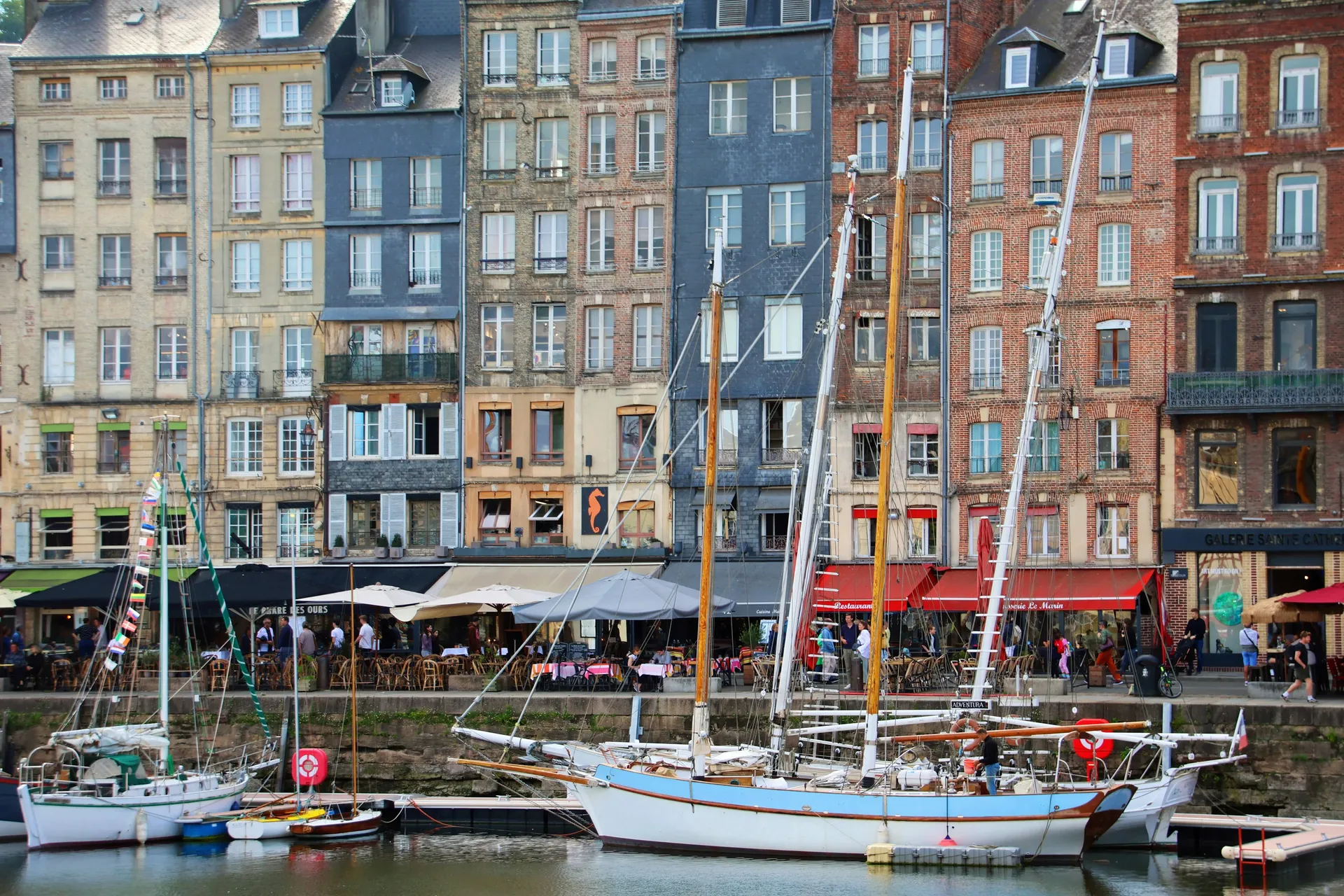
Honfleur is Normandy’s postcard: a small harbour town where the old dock — the Vieux Bassin — is ringed by tall slate-fronted houses that have been making painters reach for their brushes since the 19th century. It is small enough to walk in an afternoon and atmospheric enough for a weekend: wooden church, cobbled lanes, cider country at its back, the Channel at its front, and a restaurant scene that punches far above its size.
This guide covers the town and its surroundings. It pairs naturally with Rouen inland, the Mont-Saint-Michel west, and Deauville’s beaches next door.
🎟️ Tours and Activities
The essentials: the harbour and old town on foot, the Boudin museum’s impressionists, and the Auge country’s cider and cheese routes by car or tour. You can browse tours and activities in Honfleur — food walks, cider-house visits, coastal excursions to Étretat’s cliffs, and Seine bay cruises. Book the cider-route tours for the morning; the tasting is better before lunch than after it.
Tip: the town’s parking fills early in season; use the paid lots at the edge and walk in — the lanes are pedestrian-slow anyway. The tourist office’s map marks the free out-of-town lots with their shuttle in high summer.
📷 What to See
Vieux Bassin
The old dock, dug on Colbert’s orders: the Lieutenance (the last gate of the old town) at its head, the quays’ tall houses with slate hung like fish scales, and the boats that make the picture. It is the view that brought the impressionists — and every visitor since. See it at dawn once; you will have it alone.
Sainte-Catherine’s church
The largest wooden church in France, built by shipwrights after the Hundred Years’ War: its bell tower stands apart, separate and timbered like an upside-down hull, and the interior’s chestnut roof is naval carpentry turned to prayer. Clap gently on a quiet day; the wood answers.
The old town’s lanes
Around the harbour, the town is lanes of stone and timber: the quartier de l’Enclos, the rue de la Ville lined with shops, the two salt granaries (Greniers à Sel) now hosting exhibitions and the festivals’ concerts.
Musée Eugène-Boudin
The little museum of the town’s painter-son and the friends he influenced: pre-impressionist skies, Honfleur’s harbour on canvas, and the visiting Monets. It explains why this coast changed the history of painting.
Naturospace and the gardens
The tropical-butterfly greenhouse on the town’s edge is the children’s classic; the public gardens and the Côte de Grâce’s chapel viewpoint above town, where sailors’ votive models hang, give the view over the estuary that painters also loved.
The Auge country and the coast
Behind the town, the Auge: Normandy’s postcard countryside of half-timbered manors, cider apples, Camembert villages and calvados distilleries — a day of routes (our food notes below). Ahead, the coast: Deauville-Trouville’s beaches 15 minutes west, the Seine’s estuary nature park east, and Étretat’s white cliffs within a drive.
How two days fit
Day 1
- Dawn: the Vieux Bassin’s empty hour — the only time the quays are yours.
- Morning: Sainte-Catherine’s timber church and shipwrights’ tower, then the Boudin museum.
- Afternoon: the lanes between the salt granaries and the art galleries; the Côte de Grâce’s chapel viewpoint above town.
- Evening: a harbour terrace as the masts count themselves against the sky.
Day 2
- Auge version: the cider-and-cheese loop by car or tour — two cellar stops, one manor, a village lunch.
- Coast version: Deauville’s boardwalk and the estuary park west, Étretat’s cliffs if the day is long.
- Book ahead: the Auge tours’ morning tastings; summer harbour tables by afternoon.
🏘️ Neighborhoods and Where to Stay
- Around the Vieux Bassin: the postcard at the window; small hotels, high season prices.
- The old town lanes: atmosphere a street back from the water; quieter at night.
- The heights (Côte de Grâce): views over the estuary; a steep walk or short drive.
- Out toward the coast road: modern hotels and B&Bs with parking, five minutes from the centre.
🍛 Typical Gastronomy
Norman cooking at its source, with the Auge’s pantry next door.
| Dish | Description | Where to try it | Tip |
|---|---|---|---|
| Seafood platters | The estuary’s oysters, mussels and scallops in season. | Harbour restaurants | Order the plateau; the tide decides the menu. |
| Sole of the Channel | The classic, meunière or normande. | The old tables | Simple, expensive, worth it once. |
| Poulet vallée d’Auge | Chicken in cream and cider. | Bistros | Ask if the cider is from the Auge — it should be. |
| Camembert | Normandy’s most famous cheese; its home village lies further inland. | Cheese shops | Buy it au lait cru if you can. |
| Cider and Pommeau | The region’s apples in glass, still and fortified. | Cider houses, bars | The cider route’s tasting rooms welcome visits. |
| Calvados | The apple brandy, young to very old. | Distilleries | The older the vintage, the smoother the bill — and the brandy. |
🚌 Getting Around
From the airport. Deauville-Normandie is 20 minutes with seasonal flights; Paris is the practical gateway (2 h 30-3 h by car or train+bus). Compare transfers from Paris if you skip the car.
In town. Honfleur walks; the harbour to the far lanes is ten minutes. The coast and the Auge need wheels: bus lines exist (thin), but a car or a coastal tour is the honest answer.
Outward. Deauville-Trouville has the train to Paris; Le Havre (across the bridge) adds lines and the ferry to England; Rouen is an hour inland.
Drivers from Paris should budget three hours and arrive by mid-afternoon: arriving over the Pont de Normandie’s cable lines makes one of Normandy’s prettiest approaches, and the edge parking lots empty fast on summer evenings. Train travellers land at Deauville-Trouville or Le Havre and cross by bus or taxi — build the last leg into the plan rather than discovering it at the station.
🛡️ Safety and Common Scams
Honfleur is a small, safe tourist town.
- Pickpockets: the harbour crush on summer evenings; phones off café tables.
- Restaurant touts: the harbour’s photo menus are aimed at one-time visitors; the lanes behind hold the better tables.
- Tides on the coast: the estuary’s flats are dangerous to walk out on; follow the signed zones.
Emergency number: 112.
✈️ Best Time to Visit
| Season | What to expect | Notes |
|---|---|---|
| Spring (April-June) | Mild, blossom in the Auge | The cider country at its freshest |
| Summer (July-August) | Warm, full, festival weeks | Book everything; the harbour doubles |
| Autumn (September-October) | Golden, apple harvest | Cider houses pressing; our favourite window |
| Winter (November-March) | Quiet, grey-silver light | The painters’ season; half the crowds |
For the cider route and coastal days, book the tours ahead in season.
Pair Honfleur with Rouen inland, Deauville’s boardwalk, and the Mont-Saint-Michel on the western loop — the full map is in the France guide.