


Chamonix
Chamonix travel guide: Aiguille du Midi, Mer de Glace, the ski areas under Mont Blanc, guided off-piste, Savoyard food and mountain safety tips.
Quick Facts
- Best time to visit
- December to April for skiing; June to September for hiking
- Budget per day
- $90 - $220 per day
🌎 Introduction
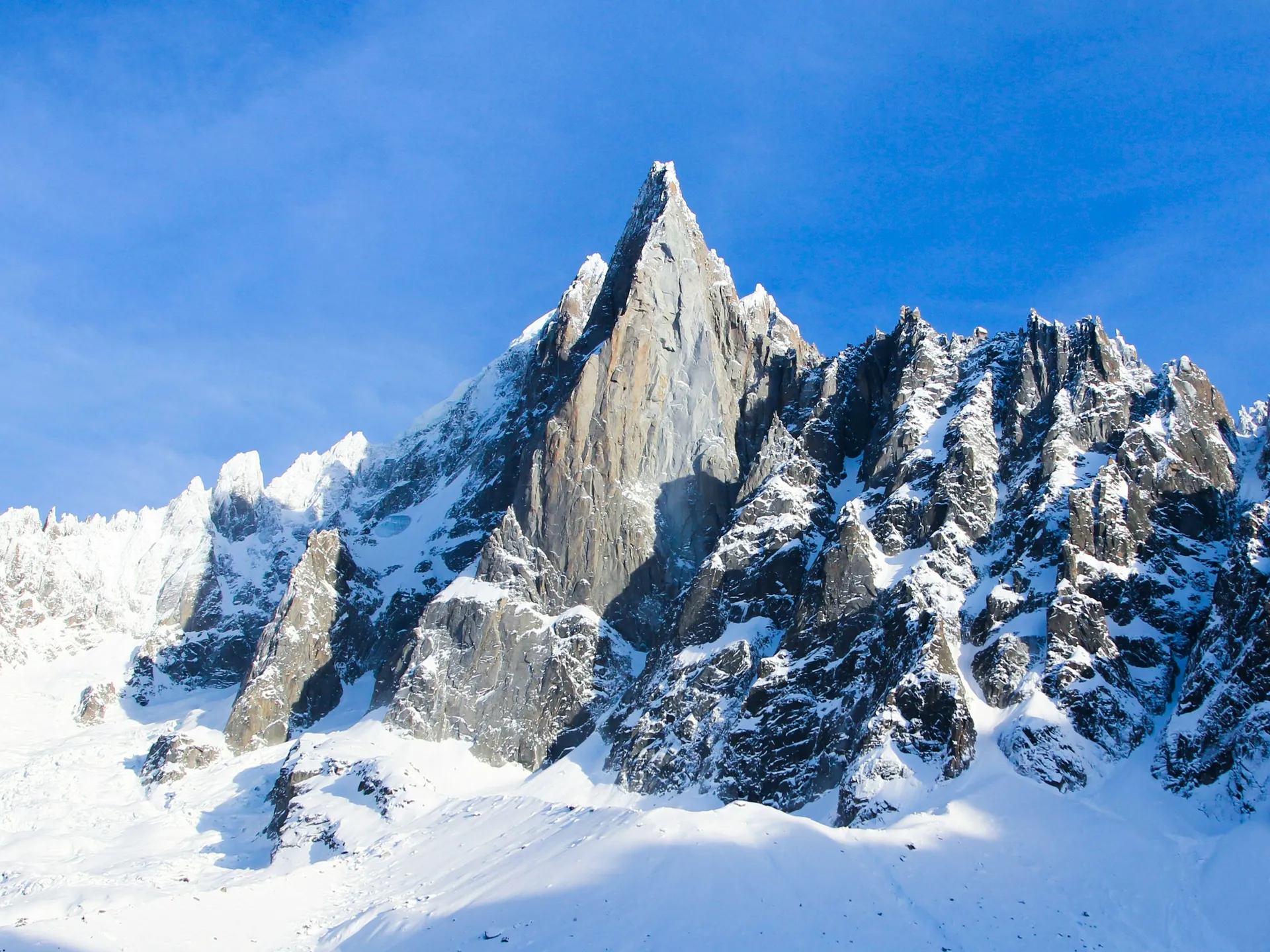
Chamonix is not a ski resort; it is a valley of them, under the highest mountain in the Alps. Mont Blanc (4,805 m) hangs over a real French-Savoyard town that hosted the first Winter Olympics in 1924 and has been the world capital of alpinism ever since. The result is a place with two souls: hardcore mountain sports in the morning — skiing, touring, climbing, paragliding — and terraces, Savoyard restaurants and a genuine Saturday market in the afternoon.
It rewards visitors who understand its geography: several separate ski areas, a valley train, and mountains that demand respect. If you want to organize ahead, you can compare tours, lift tickets and activities in Chamonix before you travel.
🎟️ Tours and Activities
The headline experiences sell out in peak weeks: the Aiguille du Midi cable car, the Montenvers train to the Mer de Glace, guided Vallée Blanche descents and paragliding flights. You can browse tours and activities in Chamonix — guided mountain days, glacier visits, the Mont Blanc excursions and ski lessons. Book the cable cars online for the first clear day, and keep flexibility: in Chamonix the weather decides the calendar, not you.
Tip: buy the Mont Blanc Multipass if you plan two or more lifts (Aiguille du Midi, Montenvers, Brévent, Flégère); it is sold online and the savings are immediate. Check opening status each morning — wind closes the high cables.
📷 What to See
Aiguille du Midi
The cable car from Chamonix centre climbs to 3,842 m in two stages, delivering the terrace view of Mont Blanc and the “Step into the Void” glass box. Go early for clarity, allow an hour for altitude acclimatization, and remember that this is serious mountain air: walk slowly, drink water.
Mer de Glace and Montenvers
The red cog railway climbs the valley side to France’s largest glacier, with a grotto carved into the ice each year and a crystal exhibition. The glacier’s retreat is measured in the stairway you descend to reach it — one of the most legible climate lessons in the Alps.
Brévent and Flégère
The two sun-facing ski areas face Mont Blanc directly: the classic postcard panorama of the whole massif. In winter they carry the intermediate skiing; in summer their lifts serve hikers and trail runners on the balconies.
Grands Montets and Les Houches
The Grands Montets above Argentière is the big vertical, off-piste-famous area (its top lift status changes by season — check the official site); Les Houches, down the valley, is the family-friendly area with tree-lined runs and the World Cup downhill piste.
The town and the alpinism heritage
Chamonix centre is compact and pleasant: the church square, the statue of Balmat and de Saussure after the first ascent of Mont Blanc (1786), the Alpine Museum, and a main street mixing gear shops with bakeries. The Saturday market fills it with cheese, honey and Savoyard sausage.
Vallée Blanche
The legendary 20 km high-mountain off-piste descent from the Aiguille du Midi down the glacier — with a mountain guide, always: crevasses, seracs and rope-work are not self-service. It needs skiing ability and stable conditions, and it is the experience many strong skiers come here for.
🏘️ Neighborhoods and Where to Stay
- Chamonix centre: everything at the door — lifts, buses, restaurants — and the prices to match; best for first visits without a car.
- Argentière: up-valley, quieter, at the foot of the Grands Montets; the skier’s choice.
- Les Houches: down-valley and family-oriented, often cheaper, with its own ski area.
- Les Praz and Les Bossons: leafy, residential, calmer, between the Flégère lift and the waterfalls.
🍛 Typical Gastronomy
Savoyard mountain cooking is built for cold evenings and big days.
| Dish | Description | Where to try it | Tip |
|---|---|---|---|
| Fondue savoyarde | Melted mixed cheeses (beaufort, comté, emmental) with bread cubes. | Traditional restaurants | Book a table; it is a full meal, not a starter. |
| Tartiflette | Potatoes, reblochon, bacon and onion baked golden. | Mountain restaurants and town tables | The classic ski-day reward. |
| Raclette | Half a wheel of raclette cheese melted and scraped over potatoes and charcuterie. | Specialist restaurants | Order for two; the ritual is the point. |
| Diots de Savoie | Savoyard sausages cooked in white wine. | Bistros and the Saturday market | With croziflette if offered. |
| Crozets | Small square buckwheat or wheat pasta, gratin or with diots. | Family restaurants | Local, filling, underrated. |
| Génépi | The herbal liqueur of the Alps, made from mountain artemisia. | After dinner anywhere | A small glass is the traditional digestif. |
🚌 Getting Around
From the airport. Geneva is the closest major airport: shared transfers and buses cover the ~1 h 15 ride through the Mont Blanc tunnel’s approach; prebook a transfer from Geneva to skip the Saturday queue.
In the valley. The Mont Blanc Express train links Chamonix, Les Praz, Argentière and Vallorcine; ski buses connect every lift area and are included with guest cards in many accommodations. A car is optional here — parking is scarce and the valley moves by train and bus.
Beyond. The Mont Blanc tunnel leads to Italy (Courmayeur in 30 minutes); the Col des Montets road reaches Martigny, Switzerland, by scenic railway connection.
🛡️ Safety and Common Scams
Chamonix’s risks are mountain risks more than urban ones.
- Off-piste and glaciers: roped pistes end where the uncontrolled mountain begins; take a guide, carry the trio (transceiver, shovel, probe) and check the avalanche bulletin (the official meteofrance montagne report) every morning.
- Altitude: the Aiguille du Midi is 3,842 m — go slow, hydrate, and keep small children’s visits short.
- Weather changes: high cables close for wind; have a plan B (Mer de Glace, museums, swimming pool).
- Urban caution: normal care with bags in crowds; the town is safe by any standard.
Mountain rescue: 112 (and note that off-piste rescue costs can be charged — insurance matters). Ski with the resort guides rather than improvising.
✈️ Best Time to Visit
| Season | What to expect | Notes |
|---|---|---|
| Winter (December-April) | Deep ski season, festive town | Areas open progressively from late November; February is peak; see our guide to choosing a French ski resort |
| Spring (May-June) | Quiet, snowmelt, hiking starts low | Some lifts closed; best value lodgings |
| Summer (July-September) | Hiking, trail running, climbing, paragliding | High-season bustle; book the Aiguille du Midi ahead |
| Autumn (October-November) | Golden larches, empty trails | The valley at its calmest; ski season begins again |
For winter weekends, book the cable cars and your mountain guide as soon as your dates are fixed.
Pair Chamonix with Annecy for the lake-and-town counterpoint, Lyon for the gastronomy, or Strasbourg for the Christmas markets — and see the France guide for the full map.