


Cannes
Cannes travel guide: the Croisette and its beaches, the old Suquet quarter, the Lérins islands, the film festival and the Riviera's year-round life.
Quick Facts
- Best time to visit
- May to June and September to October; May for the festival
- Budget per day
- $85 - $210 per day
🌎 Introduction
Cannes is the Riviera’s shop window: a curve of bay, a boulevard of palms and palace hotels, and a film festival that each May pastes the town’s name onto two weeks of world attention. The rest of the year it is quieter than its reputation — a mid-size city with a proper market quarter, an old hill town above the port, and two pine-scented islands a short ferry ride out.
This guide covers the city and its islands. The festival belongs to its own calendar; the wider season is our Riviera in winter guide, and Nice, 30 minutes along the coast, is the practical gateway.
🎟️ Tours and Activities
The essentials: the islands by ferry (Sainte-Marguerite’s fortress and Île Saint-Honorat’s abbey), boat circuits of the bay and the corniches, and the perfumery tours inland at Grasse. You can browse tours and activities in Cannes — island crossings, catamaran hours, the Esterel coastal cruises. Ferries run on reduced timetables off-season; check the operators’ sites for the day.
Tip: the film festival (mid-May, dates on the official festival site) closes the palace zone to the public and multiplies hotel prices — come for it only with rooms booked far ahead, or come two weeks later for the same sea and half the rates.
📷 What to See
La Croisette
The boulevard of the postcards: palace hotels on one side, private beaches and the bay on the other, ending at the Palm Beach point. Walk it at the golden hour; the public beach slices sit between the private rows, and the sand is free even where the sunbeds are not.
Le Suquet and the old port
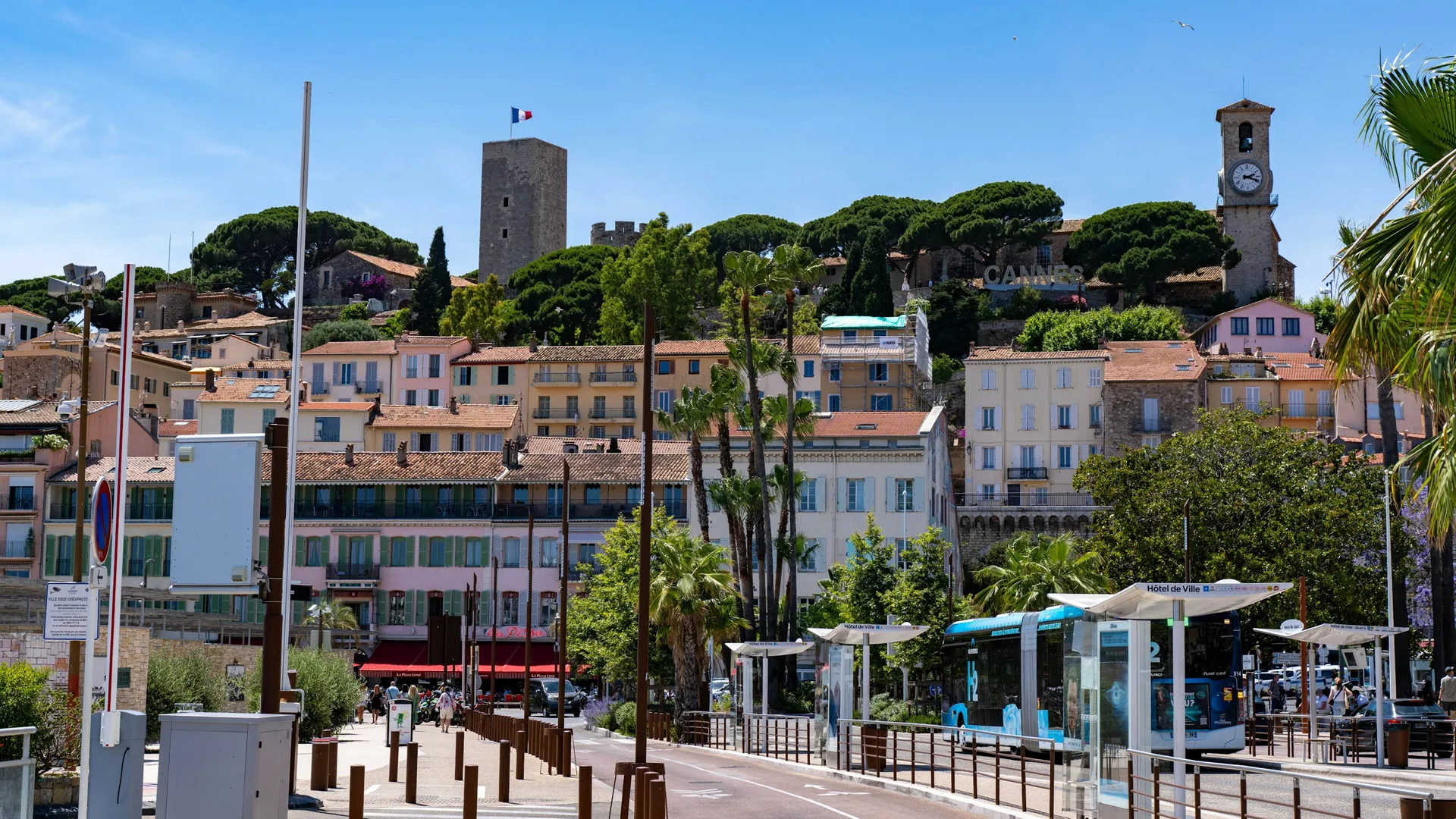
The old fishermen’s quarter climbs the hill west of the bay: stepped lanes, the church of Notre-Dame-de-l’Espérance, and the Castre museum in the medieval castle, whose tower gives the classic view over the port, the Croisette and the Lérins islands offshore.
The Lérins islands
Ten to fifteen minutes by ferry: Sainte-Marguerite, the fortified island where the Man in the Iron Mask was held (the cell is part of the maritime museum), ringed by umbrella pines and walking trails; and Saint-Honorat, the working monastery island with its wine and liqueurs made by the monks — the quieter, stranger, better island. Both have modest restaurants in season.
Forville market and the real town
Behind the Croisette runs the city that locals use: the Forville covered market (mornings, closed Mondays) and its streets of fromagers, butchers and lavender bundles; the rue Meynadier’s shops; and the Carnot quarter’s everyday Cannes. The contrast is the point — twenty minutes from the red carpet, a full Provençal market.
The ports and the point
The old port’s yacht basin, the Pierre Canto at the point, and the fireworks-and-regatta calendar of the summer give Cannes its maritime theatre. In July the fireworks festival lights the bay (schedules on the city’s official site).
Day trip: the Esterel
The red corniche road west climbs into the Esterel massif’s rhyolite cliffs — a drive, a boat view, or a hike from Théoule. It is the coast’s most dramatic half-day, and it starts 20 minutes from the Croisette.
How two days fit
Day 1
- Morning: the Croisette’s full length (45 minutes’ walk), then the Forville market’s colours.
- Midday: lunch off the Meynadier lanes — the market’s products, harbour prices.
- Afternoon: the Suquet’s climb and the Castre museum’s tower view; back down for a swim from the public beach.
- Evening: the old port’s terraces, the islands dark on the water.
Day 2
- Morning: the first ferry to Sainte-Marguerite — the fortress, the Iron Mask’s cell, the pine trails.
- Midday: the crossing to Saint-Honorat; lunch at the monks’ tables or a picnic under the eucalyptus.
- Book ahead: ferry tickets the evening before; July’s fireworks-night tables weeks out.
🏘️ Neighborhoods and Where to Stay
- Croisette front: the palace experience at palace prices; beach at the door.
- Between the station and the Croisette: practical, walkable, a mix of solid mid-range hotels; the smart compromise.
- Le Suquet: atmosphere and stairs; small hotels with views.
- West along the coast (La Bocca): quieter, sandier, cheaper, a short bus or bike from the centre.
🍛 Typical Gastronomy
Riviera cooking with a luxury gloss — and a real market behind it.
| Dish | Description | Where to try it | Tip |
|---|---|---|---|
| Socca | Chickpea pancake from the wood oven. | Market quarter fryers | Eat it standing, hot, peppered. |
| Pissaladière | Onion, anchovy and olive tart. | Bakeries | The mid-morning standard. |
| Daube de lotte | Monkfish braised Provençal-style. | Old-port tables | Ask for the day’s catch braised rather than grilled once. |
| Salade niçoise | The coast’s classic done properly. | Market bistros | Expect the purist version this close to Nice. |
| Tarte tropézienne | The cream-filled brioche of the coast. | Bakeries | Invented in Saint-Tropez, west of here, adopted everywhere. |
| Monastery products | Lérins abbey’s wines and liqueurs. | The island shop | A souvenir with a millennium of branding. |
🚌 Getting Around
From the airport. Nice airport is 30-40 minutes by express bus or taxi; compare transfers for late arrivals with luggage.
Trains. Cannes sits on the coastal line: Nice in 25-35 minutes, Antibes in 10, Marseille in a little over 2 hours. The station backs onto the market quarter — a two-minute walk to Meynadier.
In town. The centre and the Croisette walk; buses run along the coast; bikes cover the flat seafront. The islands are ferry-only.
The airport’s express bus runs direct to Cannes’ centre in season and off — check the operator’s current timetable rather than the general wisdom; and if your days include the islands, buy the ferry tickets the evening before: the morning queues at the port move slower than the boats.
🛡️ Safety and Common Scams
Cannes is safe and heavily policed; the cautions are small.
- Pickpockets: the Croisette crush in season and festival crowds; standard care.
- Beach touts: the private beaches’ hosts are legit; the “designer” goods sold along the front are not.
- Ferry timing: the last boats back from the islands leave early off-season — check the schedule before you swim.
Emergency number: 112.
✈️ Best Time to Visit
| Season | What to expect | Notes |
|---|---|---|
| Spring (April-June) | Warm, pre-summer light | The May festival divides the month; either side, sea and terraces |
| Summer (July-August) | Hot, full, fireworks | The bay’s fireworks calendar in July; book beaches and ferries |
| Autumn (September-October) | Warm sea, golden light | The locals’ favourite; hotel rates soften |
| Winter (November-March) | Mild, quiet, bright | The Riviera in winter season; the carnival weeks sit up the coast in February |
For island days and coastal cruises, book the boat trips ahead in high season.
Pair Cannes with Nice along the bay, Antibes’ ramparts between them, and the Esterel red coast west — the full map is in the France guide.